

Thailand is one of the easiest and cheapest countries in the world to explore, but your experience will depend a lot on how you move around. With a little planning and some local know-how, you can cross the country from northern mountains to southern islands for surprisingly little money, without sacrificing comfort or safety. This guide explains how to travel around Thailand easily and cheaply, using the same tricks long-term travelers and locals rely on every day.
Understanding Costs and Planning a Smart Route
Before you look at buses or trains, it helps to understand what transport actually costs in Thailand today. In most regions, short city rides on buses or shared pickups are typically well under the price of a coffee back home, and long-distance buses or trains between major cities can often be cheaper than a single taxi ride in a Western capital. Budget travelers commonly get by on a modest daily allowance that comfortably covers local transport, simple accommodation and street food, especially if they avoid unnecessary flights and premium tourist services.
Your route will strongly influence how much you spend and how easy your trip feels. A common budget-friendly loop starts with Bangkok, continues north to cities such as Ayutthaya and Chiang Mai, then drops south by train or bus toward the Gulf islands or Andaman Coast. Sticking mostly to overland links between big hubs lets you use frequent, competitive services instead of one-off tourist transfers. When possible, bunch longer journeys together so you can take advantage of overnight buses or trains, which save the cost of a hotel night.
Season and timing also matter for both cost and convenience. The cool, dry months from roughly November to February are the busiest, with higher demand on transport and some routes selling out days in advance. In hotter or rainier months there are usually more seats and better prices, although occasional storms can disrupt ferries in the south. If you are flexible with departure dates and times, you are more likely to find cheaper fares and less crowded vehicles, especially on popular weekend routes serving major beach areas and big festivals.
Finally, consider your own comfort level and pace. Trying to see too many places in a short period means you will spend more time and money in transit. Slowing down, spending longer in each stop and choosing straightforward point-to-point journeys not only saves your budget but also makes the trip easier to manage, especially if you are carrying a backpack or traveling with children.
Getting Around Bangkok on a Budget
Most trips to Thailand begin or end in Bangkok, so learning to move around the capital cheaply will pay off quickly. The city has one of Southeast Asia’s most extensive public transport systems, combining the BTS Skytrain, MRT subway, public buses and river boats. The Skytrain and MRT are particularly convenient for first-time visitors, with clear English signage and air-conditioned carriages. Typical one-way fares are priced by distance and tend to be inexpensive compared to big-city metro systems elsewhere.
Stored-value cards for the BTS and MRT simplify travel for anyone spending more than a day or two in the city. You can load money once, tap in and out at the gates and avoid queuing at vending machines for every ride. Some visitors also choose one-day passes when they plan to make many trips in a single day of sightseeing, such as hopping between shopping districts, temples and riverside areas. Peak hours in the morning and late afternoon are crowded, so traveling just outside rush periods can make rides more comfortable.
For very low-cost travel, Bangkok’s city buses and canal boats remain hard to beat. Non-air-conditioned buses are usually the cheapest option, followed by air-conditioned services that still offer excellent value. Canal boats and Chao Phraya river ferries connect major historic and commercial neighborhoods, and are popular with commuters as well as tourists. These services are not luxurious, but they are efficient once you understand the main routes, and fares are usually just a fraction of what you would pay for a taxi for the same distance.
Taxis and ride-hailing cars are widely available and remain relatively inexpensive when shared or used for late-night journeys when trains have stopped. To avoid overpaying, look for official metered taxis and confirm that the meter is switched on before the car moves. Ride-hailing apps can provide an approximate price up front and are useful for trips where you do not feel comfortable negotiating or explaining directions. Within central neighborhoods, walking is still free and often the most pleasant way to explore side streets, temples and markets.
Using Buses and Trains for Long-Distance Travel
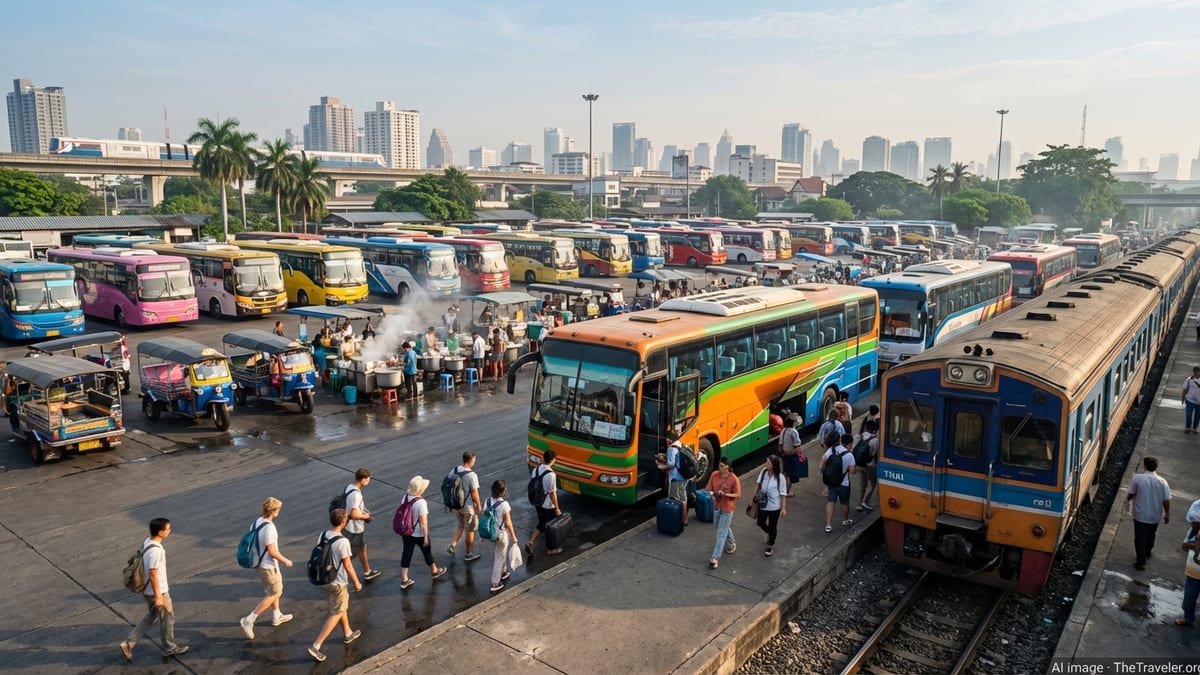
For crossing the country cheaply, long-distance buses and trains are the backbone of Thailand’s transport network. Intercity buses link almost every major town and city, from Chiang Rai in the far north to deep southern provinces near the Malaysian border. State-run bus companies typically offer the lowest fares, while private operators compete with a range of comfort levels, from basic seated buses to high-deck coaches with reclining seats, onboard toilets and snacks. Ordinary and express buses are cheaper, while so-called VIP classes cost more but provide wider seats and more legroom.
Overnight buses are especially popular on long routes such as Bangkok to Chiang Mai or Bangkok to Phuket. Leaving in the evening and arriving in the morning saves the price of a hostel or guesthouse for that night, which can be a significant saving on multi-week trips. For the best value and safety, it is generally wise to book through official bus terminals or reputable counters instead of unverified street agents. Keep your valuables with you in the cabin rather than in checked luggage, and dress in layers to cope with strong air-conditioning.
Thailand’s rail network offers another affordable and scenic way to get around. Trains connect Bangkok with major destinations including Chiang Mai, Nong Khai and Surat Thani, the rail gateway to the Gulf islands. Third-class and second-class seats are usually the cheapest choices and can be very economical on daytime journeys. For longer distances, second-class sleepers are a comfortable middle ground between budget and comfort, with simple bunk beds and shared facilities. First-class sleepers provide more privacy at higher cost.
Train tickets can often be bought at stations shortly before departure outside of peak periods, but popular routes and sleepers can sell out days ahead during holidays. If you know your dates, buying earlier improves your chances of getting your preferred class and departure time. While trains are not always the fastest option, they are usually reliable, provide more legroom than buses and let you enjoy views of countryside that you would miss from the highway.
Cheap Domestic Flights, Ferries and Island Connections
Internal flights in Thailand used to be a major expense, but competition from budget airlines has pushed fares down on popular routes. Flights between Bangkok and cities such as Chiang Mai, Krabi, Phuket and Hat Yai are often reasonably priced, especially when booked several weeks in advance and outside major Thai and international holidays. For travelers on a short itinerary, a single domestic flight can make sense to avoid spending a full day on the road or rail.
That said, frequent flying will quickly increase your overall costs compared with buses and trains. Airport transfers, luggage fees and higher prices on late bookings can add up, and flights offer less of a sense of place than a day on a train through rice fields or a bus through mountain passes. A practical compromise is to use one or two flights on the longest legs of your journey and rely on ground transport everywhere else. If you are traveling only within a region, such as northern Thailand or the southern peninsula, overland routes alone will likely be cheaper and more environmentally friendly.
Reaching Thailand’s famous islands requires a mix of land and sea travel. Ferries and slower boats connect mainland ports to major islands such as Phuket, Koh Samui, Koh Phangan and Koh Tao in the Gulf, and Koh Lanta, Koh Phi Phi and others in the Andaman Sea. Public ferries are the cheapest way to island-hop, with prices that are usually far lower than speedboats on the same route. Overnight or slower ferries sometimes offer basic sleeping areas, effectively combining transport and accommodation.
To keep island travel cheap and easy, avoid last-minute private transfers sold at inflated prices in tourist zones. Instead, buy tickets at the pier or from established travel counters that clearly post schedules and fares. Weather can affect services, especially during monsoon periods, so allow extra time when you have onward flights or important connections. Carry a light jacket to handle sea breezes and always keep essential items in a daypack in case stored luggage is hard to reach during crossings.
Local Transport: Tuk‑tuks, Songthaews and Scooters
Once you arrive in each town or island, local transport becomes your main daily expense after food and lodging. Thailand offers several ultra-cheap options that can keep these costs modest. Songthaews, which are converted pickup trucks with benches in the back, act as shared taxis on fixed or semi-flexible routes. They are especially common in cities like Chiang Mai and in many southern towns. Fares are usually low and depend on distance, making them a favorite of locals and budget travelers who are not in a rush.
Tuk‑tuks, the three-wheeled motorized rickshaws found in many Thai cities, are almost a symbol of the country. They are fun for short hops and late-night rides, but they can be more expensive per kilometer than taxis if you do not negotiate firmly in advance. To keep costs down, agree on the fare before you get in, be prepared to walk away from inflated quotes and avoid offers of very cheap rides that include detours to shops where drivers receive commissions. In cities with ride-hailing services, comparing estimated prices on your phone can help you decide whether a tuk‑tuk quote is reasonable.
In smaller towns and islands, renting a scooter is often the most flexible and economical way to get around. Daily rental rates are typically low, and fuel for a day of casual exploring is also inexpensive. However, scooter travel comes with important cautions. Thai traffic can be hectic, road conditions vary and accidents involving tourists are unfortunately common. You should only rent a scooter if you have prior riding experience, a valid license that covers motorcycles and appropriate travel insurance. Always wear a helmet, take photos of the bike when you pick it up and follow local speed limits.
If you prefer to avoid scooters, you can still get around cheaply by walking, using songthaews and arranging occasional short taxi or ride-hailing trips when needed. Many island towns and historic centers are compact enough that you can cover most sights on foot, especially if you choose accommodation close to the areas you want to explore. Planning your days to minimize backtracking and grouping nearby sights together will save both time and money.
Saving Money While Staying Safe and Comfortable
Traveling cheaply in Thailand does not mean taking unnecessary risks or sacrificing all comfort. The most effective savings usually come from planning and habits rather than extreme penny-pinching. Booking long-distance transport a bit in advance, especially before weekends and holidays, can secure better seats and avoid having to pay for high-end options at the last minute. Traveling overnight on well-regarded operators conserves your daytime hours and reduces accommodation costs, provided you are comfortable sleeping on the move.
Keeping your belongings secure is just as important as finding a cheap ticket. Use small locks on your backpack or suitcase, keep passports and money in a money belt or secure pocket and carry a lightweight cable lock to secure bags to fixed objects on overnight journeys if that makes you feel safer. Most Thai transport is safe, but petty theft can occur in crowded buses or stations like anywhere else. Having digital copies of important documents stored online adds an extra layer of security.
Food and drink habits also shape your overall travel costs. Eating where locals eat, especially at markets and street stalls, can keep daily food spending low while giving you some of the best meals of your trip. Basic noodle soups, rice dishes and snacks are usually priced very modestly in non-touristy areas. Buying bottled water or refilling at reputable refill points is inexpensive, while frequent imported coffees, alcohol in bars and meals in international restaurants will quickly raise your daily total. Setting a rough daily budget for extras such as massages, cocktails and activities helps you avoid end-of-trip surprises.
Comfort on the road comes from small adjustments. Always carry a light sweater or scarf for overly cold air-conditioning, earplugs and an eye mask for overnight travel and a small power bank to charge your phone during long trips. Download offline maps of your destination so you can orient yourself when you step off a bus or ferry, even without mobile data. A local SIM card with a basic data package is affordable and makes it easier to book rides, check routes and contact guesthouses if you are running late.
Digital Tools, Tickets and Cultural Etiquette
Mobile tools can make traveling around Thailand easier and often cheaper. Map apps help you see whether a quoted ride price is reasonable based on distance, while translation apps can help you explain destinations to drivers who do not speak much English. Ride-hailing apps are available in many cities and can prevent misunderstandings over fares. Some bus and train routes now allow online booking through official or well-known platforms, which reduces the need to stand in line at busy terminals, although buying directly at stations can still be the best way to access last-minute seats.
When searching for transport, be wary of services that appear dramatically cheaper than others without a clear reason. Extremely low prices may mean hidden add-ons or poor safety standards. It is often better to pay a little more for a trusted operator that respects driving laws and maintains vehicles properly. Reading recent reviews and asking other travelers for recommendations can help you spot reliable companies, especially for overnight buses, ferries during bad weather and any excursion that involves remote roads or crossings.
Respecting local customs will make your movements around Thailand smoother and more enjoyable. Queuing politely at ticket counters, dressing modestly when passing through temple areas on your way to boats or buses and speaking calmly during misunderstandings all go a long way. In many situations, a smile and a few basic Thai phrases can help defuse tension and lead to better outcomes, whether you are asking a driver to switch on the meter or negotiating a songthaew fare.
Remember that schedules and policies can change as authorities upgrade infrastructure or adjust fares. It is wise to double-check departure times a day or two before long trips and to arrive at stations and piers earlier than you would for similar journeys at home. This extra buffer gives you time to find the right platform or counter, buy snacks, use the restroom and deal with any last-minute changes without stress.
The Takeaway
Traveling around Thailand easily and cheaply is very achievable if you understand the country’s transport options and approach your route with a flexible mindset. Public systems in Bangkok, extensive networks of buses and trains, budget-friendly ferries and simple local options like songthaews and tuk‑tuks form a web that can take you almost anywhere you want to go. By combining these tools thoughtfully, you can keep costs low without giving up comfort or safety.
The key themes are planning and patience. Choose a logical route, favor overland travel for most legs and reserve flights for the occasional long hop when time is short. Give yourself margin for delays, learn the basic fare structures and rely on local food and modest guesthouses to prevent your budget from creeping up. With these strategies, Thailand becomes not only a beautiful and welcoming destination but also one of the most accessible countries in the region for independent travelers watching their spending.
FAQ
Q1. How much should I budget per day to travel around Thailand cheaply?
For a simple, low-cost trip, many travelers manage on a modest daily budget that covers hostel beds or basic guesthouses, local food, city transport and occasional activities. Your exact number will depend on how often you move, whether you drink alcohol and how many paid tours you join, but careful planners can keep daily spending relatively low by using public buses and trains and eating primarily at local markets.
Q2. Is it cheaper to travel by bus, train or flight inside Thailand?
For most routes, buses and trains are cheaper than flights, especially when you choose standard or second-class options and avoid premium services. Flights can be good value on very long routes if you book in advance, but once you add airport transfers and baggage fees they tend to cost more overall than ground transport.
Q3. Do I need to book long-distance buses and trains in advance?
Outside of big holidays and peak months, you can often buy tickets a day or two in advance, or even on the day of travel for less popular departures. However, overnight services and sleeper trains on major routes can sell out, so booking earlier is wise if you have fixed dates or want specific seat types.
Q4. Are overnight buses and trains safe in Thailand?
Most overnight services are widely used and generally safe, but it is sensible to take basic precautions such as choosing well-reviewed operators, keeping valuables with you in the cabin and avoiding excessive alcohol. If you are a light sleeper or nervous about road travel, trains with sleeper berths are usually the more comfortable option.
Q5. Is renting a scooter a good way to save money?
Renting a scooter can be cheap and convenient in smaller towns and islands, but it is only a good idea if you have experience, a proper license and insurance. Traffic conditions and road rules may differ from what you are used to, so if you are unsure, it is safer to rely on walking, songthaews and short taxi rides instead.
Q6. How can I avoid being overcharged by tuk‑tuks and taxis?
To minimize overcharging, always agree on tuk‑tuk fares before boarding and insist on using the meter in taxis whenever possible. Using ride-hailing apps in cities where they operate can give you a clear idea of fair prices, and walking away politely from inflated quotes often leads to better offers elsewhere.
Q7. What is the cheapest way to get from Bangkok to the islands?
The least expensive approach is usually to travel by bus or train from Bangkok to a coastal hub such as Surat Thani, Chumphon or one of the Andaman ports, then transfer to a scheduled public ferry. Combined tickets sold through official counters can simplify the process, but buying legs separately at stations and piers may sometimes offer a small saving.
Q8. Is it easy to get around Thailand if I do not speak Thai?
Yes, it is generally quite manageable, especially on established tourist routes. Station staff and drivers in busy areas are used to helping visitors, and signage on major transport systems often includes English. Learning a few key phrases, carrying screenshots of your destination in Thai script and using translation apps can make communication even smoother.
Q9. How can I stay connected for maps and ride-hailing apps?
Buying a local SIM card with a basic data package on arrival is straightforward and affordable. With mobile data, you can use map apps for navigation, check public transport routes and call ride-hailing cars where available, all of which make moving around easier and can help you avoid unnecessary detours or miscommunications.
Q10. Are there hidden transport costs I should watch out for?
Small extras can add up, including baggage surcharges on some budget flights, higher prices for last-minute bookings, optional seat upgrades, and premium charges on late-night or holiday services. To keep surprises to a minimum, read fare conditions carefully, confirm whether your ticket includes transfers and allow enough time between connections so you do not have to rely on costly last-minute options.