

Winnipeg rewards visitors who arrive prepared. This prairie capital is compact but spread out, with a busy international airport, evolving public transit network, and a growing mix of rideshares, bikes, and walkable neighborhoods.
Understanding how to reach the city and move around once you are here will help you spend less time navigating logistics and more time exploring The Forks, the Exchange District, and the banks of the Red and Assiniboine rivers.
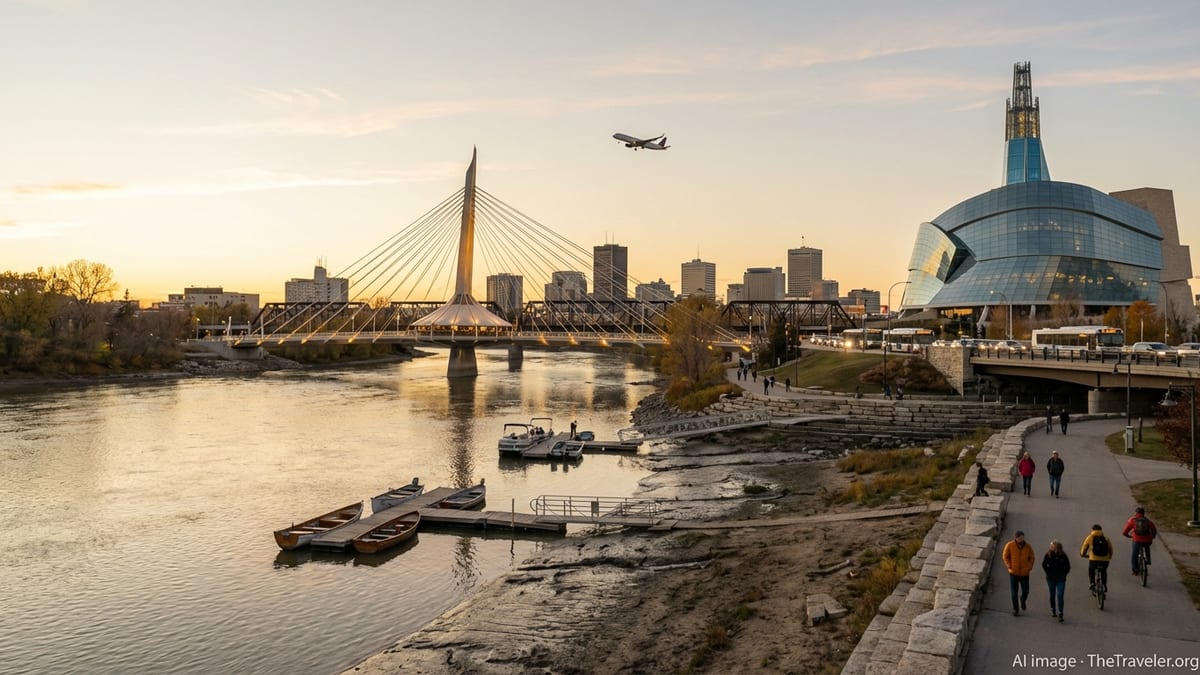
Understanding Winnipeg’s Location and Key Gateways
Winnipeg sits near the geographic center of North America, in southern Manitoba, and functions as a major transportation hub for the Prairies. That central position keeps it well connected by air to other Canadian cities and some U.S. gateways, while long-distance rail and intercity buses link it to regional destinations. For most international visitors, the main entry point is Winnipeg James Armstrong Richardson International Airport, located roughly 7 kilometers west of downtown.
The airport lies just off the main north south Route 90 corridor, which is signed as the city’s airport route and connects directly to Portage Avenue, one of Winnipeg’s primary downtown arterials. This makes transfers between the airport, downtown hotels, and major event venues relatively straightforward whether you choose a taxi, rideshare, or rental car. The city’s ring-shaped Perimeter Highway provides onward connections for travelers heading to cottage country, rural Manitoba, or driving across the Prairies.
Winnipeg’s core itself is compact and anchored by a handful of recognizable areas: The Forks at the junction of the Red and Assiniboine rivers, the historic Exchange District, and the downtown grid centered on Portage and Main. Many visitors will spend most of their time moving between these districts and nearby neighborhoods such as Osborne Village, Corydon, and St. Boniface, all of which are accessible by a mix of transit, walking, and short rideshare trips.
Because Winnipeg’s winter weather can be severe, with icy streets and low visibility at times, the city’s transportation planning takes snow and cold into account. That means reliable snow clearing on main routes, enclosed walkways in parts of downtown, and transit operations that run year round. Visitors arriving outside the summer months should factor conditions and daylight hours into their transportation choices.
Flying Into Winnipeg: Airlines, Routes, and Airport Basics
Winnipeg James Armstrong Richardson International Airport handles the majority of passenger traffic into the region. It serves as a key domestic hub, with frequent flights to cities such as Toronto, Vancouver, Calgary, Edmonton, and Montreal, as well as seasonal or regular service to several U.S. and sun destinations. Route networks and schedules can shift seasonally, so travelers are wise to check current flight options and consider flexible dates when comparing fares.
The passenger terminal is modern and relatively compact, which keeps walking distances short from gate to baggage claim and onward to ground transport. Arrivals and departures are located on separate levels, and wayfinding signage is clear. For most visitors, the airport experience is straightforward: fast access to car rental desks, taxi stands, and the area where rideshare services pick up, as well as a signed stop for Winnipeg Transit buses on the arrivals level.
Because Winnipeg is a mid-sized market, flights can fill up around peak travel periods such as school holidays, major sporting events, or summer festivals. Booking earlier often provides better choice on departure times and seat selection. In winter, weather across the Prairie and central Canada network can occasionally disrupt operations, so allowing a buffer for connections and monitoring flight alerts is prudent.
Customs and immigration processes are handled at the airport for international arrivals. Wait times are usually moderate compared with the largest Canadian gateways, but they can lengthen during peak waves of flights. Travelers with connections should ensure that layovers allow sufficient time to clear formalities, collect and recheck baggage if necessary, and pass through security screening again.
From Plane to Downtown: Airport Transfers and First Steps
Once you collect your baggage, you have several options for getting into Winnipeg. Taxis line up outside the arrivals area and typically reach downtown in around 15 to 25 minutes depending on traffic and weather. Fares are metered and vary with distance and conditions, but visitors generally find costs to central hotels to be in the modest range compared with many other North American cities. Taxis are regulated and use designated stands at the terminal.
Rideshare services such as Uber and Lyft operate legally in Winnipeg under the city’s vehicle for hire framework. Passengers order rides through the apps and meet drivers at a signed rideshare pickup zone on the lower level. Pricing can fluctuate with demand, but for most journeys between the airport and downtown or popular neighborhoods like Osborne Village, typical fares are comparable to or slightly below taxi pricing. During major events or storms, surge pricing is possible, so checking estimated fares in advance is sensible.
Budget-conscious travelers can use Winnipeg Transit from the airport. The bus stop is located in the median outside arrivals, near a marked entrance. Transit routes and service levels evolve, but public information notes that buses connect the airport with major transfer points and downtown areas from early morning into late night, often from roughly around 5:30 a.m. until after midnight. Travel times are longer than by car, especially during peak periods, but the cost is significantly lower. Visitors should confirm current routes, schedules, and fare options before traveling, as route numbers and timetables can change.
Several major car rental brands operate directly from the airport terminal, offering convenient pick up and drop off for visitors planning to explore beyond central Winnipeg or make regional day trips. Rates vary with season, demand, and vehicle category, but compact cars are often priced competitively with two or three taxi rides. For winter visits, it is worth requesting a vehicle with good winter tires and confirming how to operate features such as block heaters if you plan to park outdoors for extended periods.
Getting Around by Public Transit
Winnipeg Transit runs a citywide bus network that operates year round and serves most neighborhoods tourists are likely to visit. The system includes main line routes that connect suburban areas with downtown, express services during rush hours, and feeder routes linking residential districts to major corridors. Regular buses generally run from early morning until past midnight, with service seven days a week, although exact start and end times depend on the route.
Fares are structured in a simple format, with single-ride tickets and passes available. While specific prices change periodically, Winnipeg’s bus fares are typically in the moderate range for Canadian cities. Day passes or multi-ride options can be good value for visitors who anticipate making several trips across town. Tickets are sold through various outlets and machines, and many riders use mobile tools or planning apps to check schedules in real time.
In recent years, Winnipeg has invested in modernizing parts of its transit network. This includes rapid transit elements and the introduction of zero-emission articulated buses on some routes, which provide a quieter ride and increased capacity. These improvements primarily benefit busy commuter corridors and airport connections, and they reflect an ongoing effort to support more sustainable transportation options in the city.
For visitors, using transit is most practical when traveling between downtown, The Forks, the universities, and major shopping or entertainment districts along Portage Avenue and Route 90. Buses are generally safe and well used, but as in any city, it is wise to keep valuables secure and be mindful of your surroundings, particularly late at night or when vehicles are crowded after events.
Rideshares, Taxis, and Car Rentals in the City
Once you are in Winnipeg, taxis and rideshares provide flexible point-to-point transport, particularly valuable during winter or late at night when walking and cycling are less appealing. Taxis can be hailed at marked stands downtown, outside major hotels and venues, or booked by phone. They use regulated meters, and drivers are familiar with common tourist destinations such as The Forks, the Exchange District, and Canada Life Centre.
Rideshare apps give visitors an easy way to compare estimated wait times and prices. Both Uber and Lyft are active in Winnipeg, and city policy has evolved to accommodate these services within its vehicle for hire regulations. Recent proposals have even examined creating designated pickup and drop off zones near busy downtown arenas and theaters to improve safety and traffic flow. Using a rideshare may mean shorter waits and the ability to pay and tip through the app, which some travelers prefer.
For travelers planning to explore outside the city core or combine urban sightseeing with visits to parks and lakes, renting a car can be practical. In addition to airport locations, several rental agencies maintain branches in central Winnipeg. Parking downtown is a mix of on-street metered spaces and surface or garage lots, with rates that vary by block and event schedule. During large concerts, sports games, or festivals, parking can be tight around key venues, so allowing extra time or using transit and rideshares may be less stressful.
When driving, visitors should be prepared for broad arterial roads like Route 85 along Portage Avenue and Route 52 on Main Street, which carry heavy traffic at peak times. In winter, driving requires added caution due to snow, ice, and occasional reduced visibility. Local drivers are accustomed to these conditions, but those unfamiliar with winter roads might prefer transit or rideshares until they are comfortable.
Walking, Biking, and Neighborhood-Level Movement
Winnipeg’s central neighborhoods are walkable on a fair day, and some of the city’s most memorable experiences come from exploring on foot. The Forks offers pedestrian-friendly promenades along the rivers, and the adjacent Exchange District, with its historic warehouses and cultural venues, rewards slow wandering. Distances between downtown attractions are generally modest, but the spread-out nature of the city means that moving between districts often requires a bus, bike, or car ride.
Seasonality plays a major role in how practical walking and cycling are. In summer, riverfront trails and neighborhood sidewalks become popular with both residents and visitors. In the depths of winter, frigid temperatures and icy surfaces can make even short walks challenging without proper clothing and footwear. At these times, many travelers opt for a strategy that combines short walks between indoor venues with transit or rideshare hops between districts.
Cycling infrastructure has been expanding gradually, with marked bike lanes and multi-use paths in select corridors. The city has invested in routes that connect residential areas to downtown, and cyclists can also take advantage of riverfront pathways when conditions permit. Visitors who are comfortable cycling in urban settings may find biking an efficient way to move between spots like Osborne Village, Corydon, and central Winnipeg, although the network is still developing and requires careful route planning.
Several local businesses offer bike rentals in the warmer months, and some accommodations provide bicycles for guests. Helmets are strongly recommended, and riders should be familiar with Manitoba’s road rules. Because cycling conditions vary markedly by season, checking local advice on current trail status and construction detours is a good habit before setting out.
Seasonal and Accessibility Considerations
Winnipeg’s climate shapes transportation choices more than in many Canadian cities. Summers are warm and relatively dry, making walking, cycling, and open-air attractions appealing. Transit buses operate with open windows or air conditioning, and roadworks are common as the city undertakes repairs and upgrades during frost-free months. Visitors arriving in this season can often choose any mode of travel comfortably, tailoring their approach to budget and itinerary.
Winter, by contrast, demands more planning. Snow and ice can slow traffic and occasionally affect flight and bus schedules, although the city is accustomed to managing these conditions and works to keep main routes passable. Urban explorers may prefer to cluster activities by area to minimize time spent outdoors between destinations. Dressing in layers, wearing traction-friendly footwear, and building extra time into transfer plans will make winter travel more forgiving.
Accessibility is an important consideration for many travelers. Winnipeg Transit operates low-floor buses with ramps to accommodate wheelchairs, scooters, and strollers. Priority seating areas are clearly marked, and drivers are trained to assist with boarding and securement where needed. The city also runs specialized services for riders with mobility challenges who meet eligibility criteria, providing door-to-door options beyond the standard fixed routes.
At the airport, curb ramps, elevators, accessible restrooms, and clearly signed wayfinding support passengers with reduced mobility. Taxis and rideshare fleets include vehicles capable of accommodating mobility aids, although these may require additional wait time, so advance planning helps. Many major attractions and hotels in central Winnipeg are built or renovated with step-free entrances and accessible washrooms, but as building stock is mixed, it is wise to confirm specific needs in advance.
Practical Tips for Choosing the Right Mode
When deciding how to move around Winnipeg, consider your budget, comfort with winter conditions, and the shape of your itinerary. If you are staying downtown and focusing on The Forks, museums, and events at central venues, you can rely on a mix of walking, transit, and occasional short rideshare trips. This approach keeps costs modest and avoids the need to navigate parking and unfamiliar roads.
Travelers whose plans include multiple trips to outlying shopping centers, suburban relatives, or regional destinations may find that a rental car saves time and offers flexibility, particularly outside the summer months. In that case, choosing accommodation with on-site parking or secure garage access simplifies logistics. Remember that fuel prices and parking fees add to the total cost of car travel, so factor those into your comparison with taxis and rideshares.
For those arriving for a short business trip or weekend break, the most efficient combination is often a rideshare or taxi from the airport to a centrally located hotel, followed by walking and transit for most daily movements. This avoids the overhead of a rental car while still allowing you to reach your accommodation quickly after a flight. As your plans firm up each day, checking transit apps and rideshare pricing in real time will help you choose the best option for each leg of your journey.
Above all, keep some flexibility in your schedule. Weather, construction, and event traffic can each influence travel times in Winnipeg. Having alternate routes or modes in mind, such as a willingness to switch from bus to rideshare if conditions deteriorate, will keep your trip running smoothly even when circumstances change.
The Takeaway
Visiting Winnipeg is easier when you understand how its transportation pieces fit together. A well-located airport, manageable distances between major districts, and a mix of buses, rideshares, and walkable neighborhoods give visitors multiple ways to navigate the city. By matching your choices to the season, your budget, and your comfort with driving or winter conditions, you can focus more on Winnipeg’s riverfront, historic streets, and cultural venues and less on the mechanics of getting from place to place.
Whether you rely on a bus pass and your walking shoes, schedule a series of rideshare trips, or pick up a rental car for wider exploration, Winnipeg supports a variety of travel styles. Plan your airport transfer in advance, keep an eye on current transit information, and remain flexible when weather or events affect traffic. With those basics in hand, your time in this Prairie city can be both efficient and memorable.
FAQ
Q1. How far is Winnipeg airport from downtown, and how long does the trip take?
The airport is roughly 7 kilometers from downtown, and typical taxi or rideshare journeys take about 15 to 25 minutes depending on traffic and weather.
Q2. What are the main options for getting from Winnipeg airport to my hotel?
You can choose between taxis, rideshares such as Uber and Lyft, public buses run by Winnipeg Transit, and rental cars from agencies based at the airport.
Q3. Is public transit in Winnipeg convenient for visitors?
Yes, especially if you are staying near downtown or The Forks. Main line bus routes serve most tourist areas, though trips can take longer than driving.
Q4. Are rideshares widely available in Winnipeg?
Rideshares operate throughout most of the city, particularly in central and popular neighborhoods, and usually have short wait times outside of major events or storms.
Q5. Do I need a car to explore Winnipeg?
You do not strictly need a car if you stay central and use transit and rideshares, but a rental car is useful for visiting outlying areas or making regional day trips.
Q6. How does winter affect getting around Winnipeg?
Winter brings snow, ice, and cold, which can slow traffic and make walking harder. Allow extra time and consider transit or rideshares if you are not used to winter driving.
Q7. Is Winnipeg Transit accessible for travelers with mobility challenges?
Most regular buses are low-floor with ramps, and there are designated spaces for mobility aids. The city also offers specialized services for eligible riders.
Q8. Is it safe to walk around downtown Winnipeg?
Many visitors walk comfortably around central areas during the day. As in any city, staying aware of your surroundings and using well-lit routes at night is recommended.
Q9. How expensive are taxis and rideshares compared with other Canadian cities?
Taxi and rideshare fares in Winnipeg are generally moderate by Canadian standards, with airport to downtown trips typically costing less than in the largest cities.
Q10. What is the best way to get around if I am visiting for a short weekend?
For a brief stay, many travelers use a taxi or rideshare from the airport, then rely on walking, buses, and occasional short rideshare trips between key downtown and riverfront attractions.