

More news on this day
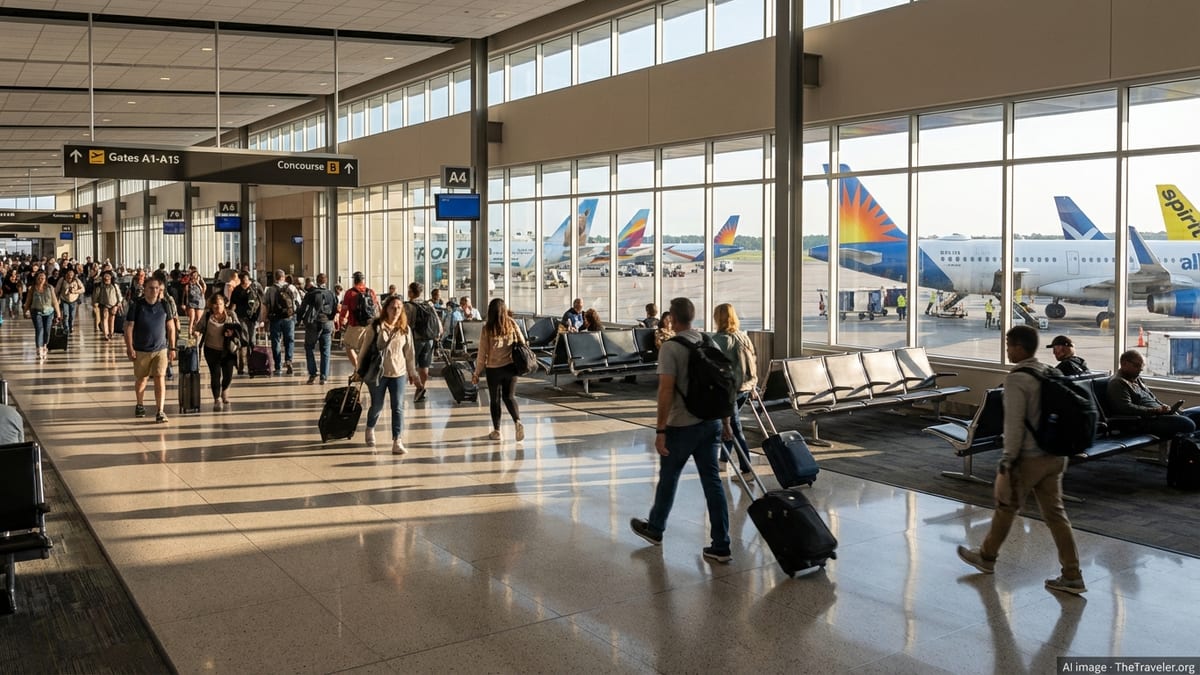
Ultra-low-cost carriers Frontier, Allegiant, Breeze, and Spirit are reshaping the economics of flying in the United States in 2026, unleashing a surge of rock-bottom fares, new routes from overlooked airports, and intense pricing pressure that is forcing larger rivals to rethink how they compete for budget-conscious travelers.
The Ultra-Low-Cost Playbook Takes Center Stage
The U.S. airline market is entering a new phase in 2026 as ultra-low-cost carriers (ULCCs) push deeper into territory once dominated by the big legacy brands. Frontier, Allegiant, Breeze, and Spirit are at the center of this shift, using stripped-down base fares, dense seating configurations, and heavy reliance on ancillary fees to undercut traditional competitors on price. While the model itself is not new, the scale and coordination of these moves across the country are starting to reshape route maps and traveler behavior.
What distinguishes this wave of ULCC growth is how aggressively these airlines are targeting underserved secondary airports and city pairs that have few or no nonstop options. By focusing on leisure travelers who are flexible on dates and airports, they are able to fill planes with very low advertised fares, then layer on paid extras such as seat selection, bags, and early boarding. For many flyers, the all-in price still comes in below legacy competitors, and that is where these carriers are putting the most pressure on the wider market.
The strategy is particularly potent at a time when federal data show that average domestic fares remain high by historical standards, even after a modest pullback in 2025. With U.S. passenger volumes near record levels in early 2026 and consumers still highly price-sensitive, ULCCs see an opening to win first-time customers and lure back travelers who cut back during previous years of disruptions.
Breeze’s 2026 Blitz on Underserved Cities and Sun Destinations
No carrier better illustrates the new momentum than Breeze Airways. The Utah-based airline, which only began flying in 2021, is now in the midst of one of the most aggressive expansions in the country. By spring 2026 Breeze expects to operate more than 300 routes across over 70 airports, with a network focused on connecting smaller and mid-sized cities directly to leisure destinations rather than routing passengers through traditional hubs.
Much of the 2026 growth targets warm-weather getaways and secondary markets that have long complained about limited nonstop options. New flights are being rolled out linking cities such as Provo, Twin Falls, Lincoln, Manchester, Myrtle Beach, and Brownsville directly to major leisure draws including Orlando, Las Vegas, Southern California, and Florida’s Gulf Coast, often with introductory one-way fares advertised from under 80 dollars. The airline leans heavily on its Airbus A220-300 jets, which offer lower operating costs and allow it to profitably serve city pairs that would be marginal for larger competitors.
Breeze is also pushing beyond U.S. borders. In early 2026 it begins its first international flights, adding Cancun, Montego Bay, Punta Cana, and Nassau to a growing Caribbean and Mexico portfolio. Seasonal service from cities like Norfolk, Charleston, New Orleans, Raleigh-Durham, and Tampa gives U.S. travelers new low-cost options to popular beach destinations, frequently in markets where only one or two carriers previously operated. By positioning itself as a “Seriously Nice” hybrid between bare-bones and full-service, with optional extra-legroom seating and onboard Wi-Fi, Breeze aims to peel away both budget travelers and some passengers who might otherwise choose a legacy carrier.
Frontier’s Mass-Market Price War and Route Shuffle
Frontier Airlines, long a fixture of the ultra-low-cost space, is using 2026 to double down on its core promise of volume-driven, no-frills flying at the lowest possible fare. Building off a series of 2025 network additions, Frontier continues to flex a highly dynamic route map, frequently entering and exiting markets based on performance and seasonal demand. This constant shuffle allows the airline to chase leisure peaks, filling planes with bargain hunters when and where it sees the strongest response to sale fares.
Frontier’s strategy hinges on giant fare promotions that grab headlines and force competing airlines to respond. Limited-time offers featuring one-way tickets advertised in the tens of dollars, particularly on off-peak days and shoulder seasons, have become a hallmark. While the final ticket price climbs once bags, seat assignments, and other extras are added, the headline fares anchor consumer expectations and put downward pressure on what larger carriers can charge in overlapping markets.
The airline is also leaning into point-to-point connections that bypass congested hubs in favor of secondary airports with lower costs and fewer delays. By serving a mix of large metros and smaller cities with a uniform Airbus narrowbody fleet, Frontier keeps unit costs low and can quickly adjust capacity. This flexibility allows it to launch experimental routes against rivals and pull back just as swiftly if performance lags, a nimbleness that traditional hub-and-spoke airlines struggle to match.
Allegiant Deepens Its Small-City Grip
Allegiant Air remains the archetype of the small-city leisure specialist, and 2026 brings more of the targeted additions that have defined its growth. The carrier continues to court communities that have limited or no nonstop service to vacation destinations, offering a handful of weekly flights with fares that often start under 100 dollars each way. In return, airports and local tourism boards frequently partner with Allegiant through marketing support and incentives, giving the airline a cost advantage that competitors find hard to replicate.
Recent announcements underscore how this model is spreading. In Wisconsin, for example, La Crosse Regional Airport is set to gain new Allegiant service to Phoenix-Mesa and Orlando Sanford in 2026, with one-way introductory fares starting around 69 dollars. For residents who previously faced long drives to larger airports or costly connections, such routes can immediately change the economics of a family vacation. Allegiant’s pattern of flying a few times per week, rather than daily, allows it to balance demand and keep aircraft utilization high, a key to sustaining low fares.
Allegiant’s focus on secondary airports also sends ripples into nearby larger markets. When a small city gains new low-cost nonstop options, some travelers who once drove to regional hubs like Minneapolis, Phoenix, or Chicago choose instead to fly from their local field. That shift can erode passenger volumes at the bigger airports and increase pressure on the mainstream carriers that rely on those hubs for traffic density.
Spirit’s Turbulent Turnaround and the Fare Shock Effect
Spirit Airlines enters 2026 from a far more precarious position than its ULCC peers, yet its presence in the market remains a powerful force on pricing. After enduring repeated financial strains and entering Chapter 11 bankruptcy protection again in 2025, Spirit has been restructuring its fleet and balance sheet while attempting to reassure travelers that flights will continue as scheduled. The carrier recently moved to sell a batch of Airbus jets to raise cash, while recalling several hundred furloughed flight attendants as it stabilizes operations heading into the busy 2026 travel season.
Despite its challenges, Spirit still holds significant share in key leisure and visiting-friends-and-relatives corridors, particularly along the East Coast, in Florida, and on routes to Latin America and the Caribbean. In many of these markets, Spirit’s bare-bones Yellow fare often sets the floor for what competitors can realistically charge without losing price-sensitive travelers. Even when larger airlines offer more amenities, they frequently have to reduce their entry-level fares or introduce their own stripped-down basic products when Spirit is in the mix.
The carrier’s future network will likely be leaner but more focused on routes where it can consistently fill aircraft. As Spirit prunes underperforming flights and reallocates capacity to stronger markets, it will continue to apply downward pressure on fares wherever it flies. For consumers, the headline stories about bankruptcy and asset sales can obscure a more immediate reality: as long as Spirit remains active in a given city pair, competitors ignore its pricing at their peril.
How These Airlines Are Undercutting the Competition
Collectively, Frontier, Allegiant, Breeze, and Spirit are using a blend of tactics that directly challenge larger U.S. airlines on cost and flexibility. One pillar is an unbundled fare structure that turns almost every add-on into an ancillary revenue stream. By charging separately for checked bags, carry-ons, seat selection, and sometimes even printing a boarding pass at the airport, ULCCs can advertise exceptionally low base fares while still generating the revenue they need to operate profitably.
Another advantage lies in fleet and labor economics. These carriers primarily operate single-fleet or simplified fleet models, such as Airbus A320-family aircraft or the A220-300, with relatively high seating density. That keeps maintenance, training, and scheduling costs down. Many routes are flown just two or three times per week, which matches leisure demand peaks while avoiding the expensive daily frequencies that business travelers expect from legacy airlines.
Route selection itself is a powerful competitive weapon. Rather than fighting for share on the busiest trunk routes between major hubs, ULCCs increasingly string together mid-sized and regional cities to leisure destinations that are lightly served or not served at all. The result is a patchwork of point-to-point connections that are difficult for larger carriers to match without disrupting their hub structures. When ULCCs do enter big-city routes, they tend to focus on off-peak times and secondary airports, such as Phoenix-Mesa or Orlando Sanford, where fees and congestion are lower.
Where Travelers Are Finding the Cheapest Fares in 2026
For U.S. travelers in 2026, the cheapest fares are frequently emerging in a few specific patterns. First, new-route launches are a prime opportunity, as ULCCs often roll out headline-grabbing introductory prices for the first weeks or months of service. Breeze’s expansions from cities like Brownsville, Twin Falls, or Manchester to sunny destinations have come with limited-time offers at 39 to 79 dollars one way. Allegiant’s new La Crosse flights to Phoenix-Mesa and Orlando Sanford similarly debuted with sub-100-dollar starting fares.
Second, departures from secondary airports can yield significant savings for flyers who are willing to drive a bit farther or shift away from large hubs. Cities that recently gained low-cost service, such as regional airports in the Midwest, Mountain West, and Southeast, often see an immediate gap between ULCC pricing and fares at the nearest big-city alternative. Passengers who previously funneled through larger hubs are beginning to stay local when they can book nonstop flights at sharply lower prices.
Third, flexible travel days continue to be critical. Because ULCCs tend to cluster flights on certain days of the week and adjust schedules seasonally, the best fares often appear on midweek or shoulder-season departures. Travelers who can avoid peak holiday weekends and align their plans with the two or three weekly frequencies that Allegiant or Breeze offer stand to see the most dramatic savings, especially when booking during fare sales that are heavily promoted across social and traditional media.
The Tradeoffs Behind Rock-Bottom Tickets
Even as these carriers help pull down average fares, consumer advocates and regulators are reminding travelers to look beyond the initial ticket price. Reports from financial and travel advisory firms in late 2025 and early 2026 have highlighted how unbundled pricing can mask the true cost of a trip once bags, seat selection, itinerary changes, and onboard purchases are accounted for. Budget airlines are not alone in relying on fees, but the ULCC model makes them central to the business.
Passenger experience can also vary widely. Dense seating and limited legroom, fewer daily frequencies, and stricter rules around ticket changes can all pose challenges for travelers used to the flexibility and amenities of legacy carriers. Weather disruptions or operational hiccups may have a bigger impact when there are only two flights per week on a given route, as is common in Allegiant’s and Breeze’s schedules. Spirit’s recent financial turmoil has added another layer of uncertainty for some customers, even as the airline insists that day-to-day operations remain stable.
For many flyers, though, the tradeoff is acceptable. The ability to reach a beach destination, theme park, or family gathering at a fraction of previous costs is a powerful draw, particularly for larger households. As long as travelers understand the fee structures and build some flexibility into their plans, the expanding networks of Frontier, Allegiant, Breeze, and Spirit are opening the door to more frequent and affordable trips across the United States and beyond.