

More news on this day
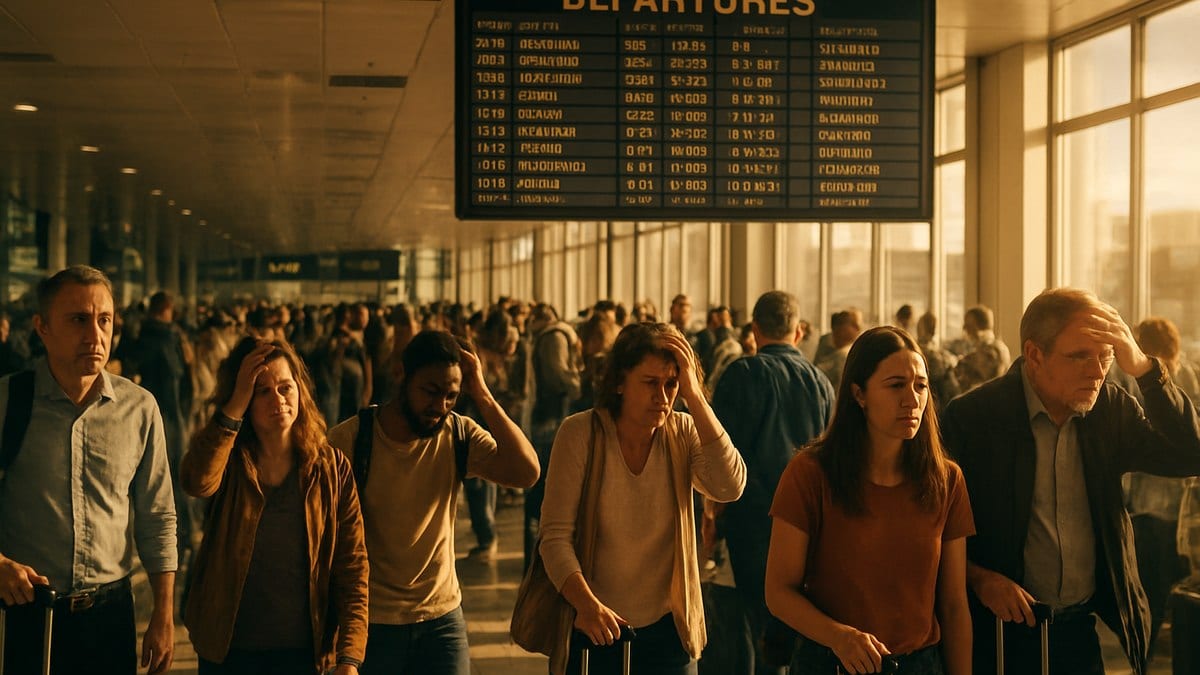
Hundreds of travelers at Fort Lauderdale-Hollywood International Airport faced hours of disruption on April 11 as a wave of operational issues contributed to 149 delayed flights and more than a dozen cancellations, tangling connections across the United States and beyond.
Get the latest news straight to your inbox!
Wide-Ranging Disruptions Across Fort Lauderdale Network
Publicly available data from aviation analytics platforms and industry reports indicate that Fort Lauderdale-Hollywood International Airport saw one of the most affected schedules in the country on April 11, with delays and cancellations cutting across multiple carriers. The disruption formed part of a broader pattern of U.S. flight reliability challenges, but Fort Lauderdale stood out for the sheer number of impacted departures and arrivals connected to its busy leisure network.
The disruptions were particularly concentrated among airlines that rely heavily on Fort Lauderdale as a gateway for domestic sun destinations and Latin American routes. Reports indicate that services to cities such as Newark, Dallas, San Antonio and Tampa were among those seeing extended departure holds or late inbound aircraft, leaving passengers queueing at customer service desks and crowding gate areas as they awaited updated information.
By late evening, industry tallies showed a total of 149 delayed flights linked to Fort Lauderdale operations and 13 outright cancellations, affecting both short-haul domestic services and medium-haul international sectors. While the majority of flights ultimately operated, the rolling delays created a wave of missed connections and forced rebookings that rippled into Sunday’s early schedule.
Flight-tracking dashboards also showed knock-on schedule compression, with some aircraft turning around more quickly than usual in an effort to recover lost time. That in turn left crews and ground teams working against tighter margins, heightening the risk of further slippage whenever boarding, baggage handling or pushback took longer than planned.
Operational Strains and Weather Among Contributing Factors
National delay statistics for April 11 point to a challenging day across the U.S. system, with well over a thousand flights reported late or canceled nationwide. Within that broader picture, Fort Lauderdale’s performance reflected a mix of localized weather effects, aircraft rotation issues and infrastructure pressures that have been building through the busy spring travel period.
Earlier heavy showers and unsettled conditions in parts of Florida slowed traffic flows through segments of the regional airspace, according to publicly accessible aviation weather products and delay maps. Even when no formal ground stop was in place for Fort Lauderdale, transient restrictions on departure rates and arrival spacing contributed to rolling gate holds and longer taxi-out times for some departures.
Separate reports highlight the role of late inbound aircraft in prolonging the disruption. When aircraft and crews arrive behind schedule from other congested airports, subsequent departures from Fort Lauderdale can be forced into a cascading delay pattern. On a day when multiple U.S. hubs were also battling schedule challenges, that dynamic was clearly on display across several Fort Lauderdale-focused carriers.
Industry analyses released in recent months have also underscored the lingering impact of staffing constraints in areas such as air traffic control, maintenance support and ground handling. While there is no single identified trigger for Fort Lauderdale’s April 11 disruptions, the day’s performance aligns with a wider trend in which modest weather or equipment issues can quickly escalate into large-scale schedule instability when underlying capacity is tight.
Impact on Travelers and Popular Leisure Routes
The timing of the disruption was particularly challenging for leisure travelers, many of whom were heading into or out of South Florida at the end of school breaks and early spring getaway periods. Fort Lauderdale’s role as a key departure point for Caribbean, Central American and domestic beach destinations meant that delays often involved groups traveling with families, cruise passengers returning to home cities and budget-conscious flyers relying on tight connections.
Published coverage of airport conditions on April 11 described crowded terminal concourses, long lines at airline service counters and passengers stretched across the floor near charging stations as they tried to keep devices powered while waiting for revised itineraries. For some, missed onward flights meant unplanned overnight stays in the Fort Lauderdale area or rebookings through alternative hubs such as Atlanta, Charlotte and New York.
Travel advisories assembled by consumer and industry outlets emphasized the importance of checking flight status repeatedly throughout the day, even after an initial delay notice. With departure times shifting in short increments as operations attempted to stabilize, passengers who stayed close to gate announcements and airline apps were better positioned to react quickly to sudden boarding calls or last-minute gate changes.
For domestic connections, disruptions on routes linking Fort Lauderdale to Newark, Dallas and other major nodes proved especially consequential. These flights often feed larger national networks, so significant delays there can strand travelers far from their eventual destinations, particularly when later departures are already heavily booked.
How Fort Lauderdale Compares in a National Context
Recent federal data and transportation oversight reports show that Fort Lauderdale-Hollywood International Airport routinely handles several million passengers each month, placing it among the busiest airports in Florida and the wider U.S. leisure market. The airport’s growth over the past decade has been fueled by low-cost carriers expanding point-to-point routes and by strong demand from both domestic and international tourists.
Performance metrics compiled in government and industry scorecards indicate that Fort Lauderdale has historically recorded a meaningful share of late arrivals relative to total traffic, with average delay durations that can stretch close to an hour when flights do run behind schedule. Analysts note that while this does not place the airport at the very bottom of national rankings, it reinforces the need for travelers to build buffer time into connections, particularly during peak holiday and weekend travel periods.
On April 11, national figures showed disruptions distributed across multiple hubs, not just Fort Lauderdale. Yet the combination of 149 delayed flights and 13 cancellations at a single airport underscored how concentrated operational challenges can quickly dominate the experience of travelers in one region, even when the broader system remains technically functional.
Aviation observers point out that days with several thousand delayed flights nationwide are no longer rare, particularly when weather fronts intersect with constrained staffing. In that context, Fort Lauderdale’s April 11 performance is being viewed as another data point in a longer-running conversation about resilience in the U.S. air travel network and the ability of carriers and airports to absorb routine shocks without cascading disruptions.
Practical Guidance for Upcoming Fort Lauderdale Travelers
In the wake of the April 11 disruptions, travel experts and consumer advocates are reiterating practical steps that can help mitigate the impact of future irregular operations at Fort Lauderdale and other busy hubs. One consistent recommendation is for passengers to rely on airline mobile apps and text alerts as the primary source of real-time information, rather than waiting for overhead announcements in crowded terminals.
Publicly available guidance also encourages travelers with tight connections to consider building in additional time when routing through Fort Lauderdale, particularly on peak days such as Fridays, Sundays and holiday periods. Where possible, choosing earlier departures can provide a wider cushion for same-day rebooking if a flight is significantly delayed or canceled.
For those who do encounter lengthy delays or cancellations, consumer-rights resources emphasize that passengers may be eligible for refunds or alternative arrangements, depending on the airline’s policies and the reason for the disruption. Keeping documentation of delay durations, cancellation notices and any out-of-pocket expenses can be helpful when pursuing reimbursement or goodwill gestures from carriers after travel plans are disrupted.
With airlines continuing to adjust schedules and staffing ahead of the busy summer season, observers note that Fort Lauderdale’s experience on April 11 serves as a reminder that even routine travel days can quickly become complex. For now, travelers passing through the South Florida gateway are being advised to stay informed, stay flexible and treat buffer time as an essential part of any itinerary.