

More news on this day
Hundreds of flights across Asia and key Gulf hubs are being disrupted in April 2026 as ongoing Middle East tensions, constrained airspace and airline schedule cuts collide with already stretched aviation networks.
Get the latest news straight to your inbox!
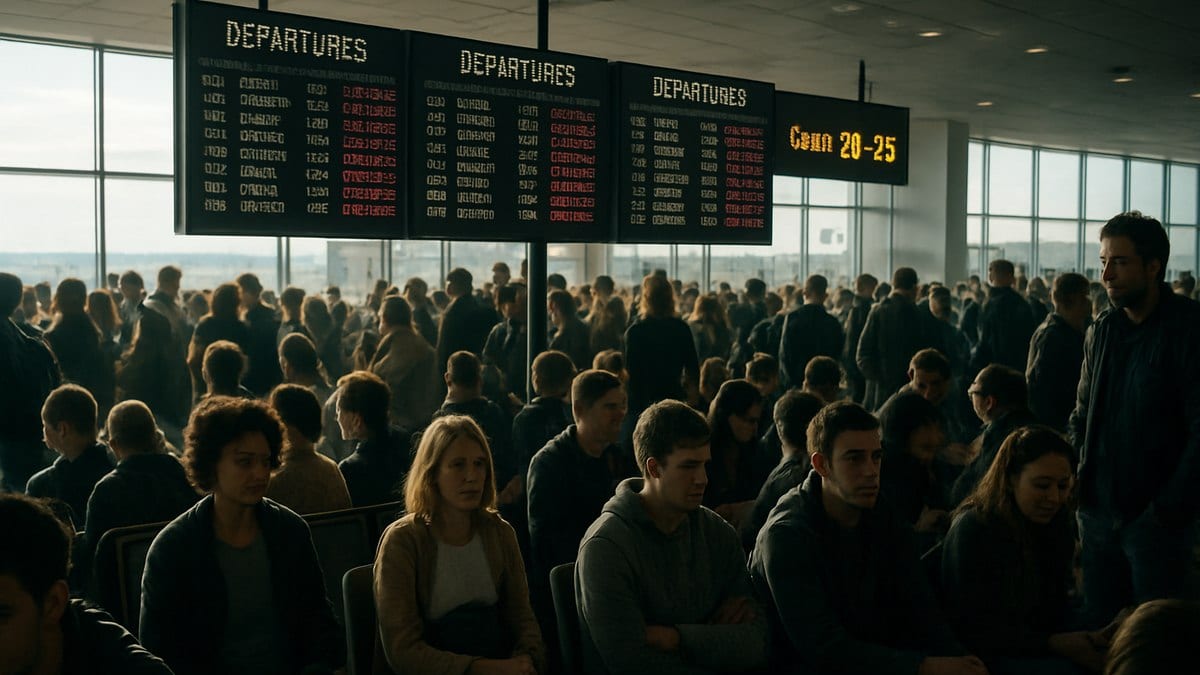
Conflict-Linked Airspace Restrictions Ripple Across Key Corridors
April schedules across the Gulf and wider Asia are being reshaped by airspace restrictions tied to the conflict involving Iran and several Gulf states. Publicly available aviation advisories show that airspace over parts of Iran, Iraq, Qatar, Bahrain and the United Arab Emirates has been periodically restricted since late February 2026, forcing carriers to suspend or reroute services on some of the world’s busiest connecting corridors.
Operational bulletins circulated to corporate travel clients in March reported that segments of Middle East airspace remained restricted into early April, with implications for flights that would normally route through Dubai, Doha and neighboring hubs. In several cases, airlines have opted to cancel or extend suspensions of services rather than operate longer, more complex routings around the affected zones.
These constraints come on top of existing regional security concerns that had already led some carriers to avoid overflying parts of the Middle East. The cumulative effect is fewer available flight options, longer detours for those that do operate, and increased pressure on alternative hubs in South and Southeast Asia.
Data compiled by aviation analysts indicate that delays and cancellations have clustered around late March and early April, coinciding with renewed missile and drone activity in the Gulf and cautious responses from international airlines. Even flights that technically remain operational have faced schedule degradation as aircraft and crew are repositioned to accommodate shifting routings.
Gulf Giants Extend Suspensions, Straining Global Connections
Flag carriers that treat the Gulf as a global crossroads are extending temporary suspensions well into the spring, amplifying disruption for travelers moving between Asia, Europe and Africa. Singapore Airlines has prolonged the suspension of its Singapore–Dubai services through the end of May, after an earlier decision to cancel those flights through April. The carrier has cited uncertainty around the regional security environment and airspace availability.
European operators are taking a similarly cautious approach. Coverage in Dutch media indicates that KLM has maintained a halt on flights to Dubai and to Saudi cities Riyadh and Dammam, currently into mid-May, while also avoiding overflight of Iranian, Iraqi and Israeli airspace. That stance has removed a key option for passengers using Amsterdam as a connection point to and from Gulf destinations.
In Central Asia, Kazakhstan’s Air Astana has continued a suspension of flights to Dubai through April. The airline announced that affected passengers could obtain refunds or rebook on other routes across its network, but the continued pause underlines how even secondary carriers are reshaping their schedules around the Gulf.
Philippine Airlines has also extended the suspension of its Manila–Dubai and Manila–Doha routes until at least the end of May, citing risks to airspace safety and critical infrastructure across the Middle East. The loss of these direct links has immediate consequences for overseas workers and leisure travelers in the Philippines who rely heavily on Gulf connections for onward journeys to Europe and beyond.
Asian Hubs Log Hundreds of Cancellations and Thousands of Delays
The ripple effects are clearly visible at Asia’s major hubs, where published aviation data for late March and early April point to a spike in flight disruptions. Industry analyses describe a “network-wide” aviation crunch in which more than 3,000 flights across Asia have experienced cancellation or significant delay in recent days, with Chinese, Japanese, Thai and Gulf airports among the most heavily affected.
One recent breakdown of operations across Beijing, Shanghai, Tokyo, Bangkok, Jakarta, Dubai and Doha highlighted nearly 400 cancellations and over 5,000 delays in a single intensive disruption period at the end of March. China Southern Airlines, for example, reportedly registered dozens of cancellations but more than a thousand delays across its Asian operations, illustrating how knock-on schedule slippages can far outnumber outright cancellations.
Further reporting from data-focused outlets this month places the latest disruption tally for Asia at more than 3,000 affected flights, including several hundred cancellations. The pressures are not confined to any single country: Tokyo and other Japanese airports have seen congestion spill over into Southeast Asia, while Singapore Changi has grappled with waves of late-arriving aircraft from China, India and Japan that then depart behind schedule.
Abu Dhabi and other Gulf gateways, already grappling with conflict-related constraints, feature in the same datasets as both origin and destination points for delayed services. While some Gulf-based carriers have maintained relatively low cancellation counts on certain days, the proportion of delayed flights has surged as aircraft are rerouted and rotations compressed.
Travelers Face Longer Journeys, Scarcer Seats and Higher Fares
For passengers, the disruption is translating into missed connections, rebooked itineraries and rising ticket prices on remaining routes. Travel industry analysis suggests that as carriers trim frequencies or suspend routes serving the Gulf, capacity across the broader Asia–Europe and Asia–Africa markets has tightened. That has left fewer seats available on non-Gulf routings via hubs such as Istanbul, Singapore, Kuala Lumpur and key European cities.
Financial commentators tracking airline pricing models report that fares on some alternative routings between Europe and popular Asian destinations are already trending higher for April and May departures. One recent assessment estimated that reduced capacity linked to the March and April disruption wave could lift prices on certain long-haul itineraries by low double-digit percentages, particularly during school holiday periods in Europe.
Passengers connecting through the Gulf have reported on social platforms that they are being rebooked via secondary hubs in Asia or Europe, often adding several hours to journey times. In some cases, itineraries initially built around a single stop in Dubai or Doha have been replaced with two-stop routings as airlines work around restricted airspace and limited slot availability.
Industry observers note that aircraft and crew shortages, combined with maintenance bottlenecks dating back to the pandemic, are limiting airlines’ ability to add backup capacity quickly. As a result, irregular operations in one part of the network can cascade rapidly, leaving travelers with few same-day alternatives when a flight is canceled or heavily delayed.
Outlook: Gradual Adjustments but No Quick Fix
Looking ahead through the rest of April, travel analysts expect a gradual, uneven normalization rather than a sudden return to pre-disruption patterns. Some Gulf and Asian airports have already shown early signs of stabilizing operations on certain days, but schedules remain fragile, with regional ceasefire developments and airspace notices still subject to change at short notice.
Airlines are publishing rolling updates that extend suspensions in small increments, typically by several weeks at a time. This approach reflects both caution about the security environment and uncertainty over how quickly regulators will ease current overflight constraints. As carriers test new routings and redeploy aircraft to alternative markets, travelers can expect schedule changes to continue throughout April and possibly into early summer.
Industry bodies and consumer advocates are reminding passengers to monitor their bookings closely and to check flight status repeatedly in the 24 hours before departure, given the high likelihood of last-minute changes. They also encourage travelers to familiarize themselves with applicable passenger rights regimes, including refund and rebooking options, which vary by airline and jurisdiction.
For now, the picture across Asia and the Gulf is one of partial recovery punctuated by persistent disruption. While the most acute phase of airspace closures may ease if current diplomatic efforts hold, the cumulative impact on airline networks, airport congestion and traveler confidence is likely to be felt well beyond April 2026.