

More news on this day
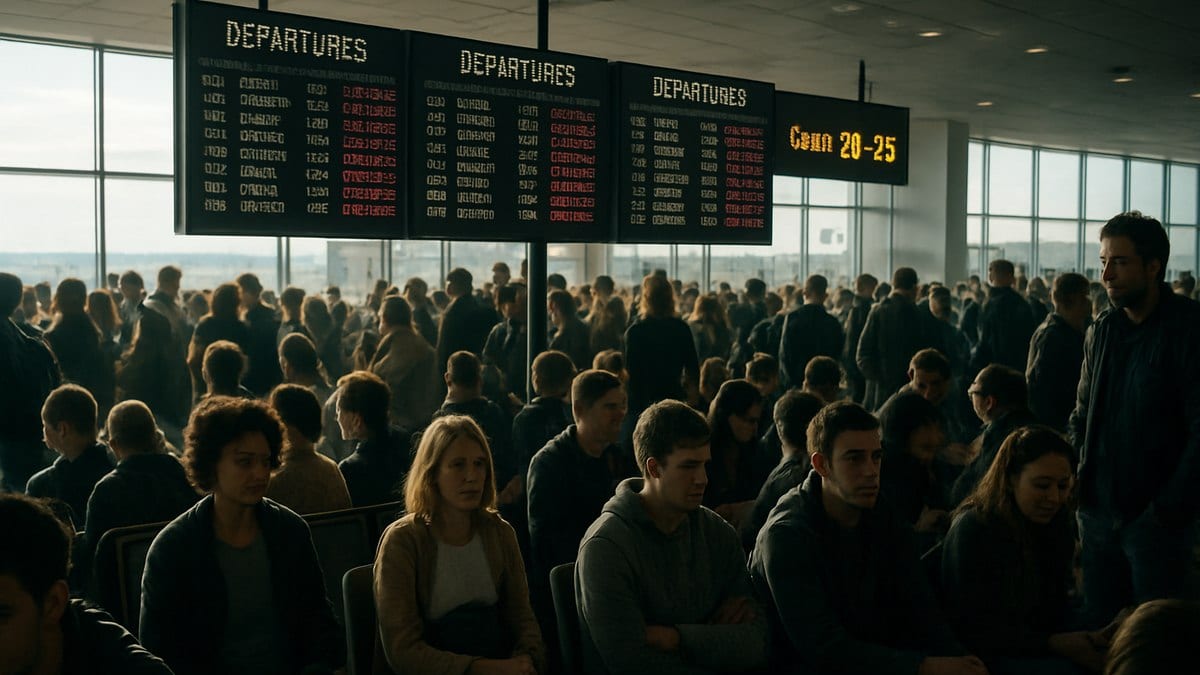
Hundreds of flights across Asia and major Gulf hubs are being cancelled or severely delayed in April 2026, as the fallout from the Iran war, regional airspace closures and surging jet fuel prices continues to destabilise already fragile airline schedules.
Get the latest news straight to your inbox!
Conflict Fallout Keeps Gulf Gateways Under Strain
Air connectivity through the Gulf has been under sustained pressure since late February 2026, when missile and drone strikes linked to the Iran conflict triggered the temporary closure of key airspaces and forced mass cancellations at regional hubs. Publicly available data on flight operations indicates that Dubai, Abu Dhabi and Doha have yet to return to normal levels, with some terminals still handling only a fraction of their usual international traffic.
Reports on the economic impact of the conflict highlight that widespread airspace closures across the United Arab Emirates, Qatar, Bahrain and neighbouring states led to thousands of daily cancellations in March, effectively paralysing the Gulf’s role as a bridge between Europe and Asia. Although limited commercial services have since resumed, schedules through early April remain heavily reduced, and many airlines are operating one-off repatriation and cargo flights instead of regular passenger rotations.
According to recent operational updates compiled by aviation news outlets and route-tracking services, Qatar Airways continues to suspend numerous destinations through the second half of April, including key regional points such as Dubai, Sharjah and Abu Dhabi, as well as a long list of intercontinental routes. Capacity constraints at Doha’s Hamad International Airport are forcing passengers to connect via alternative hubs, while airlines from Europe and Asia are re-routing long haul services to avoid congested or closed Gulf corridors.
Travel industry bulletins note that while security conditions have stabilised somewhat compared with the initial shock in late February, the operational recovery at Gulf hubs has been slow. Aircraft and crew are still out of position, slot patterns remain disrupted, and airlines are cautious about rebuilding frequencies on routes that may again be affected by renewed tensions or changes in overflight permissions.
Asia’s Hubs Grapple With Knock-On Cancellations
Across Asia, major airports from Tokyo and Seoul to Singapore and Kuala Lumpur are dealing with persistent knock-on disruptions as the Gulf crisis reverberates through global networks. Data compiled by independent flight monitoring platforms for early April shows hundreds of cancellations and several thousand delays in a single day across Asian airports, with congestion, operational strain and weather all identified as contributing factors.
On April 7, regional travel media reported that more than 260 flights were cancelled and nearly 4,000 delayed at airports in China, Japan, India, Singapore, Saudi Arabia and other markets, affecting carriers such as Air China, IndiGo, Batik Air and Flydubai. Analysts cited systemic issues rather than isolated events, including tight aircraft utilisation, crew scheduling disruptions and residual rerouting around closed Middle Eastern airspace that continues to complicate Asia–Europe and Asia–Africa operations.
Seoul Incheon, one of North Asia’s primary long haul gateways, has also been highlighted in recent coverage for ongoing cancellations affecting itineraries between the United States and Asia. Route analysis from aviation intelligence services indicates that capacity on some transpacific and transcontinental links remains below normal, with cascading schedule changes reducing onward connectivity to secondary cities.
In Southeast Asia, Singapore’s Changi Airport has largely maintained infrastructure reliability but is still feeling the impact of shifting traffic flows and Gulf-related route suspensions. Industry-focused publications describe a pattern in which flights are delayed rather than cancelled outright, masking the extent of disruption for travellers who face missed connections and extended journey times even when services technically operate.
Fuel Price Shock Forces Airlines To Cut Routes
Alongside security considerations and airspace restrictions, a sharp spike in global jet fuel prices linked to the Strait of Hormuz crisis is exacerbating the disruption. Economic assessments of the conflict note that oil output from several Gulf producers has fallen significantly since early March, pushing benchmark crude prices higher and driving up operating costs for airlines on energy-intensive long haul sectors.
In response, a growing number of Asian and Middle Eastern carriers have announced schedule cuts, temporary route suspensions and new fuel surcharges for April 2026 and beyond. Reports from regional trade publications in March detailed how airlines across the Asia-Pacific moved into a defensive posture, cancelling services, imposing phased surcharges on long haul tickets and trimming frequencies to manage cash burn against volatile fuel markets.
The pressure has been particularly visible at smaller or financially constrained operators. For example, Pakistan International Airlines recently confirmed via domestic business media that it will suspend flights on several Gulf and Asia routes in mid-April, including services to Beijing and Kuala Lumpur, as it seeks to cope with a jet fuel cost increase reportedly in excess of 150 percent. Similar announcements from other carriers suggest that point-to-point links between secondary cities in South Asia, Southeast Asia and the Gulf could remain thinly served through the remainder of the month.
Industry commentators caution that higher fuel costs may also slow the restoration of capacity at larger network airlines. Even where security conditions permit a fuller schedule, operators must weigh the economics of reinstating marginal routes, which could delay the return of former frequencies on some Asia–Gulf and Asia–Europe corridors.
Extended Suspensions On Key Asia–Gulf Links
Several prominent airlines have extended or expanded suspensions on important Asia–Gulf routes into late April, deepening the disruption for business and leisure travellers who rely on these corridors. Singapore Airlines, for instance, has prolonged the cancellation of its Singapore–Dubai flights into May, following earlier extensions through March and April. Travel advisories and regional press coverage indicate that low cost subsidiary Scoot has also suspended certain services into Saudi Arabia, including Jeddah, during this period.
Local travel forums and airline notices suggest that carriers in the Philippines, Malaysia and India are operating reduced schedules or cancelling selected departures to Dubai and Doha until at least April 30. Some passengers booked on Manila connections through Gulf hubs report being rebooked via alternative routings through Europe or rerouted onto limited direct services that bypass the Middle East altogether.
In the Gulf itself, operational updates compiled by aviation scheduling specialists show that Qatar Airways plans to keep dozens of destinations offline for parts of April, including several European capitals and major regional cities. While frequencies on certain Asia routes such as Singapore and Hong Kong are set to increase modestly in the second half of the month, overall connectivity remains well below pre-crisis norms.
The picture is further complicated by legacy suspensions that predate April but remain in effect. A number of European and Asian airlines, including some of the largest transcontinental brands, significantly curtailed or halted Dubai operations in March and have not yet confirmed full restoration dates, limiting connection options for travellers who would traditionally route through the city.
Travellers Face Longer Journeys And Limited Options
For passengers, the net result in April 2026 is a patchwork of reduced frequencies, rolling cancellations and schedule changes that can be difficult to navigate, particularly for those planning multi-leg itineraries between Europe, Asia and Australasia. Publicly available flight data shows that while the absolute number of daily cancellations has eased from the peaks seen in early March, disruption remains widespread enough to affect hundreds of services across Asia and the Gulf each week.
Industry analyses point to longer routings and fewer non-stop options as airlines avoid sensitive airspace and work around Gulf hub constraints. Some Europe–Asia flights are operating on more northerly or southerly tracks, adding flight time and increasing fuel burn, while others have been retimed or re-routed via alternative hubs in Europe, Central Asia or Southeast Asia. These shifts can create new pressure points at secondary airports that were not designed to handle large volumes of transit traffic.
Travel advisories issued by airlines and tourism organisations consistently emphasise the importance of monitoring bookings closely during April, as timetables are subject to late changes. Passengers are being encouraged, where possible, to allow longer connection windows, remain flexible with dates and be prepared for last-minute rebooking if routes through the Gulf or across affected Asian hubs are further adjusted.
Although some analysts anticipate gradual improvement later in the second quarter of 2026, the combination of unresolved geopolitical tensions, elevated fuel prices and complex aircraft deployment challenges suggests that Asia–Gulf air travel will continue to experience periodic disruption. For now, hundreds of flights remain at risk of cancellation or significant delay on any given day, underscoring the fragility of international connectivity across this pivotal aviation corridor.