

More news on this day
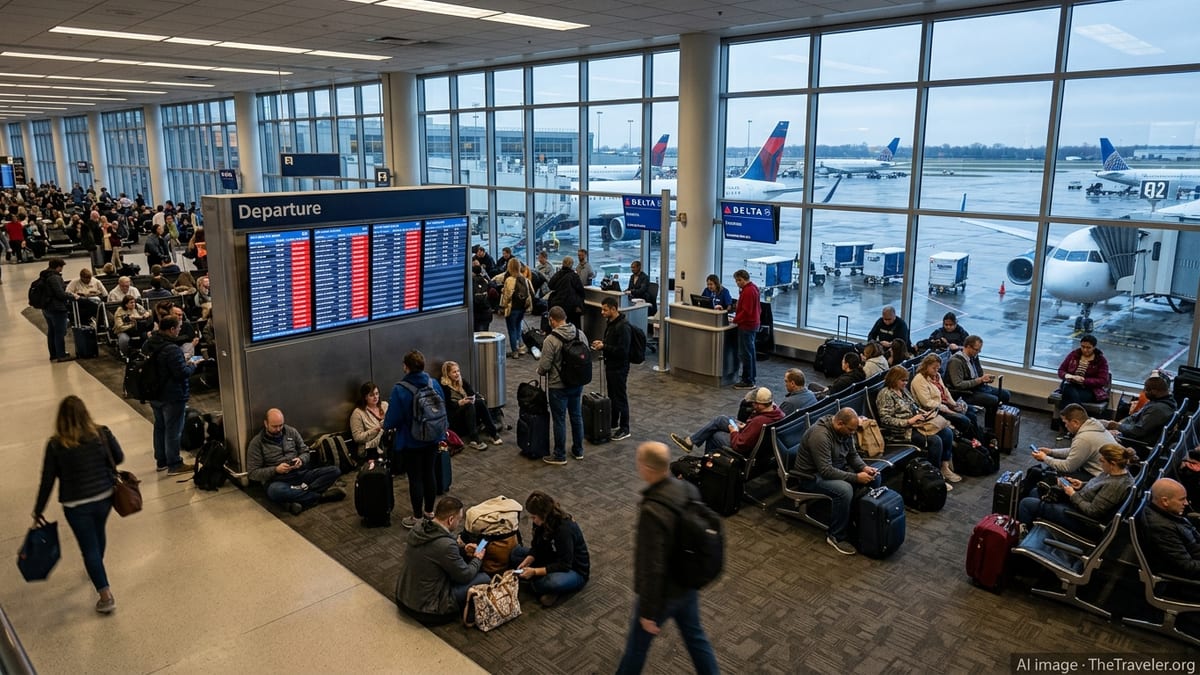
Chicago O’Hare International Airport experienced another challenging travel day as publicly available flight-tracking data showed 539 delays and 13 cancellations, disrupting passengers on Republic Airways, Delta Air Lines, SkyWest, United Airlines and several other carriers moving through one of the nation’s busiest hubs.
Get the latest news straight to your inbox!
Heavy Disruptions at a Key Midwestern Hub
Real-time tracking platforms indicated that by late afternoon, hundreds of departures and arrivals at O’Hare had been pushed back, with delays rippling across the national network. Although the number of outright cancellations remained comparatively limited, the scale of schedule changes created long queues at gates, crowded concourses and missed connections for travelers relying on the airport’s extensive domestic and regional links.
The disruptions touched a mix of mainline and regional operations, with Republic Airways and SkyWest operating flights marketed by major network carriers, alongside services directly flown by Delta Air Lines and United Airlines. Because many regional aircraft feed connecting banks for larger jets, delays on shorter routes quickly cascaded into later departures on transcontinental and international flights.
O’Hare’s status as both a major connection point and an origin-and-destination market magnified the effect. Travelers beginning or ending their journeys in Chicago faced schedule uncertainty, while those passing through found themselves rebooked on later departures, sometimes routed through alternate hubs to avoid mounting congestion.
Weather, Congestion and Staffing Combine to Slow Operations
Recent days at O’Hare have been shaped by a combination of unsettled spring weather in the Midwest and broader operational constraints. Public forecasts and aviation advisories have highlighted episodes of thunderstorms, strong winds and lingering wintry conditions across the region during March, patterns that can reduce runway capacity and force airlines to trim departure and arrival rates for safety and spacing.
When air traffic controllers slow the flow of aircraft into a constrained airspace, ground delay programs are commonly implemented, assigning later departure times to flights bound for the affected airport. Passenger accounts and operational discussions online in recent weeks have described such programs at O’Hare, with aircraft held at their origin airports until slots become available, leading to late arrivals and extended waits on the ground.
At the same time, airlines and airports are managing staffing levels that can be stretched during peak travel periods such as spring break. Where crews or ground teams are not optimally positioned, even routine weather disruptions can generate longer recovery times. Once a wave of delays begins at a complex hub like O’Hare, turning aircraft around, repositioning flight crews and rebalancing the schedule becomes increasingly difficult as the day progresses.
Impact on Passengers Across Multiple Carriers
For travelers on Republic Airways, SkyWest, Delta, United and other carriers, the immediate effect of 539 delays and 13 cancellations was a day marked by uncertainty. Delayed inbound aircraft translated into later boarding times, while rolling schedule updates made it challenging for passengers to predict when they would actually depart. Missed connections became a key concern for those using O’Hare as a transfer point to smaller Midwestern cities or onward to coastal hubs.
Passengers on regional flights were particularly exposed, because those services often operate at lower frequencies than mainline routes. A single cancellation or multi-hour delay on a regional leg can leave limited alternative options on the same day, with travelers sometimes needing to route through different hubs or accept overnight stays when rebooking volumes are high.
The disruptions also affected airline operations on the ground. Crowded gate areas, longer-than-usual lines at customer service counters and pressure on call centers typically accompany mass delays. Publicly available discussions from recent O’Hare events detail travelers waiting for updated departure estimates, as well as airline staff attempting to manage seat availability and reaccommodation for large numbers of affected customers.
Knock-On Effects Across the National Network
The concentration of delays at O’Hare has broader implications for the United States air travel system. As a primary hub for United and an important station for Delta’s regional partners, the airport sits at the center of many east-west and north-south itineraries. When operations there slow, flights connect late into downstream hubs, and aircraft and crews may end the day out of position for the following morning’s departures.
Industry data and historical analyses show that large Midwestern hubs are particularly susceptible to cascading disruption because of their exposure to fast-changing weather and their role in linking smaller regional airports to the larger network. When a high-volume connection point like O’Hare experiences hundreds of delays in a single day, those knock-on effects can be felt hours later in distant cities where passengers and aircraft are still waiting to move.
Observers note that airlines have gradually adjusted schedules and added buffers in recent years to improve reliability, yet episodes of concentrated disruption continue to test the resilience of the system. Events such as the latest O’Hare slowdown underline how weather, staffing and heavy traffic can still combine to challenge even well-planned operations.
What Travelers Can Do on Disruption-Prone Days
While disruptions on the scale seen at O’Hare are largely beyond individual control, passenger behavior can influence how easily one navigates such days. Publicly available guidance from airline and airport resources generally recommends building longer connection times when routing through weather-prone hubs, particularly during busy travel seasons or months known for severe storms.
Monitoring flight status through airline apps and airport displays remains essential, as departure and arrival times can shift repeatedly before boarding. Where travel plans are flexible, some carriers may offer change-fee waivers during periods of expected disruption, allowing passengers to move their trips to earlier or later days with fewer penalties.
For those already en route when delays mount, staying informed about alternative routings and being prepared for possible overnight stays can reduce stress. The latest round of disruptions at O’Hare underscores the importance of contingency planning, especially when traveling through major hubs served by multiple carriers whose operations can be affected simultaneously by the same local conditions.