

More news on this day
Hundreds of passengers across Europe faced unexpected disruption today as a fresh wave of cancellations and delays affected at least 46 flights and pushed back more than 380 services across Germany, the United Kingdom, Turkey, the Netherlands, France and other countries, snarling operations for major carriers including British Airways, KLM, easyJet and Virgin Atlantic.
Get the latest news straight to your inbox!
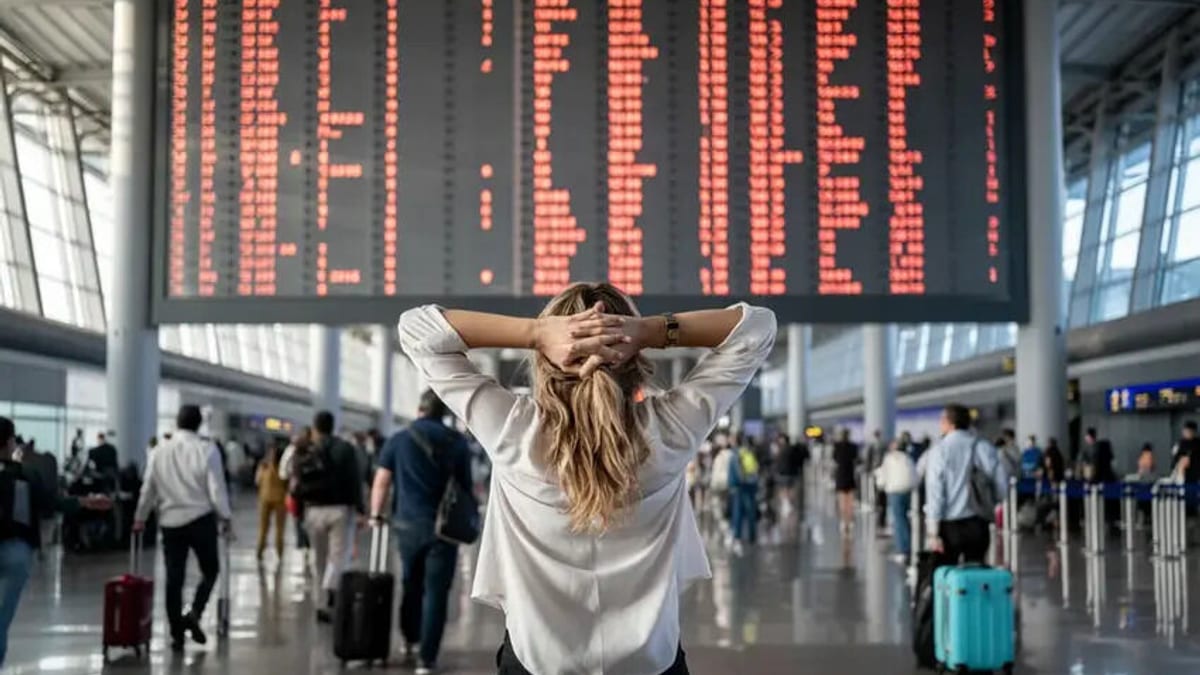
Image by travelandtourworld.com
Major Hubs From Munich to Amsterdam Hit by Fresh Wave of Disruption
Publicly available flight-tracking data for Monday shows widespread operational disruption at several of Europe’s busiest hubs, with clusters of cancellations and rolling delays from early morning into the afternoon. Airports in Germany, including Munich, reported a noticeable spike in grounded flights, while key Western European gateways in the United Kingdom, France, Belgium and the Netherlands also experienced knock-on schedule problems.
Travel industry coverage indicates that services in and out of Munich, Brussels and Amsterdam were among the hardest hit, with some departures removed from schedules at short notice and others subject to multi-hour delays. Passengers reported long queues at check-in and rebooking desks as airlines worked through a backlog of disrupted services and attempted to consolidate lightly booked flights.
While the precise breakdown varies by airport, today’s operational picture suggests a pattern of relatively limited outright cancellations combined with a much larger number of delayed flights. The combined impact has been enough to derail travel plans for hundreds of passengers, particularly those relying on tight connections to reach North America, the Middle East and Asia through European hubs.
Data from regional monitoring platforms shows that the disruption is not confined to a single country or airport, indicating broader operational challenges affecting multiple segments of the European network rather than a purely local outage or isolated technical issue.
Flag Carriers and Low-Cost Giants Among Affected Airlines
Published airline and airport information shows that several of Europe’s best-known carriers have been caught up in the latest wave of disruption. British Airways and Virgin Atlantic have faced delays and selective cancellations on routes linking the United Kingdom with continental hubs such as Amsterdam, Brussels and Munich, impacting both business and leisure travelers at the start of the working week.
KLM and easyJet, both heavily exposed to short-haul European traffic, have also experienced disruption on services connecting the Netherlands and the United Kingdom with Germany, France and Turkey. Holdings data and recent operational reports suggest that even a small number of cancellations on key routes can create ripple effects across the day, as aircraft and crew fall out of position for subsequent rotations.
Smaller regional and leisure-focused carriers appear to have been indirectly affected as well, particularly where they share airport resources such as ground handling or air traffic capacity with larger airlines. In practice, this means that travelers booked on a wide range of brands may experience similar delays, regardless of whether their own airline has cancelled a large number of flights.
Observers note that the mix of legacy and low-cost airlines involved underlines how tightly interconnected European aviation has become, with operational stress at a single hub quickly cascading through alliance partners and codeshare services.
Weather, Congestion and Operational Constraints Drive Schedule Turbulence
Recent coverage of European aviation operations points to a familiar combination of factors behind today’s disruption. Variations in weather conditions across the continent, including gusty winds and unsettled systems over parts of Germany, France and the Low Countries, have forced airports to adjust runway configurations and spacing between arrivals and departures, cutting into overall capacity.
In parallel, high passenger demand at the tail end of the winter travel season has left airlines with limited slack in their schedules. When an early-morning rotation is delayed or cancelled, that aircraft and crew may be unavailable for subsequent segments, leading to further delays and selective cancellations later in the day. Hub airports such as Munich, Amsterdam and Brussels are particularly sensitive to these cascading effects because so many passengers rely on tight connections.
Operational reporting from previous months has highlighted how staff shortages in air traffic control and airport ground operations can amplify even modest weather-related restrictions. When combined with stringent safety margins and congestion within European airspace, the result can be a day of persistent minor delays that accumulate into missed connections and disrupted itineraries for large numbers of travelers.
Today’s pattern of 46 cancellations and 386 delays across multiple European countries appears consistent with this multi-factor explanation, rather than a single, clearly defined outage such as a national air traffic system failure or a large-scale strike.
Knock-on Effects for Long-Haul Connections and Business Travel
The latest disruption has produced disproportionate headaches for travelers connecting onto long-haul services, particularly those operated by British Airways, Virgin Atlantic and KLM from hubs in London and Amsterdam. With many transatlantic and intercontinental flights departing only once per day on specific routes, a multi-hour delay on an inbound European feeder flight can mean a missed connection and an unplanned overnight stay.
Business travelers relying on day trips between European capitals have also been affected, as morning departures from cities such as Brussels, Amsterdam and Munich slipped behind schedule. Reports from passenger forums describe meeting plans being reshuffled, same-day returns being abandoned and travelers scrambling to switch to rail services where practical.
For leisure travelers, the impact is often felt in lost holiday time and additional costs for accommodation, meals and alternative transport. Although European consumer protection rules may provide avenues for compensation when delays and cancellations fall within an airline’s control, the process of filing claims and securing payments can be slow and complex, especially when multiple carriers or codeshare partners are involved in a single itinerary.
Industry analysts note that repeated episodes of moderate disruption, such as today’s, can gradually erode traveler confidence, encouraging some passengers to build in longer connection times or choose direct rail routes on shorter intra-European legs where high-speed options exist.
What Today’s Disruption Signals for Spring Travel in Europe
Travel analysts observing today’s events suggest that the pattern of scattered cancellations and widespread delays may foreshadow a challenging spring for European air travel. With demand expected to remain strong and airlines still managing the after-effects of previous staffing and infrastructure constraints, the overall system may struggle to absorb additional pressure from weather or geopolitical developments.
Publicly available commentary from aviation specialists highlights that airlines have become more cautious about overextending their schedules, but any imbalance between available crew, aircraft and airport capacity can still quickly translate into delays across multiple countries. Today’s figures for cancellations and delays across Germany, the United Kingdom, Turkey, the Netherlands and France illustrate how quickly such imbalances can surface.
For travelers planning trips in the coming weeks, today’s disruption serves as a reminder to factor in potential schedule changes, especially when relying on connections through busy hubs such as Munich, Brussels and Amsterdam. Travel planners often recommend allowing additional time for transfers, considering earlier departures when schedules permit and staying alert to last-minute schedule adjustments.
While Europe’s aviation system continues to operate far below the levels of disruption seen during the peak of past crises, today’s events underscore that even routine operational challenges can leave hundreds of passengers grounded when conditions combine unfavorably across several of the continent’s major air travel markets.