

More news on this day
Hundreds of passengers across Asia are facing long queues, missed connections and overnight airport stays as a new wave of disruption delays 1,666 flights and cancels 188 at major hubs including Chengdu Tianfu, Jakarta Soekarno Hatta, Kunming Changshui, Bangkok Suvarnabhumi and Kuala Lumpur International Airport.
Get the latest news straight to your inbox!
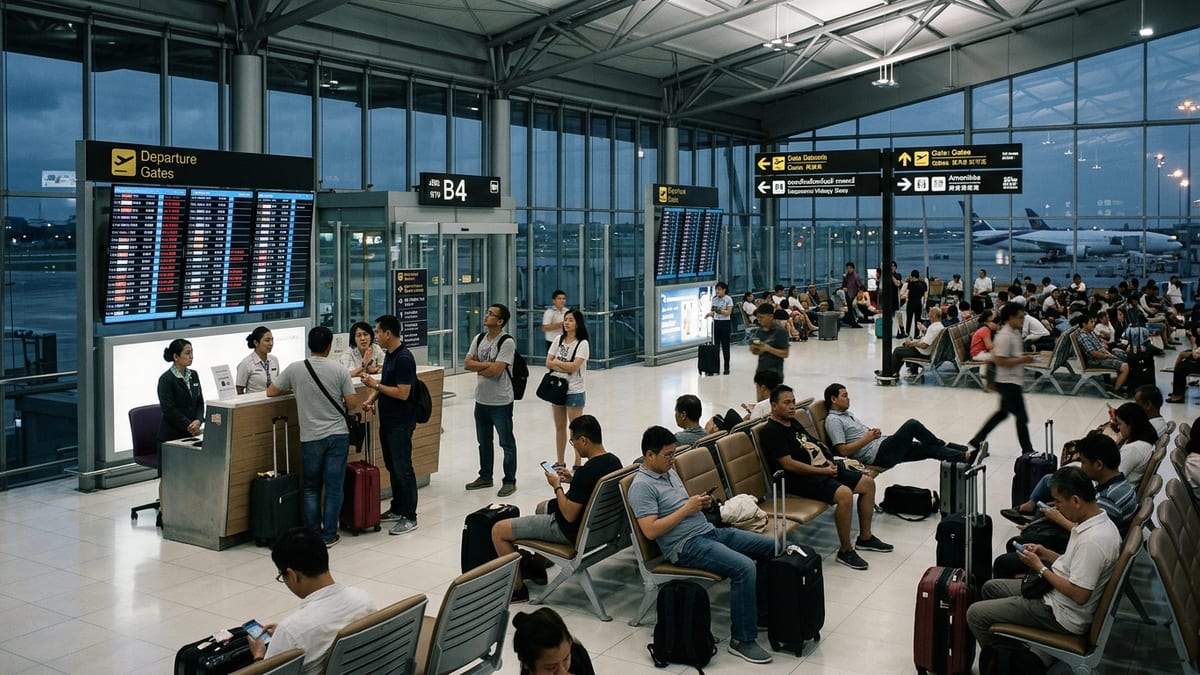
Air Travel Gridlock Spreads Across Asia’s Busiest Hubs
According to aggregated operational data and published aviation coverage, today’s disruption is part of a wider pattern of instability that has gripped Asia’s air travel network in recent weeks. Recent tallies show thousands of delays and hundreds of cancellations repeatedly hitting key regional gateways, with fresh knock-on effects for passengers flying to and from North America, Europe and Australia.
The latest wave centers on a cluster of high-volume airports: Chengdu Tianfu and Kunming Changshui in western China, Jakarta’s Soekarno Hatta in Indonesia, Bangkok’s Suvarnabhumi and Kuala Lumpur International Airport in Malaysia. Operations at other international airports across China, Southeast Asia and the Gulf are also reported to be affected, intensifying a cross-border cascade of missed connections and rebookings.
Publicly available flight-tracking snapshots indicate that while the number of outright cancellations remains lower than the volume of delayed services, the imbalance is contributing to severe congestion on the ground. Aircraft are arriving late, turning around more slowly and departing behind schedule, compounding delays through the rest of the day and forcing passengers into unplanned overnight stops.
Travel industry analysts note that these hubs rank among the busiest in the region by annual passenger volume, meaning relatively modest percentages of disrupted flights can translate into very large numbers of affected travelers. Even a few dozen cancellations and several hundred delays at each airport can generate crowding in terminals, stretched customer-service desks and intense pressure on hotel capacity near airports.
Weather, Infrastructure Strain and Airspace Constraints Converge
Reports from across the region indicate that no single factor is responsible for the disruption. Instead, a convergence of localized weather events, infrastructure stress and regional airspace constraints is placing unusual strain on airlines and airports at the same time.
In Indonesia, recent coverage has highlighted extreme rainfall and localized flooding around Jakarta’s Soekarno Hatta, including water intrusion incidents inside terminal areas. In some cases, inbound flights have been diverted or slowed by adverse weather, upsetting arrival waves and compressing turnaround windows for outbound services.
Across China’s western hubs, including Chengdu Tianfu and Kunming Changshui, previously reported bottlenecks have been linked to dense traffic patterns and limited slack in schedules. When aircraft and crew arrive late from other parts of the network, these airports have little capacity to absorb the disruption, leading to a buildup of delayed departures and aircraft waiting for available gates.
Compounding these local pressures are wider geopolitical and airspace issues. Earlier operational briefings on Asia Pacific services described how airspace restrictions and long reroutes on certain international corridors have added flight time and fuel burn, reducing scheduling flexibility. Even when today’s flights do not traverse affected regions directly, aircraft and crew rotations influenced by those constraints can still ripple into Asian hubs days later.
Passengers Face Long Queues, Missed Connections and Rebooking Scramble
For travelers on the ground, the numbers translate into long waits at check-in counters, packed departure lounges and uncertainty over onward journeys. When a flight departs several hours late from a hub such as Bangkok, Kuala Lumpur or Jakarta, passengers with tight connections to long-haul services often find that their onward flights have left without them, even if those later departures operate on time.
Once a connection is missed, rebooking becomes more complicated. Recent days have already seen significant schedule changes and load factors remain high, limiting the number of spare seats available on alternative flights. Economy cabins on popular routes to Europe and North America can fill quickly, leaving stranded passengers reliant on space opening up through cancellations or voluntary changes by other travelers.
Family and leisure travelers are particularly exposed, as many rely on self-constructed itineraries using separate tickets across different airlines and low-cost carriers. When delays at hubs such as Kunming Changshui or Chengdu Tianfu cause a missed onward segment from Bangkok or Kuala Lumpur booked on a separate ticket, there is often no automatic protection, and travelers may need to purchase entirely new tickets at short notice.
Business travelers are also feeling the effects, with meetings postponed or shifted online as staff struggle to reach regional centers on time. Travel management companies report increased demand for itinerary monitoring and proactive rebooking services as organizations attempt to keep trips on track amid rolling disruption.
Airlines and Airports Work to Clear Backlogs
Airlines across the region are attempting to stabilize operations by adjusting schedules, consolidating lightly booked services and repositioning aircraft where possible. Some carriers have quietly trimmed frequencies on marginal routes to free up aircraft for more critical connections, while others are operating additional late-night or early-morning services to clear stranded passengers when slots and crew rules allow.
Airport operators at hubs such as Suvarnabhumi, Kuala Lumpur and Jakarta are focusing on managing terminal crowding and maintaining basic services for passengers facing extended stays. Publicly available airport bulletins emphasize the importance of passengers checking flight status regularly and allowing extra time to move through check-in and security, especially during peak banked departure waves.
Ground-handling operations are also under pressure. Delayed arrivals stretch baggage-handling and cleaning teams, while catering and fueling services must adjust to rapidly shifting departure times. Any small staffing shortfalls or equipment outages can therefore amplify delays during already stressed periods, making it harder for airports to recover between waves of traffic.
Despite these efforts, recovery is expected to be gradual. Aviation analysts note that when multiple hubs suffer disruption simultaneously, aircraft and crews can end up out of position across several countries, requiring days rather than hours to bring schedules back into balance.
What Travelers Should Do If Their Flight Is Affected
Consumer advocacy groups and passenger-rights platforms advise travelers caught up in the current wave of disruption to focus on timely information and documentation. The most up-to-date status for a specific flight typically appears in airline mobile apps and on official airport information boards, rather than on third-party booking sites or static confirmation emails.
When a delay or cancellation occurs, passengers are advised to keep boarding passes, booking confirmations and any written notifications of changes. Such documentation can later support claims for refunds, rebooking assistance or statutory compensation where applicable under regional regulations.
Travel planners also suggest building additional buffer time into itineraries that route through congested Asian hubs over the coming days. Longer layovers in cities such as Bangkok, Kuala Lumpur, Jakarta, Chengdu or Kunming may reduce the risk of missed onward connections if the initial leg runs late.
For now, the combination of 1,666 delayed flights and 188 cancellations underscores how fragile the region’s aviation recovery remains. With passenger demand close to pre-pandemic levels and schedules running at near-full capacity, even localized shocks can rapidly escalate into widespread disruption across Asia’s interconnected air travel network.