

More news on this day
Hundreds of passengers across Europe are facing missed connections and overnight waits after a new wave of disruption led to 1,720 delayed flights and 61 cancellations at major airports, underscoring how fragile the continent’s air travel network remains in early April 2026.
Get the latest news straight to your inbox!
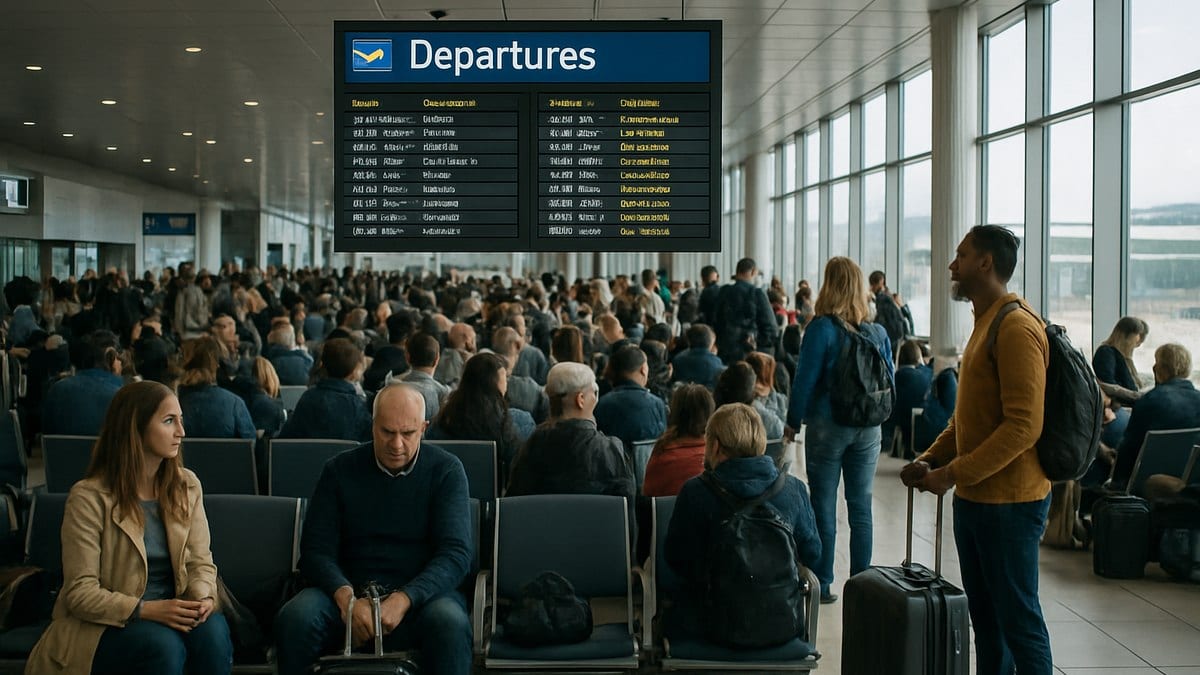
Major Hubs From London to Athens Hit by Rolling Disruptions
Publicly available flight-tracking tallies and industry summaries for the first days of April indicate that disruption has been concentrated at Europe’s largest hubs, with ripple effects spreading across national borders. The latest count of 1,720 delays and 61 cancellations adds to several consecutive days of severe strain at airports in the United Kingdom, the Netherlands, Germany, Italy, Spain and Greece.
Recent coverage of the period around 5 to 8 April points to Amsterdam Schiphol, London Heathrow and several Scandinavian and Mediterranean gateways among the worst affected, with hundreds of late departures logged in a single day at some locations. In several cases, airports that had already experienced significant disruption earlier in the month have again appeared near the top of regional delay and cancellation rankings.
At Athens International Airport, for example, a wave of delays and a smaller number of cancellations reported on 5 April contributed to wider knock-on effects on services to Northern Europe. Similar patterns have been observed at Spanish and Italian hubs, where heavy use of connecting traffic means issues on one day can continue to affect passengers and crews for several rotations afterward.
Data compiled by specialist travel sites and consumer platforms suggests that, while the majority of affected flights are eventually operated, the scale of delay is substantial. Many services are running one to three hours behind schedule, sufficient to strand passengers overnight when onward connections cannot be rebooked the same day.
Weather Systems, Staffing Gaps and Airspace Restrictions Combine
Multiple strands of reporting indicate that no single cause is responsible for the 1,720 delays and 61 cancellations recorded in this latest wave. Instead, the situation reflects a familiar but challenging combination of spring weather systems, staffing constraints and airspace restrictions that together leave limited room for recovery once schedules begin to slip.
Across Western and Southern Europe, fast-moving storm fronts have brought heavy rain, strong winds and low cloud at various points since the beginning of April, periodically forcing airports to cut arrival and departure rates. When air traffic control reduces the number of movements per hour for safety reasons, airlines must hold or reroute flights, quickly creating queues on the ground and in the air and pushing rotations late into the day.
These weather-related constraints are colliding with lingering staffing pressures in airline operations and ground handling. Industry analyses over the past year have highlighted how lean resourcing leaves carriers vulnerable when even minor technical issues or crew illness arise, as spare aircraft and reserve crews are not always available at the right place and time. Once early-morning flights are delayed, duty-time limits for pilots and cabin crew can lead to later cancellations if schedules cannot be recovered.
Airspace issues are also playing a role. Reports on regional aviation in early April describe ongoing congestion on busy corridors and localized closures linked to geopolitical tensions and military activity. These constraints funnel traffic into narrower lanes and force detours that lengthen flight times, contributing to missed slots at destination airports and complicating efforts to return aircraft and crews to their planned rotations.
Stranded Passengers Face Long Queues and Limited Options
For travelers caught up in the disruption, the operational and meteorological explanations offer little comfort. Social media posts and consumer reports from the past week describe long queues at customer service desks, crowded terminal floors and hotel rooms in key hub cities selling out as evening cancellations are confirmed.
Because the 61 cancellations are spread across numerous airlines and routes rather than concentrated in a single event, rebooking options are often limited. Many affected passengers are being shifted to flights departing a day or more later, especially on busy intra-European city pairs where remaining seats for the Easter and spring holiday period are already scarce.
Travelers on multi-sector itineraries, including long-haul connections through European hubs, appear to be among the hardest hit. When an initial short-haul leg into a hub such as Amsterdam, London or Frankfurt departs several hours late, onward services to North America, Africa or Asia may be impossible to catch, even if those flights leave on time. In such cases, passengers can find themselves re-routed via entirely different gateways, adding further strain to the network.
Industry commentary emphasizes that the operational impact extends beyond the passengers directly affected by the 61 cancelled flights. Each cancellation typically represents hundreds of travelers and disrupts aircraft and crew positioning, which can, in turn, contribute to additional delays on subsequent days as airlines work to rebalance their schedules.
Passenger Rights Come Into Focus Under EU261 Rules
With delays and cancellations once again in the spotlight, interest has renewed in Europe’s passenger rights framework, commonly referred to as EU261. The regulation, which applies across the European Union and in closely aligned jurisdictions, sets out when travelers are entitled to care, rerouting, refunds and cash compensation in the event of cancellations or long delays.
Consumer guidance summarizing the rules notes that passengers on flights departing from EU airports, or arriving in the EU on an EU or UK carrier, are generally entitled to meals, refreshments and hotel accommodation when severe disruption leaves them stranded. Airlines must also offer a choice between a refund and rerouting at the earliest opportunity when a flight is cancelled or subject to a very long delay.
However, compensation payments are treated differently. Publicly available legal summaries highlight that airlines are not required to pay compensation if they can show that disruption was caused by extraordinary circumstances outside their control, such as severe weather, certain air traffic control restrictions or airspace closures. In such cases, carriers still owe care and assistance but can decline cash payouts.
As a result, the 1,720 delays and 61 cancellations reported in the latest wave may translate into a mixed picture for affected travelers. Those whose flights were disrupted primarily for operational or staffing reasons could be eligible for compensation, while others facing weather-driven problems may only receive rerouting and basic care. Experts advising passengers consistently recommend keeping boarding passes, documenting delay times and submitting claims promptly through airline channels or independent claim platforms.
Outlook for Spring Travel as Pressure on Networks Builds
The fresh cluster of 1,720 delays and 61 cancellations arrives at a sensitive moment for European aviation, with airlines ramping up schedules for the late spring and summer season. Business travel is gradually recovering in several markets, while leisure demand remains strong, particularly on Mediterranean routes and city-break destinations.
Industry reports on wider delay trends suggest that structural challenges are unlikely to disappear quickly. Analyses of air traffic control performance in Europe over the past decade point to a steady increase in average delay minutes per flight, even as total traffic has risen more modestly. This dynamic leaves airlines and airports operating with little slack to absorb unexpected shocks.
At the same time, travellers are showing limited tolerance for repeated disruption. Consumer-facing platforms tracking complaints and compensation claims across Europe report elevated activity whenever large clusters of delays and cancellations occur, and advocacy groups continue to lobby for stricter enforcement of existing rules rather than major regulatory changes.
For now, travel planners recommend that passengers build additional buffer time into itineraries that involve tight connections, particularly through known congestion points such as major Northern European hubs. As April progresses, the extent to which airlines and infrastructure providers can stabilize operations after this latest bout of disruption will shape confidence heading into the peak summer season.