

More news on this day
Hundreds of passengers across Asia are facing long queues, missed connections, and overnight airport stays after 1,666 flights were delayed and 188 cancelled at major hubs including Chengdu Tianfu, Jakarta Soekarno-Hatta, Kunming Changshui, Bangkok Suvarnabhumi, and Kuala Lumpur, compounding a broader wave of air travel disruption sweeping the region.
Get the latest news straight to your inbox!
Key Asian Gateways Buckle Under Operational Strain
Publicly available aviation data for the past 24 hours indicates that traffic through several of Asia’s busiest international airports has been severely disrupted, with a combined 1,666 delays and 188 cancellations logged across multiple hubs. Chengdu Tianfu, Kunming Changshui, Bangkok Suvarnabhumi, Jakarta Soekarno-Hatta and Kuala Lumpur International all feature prominently in delay and cancellation statistics, underscoring how a bad day at a handful of large nodes can reverberate through the wider network.
Reports from specialist air travel trackers show that these figures form part of a broader pattern of irregular operations that has been building across Asia since early March, when the region began registering elevated levels of disruption measured in the thousands of daily delays. As hubs attempt to recover from earlier operational shocks, even relatively modest new issues are translating into long queues at check in, extended aircraft turnaround times, and tight slot constraints.
Travel industry coverage notes that carriers with dense intra Asian schedules, particularly those shuttling between Chinese secondary cities and Southeast Asian capitals, are appearing frequently in delay logs. Once a morning bank of flights at a single hub departs late, aircraft and crews arrive out of position for onward services, creating rolling knock on effects that are now visible in today’s statistics from western China to the Malay Peninsula.
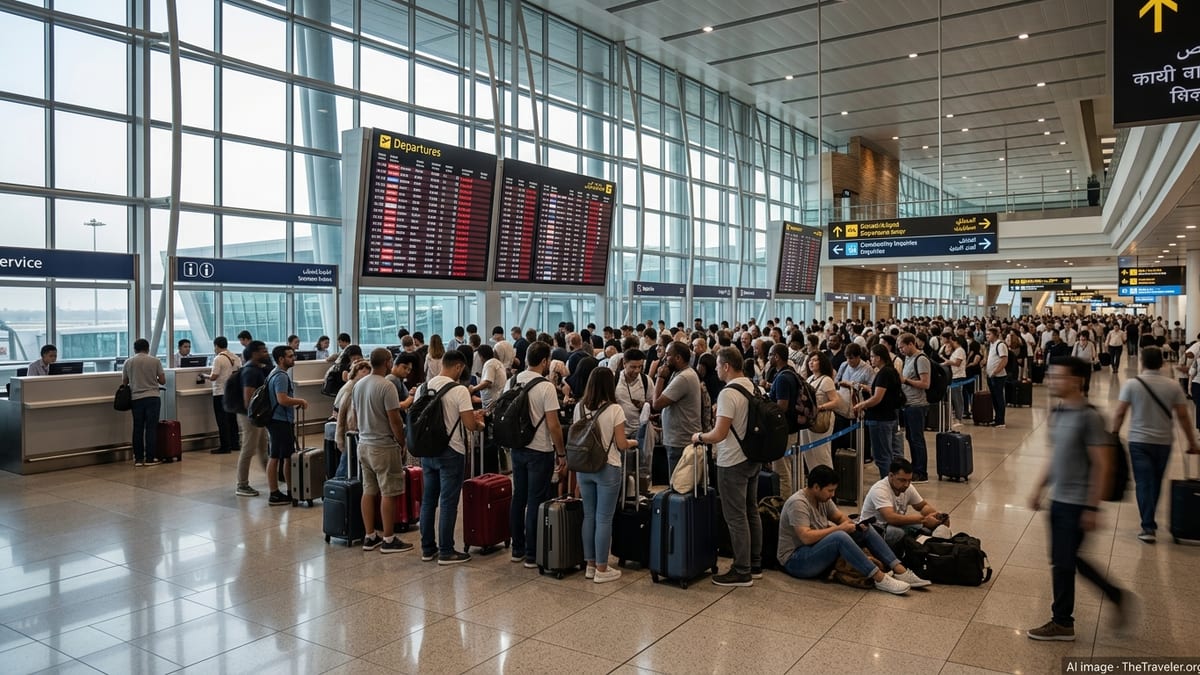
For passengers, the operational backdrop translates into missed connections, rebooked itineraries, and mounting accommodation and meal costs. Social media posts from travelers in Chengdu, Bangkok, and Kuala Lumpur describe crowded departure halls and rapidly changing departure boards as airlines juggle scarce aircraft, crew hours, and runway capacity.
Weather Trouble and Infrastructure Glitches Add to the Gridlock
In Indonesia, the disruption has been compounded by recent weather related incidents at Jakarta’s Soekarno-Hatta International Airport. Local media coverage describes intense rainfall that prompted a series of flight diversions and delays earlier this week, as pilots opted to hold, reroute, or divert arrivals in the interest of safe operations. Follow up reports indicate that while schedules have largely normalized, knock on effects from those delays are still being felt in today’s traffic flows.
The same storm system has been linked to a partial ceiling collapse in part of Terminal 3 at Soekarno-Hatta, which forced the temporary closure of a gate area and added to congestion within the terminal. Although outbound operations continued, airlines were required to adjust boarding procedures and ground handling, contributing to longer turnaround times and tightening the margin for on time departures across the rest of the day’s schedule.
Elsewhere in the region, localized thunderstorms and seasonal weather patterns have affected airport performance at several Chinese hubs, including Kunming and Chengdu. Mountainous terrain and rapidly changing weather conditions in southwestern China can complicate approach and departure procedures, leading to flow control measures that quickly translate into a backlog of delayed flights.
At Bangkok Suvarnabhumi and Kuala Lumpur International, aviation data suggests that ground handling bottlenecks and runway congestion rather than extreme weather are the primary drivers of today’s delays. Peaks in long haul traffic, combined with the morning and evening waves of regional services, are stretching ramp resources and slot availability, leaving little room to absorb irregular operations elsewhere.
Regional Airspace Tensions Cast a Long Shadow
The operational challenges unfolding at these Asian hubs cannot be viewed in isolation from the broader geopolitical environment. Since late February, airspace restrictions and airport closures linked to conflict in the Middle East have forced airlines to redesign flight paths between Europe, Africa, and Asia, adding distance, flight time, and scheduling complexity to many long haul services.
Economic and aviation analyses highlight that the closure or restriction of multiple Middle Eastern airspace corridors has removed a key east west bridge that normally carries a significant share of global traffic. As airlines reroute around affected regions, aircraft spend more time in the air and less time available for rotations within Asia, reducing flexibility in aircraft deployment at hubs such as Bangkok and Kuala Lumpur.
These constraints have been reflected in recent data showing elevated cancellations and delays not only at Gulf hubs, but also at secondary airports that depend on feed from disrupted long haul networks. When an inbound overnight service arrives late or is cancelled entirely, morning departures from Asian gateways can be left without aircraft or crews, which in turn contributes to the kind of delay and cancellation totals now being recorded across Chengdu, Kunming, Jakarta, and other cities.
Travel advisory bulletins from major governments and airline network updates suggest that the current pattern of detours, capacity reductions, and rolling schedule changes is likely to persist in the short term, keeping pressure on Asian hubs that function as connection points between disrupted long haul routes and high frequency regional traffic.
Passengers Face Long Queues, Limited Rebooking Options
For travelers on the ground, today’s numbers translate into an uneven and often confusing experience. At affected airports, publicly available footage and passenger accounts depict long lines at ticket counters and transit desks as customers attempt to secure alternative routings. With aircraft and crews stretched thin, same day rebooking options are limited on many routes, especially during peak travel periods.
Consumer rights organizations and travel platforms are reminding passengers to check the status of their flights before heading to the airport and to familiarize themselves with airline rebooking and refund policies. In several recent disruption episodes across Asia, carriers have offered limited change fee waivers or flexible rebooking windows, but these typically apply to specific dates and routes and can change quickly as conditions evolve.
Accommodation remains a particular pinch point. While some airlines may provide hotel vouchers in cases of long delays or cancellations, practices vary widely by carrier, jurisdiction, and cause of disruption. In many cases, stranded passengers in cities such as Bangkok or Kuala Lumpur are resorting to booking last minute rooms themselves or spending the night in terminal seating when nearby hotels fill up.
Meanwhile, travel agents and online booking platforms are reporting higher call volumes as customers seek to reroute around heavily affected hubs. Where routings through Singapore, Tokyo, or alternative Chinese gateways remain available, some travelers are opting to accept longer journeys and additional connections in exchange for a higher likelihood of departure.
What Today’s Disruptions Signal for Asia’s Aviation Network
Analysts say the spate of delays and cancellations hitting Chengdu Tianfu, Kunming Changshui, Jakarta Soekarno-Hatta, Bangkok Suvarnabhumi, Kuala Lumpur, and other airports highlights the fragility of Asia’s air travel ecosystem at a time of elevated geopolitical risk and surging demand. After several years of rapid capacity restoration, many carriers and airports appear to be operating close to their practical limits, with little slack to absorb external shocks.
Recent data series tracking delays across Asia show that multi airport disruption events are becoming more common, often triggered by a mix of weather, airspace constraints, crew availability challenges, and aging infrastructure. The current totals of 1,666 delayed and 188 cancelled flights fit this emerging pattern, where issues at a few critical nodes can rapidly cascade into region wide irregular operations.
For travelers planning itineraries over the coming weeks, industry observers recommend building greater flexibility into schedules by allowing longer connection windows, considering alternative hubs, and monitoring airline advisories closely. As today’s events demonstrate, even passengers flying exclusively within Asia can find their journeys upended by distant conflicts and complex chain reactions within the global air transport system.
While airlines and airports work to restore normal patterns of operation, the latest wave of disruption serves as another reminder that Asia’s air corridors are tightly interconnected with developments far beyond the region, and that sustained resilience will require investment not only in local infrastructure and staffing, but also in the global network on which these hubs rely.