

More news on this day
Passengers across the United States faced another bruising travel day on April 4 as at least 245 flights were canceled and 445 delayed at ten of the country’s busiest airports, leaving many travelers stranded at terminals from Atlanta to Seattle.
Get the latest news straight to your inbox!
Disruptions Concentrated at Key National Gateways
Publicly available flight-status dashboards and aggregated aviation data indicate that the latest wave of irregular operations has clustered at Hartsfield–Jackson Atlanta, Los Angeles, Chicago O’Hare, Denver, New York John F. Kennedy, Dallas–Fort Worth, San Francisco, Seattle–Tacoma, Houston Bush and Cincinnati/Northern Kentucky airports. These hubs serve as critical connectors for domestic and international routes, so disruptions at this group of gateways ripple quickly across the wider network.
The combined tally of at least 245 cancellations and 445 delays across these ten airports represents a significant share of the day’s national disruption, based on figures compiled from real-time tracking platforms and summarized in recent industry coverage. While totals remained below the highest peaks seen during severe winter storms earlier in 2026, the impact was still substantial for travelers attempting to make tight connections or reach time-sensitive events.
Reports from aviation outlets describe a patchwork of causes behind the cancellations and delays, including lingering weather issues in parts of the country, ongoing runway and airfield work, and knock-on effects from earlier days of disruption. Because the ten affected airports sit at the heart of several major carrier networks, even modest schedule reductions or localized slowdowns can strand passengers hundreds or thousands of miles away.
The pattern mirrors broader trends highlighted in recent disruption reporting, which has documented how clusters of delays at a few large hubs can accumulate into thousands of minutes of lost travel time nationwide. Data compiled for congressional and transportation research in recent years has repeatedly shown that airports such as Atlanta, Chicago O’Hare, Dallas–Fort Worth and Denver already account for an outsized share of total delay minutes in a typical year.
Weather, Runway Work and Operational Stress Combine
Early April conditions added another layer of complexity. Forecast discussions and aviation weather products pointed to low clouds and scattered thunderstorms in several regions, including the central and southern United States, where Dallas–Fort Worth, Houston Bush and Denver sit at the crossroads of busy north–south and east–west corridors. Even when storms are not severe enough to shut down runways entirely, they can force spacing between aircraft, slowing arrivals and departures.
On the West Coast, San Francisco and Seattle–Tacoma continued to manage a mix of seasonal weather and infrastructure constraints. Recent coverage has noted that San Francisco’s arrival rates have at times been reduced due to runway and airfield projects, which can leave airlines with less flexibility when schedules are already tight. At Seattle–Tacoma, springtime systems moving off the Pacific can lead to intermittent ground delays, especially when clouds and visibility fluctuate throughout the day.
Operational stress also remains a recurring theme. Industry analyses over the past year have highlighted strains in airline and airport staffing, from ramp crews and maintenance teams to air traffic control staffing levels at certain facilities. When multiple hubs experience minor slowdowns at the same time, the system has less spare capacity to absorb delays, increasing the likelihood that flights will be canceled outright rather than pushed back further into the day.
These factors are layered on top of strong travel demand. Data from recent disruption reports shows that Atlanta, Los Angeles, Chicago O’Hare, Denver, JFK, Dallas–Fort Worth, San Francisco, Seattle–Tacoma, Houston Bush and Cincinnati together serve tens of millions of departing passengers annually, with historically high percentages of flights arriving late at several of these hubs.
Passenger Impact Ranges From Missed Connections to Overnight Stays
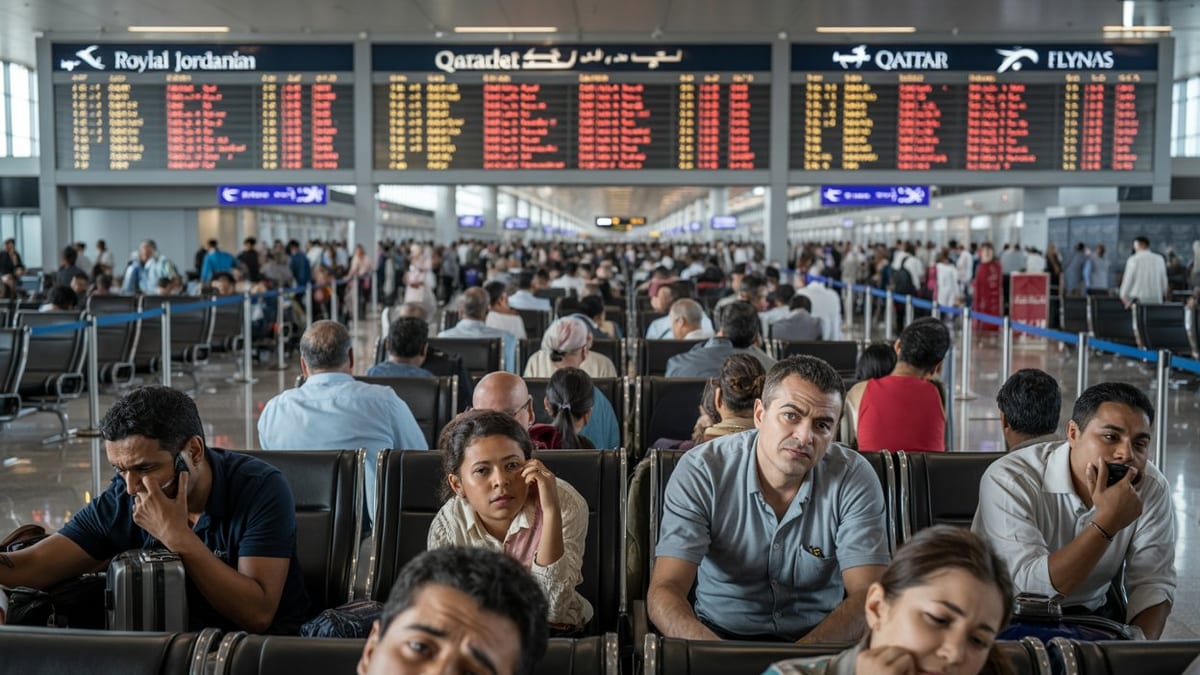
The practical effect of 245 cancellations and 445 delays is most visible in terminal concourses. Crowded gate areas, longer lines at customer-service desks and fully booked nearby hotels have been recurring features of the 2026 disruption pattern, according to recent travel and consumer reports. For travelers caught in the latest wave, this has meant missed connections, extended time on hold with airline call centers and, in some cases, unexpected overnight stays far from home.
Families traveling through Atlanta and Dallas–Fort Worth, both major domestic connecting hubs, are particularly exposed when irregular operations cascade through the day. A single missed morning connection can leave passengers with only a handful of rebooking options, especially on popular leisure routes where later flights are already near capacity. Similar challenges arise at JFK, San Francisco and Los Angeles for long-haul international passengers, where missed transoceanic departures can result in multi-day disruptions.
Consumer-rights organizations and legal-information platforms have recently reminded travelers that compensation and rebooking options vary depending on the cause of disruption and the airline’s own policies. While U.S. regulations do not mandate broad compensation for weather-related issues, carriers typically offer rebooking assistance and, at times, hotel or meal vouchers for delays deemed to be within their control.
Published coverage of earlier spring disruption waves has also underscored the uneven burden on vulnerable travelers. Passengers with tight work schedules, caregiving responsibilities or limited financial flexibility have less room to absorb additional hotel nights, unexpected meal costs or unpaid days away from work when flights are delayed or canceled at the last minute.
Strain on Airline Operations and Airport Infrastructure
From the airlines’ perspective, concentrated disruption at ten major hubs presents both logistical and financial challenges. Maintaining aircraft and crew rotations becomes significantly more difficult when several flights in a sequence are delayed or removed from the schedule. Carriers have to choose between protecting long-haul international services, key business markets and high-demand leisure routes, often reshuffling aircraft at short notice.
Airport infrastructure also comes under pressure. Reports from earlier peak disruption days this spring have described gate shortages, backed-up taxiways and stretched concessions at some hubs. When flights that were supposed to depart remain on the ground awaiting slots or crews, they occupy gates needed by arriving aircraft, triggering further delay as inbound flights wait for parking positions.
At older terminals in particular, gate-area seating and power outlets can quickly become insufficient when several departures are delayed at once. Travelers at airports such as Chicago O’Hare, JFK and San Francisco have frequently encountered standing-room-only conditions during recent disruption episodes, according to traveler accounts and consumer-travel reporting.
Longer term, policymakers and industry analysts have flagged these recurring bottlenecks as evidence that the national air transportation system is operating with thin margins. Legislative reports and independent studies have urged continued investment in air traffic control technology, runway expansions where feasible and terminal upgrades at the country’s busiest hubs, including those most affected in the latest round of cancellations and delays.
What Travelers Can Expect in the Coming Days
With the current disruption numbers still evolving on April 4, aviation analysts expect some residual impact to carry into the weekend. When flights are canceled late in the day from hubs like Denver, Seattle–Tacoma or Houston Bush, aircraft and crews may not be in position for early-morning departures on subsequent days, extending the knock-on effects for travelers who thought they were booking outside the worst of the disruption window.
Travel publications are advising passengers with itineraries through Atlanta, Los Angeles, Chicago O’Hare, Denver, JFK, Dallas–Fort Worth, San Francisco, Seattle–Tacoma, Houston Bush and Cincinnati to pay close attention to flight-status updates and to build extra time into connections where possible. Same-day schedule changes, including equipment swaps and re-routings through less congested hubs, remain a possibility as airlines work to rebalance their networks.
Some carriers have historically responded to concentrated disruption by issuing temporary travel waivers, allowing affected customers to change flights without additional fees. When such options appear, consumer advocates recommend that travelers act promptly, as alternative seats on popular routes can be claimed quickly during widespread irregular operations.
As the spring travel season continues, the latest cluster of 245 cancellations and 445 delays at ten key airports underscores how quickly conditions can shift in a complex, high-volume air system. For now, passengers moving through the country’s largest hubs are likely to face another period of uncertainty, even as airlines and airports work to restore schedules and prepare for the next surge in demand.