

More news on this day
Air travel across Germany faced significant disruption today as major hubs in Berlin, Munich, Frankfurt, Cologne, Düsseldorf, and Hamburg reported hundreds of delayed and dozens of canceled flights, stranding passengers and disrupting operations at Lufthansa, Pegasus Airlines, Eurowings, Ryanair, and several other carriers.
Get the latest news straight to your inbox!
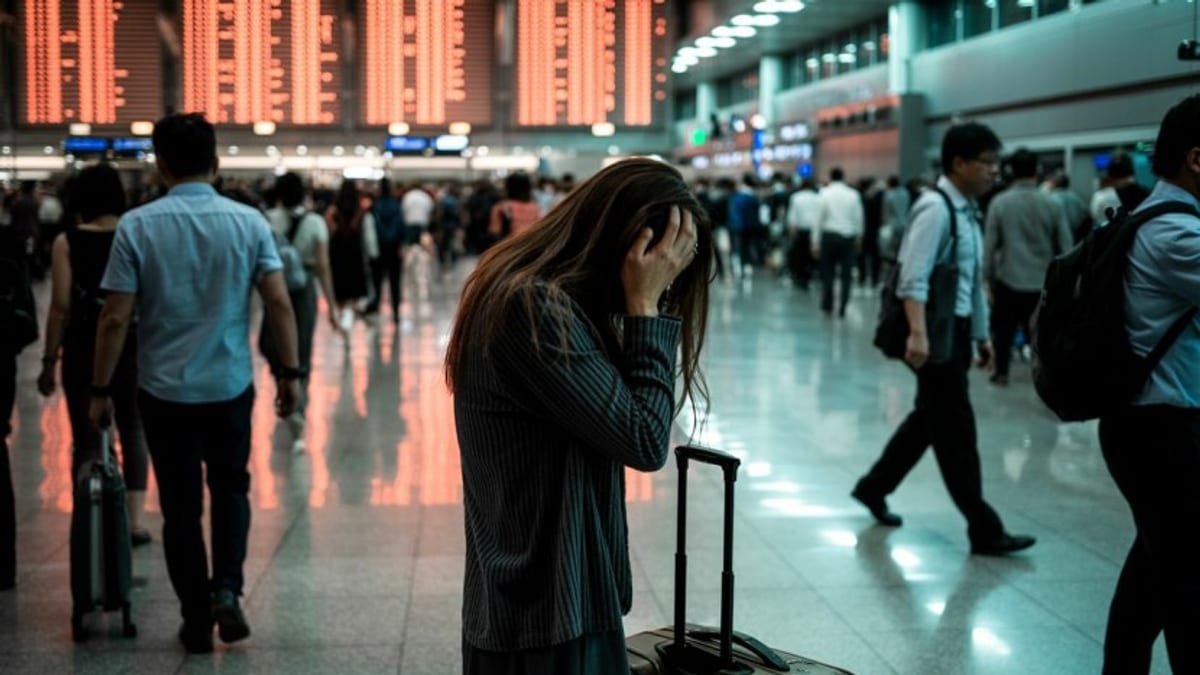
Image by travelandtourworld.com
Wide Disruptions Across Germany’s Busiest Airports
Operational data from German airport and flight tracking dashboards today indicate that 646 flights have been delayed and 28 canceled across the country’s largest hubs, affecting both domestic and international traffic. The disruption is concentrated at Berlin Brandenburg, Munich, Frankfurt, Cologne Bonn, Düsseldorf, and Hamburg, which together handle a substantial share of Germany’s daily passenger volume.
The imbalance between delays and outright cancellations suggests that many services are still attempting to operate, but with extended ground times and congested departure and arrival banks. Travelers at several airports have reported long queues at security and check in, along with crowded departure halls as delayed departures stack up across the day.
Publicly available airport information shows that delays are affecting both peak-hour business connections and leisure routes, including key domestic sectors such as Berlin to Frankfurt and Munich, as well as international services linking German hubs with Southern Europe and Türkiye.
The disruption pattern is consistent with recent days in which German air traffic has been sensitive to staffing bottlenecks, high seasonal demand, and knock on congestion in neighboring European airspace.
Lufthansa, Eurowings, Ryanair and Pegasus Among Hardest Hit
The impact is being felt across a broad mix of carriers, but Germany based Lufthansa and its low cost subsidiary Eurowings are among the most exposed because of their large share of departures from Frankfurt, Munich, Düsseldorf, Cologne and Hamburg. Industry monitoring reports for 2026 show Lufthansa leading the German market in total flights, with Eurowings, Ryanair and other low cost carriers making up much of the remaining capacity on domestic and regional routes.
According to live schedules, Lufthansa’s operations at Frankfurt and Munich have seen a cluster of delayed departures, particularly on short haul feeder routes that connect regional European cities to long haul banks. Even when flights are not canceled, extended delays can cause passengers to miss onward connections, increasing the number of travelers needing rebooking and overnight accommodation.
Eurowings services from Cologne, Düsseldorf and Hamburg are also showing elevated delays, especially to popular leisure destinations and secondary European cities. For passengers, this can mean aircraft rotations running late throughout the day, as one delayed sector cascades into the next.
Ryanair and Pegasus Airlines, which use German airports to feed large networks of point to point and Türkiye bound traffic respectively, are likewise operating in a congested environment. Even when these carriers maintain most of their schedules, they remain vulnerable to slot restrictions, ground handling slowdowns, and air traffic control constraints at the affected hubs.
Passenger Experience: Long Queues, Tight Connections, Missed Plans
The immediate consequence of 646 delayed flights is a sharp deterioration in the passenger experience. Travelers passing through Germany’s main airports today are encountering long waits at check in, security, and boarding gates as staff attempt to process a higher than usual number of disrupted journeys.
Published coverage and social media posts from passengers indicate that many are facing missed connections, particularly at Frankfurt and Munich, where hub banks are designed around tight transfer windows. When an inbound flight arrives late, passengers may find that their onward service has already departed, forcing them to rely on rebooking options that are themselves constrained by the broader congestion.
At airports like Berlin and Hamburg, where a significant proportion of traffic is point to point, delays are leading to missed hotel check in times, lost evening business appointments, and shortened city breaks. Some travelers are also reporting uncertainty at departure boards, with rolling estimated times and frequent schedule updates as airlines and airports attempt to recover punctuality.
Families and leisure travelers on low cost carriers such as Ryanair and Pegasus may be particularly affected when flights are heavily booked, limiting same day alternatives. In such cases, passengers can be offered rebooking on later flights or on different routings, but options may be scarce when disruption is widespread across multiple hubs.
Operational Strain, Weather and Systemic Vulnerabilities
While a precise single cause for today’s widespread disruption has not been isolated in public reporting, several structural factors have repeatedly been cited in recent months as drivers of irregular operations in German and European airspace. These include air traffic control staffing shortages in parts of Europe, periodic ground handling constraints at major hubs, and weather related capacity reductions during peak traffic periods.
Recent industry analyses of German aviation performance show that Lufthansa Group carriers, along with other European airlines, have been under pressure to maintain punctuality amid high demand and limited slack in schedules. When minor disruptions occur early in the day, the lack of buffer time means delays can quickly spread from one rotation to many.
At Berlin, Cologne, Düsseldorf and Hamburg, constraints in runway or apron capacity during busy waves can further limit the ability of airports to recover from earlier disruptions. Even a short period of reduced flow rates, whether due to thunderstorms, low visibility, or temporary staffing shortfalls, can trigger a backlog that lasts several hours.
Low cost carriers, which typically operate aircraft on tight turnarounds to maximize utilization, are especially susceptible to this dynamic. A single late inbound aircraft can knock an entire day’s program out of sync, amplifying the broader operational issues seen across the German network today.
What Travelers Can Do If Their Flight Is Affected
For passengers facing delays or cancellations in Germany today, consumer advocates generally point to a few practical steps to navigate the disruption. Travelers are advised to monitor their airline’s app or website for real time updates, as these channels often reflect schedule changes before airport departure boards.
In the European Union, including Germany, Regulation EC261 provides a framework for passenger rights in cases of significant delays and cancellations, including care provisions such as meals and accommodation, and in some circumstances financial compensation. Eligibility depends on factors such as the length of delay, distance of the flight, and whether the disruption is considered within the airline’s control.
Passenger rights organizations note that documentation is important. Keeping boarding passes, booking confirmations, and written evidence of delay or cancellation times can help travelers file claims later if they qualify. In many cases, airlines provide online forms to submit requests for reimbursement or compensation.
Given the scale of today’s disruption across Berlin, Munich, Frankfurt, Cologne, Düsseldorf and Hamburg, travelers with flights scheduled later in the day or in the coming 24 hours may benefit from proactively checking alternative routings, flexible ticket options, or rebooking tools offered by their carriers, in case operational conditions deteriorate further.