

More news on this day
Hundreds of passengers traveling between Mexico, the United States and Canada remain stranded after a new wave of cancellations and delays hit major airports in Cancún, Guadalajara and Mexico City, disrupting operations at carriers including AeroMéxico, JetBlue, United Airlines and Delta Air Lines.
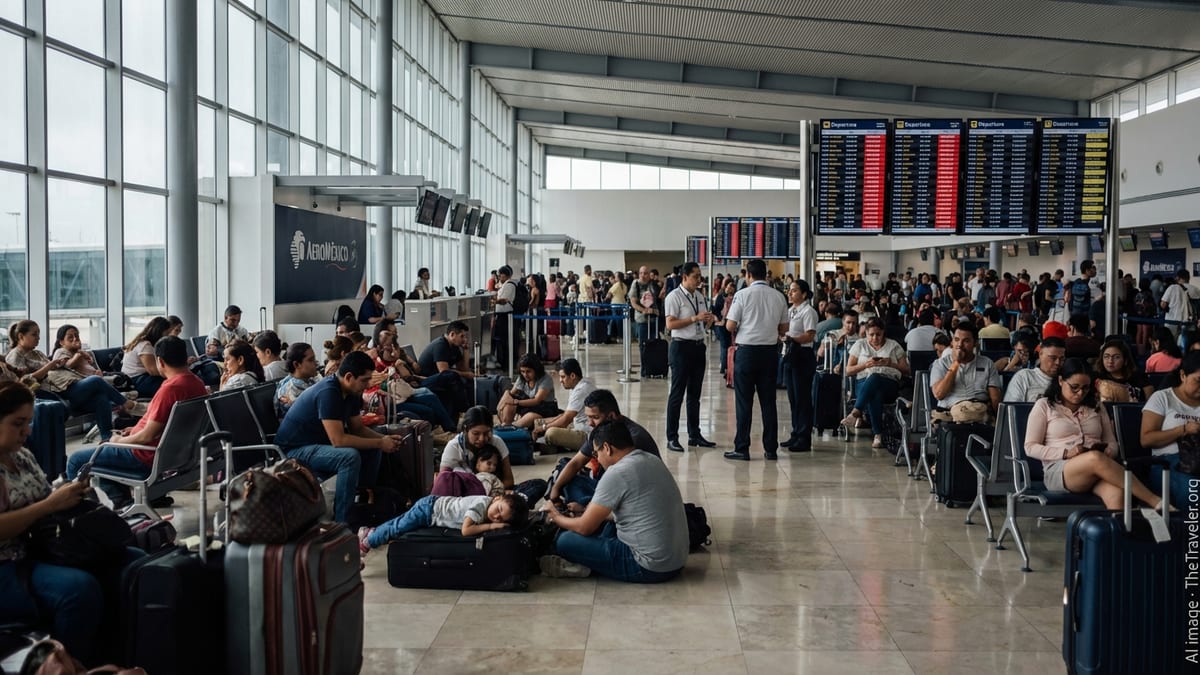
Dozens of Flights Scrapped as Operational Turmoil Deepens
Flight-tracking data and airport boards on Tuesday showed at least 45 flight cancellations and 87 delays across Cancún International Airport, Mexico City’s Benito Juárez International Airport and Guadalajara International Airport, compounding several days of disruption triggered by security unrest and knock-on operational issues. While the airports remain technically open, the latest figures highlight how fragile the recovery remains, particularly on high-demand transborder routes.
In Cancún, one of Mexico’s busiest holiday gateways, long queues formed at airline counters as passengers learned that their departures to US and Canadian hubs had been canceled or pushed back by several hours. Similar scenes played out inside Mexico City’s main international terminal and Guadalajara’s Don Miguel Hidalgo y Costilla Airport, where departure boards showed clusters of red for canceled flights and amber for extensive delays.
Airport operators and airlines described the situation as a rolling disruption rather than a complete shutdown. Schedules are being rebuilt in real time as carriers reposition aircraft and crew, but travelers are being warned to expect continued irregular operations for at least the next 24 hours.
US and Canada Routes Bear the Brunt
The latest disruption has hit international passengers particularly hard, with dozens of routes linking Mexico to major US and Canadian cities directly affected. Services to destinations such as New York, Los Angeles, Houston, Chicago, Toronto and Vancouver have experienced a mix of full cancellations, multi-hour delays and last-minute aircraft swaps that have left travelers scrambling to rebook.
AeroMéxico has faced a combination of canceled and delayed departures on key long-haul and transborder flights out of Mexico City and Guadalajara, while its regional arm has struggled with connecting services that feed those international routes. United Airlines, Delta Air Lines and JetBlue reported scattered but significant delays on flights connecting Cancún and Mexico City to their US hubs, forcing missed connections further down the line.
Canadian carriers have also been swept up in the disruption, especially on winter sun routes into Cancún and western Mexico. In several cases, aircraft and crews have been out of position following earlier days of mass cancellations, limiting the ability of airlines to quickly restore normal service even as security conditions gradually stabilize.
Stranded Passengers Face Long Lines and Limited Options
For passengers on the ground, the statistics translate into long, uncertain hours at the airport. Families returning from beach vacations, business travelers and snowbirds alike have described crowded terminals, overtaxed information desks and difficulty accessing clear updates on revised departure times.
At Cancún, travelers reported being instructed to remain close to their gates as departure times slipped multiple times throughout the morning before flights were finally canceled altogether. In Guadalajara and Mexico City, long lines formed at the rebooking counters of AeroMéxico, United, Delta and JetBlue as customers vied for limited seats on later departures or alternative routings through other hubs.
Hotel capacity in resort areas has added another layer of complexity. Some vacationers found themselves extending stays at significantly higher last-minute rates, while others opted to move closer to the airport in hopes of catching early-morning departures when operations are usually most stable. Travel insurers and credit-card providers have reported an uptick in claims and assistance calls as stranded passengers seek reimbursement for extra nights, meals and ground transport.
Airlines Balance Safety, Crew Positioning and Recovery
Airline operations teams across North America have been working to recalibrate schedules as they navigate a delicate balance between safety, crew duty limits and customer demand. Carriers serving Mexico have had to contend not only with immediate security warnings in parts of the country but also with the longer-term task of repositioning aircraft and flight crews displaced by earlier mass cancellations.
Several major airlines, including AeroMéxico, United and Delta, have issued flexible travel policies for customers booked on Mexico routes over the coming days, allowing fee-free changes or travel credits. However, even with waivers in place, the availability of alternative seats remains constrained on peak winter routes, especially from resort cities such as Cancún and coastal gateways feeding Canadian markets.
Industry analysts note that once a network experiences several days of severe disruption, knock-on effects can linger even after the immediate trigger subsides. Aircraft are not where they are supposed to be, crews may time out under duty rules, and maintenance windows can be thrown off schedule. The result is a patchwork of cancellations and rolling delays such as those now seen in Cancún, Guadalajara and Mexico City.
Travel Advisories and What Passengers Should Do Now
With hundreds of passengers still stranded and schedules in flux, both Mexican and foreign authorities continue to urge travelers to stay alert to changing conditions. The US State Department has maintained its call for heightened caution in several Mexican states, while emphasizing that airports in major tourist zones remain under reinforced security and open for operations, subject to airline decisions.
Airlines and airport officials are advising passengers scheduled to fly from Cancún, Guadalajara or Mexico City in the coming days to monitor their flight status frequently, use airline apps where possible, and arrive at the airport earlier than usual to account for longer lines at check in and security. Travelers holding separate tickets for onward connections are being urged to build in extra time or consolidate itineraries to reduce the risk of missed flights.
While operators expect a gradual normalization of traffic as aircraft and crews are repositioned, they acknowledge that any renewed security incident or bout of severe weather in North America could quickly reignite widespread disruption. For now, hundreds of passengers remain in limbo in Mexico’s largest air hubs, waiting for their chance to finally board flights home to the United States and Canada.