

More news on this day
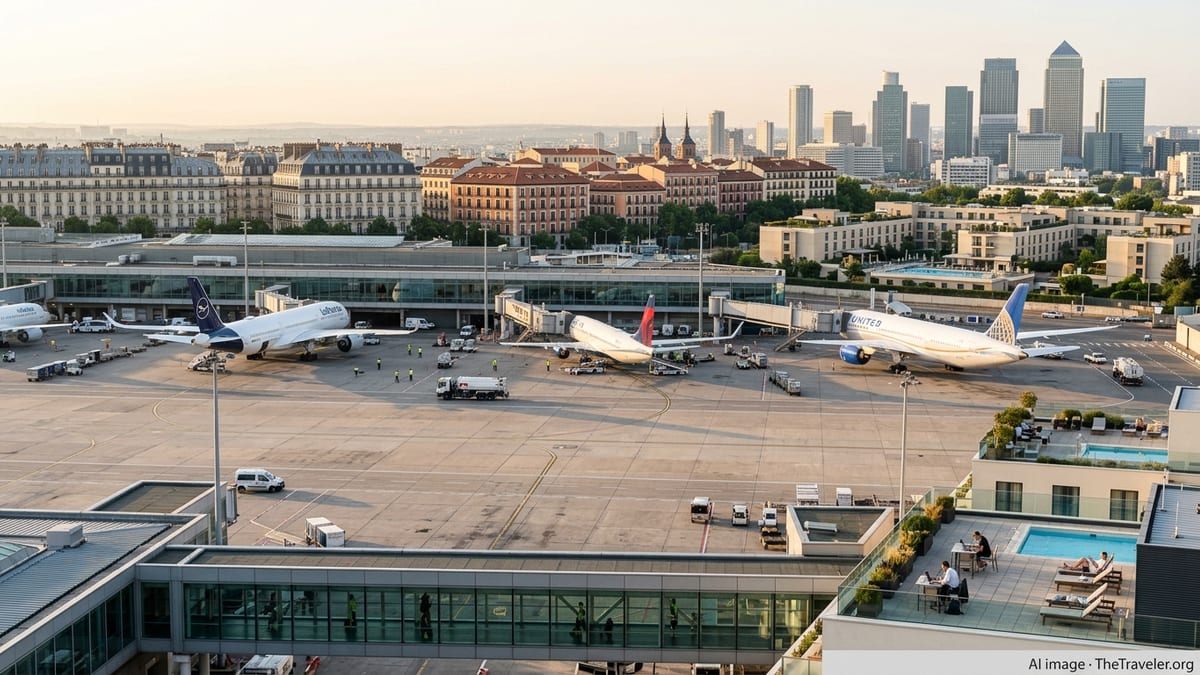
Lufthansa’s latest push into premium leisure flying is aligning it with Delta Air Lines and United Airlines in a fast-evolving hybrid airline model, and hotels in France, Spain and the United States are emerging as some of the biggest beneficiaries as global travel demand continues to rebalance around blended business and leisure trips.
Get the latest news straight to your inbox!
Hybrid Airline Strategies Reshape Long Haul Demand
Major carriers are increasingly orienting networks and cabins toward travelers who combine work and vacation, often referred to as hybrid or bleisure travelers. Industry research shows that this segment has expanded in the wake of flexible work policies, with forecasts indicating that a growing share of business-related trips now include added leisure days. Airlines are responding with schedules, fare products and onboard experiences tailored to passengers who want to work in transit but spend more time on the ground at their destination.
Lufthansa has been sharpening its focus on premium leisure demand through Discover Airlines and affiliated leisure brands within the Lufthansa Group, positioning them on high-yield routes to beach, culture and adventure destinations. Investor presentations highlight these units as vehicles for profitable growth, feeding traffic into the group’s long haul hubs while giving travelers a more resort-focused service proposition. This mirrors strategies at U.S. carriers that are tilting capacity toward routes and seasons favored by affluent leisure travelers.
Delta and United have each rebalanced their long haul networks over the past two years, emphasizing coastal gateways, sunny destinations and cultural capitals that attract both corporate clients and high-spend holidaymakers. Public commentary from airline and airport reports points to strong demand in premium economy and business cabins on transatlantic routes, even as traditional corporate travel remains below historic peaks. The result is a new hybrid model in which the same aircraft increasingly serves a mix of conference delegates, remote workers and families extending work trips.
France’s Hotel Sector Captures Premium Leisure Upswing
French hotels are seeing the effects of this hybrid air strategy most clearly in city and resort markets that sit on key transatlantic and intra-European corridors. Data compiled at a recent hospitality trends conference in Paris indicates that revenue per available room in France rose in 2025 despite a patchy macroeconomic backdrop, with December performance in particular buoyed by robust leisure and events demand. Analysts note that while some traditional business districts softened, cultural and lifestyle neighborhoods remained busy with visitors combining meetings, remote work and short breaks.
Large European hotel groups with substantial portfolios in France report that premium, midscale and economy brands continue to benefit from sustained global travel appetite. First quarter 2025 results from one major Paris-based operator show steady revenue growth year over year, underscoring how diversified pipelines and a focus on mixed-use destinations are helping offset volatility in pure corporate travel. The group’s development updates point to continued expansion in lifestyle and resort brands, which are popular with hybrid travelers arriving on full-service carriers.
Paris, Lyon, Marseille and secondary cities with strong rail and air links are increasingly marketed as hubs where visitors can work during the week and tap into local food, culture and nearby leisure regions over weekends. Hotels have responded with co-working inspired lobbies, flexible check-in patterns and rate packages designed around three to five-night stays instead of traditional one or two-night corporate bookings. The rising share of guests arriving on long haul flights operated by Lufthansa, Delta and United or their partners helps sustain demand for higher-category rooms and extended-stay products.
Spain Emerges as a Flagship Premium Leisure Destination
Spain stands out as one of the clearest winners from the global travel boom linked to hybrid aviation strategies. Market barometers produced by STR and Cushman & Wakefield show that Spanish hotels ended 2025 in strong shape, with revenue per available room rising compared with the previous year and average daily rates continuing to edge higher. Madrid in particular posted robust gains in both metrics, while Barcelona held broadly stable after several years of rapid growth, signaling a mature but resilient market.
Analysts attribute much of this resilience to a blend of international leisure tourism and steady meetings and events activity. Southern Europe performance reports highlight that regional revenue per available room rose at a healthy pace in 2024 and 2025 as travelers flocked to beaches and historic cities. Spain, which has repeatedly set new records for international arrivals, has been a focal point for long haul capacity from European and North American network carriers, including members of the Lufthansa, Delta and United alliances.
Hotel groups with Spanish roots or large footprints, such as resort-focused chains along the Mediterranean and Canary Islands, report that many properties now operate on a calendar shaped by hybrid guests. Lengths of stay have increased in key sun-and-city destinations as travelers leverage flexible work arrangements to spend a full week in places like Madrid, Valencia or Malaga. Airlines catering to these flows schedule flights to arrive early in the day, allowing guests to work upon arrival and then transition into holiday mode, a pattern that supports higher ancillary spending on food, wellness and experiences.
U.S. Hotels Navigate Contrasting Domestic Strength and International Strains
In the United States, the picture is more complex but still underscores the growing influence of hybrid air travel. Forecasts from STR and Tourism Economics issued in 2025 point to modest growth in hotel room revenue, led by higher average daily rates rather than big jumps in occupancy. Urban markets with strong group, convention and domestic leisure segments, including New York and Orlando, have been cited in industry coverage as outperformers within the national landscape.
At the same time, research by global travel and tourism bodies indicates that international visitor spending in the United States is lagging behind other major destinations and is even projected to decline in 2025. Analysts link this weakness to a mix of macroeconomic factors, currency effects and policy uncertainty that may be dampening inbound demand. For hotel owners, this means greater reliance on domestic travelers flying on hybrid-oriented networks operated by U.S. carriers such as Delta and United, which have invested in premium cabins and loyalty partnerships that encourage longer, higher-spend stays.
Development and performance updates from major lodging companies show that U.S. portfolios are leaning into lifestyle, resort and extended-stay brands that appeal to guests who travel frequently for both work and play. Some of these properties are strategically located near key airline hubs and secondary airports, banking on a steady flow of travelers who might spend the day in virtual meetings before exploring local neighborhoods in the evening. While the international segment remains under pressure, this hybrid traveler base is helping keep occupancy and rates relatively stable in many coastal and sunbelt markets.
From Cabins to Check-In: How Hotels Adapt to the Hybrid Airline Era
The shift in airline strategy is prompting parallel changes in how hotels in France, Spain and the United States design services and spaces. With more guests arriving outside traditional corporate check-in windows, properties are experimenting with flexible arrival and departure times, luggage storage, and work-ready public areas. Operators report rising demand for reliable high-speed connectivity, quiet work zones and in-room amenities tailored to guests who may spend several hours each day on video calls before heading out to sightsee.
Hotel investment flows are also following the hybrid trend. Advisory firms note that investors are increasingly targeting urban assets and resort properties that can serve both conferences and holidaymakers, particularly in markets like Madrid, coastal Spain, Paris and major U.S. gateway cities. These assets are seen as better positioned to benefit from airline capacity shifts toward premium leisure routes and from the rising share of travelers who expect to blend business and relaxation in a single trip.
Looking ahead to 2026, air transport outlooks from industry bodies point to continued, if moderating, growth in global passenger traffic, with long haul and international journeys remaining a key driver. As Lufthansa, Delta and United refine their hybrid models, the interplay between network planning, cabin design and hotel development is likely to deepen. For hotels across France, Spain and the United States, the next phase of the travel boom will be defined not just by how many guests arrive, but by how seamlessly they can switch between laptop and lounge chair once they land.