

More news on this day
Jet fuel prices have surged far beyond industry expectations for 2026, and new analysis from global aviation bodies indicates that airlines in the United States and worldwide are now bracing for a prolonged period of elevated costs that is already feeding through into higher ticket prices and fees.
Get the latest news straight to your inbox!
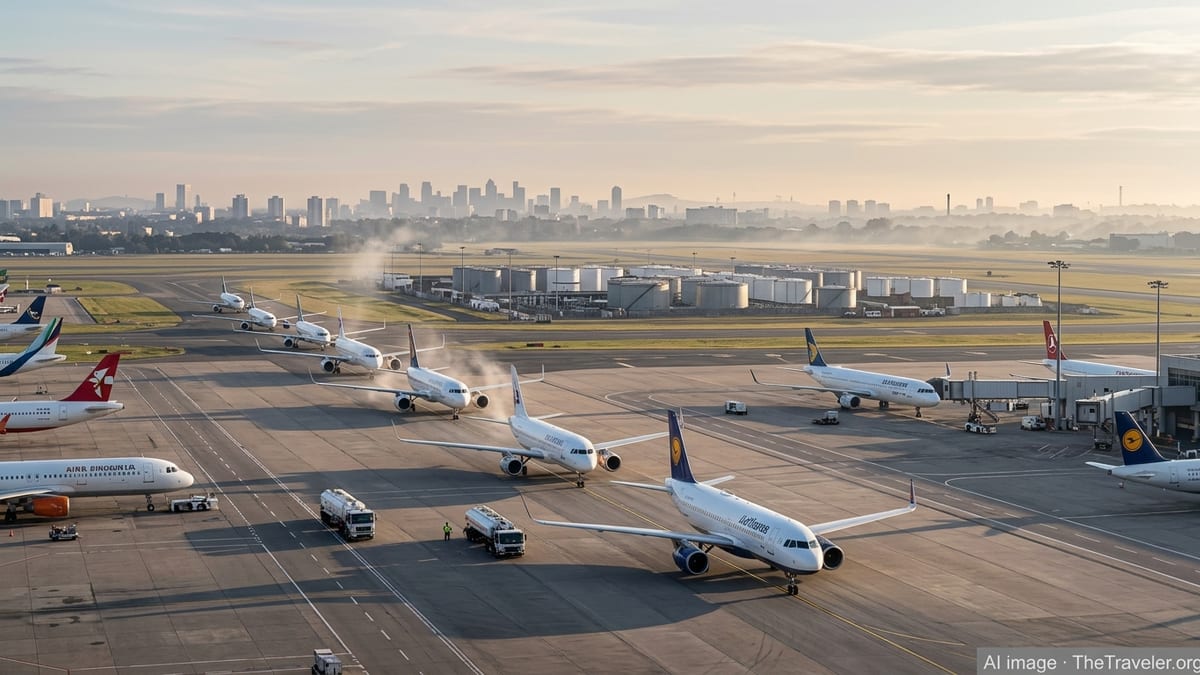
Jet Fuel Surges Past IATA’s 2026 Assumptions
The International Air Transport Association had entered 2026 expecting a relatively contained fuel environment, with internal forecasts pointing to jet fuel averaging under 90 dollars per barrel for the year based on moderate crude prices and stable refining margins. That outlook has been overtaken by events as energy markets react to the conflict in the Middle East and disruptions affecting key shipping and refining hubs.
Publicly available analyses now point to jet fuel trading at close to double early year assumptions in some regions, with spot prices equating to more than 150 dollars per barrel at times. Regional benchmarks in Europe, the United States and the Gulf have all climbed sharply since late February, while survey data published in specialist aviation and energy outlets shows April contracts resetting significantly higher than in the first quarter.
In updated commentary released alongside February 2026 traffic data, IATA highlighted fuel as the single largest new headwind for airline finances this year. The association noted that while global passenger demand is still expanding, the scale and speed of the fuel spike make it difficult for carriers to fully absorb the shock through internal efficiencies alone.
Industry financial outlooks drawn up only months ago are now being revised to reflect the new cost base. Research referenced in recent European and Middle Eastern business coverage indicates that fuel is back toward the upper end of its historical band as a share of airline operating expenses, pushing the sector away from the lower-cost environment that supported post‑pandemic recovery.
US Carriers Move Quickly To Raise Fares And Fees
The impact of the jet fuel shock is already visible in the United States, where major network carriers have begun adjusting prices and ancillary fees. Recent filings and company announcements show that airlines such as JetBlue, United Airlines and Delta Air Lines have raised checked baggage charges this spring, explicitly citing higher fuel and operating costs.
Data from the US Consumer Price Index released in early April indicates that airline fares rose at a much faster pace than overall inflation over the 12 months through March 2026. Trade press summaries of the figures report year‑over‑year increases in the mid‑teens for average ticket prices, compared with low single‑digit growth in the broader consumer basket, as carriers sought to offset the jump in jet fuel.
Executives at large US airlines have also been signaling further moves. According to published coverage in financial media, United’s leadership has warned that if current oil and fuel prices persist, airfares on certain routes could end up 15 to 20 percent higher than levels seen only weeks ago. That warning has been echoed by analysts who estimate that the four largest US carriers face several billion dollars in additional fuel expenditure this year alone.
For travelers, the most visible changes so far have been higher base fares on busy domestic and transcontinental routes, alongside higher charges for checked luggage and other optional services. Industry observers expect yield management systems to keep adjusting as the peak summer season approaches, with lower‑fare inventory likely to become scarcer on fuel‑intensive long‑haul flights.
Global Airlines Confront Thin Margins And Regional Strains
The fuel shock is global in scope, but its impact varies sharply by region and business model. IATA’s most recent medium‑term outlook, released in late 2025, projected that airlines could collectively deliver record nominal profits in 2026, but described the associated net margins as “insignificant” given the scale of revenue and investment needed to sustain global connectivity. The latest fuel developments are now putting additional pressure on those already thin margins.
Reports from European and Gulf carriers highlight particular exposure to the current turmoil, as many long‑haul routes traverse or depend on Middle Eastern airspace and fuel supplies. European aviation analyses published in recent weeks point to jet fuel costs that have more than doubled since late February, with airline groups warning in financial reports that such volatility can significantly alter expected results.
In Asia and Latin America, regulators are allowing higher fuel surcharges on international tickets, reflecting the difficulty local carriers face in shouldering costs that are priced in US dollars. Commentators in regional media note that some airlines are reinstating or expanding fuel surcharges that had been reduced or removed in earlier years when prices were lower, directly adding to the final price paid by passengers.
Low‑cost carriers, which rely heavily on stimulating demand with ultra‑low basic fares, appear particularly sensitive to the latest spike. Industry surveys and market commentary suggest that some budget airlines are trimming capacity on marginal routes, prioritizing aircraft utilization on the most profitable city pairs in an effort to protect yields while keeping headline fares as competitive as possible.
IATA Flags Ticket Price Rises As ‘Inevitable’
Against this backdrop, IATA’s leadership has adopted increasingly blunt language about the effect of higher fuel on airfares. In March, the association’s director general stated in public remarks covered by international media that increases in ticket prices are essentially unavoidable in a world of sharply higher hydrocarbon costs. Those comments referenced internal calculations that suggest average fares on some markets could climb by around 8 to 9 percent as airlines pass through at least part of the fuel burden.
Further reporting from European outlets details how, since the latest phase of the Middle East conflict began, Brent crude has moved toward triple‑digit territory while jet fuel benchmarks have risen even more steeply. The spread between crude oil and refined jet kerosene has widened, reflecting tight refining capacity and strong demand for aviation-grade fuel at a time when inventories were already relatively low.
IATA’s own economic assessments, circulated in global outlook reports and cited by regulators and financial institutions, had envisaged a more benign trajectory for energy prices in 2026. The current situation, in which actual spot prices sit dramatically above those assumptions, raises the risk that airlines will be forced into more aggressive capacity and pricing adjustments if they are unable to secure relief through hedging or operational measures.
Some airlines that had reduced or abandoned fuel hedging programs in the calmer pricing environment of 2024 and 2025 now find themselves more exposed to daily market swings. Financial analysts quoted in aviation finance publications note that while hedging can shield carriers from sudden spikes, it is not a universal solution and can become costly if prices retreat, complicating management decisions in a volatile market.
Long‑Haul Networks And Sustainability Goals Under Pressure
The latest fuel dynamics have particular implications for long‑haul international flying, which consumes more fuel per departure and is harder to substitute with other modes of transport. Intercontinental routes connecting North America to Asia, the Middle East and Africa are especially vulnerable to higher fuel costs and potential supply bottlenecks, according to route analyses referenced in specialist aviation research.
Airlines planning their summer and winter schedules for 2026 and 2027 are now weighing whether to delay new long‑haul launches or reduce frequencies on thinner routes. Industry scheduling data discussed in travel trade media already show some modest capacity cuts on fuel‑intensive sectors, as carriers prioritize aircraft deployment on routes where strong demand can support higher fares.
The fuel shock also threatens to complicate the industry’s decarbonization agenda. Sustainable aviation fuel, which is central to airline and government net‑zero road maps, remains significantly more expensive than conventional jet fuel on a per‑gallon basis. With baseline fuel costs now surging, several analysts warn in public commentary that airlines may find it harder to expand SAF use at the pace envisioned in earlier transition scenarios without additional policy support.
Regulatory developments, including more stringent carbon pricing in Europe and ongoing discussions over global measures under the CORSIA framework, add another layer of cost at a time when airlines are already wrestling with fuel and labor inflation. Economic studies released this year on European aviation suggest that higher effective carbon prices could further nudge fares upward, particularly on competitive intra‑European routes where airlines have limited ability to offset costs through ancillary revenue alone.