

More news on this day
Global aviation’s diversity push is moving from mission statement to market strategy as IATA’s 2026 Diversity & Inclusion Awards place Qatar Airways, Air Canada, LATAM, Delta Air Lines and Emirates under a powerful spotlight that reaches from Brazil to the United States and the United Kingdom, with hotel heavyweights Marriott, Hilton and Accor closely tracking how new leadership benchmarks could reshape high-value travel demand.
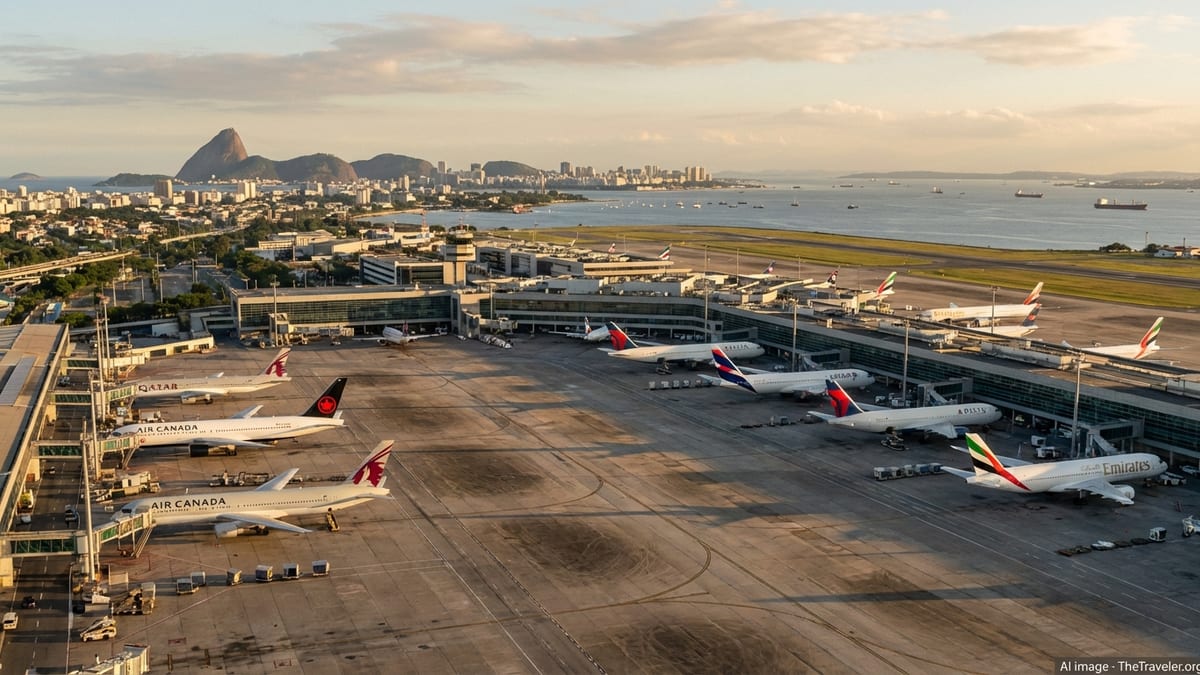
IATA’s 2026 Awards Put Inclusion at the Heart of Growth
The International Air Transport Association has opened nominations for the 2026 edition of its Diversity and Inclusion Awards, to be presented during the 82nd Annual General Meeting and World Air Transport Summit in Rio de Janeiro from 6 to 8 June 2026. The program recognizes a senior inspirational role model, an emerging “high flyer” under 40 and an airline team that can demonstrate measurable progress on diversity and inclusion.
Backed by IATA’s 25by2025 initiative, which now counts more than 200 signatories across airlines and aviation organizations, the awards are built on reported data rather than broad pledges. Participating companies commit to tracking and disclosing metrics, and to raising female representation in senior roles and in underrepresented areas such as technical operations and the flight deck.
Qatar Airways remains the headline sponsor, funding cash prizes for each category and reinforcing its positioning as a global brand championing workforce inclusion. An independent judging panel chaired by Air Transport World’s editor-in-chief and including past winners underscores the industry’s intent to make the awards both credible and comparative across markets.
The outcome will resonate well beyond the stage in Rio. With talent shortages mounting across the aviation value chain, carriers that can prove inclusive cultures and progression pathways are increasingly using those credentials in their pitch to new recruits, investors and regulators.
Brazil, USA and UK Routes Become a Test Bed for Inclusive Growth
Brazil’s aviation and tourism rebound is giving the 2026 awards added weight. IATA has chosen Rio de Janeiro, in the country’s largest aviation market, as this year’s host city just as Brazil celebrates record international arrivals and fresh long-haul capacity from North America, Europe and the Middle East. Routes connecting Brazil with the United States and the United Kingdom are among the most hotly contested, and they are being expanded by airlines that are also prominent in diversity discussions.
Qatar Airways and Emirates link Brazil to global hubs in Doha and Dubai, feeding premium leisure and corporate traffic onward to London, New York and other major cities. Air Canada has strengthened its North and South America network, connecting Canadian gateways to São Paulo while also winning domestic recognition in 2026 as one of Canada’s Best Diversity Employers, a signal to both staff and travelers that inclusion is part of its brand promise.
Delta Air Lines and LATAM, partners in a trans-American joint venture, have built dense schedules between US hubs such as Atlanta and New York and Brazilian gateways including São Paulo and Rio de Janeiro, with onward connections to London and other UK cities. Their coordination on fleet, schedules and sales is increasingly mirrored by joint initiatives on workplace culture and representation, positioning their alliance as a high-profile laboratory for inclusive leadership spanning North and South America.
As traffic recovers on these strategic corridors, the mix of passengers is changing. Younger travelers, global professionals and diaspora communities are proving more sensitive to how brands talk about equity and opportunity. For airlines competing on long-haul routes where fares are high and loyalty is critical, a tangible record on diversity and inclusion is becoming part of the commercial equation.
Qatar Airways, Air Canada, LATAM, Delta and Emirates Chase Talent Edge
Behind the awards, airlines face stark workforce realities. Long-term industry forecasts point to the need for hundreds of thousands of new pilots, technicians and cabin crew over the next two decades as fleets grow and senior staff retire. Competition for skilled labor is intensifying not only between airlines, but also with technology, logistics and hospitality companies that can offer flexible work and clearer progression paths.
In this context, initiatives showcased through IATA’s Diversity and Inclusion Awards are designed to give participating airlines a structural edge. Efforts range from mentorship and sponsorship schemes for women and underrepresented groups, to outreach in schools and universities, to transparent promotion frameworks. For Qatar Airways and Emirates, with their vast long-haul networks reliant on multinational crews, inclusive recruitment and advancement are central to maintaining service standards and schedule reliability.
LATAM and Delta are highlighting how regional partnerships can accelerate progress. Shared training programs, common leadership curricula and joint internal networks allow successful practices to be scaled across continents. Air Canada’s recent national recognition for its diversity agenda signals to candidates in Canada, the United States and beyond that the airline is investing in workplace culture as seriously as it invests in fleet and product.
For travelers, the impact shows up in more subtle ways: culturally competent service on board, language capabilities, and cabin and airport teams that better reflect the diversity of the markets they serve. As airlines increasingly publish their diversity metrics alongside financial and sustainability results, these issues are moving from human resources bullet points to core elements of corporate strategy.
Marriott, Hilton and Accor Align Hospitality Strategy With Aviation Shifts
Major hotel groups are watching the aviation-led shift closely because their fortunes are tightly linked to long-haul route economics. Marriott, Hilton and Accor each operate extensive portfolios in Brazil, the United States and the United Kingdom, and they rely on steady flows of international arrivals on the very routes being expanded by Qatar Airways, Air Canada, LATAM, Delta and Emirates.
With IATA bringing senior airline leaders and regulators to Rio in June 2026, global hotel brands will use the gathering to court corporate clients, fine-tune group and meetings strategies and showcase their own diversity credentials. Hospitality companies face similar talent pressures as airlines, and many have adopted targets on gender and leadership representation, inclusive hiring and training programs that mirror or complement IATA’s 25by2025 approach.
Accor, with deep roots in Brazil and a strong presence in Rio and São Paulo, is poised to gain from any sustained increase in international traffic linked to new or upgraded long-haul services. Marriott and Hilton, heavily exposed to US and UK corporate and leisure demand, see diversity commitments as part of their pitch to travel managers and tour operators who are under pressure to reflect corporate values across their supplier base.
As aviation and hospitality executives meet on the sidelines of the Rio summit, shared diversity benchmarks and award-winning case studies are expected to inform future preferred-supplier decisions, co-branded campaigns and loyalty partnerships, particularly on Brazil–US and Brazil–UK corridors that are set for further growth.
Why Rio’s 2026 Gathering Could Redefine Travel Leadership
The convergence of the IATA Annual General Meeting, the Diversity and Inclusion Awards and a resurgent Brazilian tourism market makes June 2026 an inflection point for global travel leadership. LATAM, as host airline, is positioning Rio as a showcase for how emerging-market carriers can compete not only on network and price, but also on culture, inclusion and community impact.
US and UK regulators, investors and corporate travel buyers will be watching which airlines and partners are highlighted on stage in Rio and how those stories align with their own environmental, social and governance priorities. Recognition for carriers such as Qatar Airways, Air Canada, Delta, LATAM or Emirates would provide a powerful narrative for marketing in North American and European boardrooms where diversity performance is now a standard line of questioning.
For Brazil, the awards place the country’s aviation and tourism infrastructure under renewed global scrutiny at a moment of strong demand. The ability of airports, airlines and hotels to demonstrate inclusive hiring, training and leadership practices could influence future investment decisions and long-term partnerships across the Americas and Europe.
As nominations roll in ahead of the April deadline, the 2026 Diversity and Inclusion Awards are evolving into more than a symbolic celebration. They are becoming a competitive arena in which airlines and their hospitality allies signal how they intend to lead a changing global travel ecosystem spanning Brazil, the United States, the United Kingdom and key connecting hubs worldwide.