

More news on this day
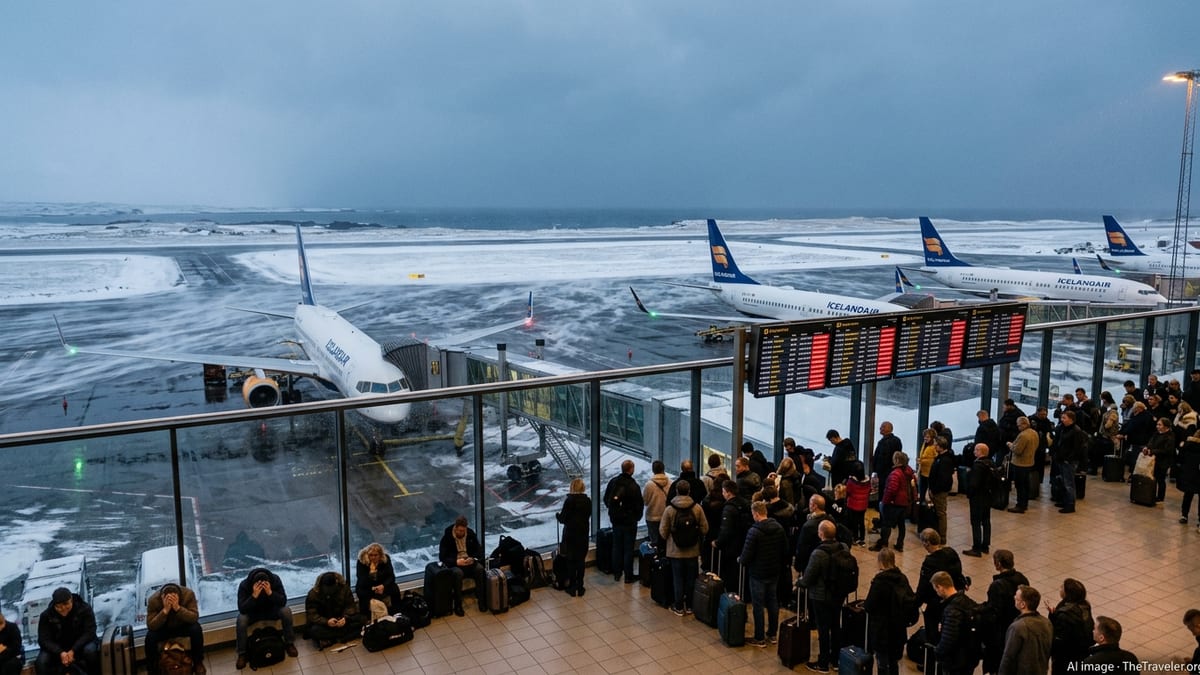
Severe late‑March storms and operational disruption have led to a fresh wave of flight cancellations affecting services at Keflavik, Reykjavik domestic, and Akureyri airports, leaving passengers bound for London, Liege, Akureyri, Egilsstaðir, and other key destinations facing long delays, unexpected overnight stays, and complex rebooking battles.
Get the latest news straight to your inbox!
Weather Turmoil and Operational Strain Hit Iceland’s Air Network
Recent storm systems sweeping across Iceland in the second half of March 2026 have triggered significant disruption to the country’s already weather‑sensitive aviation network. Publicly available forecasts from the Icelandic Meteorological Office point to high winds, blizzard conditions, and poor visibility during peak travel periods, conditions that typically force airlines to consolidate or cancel services, particularly at Keflavik International Airport and regional fields in the north and east.
Passenger accounts shared on travel forums in recent days describe clusters of cancellations and diversions as winds intensified, with multiple long‑haul and European departures from Keflavik reportedly scrubbed or rescheduled at short notice. Travelers arriving into Iceland have reported missed connections to domestic destinations such as Akureyri and Egilsstaðir, creating an uneven patchwork of stranded passengers across several airports.
The latest disruptions build on a winter of intermittent flight issues for Iceland‑bound traffic, where weather‑related operational decisions at Keflavik often cascade across the network. When early‑morning transatlantic arrivals are delayed or diverted, feeder flights onward to regional airports and key European hubs are frequently the first to be consolidated or cut.
Passengers Stranded at Keflavik, Reykjavik, and Akureyri
Travelers transiting Keflavik in recent days report waiting many hours for clarity on alternative routings after learning their flights to or from Iceland were cancelled due to the adverse conditions. Some describe long queues at service desks, while others indicate they were advised to manage rebooking online, leading to confusion when available seats quickly disappeared on popular routes such as London and other major European gateways.
At Reykjavik’s domestic airport and at Akureyri in the north, the knock‑on impact has been particularly acute for those with tight connections. Passengers who had planned seamless same‑day transfers from international arrivals at Keflavik to domestic services onward to Akureyri or Egilsstaðir report being rebooked a day or more later, or routed back through Keflavik on limited remaining seats. For visitors on short stays, this has meant losing valuable days from already brief itineraries.
Published accounts indicate that accommodation assistance has varied depending on the specific cause of each cancellation and the ticket type. Some passengers describe being provided with hotel vouchers, meals, and ground transport when disruptions were linked to broader operational issues, while others affected during periods of particularly severe weather say they had to cover their own lodging and seek reimbursement later where regulations allowed.
Key Routes Affected, Including London and Liege Links
The latest cancellations have disrupted a range of routes connecting Iceland with major European cities. Services between Keflavik and London, one of Iceland’s busiest international corridors, have seen multiple departures either delayed into the following day or combined into fewer flights, intensifying competition for remaining seats among both outbound and inbound travelers.
Freight and combination operations linking Keflavik with Liege, a significant European cargo and logistics hub, have also faced weather‑related disruption at various points over the winter, according to industry coverage of Icelandair’s European operations. While passenger itineraries are the most visible impact to travelers, these cancellations can also delay shipments and affect time‑sensitive goods moving through Iceland’s transatlantic network.
Within Iceland, links to Akureyri and Egilsstaðir are especially vulnerable when storms track across the north and east. Airline timetables show that these regional routes often operate with relatively few daily frequencies, meaning that a single round‑trip cancellation can leave travelers with limited alternatives for 24 hours or more. For visitors relying on domestic flights to reach remote winter destinations, this significantly raises the risk of missing prepaid tours and accommodation.
Confusion Around Airline Brands and Defunct Carriers
The latest wave of disruptions has also underscored lingering confusion among some travelers over Iceland’s shifting airline landscape. Icelandair remains the country’s primary full‑service carrier and the main operator at Keflavik, while several low‑cost challengers that once marketed heavily to visitors are no longer flying. Published histories show that Iceland Express, a low‑fare carrier active in the 2000s, ceased independent operations more than a decade ago after its activities and routes were taken over by WOW Air, which itself later collapsed.
More recently, the Icelandic low‑cost airline Play ended operations and cancelled all flights in late 2025, according to business and aviation news coverage at the time. That shutdown stranded passengers across Europe and North America and prompted regulators and consumer groups to reiterate guidance on how travelers can reclaim unused tickets or seek rescue fares from other airlines. The presence of these now‑defunct brand names in older bookings, comparison‑site listings, or compensation guides can add to the confusion when current‑day cancellations occur.
Travelers looking to understand their rights after a disrupted journey are frequently directed by consumer advocates and legal‑rights platforms to check whether their itinerary falls under European air passenger regulations, which can provide compensation in cases of cancellations not caused by extraordinary circumstances such as extreme weather or airspace closures. In the current situation, severe storm conditions across Iceland are likely to be a key factor in determining what support is offered.
What Travelers Should Watch for in the Coming Days
With forecasts indicating continued changeable conditions across Iceland, travelers scheduled to pass through Keflavik, Reykjavik domestic, or Akureyri in the coming days are being advised by travel experts and frequent visitors to build additional flexibility into their plans. This includes allowing longer connection times, avoiding tight same‑day links between international and domestic flights, and being prepared for last‑minute timetable changes.
Publicly available guidance from aviation and consumer organizations emphasizes the importance of monitoring airline communication channels closely, particularly email and app notifications, which are often the first place schedule changes appear. Checking flight status on the day of travel before leaving for the airport can help reduce unnecessary journeys, especially when major storms are forecast and broad groups of flights may be rescheduled together.
Travel planners also point out that travelers with fixed onward commitments, such as cruises or nonrefundable tours, may wish to build in additional buffer days when connecting via Iceland during the late winter and early spring period. While Iceland’s aviation infrastructure is well‑accustomed to operating in challenging conditions, the current pattern of storms highlights how quickly a dozen or more flights can be affected in a single day, reshaping plans for hundreds of passengers across the network.