

More news on this day
More than a dozen flights operated by Icelandair and associated carriers have been canceled across Iceland’s main airports, leaving passengers stranded at Keflavik, Reykjavik, and Akureyri and disrupting connections to major destinations including London, Liege, Akureyri, and Egilsstaðir.
Get the latest news straight to your inbox!
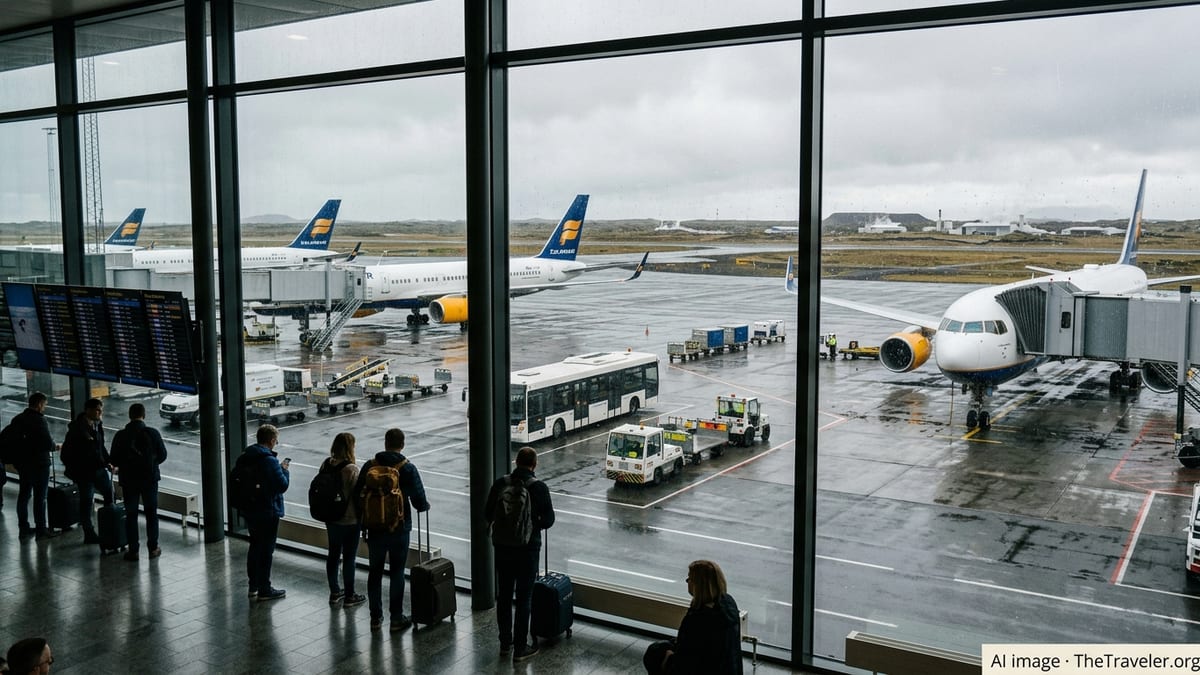
Wave of Cancellations Hits Iceland’s Main Gateways
Recent operational data and aviation tracking reports show a fresh round of cancellations across Keflavik International Airport, Reykjavik Domestic Airport, and Akureyri Airport, compounding what has already been a volatile winter for air travel in Iceland. The latest disruptions involve Icelandair’s domestic and international network as well as services branded or marketed in partnership with Iceland Express–style tour products, affecting both point-to-point travelers and those on complex itineraries through the country.
Publicly available information indicates that more than a dozen departures and arrivals have been scrubbed over a short window, including services linking Iceland’s hubs with London and other European cities, as well as domestic routes serving Akureyri and Egilsstaðir. These cancellations come on top of earlier weather-related disruptions and capacity adjustments on transatlantic routes, creating knock-on effects for travelers attempting to reach or transit through Iceland.
Industry coverage notes that Keflavik, the primary international gateway, has absorbed the largest share of affected flights, but Reykjavik Domestic and Akureyri have also seen schedules reshuffled. For passengers starting or ending their journeys in North and East Iceland, the loss of key domestic legs has made it harder to reach international departures, even when long-haul flights remain scheduled.
The timing is particularly sensitive, as Iceland continues to market itself as a year-round destination and relies heavily on smooth connectivity between Keflavik and regional airports such as Akureyri and Egilsstaðir. Any sustained pattern of last-minute cancellations risks undermining traveler confidence, especially among those using Iceland as a connecting hub between Europe and North America.
Routes to London, Liege, Akureyri, and Egilsstaðir Disrupted
According to published flight listings and recent news coverage, several of the canceled services involve high-demand routes linking Iceland to the United Kingdom and continental Europe. London, one of Iceland’s most important origin and destination markets, has seen selected flights removed from the schedule or reassigned, forcing passengers either to accept longer routings or to seek rebooking on later dates.
Regional European destinations such as Liege have also been affected as carriers trim or consolidate lower-frequency services in response to operational constraints. For travelers using Iceland as a connection point to or from secondary European cities, even a handful of cancellations can wipe out same-day transfer options, making overnight stays or complex alternative routings unavoidable.
Within Iceland, domestic links from Reykjavik to Akureyri and Egilsstaðir continue to be critical for residents and visitors alike. Icelandair remains the primary scheduled operator to these regional airports, and any cancellation on these routes can sever onward connections at short notice. Recent traffic statistics published by Icelandic airport authorities highlight the growing passenger volumes at Akureyri and Egilsstaðir, underscoring how dependent these communities have become on reliable air links to the capital and to Keflavik.
Travel forums and passenger reports describe cases where cancellations on domestic legs have caused travelers to miss onward flights to London and other European hubs, raising questions about how itineraries are constructed and protected when multiple tickets or separate bookings are involved. In many situations, the practical impact of a single domestic cancellation is magnified by the limited frequency of alternative services.
What Is Driving the Latest Icelandair and Iceland Express Disruptions
The immediate causes of the most recent cancellations vary by route, but publicly available information points to a mix of winter weather, tight fleet utilization, and broader industry pressures that continue to challenge airlines operating in and out of Iceland. The country’s volatile conditions regularly trigger orange and red weather alerts, and advisory notices in late March have warned of high winds and poor visibility likely to affect road and air transport throughout Iceland.
Weather, however, tells only part of the story. Aviation analysts and consumer-rights case summaries show instances where flights have been canceled due to late aircraft arrival, aircraft rotations disrupted by earlier storms elsewhere, or schedule adjustments connected with network restructuring. In some cases, domestic segments operated by Icelandair have been pulled when inbound feeder flights were disrupted, cutting off planned connections to London and other European destinations.
The reference to Iceland Express in tour and package documentation can add to the confusion for travelers. While Iceland Express as a standalone low-cost carrier has long since disappeared from scheduled operations, the branding persists in some third-party travel products and marketing materials. When flights in such packages are canceled, responsibilities are divided between the airline operating the service and the tour company that sold the itinerary, which can complicate efforts to secure swift rebooking or compensation.
On a structural level, Iceland’s aviation landscape is still absorbing the ripple effects of airline failures and consolidations over the past few years. The shutdown of newer entrants and seasonal shifts in capacity have left established carriers carrying more of the load on domestic and regional routes. That makes the system more vulnerable when a single operator experiences disruptions, particularly on thinner routes to airports like Akureyri and Egilsstaðir where alternative carriers are limited or nonexistent.
Impact on Stranded Passengers at Keflavik, Reykjavik, and Akureyri
For travelers caught up in the current wave of cancellations, the practical challenges begin the moment a flight disappears from the departure board. Reports from recent disruptions describe passengers stuck overnight near Keflavik after flights were scrubbed due to weather or operational issues, with limited hotel availability and transport options strained by road closures or hazardous driving conditions.
At Reykjavik Domestic Airport and Akureyri, the situation can be even more complex. When domestic flights are canceled, travelers heading for international departures at Keflavik must quickly decide whether to attempt the several-hour overland journey, often in poor weather and with uncertain road conditions. Travel advisories have repeatedly emphasized that passengers should not take unnecessary risks on Iceland’s highways simply to make a flight, but that message can be difficult to reconcile with the pressure of non-refundable bookings and tightly planned itineraries.
Travel discussion boards and complaints submitted to oversight bodies highlight recurring frustrations with long call-center waits, inconsistent information across booking channels, and uncertainty about who is responsible for arranging hotels, meals, and alternative transport. Some passengers report relatively smooth rebooking experiences, while others describe scrambling to secure last-minute accommodation or paying out of pocket for taxis and extra nights pending later claims.
Families and organized tour groups face additional complications when multiple travelers on a single booking are affected by staggered cancellations or rebookings. In some accounts, partial reassignments have left group members split across different flights or dates, forcing them to rearrange local accommodation, rental cars, or excursions at short notice.
Key Advice for Travelers Holding Icelandair or Iceland Express Itineraries
Travel specialists and consumer advocates observing the situation in Iceland recommend that passengers scheduled to fly with Icelandair or on itineraries marketed under Iceland Express–style branding take a proactive approach in the coming days. Monitoring flight status closely in the 24 hours before departure, and again on the day of travel, can provide early warning of potential disruption, especially during active weather alerts.
Passengers are also encouraged to review the terms and conditions of their tickets and any associated tour packages. Under European air passenger regulations, certain cancellations and long delays may entitle travelers to assistance, rerouting, or financial compensation, depending on the cause of the disruption and the length of notice provided. Where cancellations are linked clearly to severe weather or airport closures, compensation rules may be different from those that apply to operational or staffing issues.
Travel insurance policies can play an important role, particularly for those combining domestic and international legs on separate tickets. Policies that include coverage for missed connections, additional accommodation, or alternative transport can help mitigate the financial impact when a canceled domestic flight from Reykjavik, Akureyri, or Egilsstaðir causes a traveler to miss a long-haul departure from Keflavik.
Finally, travelers planning itineraries through Iceland during the late winter and early spring are being advised by many travel planners to build in more buffer time between domestic and international segments and to consider overnighting near Keflavik before early morning departures. Although such precautions add cost and reduce spontaneity, they can significantly lower the risk of being stranded when another round of cancellations hits Iceland’s tightly interconnected air network.