

More news on this day
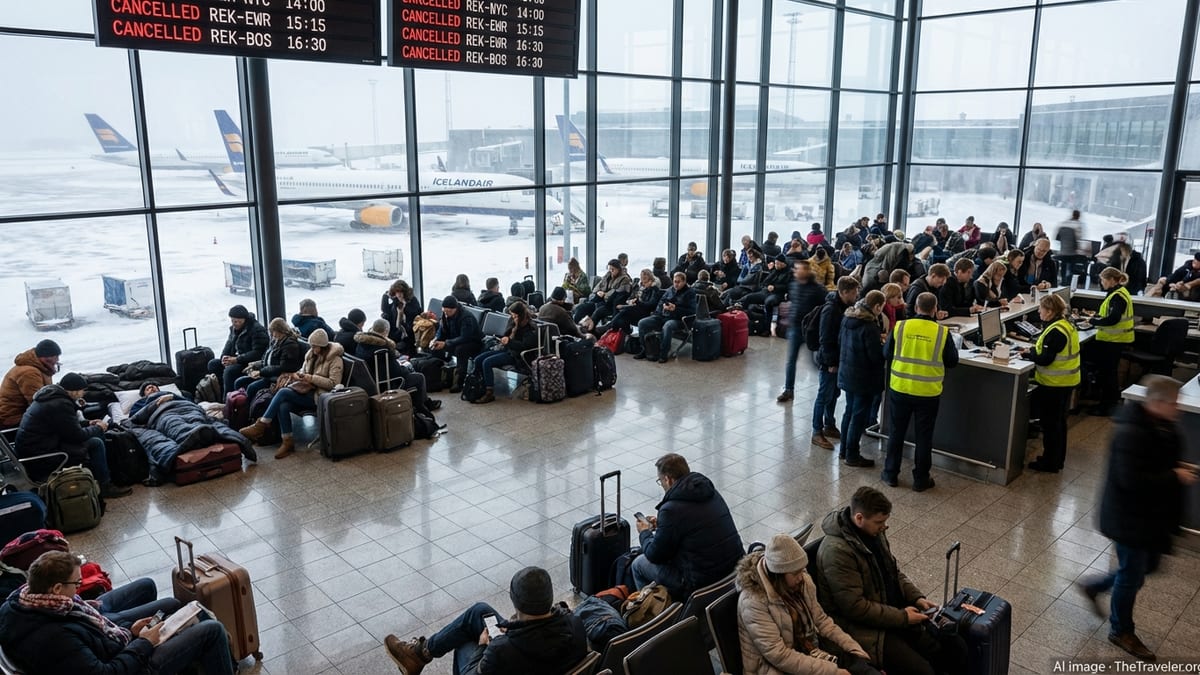
Hundreds of transatlantic passengers were left isolated in Iceland on February 23 as Icelandair cancelled five key North America-bound flights, compounding a wider aviation meltdown triggered by a dangerous winter storm paralyzing major airports from New York to Boston.
Storm Hernando Triggers Fresh Wave of Disruptions
The wave of cancellations by Icelandair came as Winter Storm Hernando, a powerful nor’easter, swept across the northeastern United States, dumping heavy snow and whipping up gale-force winds across New York, New Jersey, Massachusetts and Pennsylvania. Airports serving New York’s JFK, LaGuardia and Newark, as well as Boston Logan and Philadelphia, have all reported near-system-wide shutdowns as airlines preemptively scrubbed flights to keep aircraft and crews out of the worst conditions.
By Monday morning, aviation data providers were reporting more than 5,000 cancellations within, into or out of the United States, with disruption heavily concentrated along the busy Northeast corridor. Those figures were rising by the hour as the storm intensified, turning what had been a forecasted operational challenge into one of the most significant winter disruptions of the season.
Against that backdrop, Icelandair confirmed it had cancelled five transatlantic services linking Keflavík International Airport with major East Coast gateways including Newark, Boston and New York JFK. While some flights were halted for safety reasons linked to deteriorating weather conditions on both sides of the Atlantic, others were affected by knock-on operational and crew-positioning challenges as the storm upended schedules in the United States.
The decision has stranded passengers in Iceland who were counting on the airline’s hub-and-spoke model to connect from Europe to North America. With travel options sharply reduced across the Atlantic, many now face extended delays, unexpected overnights and the prospect of waiting days for a rebooked seat.
Key Routes to Newark, Boston and JFK Go Dark
Among the most acutely affected passengers are those booked on Icelandair’s heavily trafficked routes to Newark Liberty International, Boston Logan International and New York’s John F. Kennedy International Airport. These flights serve as critical links not only for U.S.-bound travelers, but also for connecting passengers heading onward to secondary markets across North America.
At Newark and JFK, where overall cancellation rates have surged to well above 70 percent, Icelandair’s scrapped services have added to a crowded departure board filled with red. The absence of these flights has further squeezed transatlantic capacity at a moment when other carriers, from U.S. majors to European flag airlines, are also pulling services in response to the storm and associated airport ground stops.
Boston, another key Icelandair gateway and a frequent stopover point for travelers bound for New England and Atlantic Canada, has likewise seen operations sharply curtailed. With some estimates suggesting that around four in five scheduled flights at Boston Logan were grounded, Icelandair’s decision to cancel its Boston-bound service has effectively shut off one of the more efficient routings from northern Europe to the northeastern United States.
While Icelandair has not released a full public breakdown of each affected flight, travel agents and airport information screens on Monday showed cancellations across the airline’s morning and afternoon transatlantic bank, including departures that would normally deliver passengers into the East Coast in time to connect with late-evening domestic services.
Passengers Report Long Queues and Limited Information
Inside Keflavík International Airport, travelers described scenes of long rebooking lines and anxious waits at customer service desks as word of the Icelandair cancellations spread. Many passengers were in transit from European cities, expecting short layovers in Iceland before continuing to the United States. Instead, they found themselves unexpectedly marooned in the North Atlantic hub with little clarity on when they would be able to continue their journeys.
Some stranded customers shared accounts of being directed to digital self-service tools and call centers already overwhelmed by demand from would-be travelers across the region. Others reported being handed meal vouchers and hotel information, but complained that available accommodation near the airport filled quickly as multiple flights were cut from the departure board.
For families and business travelers alike, the timing of the disruption is particularly challenging. Many had planned trips around school breaks, important meetings or onward connections in the United States. With major hubs such as Newark, Boston and JFK all under severe operational strain, even those rebooked on later flights may now face additional delays once they reach the East Coast.
Travel advocacy groups noted that while safety considerations rightly take precedence in severe weather events, airlines must still ensure clear communication, timely updates and accessible support. For passengers already in Iceland, the sense of isolation is amplified by the limited alternative options, especially as other carriers adjust their own schedules in response to the storm.
Icelandair Cites Safety and Wider System Pressures
Icelandair has framed the cancellations as a necessary response to dangerous and unpredictable conditions along the U.S. East Coast, where blizzard warnings and whiteout visibility have made flight operations increasingly hazardous. Airline sources indicated that the decision to cancel multiple transatlantic services was made in coordination with air traffic authorities and airport operators who have imposed flow restrictions and, in some cases, temporary shutdowns of runways.
The airline is also dealing with the operational ripple effects of earlier disruptions. As airports from New York to Boston enacted ground stops and curtailed inbound flights, Icelandair aircraft and crews found themselves out of position, making it harder to maintain the integrity of its normal schedule. With limited slack in winter schedules and tight crew duty-time rules, even a relatively small number of delayed arrivals and diversions can cascade into wider cancellations.
Industry analysts point out that hub-based carriers like Icelandair face unique challenges in such scenarios. When a storm targets a concentration of key destinations at the same time, the hub’s transatlantic bank can unravel quickly, forcing airlines to either consolidate passengers on fewer departures or cancel entire rotations. Given the scale of Storm Hernando’s impact across both primary and secondary airports in the Northeast, Icelandair’s decision to cancel multiple flights at once reflects a broader strategy of cutting its losses while prioritizing safety.
The airline has not yet provided a firm timeline for when normal operations to Newark, Boston and JFK will resume, noting that visibility on conditions and airport capacity in the United States remains limited. With forecasts calling for persistent snow, strong winds and continued disruptions into Tuesday, more schedule changes remain possible.
Compensation, Care and Passenger Rights in Focus
The cancellations have also renewed scrutiny of how airlines handle passenger rights and care obligations during severe weather disruptions. Under European and U.K. air passenger regulations, carriers are generally not required to pay cash compensation when cancellations are caused by extraordinary circumstances such as extreme weather, provided they can demonstrate they took reasonable measures to avoid the disruption.
However, those same rules still obligate airlines to provide care for stranded travelers, including meals, refreshments and hotel accommodation when passengers are forced to stay overnight away from home. For transit passengers stranded in Iceland, that typically includes transport to and from hotels, as well as assistance in arranging new itineraries at the earliest possible opportunity.
Early accounts from Keflavík suggest a mixed experience. Some travelers reported being swiftly rebooked on later Icelandair flights or rerouted via other European hubs, while others complained of long waits and confusion over whether they were entitled to hotel stays or only meal vouchers. With a surge in demand for local accommodation and limited availability near the airport, some passengers have been offered rooms further from the terminal or asked to return the following day for updated flight options.
Consumer advocates are urging affected passengers to keep all receipts for out-of-pocket expenses and to document their interactions with the airline, including any written communication regarding rebooking or refunds. While weather-related cancellations often fall into a complex legal gray area, clear records can be crucial when filing claims or insurance requests once the immediate crisis has passed.
Aviation Network Strains Under Regional Meltdown
Icelandair’s cancellations highlight the degree to which a single regional weather event can disrupt global air travel networks. With thousands of flights grounded across the northeastern United States, the impacts are rippling through European hubs as inbound aircraft are delayed or diverted and outbound services are pulled in anticipation of closed runways and limited gate space at U.S. airports.
Major carriers including Lufthansa, Emirates, Etihad and several North American airlines have already halted or reduced transatlantic services to New York and Boston as the storm intensified, underscoring that the disruption is far from isolated to a single airline. In some cases, airlines have taken the unusual step of completely cancelling their daily rotations to specific East Coast cities, rather than attempting partial operations that might result in aircraft and crews being stranded.
Analysts note that the timing of the storm is particularly problematic, hitting at the start of the workweek when business travel is typically strong and just as airlines are beginning to ramp up late-winter and early-spring schedules. With aircraft utilization closely calibrated and spare capacity limited, there is relatively little room to absorb multi-day disruption without affecting operations well into the week.
The concentration of cancellations at a handful of major hubs also means that connecting passengers are disproportionately affected. Travelers who might have used Icelandair’s Iceland hub as a bridge between smaller European cities and U.S. destinations now find their itineraries collapsing as both ends of the transatlantic corridor falter under the weight of the storm.
What Stranded Travelers Can Do Now
For passengers currently stuck in Iceland or facing cancelled departures from Europe, travel experts emphasize the importance of acting quickly but methodically. Those whose flights have already been cancelled should first confirm their options directly with Icelandair, either via the airline’s app, website or dedicated customer service channels. Many carriers, including Icelandair, activate special rebooking policies during large-scale weather events, allowing customers to change travel dates without standard penalty fees, although fare differences may still apply.
Passengers are also advised to explore alternatives via other carriers and routings, particularly if they need to reach the United States by a specific deadline. Some airlines traditionally offer so-called rescue or recovery fares to passengers affected by another carrier’s disruption, though these are subject to availability and are often snapped up quickly during major events. With U.S. East Coast capacity heavily constrained, travelers may find more options by routing through alternative hubs or considering nearby airports that are less severely impacted.
For those already in Iceland with confirmed hotel accommodation and rebooked flights, staying informed will be critical. Weather conditions and airport operating status in the northeastern United States are evolving rapidly, and schedules may change again as Storm Hernando moves up the coast. Travelers should monitor their flight status regularly and allow extra time to return to the airport, as ground transport can also be affected by snow, ice and limited visibility.
Travel insurance, where purchased, may offer some relief, especially policies that include coverage for delays, missed connections and additional accommodation costs. Policy terms vary widely, so passengers are urged to review their documentation carefully and contact their providers with detailed records of expenses, receipts and airline correspondence.
Outlook for the Coming Days
Meteorologists expect Winter Storm Hernando to continue battering the northeastern United States through at least late Monday and into Tuesday, with some forecasts calling for up to half a meter of snow in parts of New England and sustained high winds along the coast. Authorities have warned residents to avoid non-essential travel and have mobilized snowplows, salt trucks and emergency crews across multiple states.
Airlines, including Icelandair, are likely to continue adjusting their schedules on short notice as conditions evolve. Even once snow and winds begin to ease, airports will face the task of clearing runways, de-icing aircraft and managing backlogs of delayed and displaced passengers. That recovery process can stretch over several days, particularly when crews and aircraft are scattered across multiple continents.
For Icelandair customers booked on flights to Newark, Boston, JFK and other East Coast hubs in the coming days, the message from airlines and airports alike is to check flight status before leaving home and to be prepared for further timetable changes. Travelers with flexible plans may wish to delay non-essential trips until operations stabilize, while those with urgent travel needs should stay in close contact with their airline or travel agent.
In the meantime, the scenes at Keflavík International Airport serve as a stark reminder of the fragility of global air networks when exposed to the extremes of winter weather. As stranded passengers wait out the storm in Iceland, their experience underscores the human cost of an aviation system that can be brought to a standstill by a single, powerful nor’easter sweeping up the North Atlantic seaboard.