

More news on this day
The Bahamas and wider Caribbean are entering a new phase of cruise-driven tourism as Royal Caribbean’s Icon of the Seas, the world’s largest cruise ship, begins regular calls that are expected to channel thousands of additional visitors and millions of dollars in new spending to key island economies.
Get the latest news straight to your inbox!
New Giant at Sea Brings Record Passenger Volumes
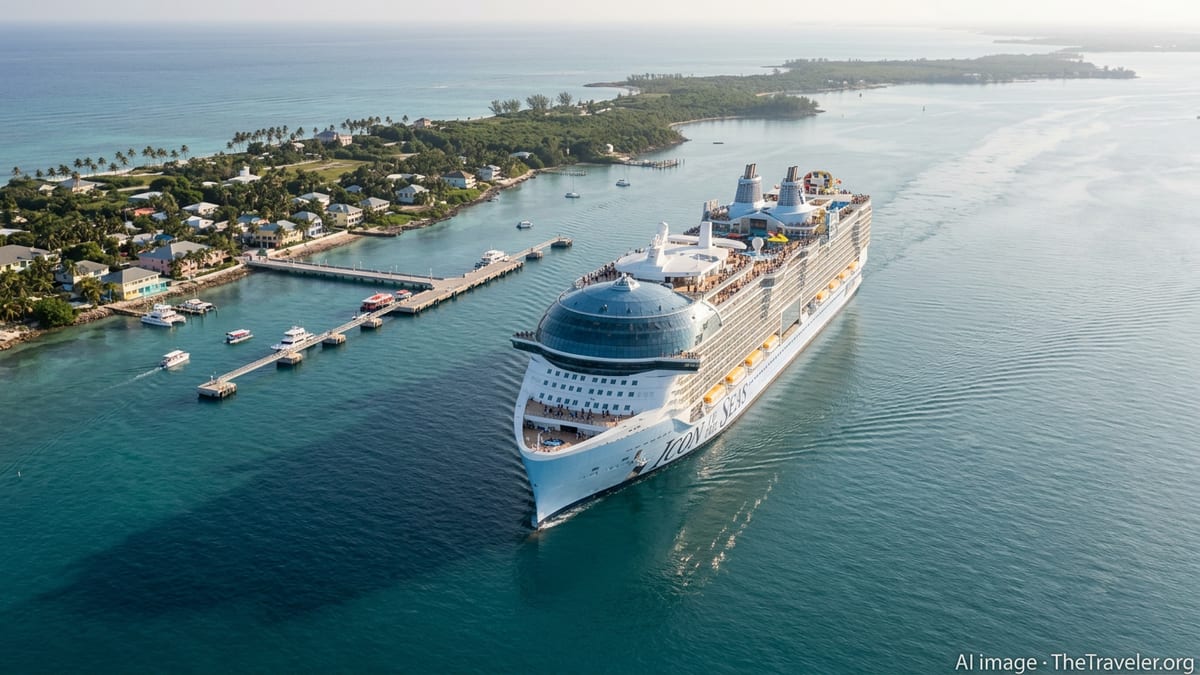
Icon of the Seas entered service in January 2024 as the largest cruise ship ever built, homeported in Miami and registered in Nassau. Publicly available data describes the vessel at roughly 1,198 feet in length, with capacity for more than 5,600 guests at double occupancy and significantly more when fully loaded. Analysts describe the ship as a floating resort, designed to anchor Royal Caribbean’s growth strategy in the Caribbean.
According to published coverage and industry schedules, Icon of the Seas operates year-round seven-night itineraries in the Eastern and Western Caribbean, with every voyage including a call at Perfect Day at CocoCay in the Bahamas. Other regular calls include destinations such as St Kitts, St Thomas, St Maarten, Cozumel and Costa Maya, placing the mega-ship firmly at the center of the region’s cruise traffic.
Cruise industry reports indicate that overall demand has rebounded strongly since the pandemic, with global passenger volumes surpassing 2019 levels. Within that context, Icon of the Seas is viewed by market observers as both a symbol and a driver of the sector’s expansion, concentrating unprecedented numbers of passengers and crew on a single platform deployed almost exclusively in the Caribbean basin.
Bahamas Sees CocoCay and Nassau Positioned as Major Winners
The Bahamas is emerging as one of the primary beneficiaries of Icon of the Seas’ deployment. The ship’s weekly calls at CocoCay, Royal Caribbean’s private island destination in the Berry Islands, are expected to generate substantial incremental spending on shore excursions, beach clubs, food and beverage, and recreational activities tailored to high-volume cruise visitors.
Economic analysts following the region note that private island destinations such as CocoCay have become central to cruise companies’ business models, allowing them to capture a larger share of guest spending while still delivering employment and contracting opportunities to local suppliers. In the case of Icon of the Seas, the sheer scale of the vessel’s passenger load amplifies these effects, with thousands of visitors disembarking in a single day.
Nassau, the ship’s port of registry and a frequent gateway for Bahamas tourism, is also positioned to benefit indirectly. Industry commentary highlights that the global spotlight on Icon of the Seas has helped reinforce the Bahamas’ image as a marquee cruise destination, supporting broader investments in port infrastructure, hospitality projects and tourism services that serve multiple cruise lines, not just a single brand.
Caribbean Ports Adapt to Mega-Ship Opportunities
Across the wider Caribbean, ports are adjusting to accommodate Icon of the Seas and future vessels of comparable size. Reports from port authorities and trade publications describe upgrades ranging from lengthened berths and reinforced piers to expanded terminal facilities designed for faster embarkation, disembarkation and security screening of very large passenger volumes.
Destinations such as St Kitts and St Thomas have featured prominently on the ship’s early itineraries, with local businesses tailoring offerings to capitalize on brief but intense surges of visitors. Retailers, tour operators and transport providers are expanding capacity to handle the influx, while some ports are experimenting with crowd management strategies to ease congestion in historic districts and popular beaches during peak call days.
Observers note that the decision by Icon of the Seas to call at less traditional cruise ports on some sailings, including secondary cities that have historically focused on cargo, demonstrates how mega-ships can catalyze diversification. By spreading calls beyond the busiest hubs, cruise lines can open up new destinations to international tourism, although these ports often face steeper infrastructure and planning challenges to handle sudden spikes in demand.
Economic Gains Balanced Against Environmental and Social Concerns
Local business groups across the Bahamas and Caribbean view Icon of the Seas as an important driver of short-term revenue and longer-term job creation. Increased port calls translate into higher demand for guides, drivers, entertainers, craftspeople and hospitality workers, and can stimulate investment in small enterprises that serve cruise passengers directly or supply larger tourism operators.
At the same time, environmental organizations and some community advocates have raised questions about the cumulative impacts of mega-cruise ships on fragile marine ecosystems and coastal infrastructure. Publicly available assessments acknowledge that while Icon of the Seas incorporates newer fuel-efficient technologies compared with earlier generations of large ships, its overall footprint remains substantial because of its size, energy use and waste streams.
Regional commentators highlight that the economic benefits of cruise tourism can be unevenly distributed, with a significant share of passenger spending captured onboard rather than ashore. This has sharpened the policy focus in some Caribbean destinations on negotiating port fees, regulating shore excursion operations and encouraging business models that keep more tourism dollars circulating locally.
Caribbean Tourism Enters a Mega-Ship Era
With Icon of the Seas now firmly established on weekly runs from Miami, the Bahamas and neighboring Caribbean states are adjusting to what many analysts describe as a mega-ship era. Additional Icon-class vessels, including Star of the Seas and a planned third sister ship, are scheduled to join the fleet in the mid-2020s, reinforcing projections that very large cruise ships will remain central to the region’s tourism landscape.
Tourism planners and industry observers in the Caribbean increasingly frame the arrival of Icon of the Seas as both an opportunity and a test. Success will depend on balancing the promise of higher visitor numbers and new revenue streams with the need to protect coastal environments, preserve local culture and ensure that economic gains reach communities beyond the immediate port zones.
As the world’s largest cruise ship continues its circuits through the Bahamas and Caribbean, the region’s response is likely to shape global perceptions of how island destinations can harness mega-cruise tourism while managing its risks, setting precedents for future deployments of even larger vessels in the decades ahead.