

More news on this day
The Indian Hotels Company Limited (IHCL) is preparing to add a new Taj Safaris lodge in the Satpura region of Madhya Pradesh, with plans for an exclusive 20-key property that will deepen the group’s luxury wildlife presence in central India.
Get the latest news straight to your inbox!
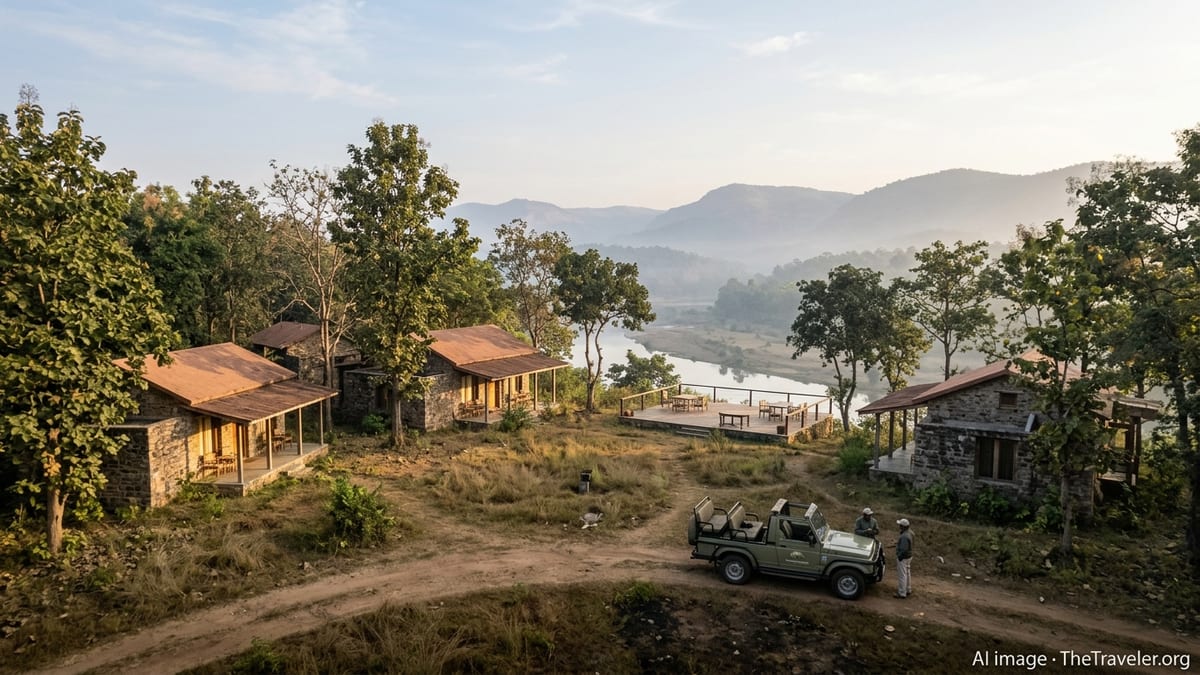
New Boutique Safari Lodge for Satpura Landscape
Publicly available information on the planned development indicates that the proposed Taj Safaris property is envisaged as a small, high-end lodge of around 20 keys, positioned to serve wildlife-focused travelers exploring the Satpura landscape. The region, anchored by Satpura Tiger Reserve and its surrounding buffer forests, has grown steadily as an alternative to more crowded central Indian parks such as Kanha and Bandhavgarh.
The new lodge is expected to follow Taj Safaris’ model of low-density, immersive accommodation, with a limited number of rooms to maintain a sense of seclusion and exclusivity. This format typically appeals to international wildlife enthusiasts and domestic luxury travelers seeking personalized guiding, quieter safari zones, and lodge-led nature experiences beyond traditional vehicle safaris.
Reports on recent IHCL development activity suggest that the Satpura project forms part of a broader strategy to increase the company’s footprint in key leisure and wildlife destinations, often through asset-light management contracts with local partners. The 20-key size signals a focus on premium positioning rather than volume, in line with Taj Safaris’ existing lodges in India’s tiger-country circuit.
While detailed timelines and design specifics have not yet been widely circulated, the Satpura project is being viewed in the market as a natural extension of IHCL’s established presence in central India, where the group already operates and manages multiple properties across Madhya Pradesh and neighboring states.
Strengthening IHCL’s Luxury Wildlife Portfolio
The Satpura lodge is expected to strengthen IHCL’s luxury wildlife portfolio at a time when the company has been expanding across leisure and nature-led destinations. Recent corporate updates and industry coverage highlight that IHCL has been steadily adding resorts and safari-style retreats, complementing its urban Taj hotels and upscale brands in both metro and emerging markets.
Taj Safaris, created as a specialist wildlife brand within the IHCL ecosystem, is known for small lodges that integrate high-end hospitality with conservation-oriented experiences. Existing lodges typically emphasize guided game drives, walking safaris where permitted, and interpretive nature activities designed around local ecosystems. Market observers expect the Satpura property to follow a similar template, adapted to the rugged hills, river valleys, and dense teak and mixed forests that characterize the Satpura range.
Industry analysts note that demand for high-quality wildlife stays in India has broadened beyond a narrow group of international visitors. A rising segment of affluent domestic travelers is seeking shorter, experience-rich breaks with professional guiding, curated itineraries, and seamless lodge services, which supports the business case for small, premium lodges such as the one proposed in Satpura.
The 20-key configuration also aligns with a global trend toward boutique safari properties that can justify higher per-night rates while keeping operating footprints and environmental pressure comparatively low. For IHCL, the project adds another differentiated product in its growing luxury and upper-upscale leisure lineup.
Satpura’s Growing Appeal as a Low-Impact Safari Destination
Satpura Tiger Reserve has earned a reputation among wildlife travelers as a quieter, more low-impact alternative to India’s better-known parks. The reserve and its surrounding landscape offer a distinctive topography of gorges, plateaus, and the Tawa reservoir, allowing for varied activities such as boat safaris, walking trails in designated areas, and jeep drives on less congested routes.
Travel trade reports and wildlife tour operators commonly describe Satpura as a destination for travelers who prioritize deeper nature immersion and birding, rather than purely big-cat sightings. The planned Taj Safaris lodge is poised to tap into this positioning, offering a base for longer stays centered on layered natural-history experiences, from tracking smaller mammals to exploring nocturnal species with expert naturalists.
The region’s relative remoteness compared with some of central India’s more commercialized parks has historically limited large-scale hotel development, leaving space primarily for smaller lodges and camps. A 20-key Taj Safaris property fits within this pattern, adding capacity while broadly preserving the destination’s intimate feel.
For Satpura’s tourism ecosystem, another branded luxury lodge could help raise international visibility, encourage longer itineraries across central India’s protected areas, and support ancillary services such as local transport, guiding, and community-based experiences in nearby villages.
Focus on Sustainability and Community Linkages
Although detailed sustainability plans for the Satpura project have not yet been widely published, IHCL’s recent communications around new resorts and safari-style properties consistently emphasize environmental stewardship, energy-efficient design, and community engagement. Many of the group’s new-build and conversion projects reference measures such as reduced single-use plastics, responsible sourcing, and integration with local livelihoods through jobs and supply chains.
Market watchers expect similar priorities at the Taj Safaris lodge in Satpura, particularly given the sensitivity of the central Indian forest landscape and the presence of wildlife corridors connecting the Satpura and Vindhya ranges. The small key count, when paired with design that clusters accommodation thoughtfully around existing vegetation and contours, is generally regarded as a more sustainable approach than larger, high-density resorts.
Community linkages are likely to be an important aspect of the project, in line with broader industry practices in India’s wildlife destinations. Lodges in such regions commonly draw staff from nearby villages, source fresh produce locally where possible, and collaborate with local stakeholders on craft, cultural programs, and conservation-awareness initiatives. These linkages can help spread tourism benefits more evenly while reinforcing the value of habitat protection.
For travelers, a sustainability-forward approach often translates into more authentic experiences, from locally inspired cuisine to interactions with resident naturalists and community members who offer insight into the human-wildlife interface around Satpura.
What the Project Signals for India’s High-End Safari Market
The decision to pursue a boutique Taj Safaris project in Satpura is being interpreted by hospitality observers as a sign of continued confidence in India’s high-end safari market. Industry data in recent years has pointed to rising hotel signings and investment across Tier II and nature-led destinations, reflecting traveler appetite for experiences that combine comfort with access to landscapes and wildlife.
IHCL’s expanding pipeline across leisure destinations suggests that domestic and international tourism demand is diversifying beyond traditional city breaks and heritage circuits. Wildlife reserves and national parks, particularly in central India, are emerging as key nodes within multi-stop itineraries that might also include cultural and spiritual destinations.
For tour operators and travel planners, the addition of a Taj Safaris lodge in Satpura will likely provide greater flexibility in crafting high-end central India journeys, allowing guests to combine contrasting habitats and park styles while remaining within a familiar hospitality ecosystem. This, in turn, could encourage repeat visitation and multi-park safaris that distribute tourism more evenly across the region.
As plans for the Satpura property progress, the project will be closely watched for how it balances luxury positioning with the practical considerations of operating in a sensitive forest environment. For now, the proposed 20-key Taj Safaris lodge underscores Satpura’s rising profile on India’s wildlife travel map and highlights IHCL’s ongoing push into curated, nature-centric hospitality experiences.