

More news on this day
Indian Hotels Company Limited has announced plans for a new Taj Safaris lodge in Satpura, Madhya Pradesh, a move that reinforces its strategy of growing an upscale wildlife portfolio across India’s premier national parks.
Get the latest news straight to your inbox!
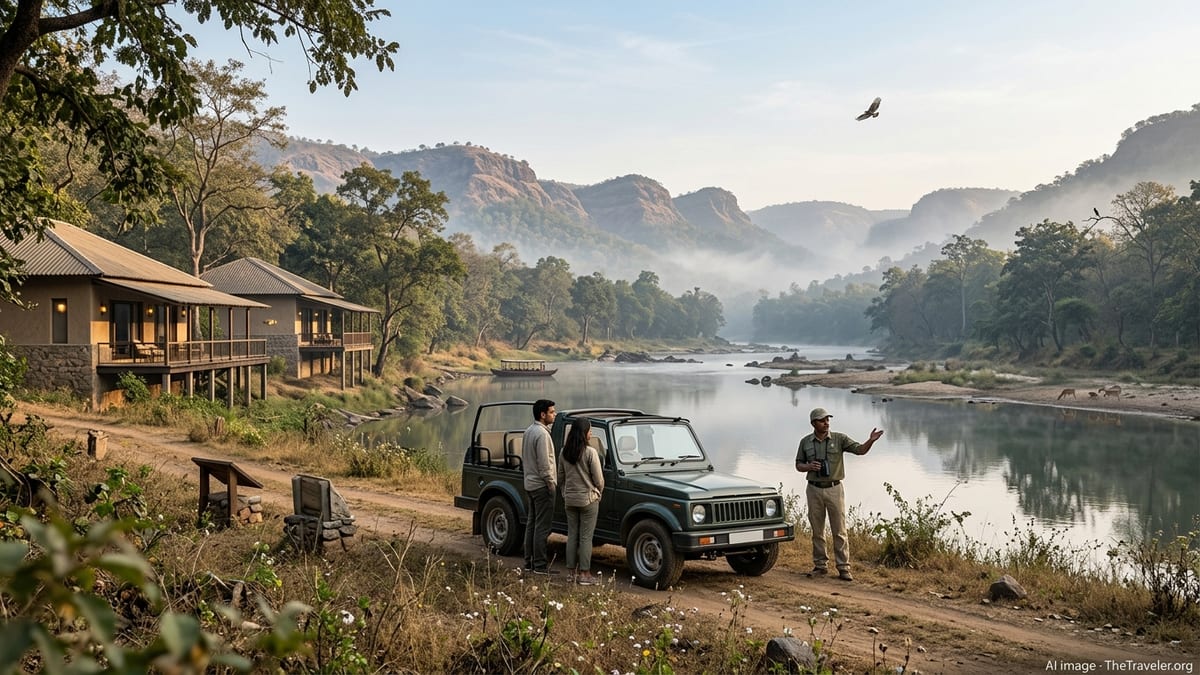
Strategic Expansion in India’s Wildlife Heartland
Publicly available information on Indian Hotels Company Limited’s recent development pipeline indicates that the hospitality group is sharpening its focus on experiential travel, with a particular emphasis on nature and wildlife-led stays. The announcement of a Taj Safaris lodge in Satpura fits into a broader push to deepen the company’s presence in central India, where tiger reserves and forest landscapes have become key magnets for high-spending domestic and international travelers.
Satpura, located in Madhya Pradesh, is already regarded as one of India’s more intimate and less crowded tiger reserves, known for its rugged hills, dense forests, and riverine ecosystems. Industry coverage notes that the region has steadily gained visibility among safari enthusiasts seeking alternatives to more famous but busier reserves, providing an opportunity for premium operators to introduce high-end, low-impact lodges.
The new Taj Safaris lodge is expected to tap into this demand, offering a small inventory of luxury suites or cottages designed around immersive wildlife experiences rather than conventional resort-style stays. Reports suggest that IHCL’s broader development strategy in recent years has paired city hotels with leisure and nature escapes in the same state, enabling multi-stop itineraries that combine urban culture with wilderness stays.
By anchoring a fresh Taj-branded presence in Satpura, IHCL is also reinforcing its longstanding association with Madhya Pradesh’s national parks, where it already operates safari lodges in other reserves through the Taj Safaris portfolio. The Satpura project therefore represents both a geographic consolidation and a brand-deepening exercise in one of India’s most important wildlife tourism circuits.
Taj Safaris: Strengthening a Niche Luxury Portfolio
Taj Safaris has evolved into one of IHCL’s most distinctive niche brands, built around small-scale jungle lodges that prioritize guided wildlife excursions, naturalist-led experiences, and conservation-aware design. Company disclosures and travel trade reporting highlight how Taj Safaris properties have helped position IHCL as a serious player in India’s competitive safari lodge segment, alongside independent luxury operators.
The addition of a Satpura lodge extends a circuit that already includes properties near key central Indian reserves. This circuit model allows guests to move between parks while remaining within a single brand ecosystem, a concept that has become increasingly important for luxury travelers who value seamless logistics, consistent service standards, and curated experiences across multiple locations.
In line with Taj Safaris’ existing lodges, the Satpura property is expected to emphasize intimate group sizes for game drives and walks, detailed interpretation by trained naturalists, and tailored itineraries that go beyond tiger spotting to showcase birds, smaller mammals, and the broader ecology of the Satpura landscape. Travel industry analyses point out that this style of programming aligns with a global shift in safari tourism from purely big-cat sightings toward more holistic wilderness immersion.
The Satpura lodge will also reinforce IHCL’s broader luxury narrative under the Taj umbrella, which now spans grand city hotels, beach resorts, palace conversions, and boutique retreats. By extending the brand into deeper wildlife territory, the group is seeking to ensure that Taj remains relevant to a new generation of travelers who increasingly prioritize experiences, storytelling, and a sense of place when choosing high-end stays.
Focus on Sustainability, Community and Low-Impact Design
IHCL’s recent sustainability reporting places strong emphasis on responsible tourism practices, including reductions in single-use plastics, energy conservation, and community engagement across its portfolio. Taj Safaris lodges, in particular, are frequently highlighted in public documents as examples of low-impact development that blend with forested surroundings and support local livelihoods.
Industry observers expect the Satpura lodge to follow similar principles, with architecture and landscaping that minimize disturbance to flora and fauna and incorporate local materials where feasible. Wildlife lodges in the region increasingly adopt design approaches that limit building footprints, manage water usage carefully, and rely on renewable or more efficient energy systems, and Taj Safaris properties have generally been aligned with these trends.
Community integration is likely to be another central pillar. Existing Taj Safaris lodges are known, according to travel and sustainability coverage, for employing staff from nearby villages, commissioning local crafts, and collaborating with neighborhood partners for cultural experiences such as folk performances or traditional cuisine. The Satpura lodge is expected to replicate this pattern, creating employment opportunities and new income streams around the reserve.
Environmental experts and tourism planners often argue that well-managed, high-value, low-volume safari lodges can play a constructive role in conservation by providing a financial rationale for protecting habitats while reducing the need for higher-impact mass tourism infrastructure. Positioned within this framework, the new Taj Safaris lodge is likely to be presented as part of a model that seeks to balance guest comfort with ecological sensitivity.
Boost to Madhya Pradesh’s Premium Tourism Landscape
Madhya Pradesh has steadily built its reputation as a wildlife and heritage destination, anchored by reserves such as Kanha, Bandhavgarh, Pench, and Satpura, along with a network of historic sites and religious circuits. State tourism campaigns in recent years have placed increasing emphasis on nature and adventure, encouraging investments in lodges, resorts, and supporting infrastructure across the region.
The decision by IHCL to add a Taj Safaris lodge in Satpura is expected to enhance the state’s appeal for high-end visitors who typically combine safaris with stays in palace hotels or heritage properties. Market analysts note that when a major hospitality group expands its luxury footprint in a region, it often encourages complementary investment from tour operators, transport providers, and boutique experience companies, amplifying the overall tourism value chain.
Satpura has traditionally attracted a more specialist wildlife audience, but with new luxury inventory, it could see a rise in affluent travelers who might previously have focused on more famous tiger reserves. This, in turn, may diversify visitor flows across Madhya Pradesh, easing pressure on heavily trafficked parks while distributing tourism revenues more widely.
The planned lodge is also consistent with a broader pattern of national and international brands targeting smaller Indian cities and nature destinations, reflecting a maturing domestic travel market where long-weekend trips, wellness breaks, and experiential holidays are increasingly common. For Madhya Pradesh, a stronger presence from Taj Safaris underscores its position as a core hub in India’s wildlife and eco-tourism map.