


More news on this day
India’s ambitious rail modernisation drive is entering a new phase as freight traffic surges by close to nine percent on key corridors, underpinning a wider transformation that is freeing up capacity for passenger trains and reshaping connectivity for millions of travelers across the country.
Get the latest news straight to your inbox!
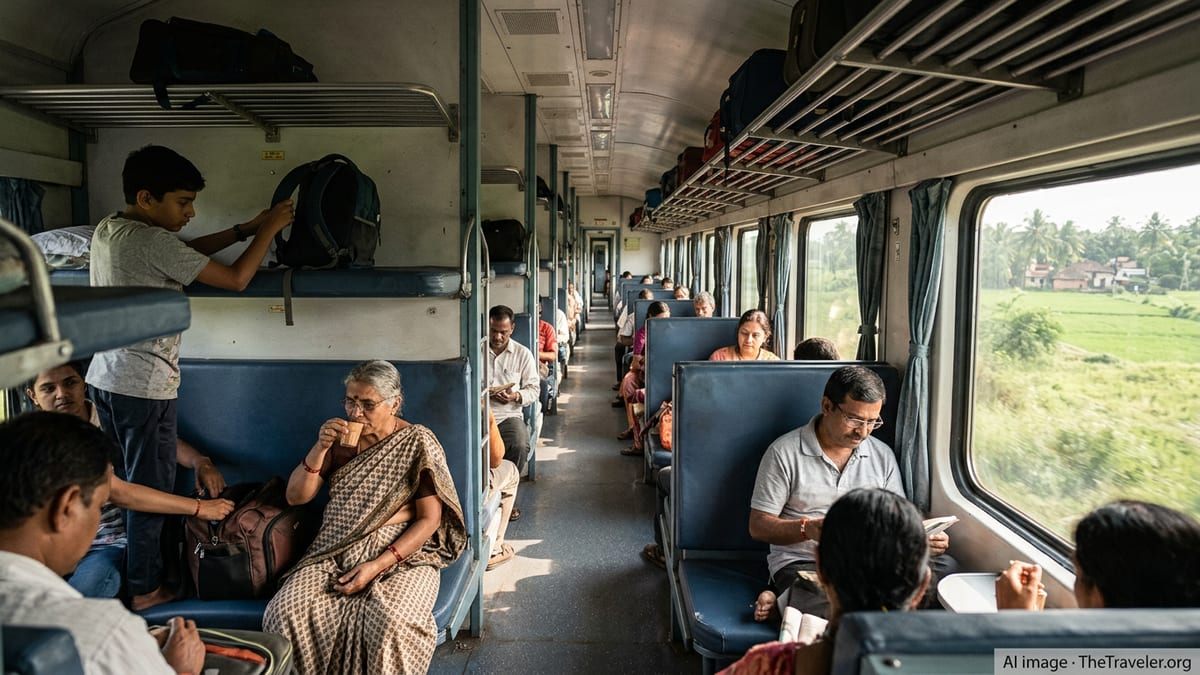
Freight Momentum Signals a New Era for Indian Railways
Recent data and official statistics show that Indian Railways has recorded one of its strongest freight performances in years, with freight loading rising in the high single digits on an annual basis and crossing around 1.6 billion tonnes over the most recent financial cycles. Freight volumes in 2023-24 reached approximately 1,591 million tonnes, up from about 1,512 million tonnes a year earlier, while subsequent monthly updates for the 2024-25 and 2025-26 periods point to further year-on-year gains close to nine percent on several key months.
Publicly available information indicates that freight now accounts for the majority of the railway operator’s revenue, with total earnings in 2023-24 estimated at around 2.56 trillion rupees and freight shouldering a significant share of this figure. Analysts note that a compound annual growth rate of more than seven percent in freight loading since 2019-20 has helped stabilise the railways’ finances and funded network expansion that benefits both cargo and passengers.
The broad-based rise in freight has been driven by higher movement of coal, cement, iron ore, foodgrains and containers, as well as new initiatives to attract private cargo. Policy changes such as flexible tariffs, wagon investment schemes and simplified terminal approvals have also been credited in published coverage with helping Indian Railways regain traffic share from road transport on long-haul routes.
Economists and transport specialists say this freight-led turnaround marks a structural shift for the national carrier, which for years struggled with underinvestment and capacity bottlenecks. Stronger freight earnings, they argue, are now enabling higher capital spending on tracks, signaling and rolling stock that can unlock faster, more reliable journeys for passengers.
Dedicated Freight Corridors Free Space for Passenger Trains
A central pillar of India’s rail freight expansion has been the steady commissioning of the Eastern and Western Dedicated Freight Corridors, two purpose-built lines designed to carry heavy cargo away from the congested mixed-use network. According to project summaries and recent government reports, more than 90 percent of the Western Dedicated Freight Corridor is now operational, while the Eastern corridor has largely been completed, with remaining sections moving toward closure.
These electrified, high-capacity freight lines are engineered for heavier axle loads and longer trains, enabling double-stacked container services on key stretches between northern logistics hubs and ports in Gujarat and Maharashtra. By diverting bulk and container cargo to these corridors, traffic planners expect up to 70 percent of freight on some routes to migrate away from traditional passenger lines over time.
The operational impact of this shift is already visible in major corridors such as Delhi–Mumbai and Delhi–Howrah, where the removal of slower, heavy freight services is allowing more passenger trains to be scheduled and improving punctuality. Timetabling experts note that dedicated freight paths reduce conflicts at junctions and free up valuable paths for long-distance express trains, suburban services and new semi-high-speed operations.
Transport researchers point out that separating freight and passenger flows is a global best practice that can raise average speeds for both segments. For India, where more than 20 million people travel by train each day on over 13,000 passenger services, the capacity released by freight migration is expected to support additional trains to underserved regions and shorter journey times on established routes.
Investment in Electrification, Terminals and Rolling Stock
The latest performance data sits alongside an aggressive investment push in core railway infrastructure. Over the past few years, Indian Railways has reported record track laying and electrification, with more than 7,000 route kilometers electrified in a single financial year and the share of electrified routes rising sharply. This shift reduces dependence on diesel, cuts fuel costs and enables more powerful, energy-efficient locomotives for both freight and passenger operations.
Freight-specific investments are also expanding rapidly. New private and public freight terminals, sidings and multimodal logistics parks are being commissioned to handle rising cargo volumes, particularly on industrial and mining belts. Container traffic has benefited from upgrades such as higher overhead equipment on select corridors, which accommodate double-stack container trains that move more goods per train and reduce the need for additional rakes.
Rolling stock capacity is another focus area. Indian Railways’ latest yearbooks and statistical statements highlight a large fleet of freight wagons and increasing deployment of modern designs with improved payload and speed characteristics. Coupled with rationalised yard operations and digital tracking tools, these changes aim to shorten wagon turnaround times and improve reliability for shippers.
Crucially, these investments are framed in public documents as part of a broader national logistics strategy that targets lower transport costs and a higher rail share in freight movement. Rail remains among the most cost-effective modes for long-distance bulk transport in India, and incremental efficiency gains can translate into significant savings for core sectors such as power, steel and agriculture.
Passenger Connectivity Expands on the Back of Freight Earnings
While freight performance dominates the revenue picture, its effects are being felt most tangibly by passengers. According to recent Economic Survey chapters and railway updates, passenger volumes grew more than five percent in 2023-24 compared with the previous year, with around 648 crore passenger journeys recorded and further growth reported in subsequent months.
Higher freight earnings have supported investments in doubling and tripling tracks on saturated routes, station upgrades, signaling modernisation and the introduction of new passenger trains. Semi-high-speed services on select intercity routes, additional long-distance express trains and enhanced suburban networks around major cities are all benefiting from the additional capacity unlocked by freight corridors and related projects.
In remote and border regions, expansion projects such as new broad-gauge lines in the North East and hill states are considered strategically important for both connectivity and security. Publicly available project reviews describe how these new links connect previously isolated districts to the national network, enabling faster movement of essential goods while opening up tourism and employment opportunities for local communities.
Travel industry observers say that as reliability improves and journey times fall, more middle-class travelers are opting for trains over buses or short-haul flights on certain corridors. The combination of competitive fares, expanding routes and better punctuality could further shift travel patterns in favour of rail, particularly for overnight and medium-distance journeys.
Economic, Environmental and Social Implications of the Freight Surge
The near nine percent surge in freight volumes on key corridors comes with wider economic and environmental implications. A more efficient, rail-heavy logistics system reduces the burden on highways, helping to ease congestion and lower vehicle emissions. Studies on transport costs indicate that rail transport remains substantially cheaper per tonne-kilometre than road, and shifting more cargo to rail can therefore support lower prices across multiple sectors.
From a climate perspective, the rapid electrification of freight routes, deployment of energy-efficient locomotives and pilot projects in renewable-powered operations contribute to India’s broader decarbonisation targets. Moving bulk commodities by electric freight trains instead of diesel trucks significantly cuts greenhouse gas emissions and local air pollution, especially along dense industrial corridors.
Socially, the strengthening of the railway system has a direct impact on mobility and access. Millions of daily passengers rely on trains for work, education, healthcare and family visits. As freight-led revenues finance safer tracks, upgraded signaling and modern rolling stock, passengers can benefit from smoother rides, better safety measures and expanded services in both rural and urban areas.
Looking ahead, planners and analysts suggest that sustaining high single-digit freight growth alongside robust passenger expansion will require continued investment and careful network management. If current trends hold, the railways’ freight surge could underpin a long-term “travel revolution” in India, in which a more financially resilient rail system delivers faster, more inclusive and more sustainable connectivity for travelers across the country.