

More news on this day
An IndiGo flight operating from Visakhapatnam to Delhi carried out a safe emergency landing at Indira Gandhi International Airport on March 28 after a suspected mid-flight engine failure, with all 161 passengers and crew reported safe following heightened alert procedures at the capital’s main airport.
Get the latest news straight to your inbox!
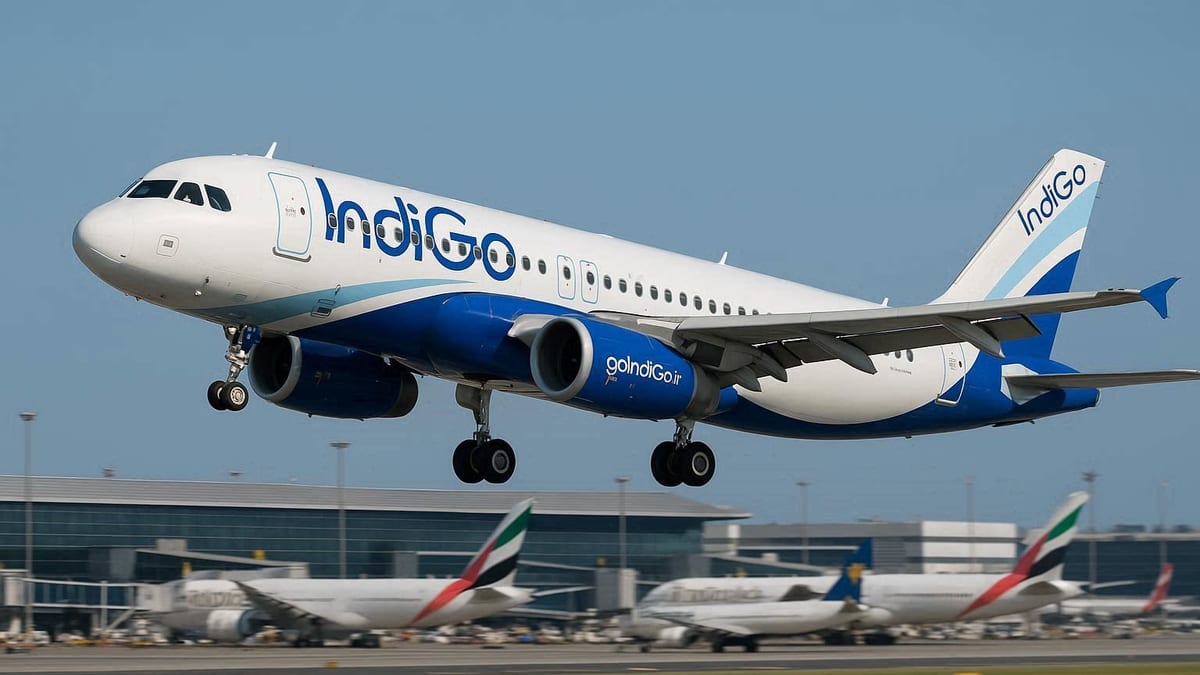
Image by Latest International / Global Travel News, Breaking World Travel News
Emergency Declared After Suspected Engine Failure
Publicly available information indicates that IndiGo flight 6E 579 was en route from Visakhapatnam to Delhi on the afternoon of March 28 when the crew reported a technical problem linked to one of the aircraft’s engines as it neared the national capital. Reports describe the situation as a suspected engine failure that prompted the declaration of a full emergency at Indira Gandhi International Airport.
Airport emergency protocols were activated as the aircraft approached Delhi, with fire and rescue services placed on standby along the runway. The flight was carrying 161 passengers, alongside flight crew and cabin staff, according to published coverage from Indian news outlets. No structural damage to the aircraft has been mentioned in initial reports.
Despite the tense circumstances, the aircraft completed its approach and landing without incident. Runway operations were briefly prioritised to accommodate the incoming emergency traffic, a standard measure used to minimise risks and provide rapid access for ground support vehicles if needed.
Once the aircraft came to a stop, it was guided to a designated area for inspection and to facilitate the safe disembarkation of those on board. Subsequent information from multiple news reports confirms that no injuries were recorded.
Safe Evacuation and Passenger Experience
Reports indicate that all 161 passengers were safely evacuated from the aircraft after landing, with ground staff and emergency teams overseeing the process in accordance with aviation safety procedures. There have been no indications of smoke or fire on board, and the incident appears to have been contained to the suspected engine malfunction detected in flight.
Passengers reportedly experienced a period of heightened tension as the aircraft prepared for its emergency landing. Some accounts shared via social media and online forums describe an atmosphere of anxiety in the cabin while the aircraft descended toward Delhi, although the overall landing was described as controlled and stable.
Available information suggests that IndiGo arranged onward travel and assistance for affected passengers after the aircraft was taken out of service for technical checks. While detailed timelines for rebooking and baggage handling have not been widely disclosed, the airline is understood to have followed standard disruption protocols used for unscheduled landings and aircraft substitutions.
There has been no public report of serious medical issues among travelers attributed to the incident. The absence of injuries and the orderly handling of the landing and disembarkation are being highlighted in media coverage as a positive outcome in a potentially serious situation.
Technical Checks and Preliminary Examination
Following the safe landing, the aircraft involved in flight 6E 579 was grounded for inspection. According to published coverage from national and regional outlets, initial assessments have focused on the engine where the problem was first detected, as well as associated systems that monitor and manage engine performance.
While early reports refer to a suspected engine failure or serious engine fault, there has been no detailed public disclosure of the specific component or mechanism involved. Such technical findings typically emerge later, after airline engineers and relevant aviation authorities complete their assessments and, if required, issue formal incident summaries.
Industry observers note that modern commercial aircraft are designed to continue flying safely on a single engine in the event of a failure in the other, allowing crews to conduct controlled diversions or emergency landings. In this case, publicly available information suggests that standard operating procedures for a critical engine issue were followed, including priority landing and full emergency preparedness on the ground.
Depending on the conclusions of the ongoing technical evaluation, further checks may be required on similar aircraft or engines within the carrier’s fleet. However, as of the latest reports, flight schedules beyond the specific aircraft involved do not appear to have been significantly affected by the incident.
Context Within IndiGo’s Recent Operational Scrutiny
The emergency landing comes at a time when IndiGo is already under close public and regulatory attention for its broader operations. Over recent months the airline has drawn scrutiny for schedule disruptions, technical snags, and capacity constraints that followed crew scheduling challenges and regulatory changes affecting duty time limitations.
Separate reporting in early 2026 has described efforts by India’s aviation regulator to monitor IndiGo’s operations more closely, including temporary staffing at the airline’s operations control centers and conditional relaxations aimed at stabilising flight schedules. These measures were designed to reduce cancellations and delays rather than address specific safety issues, but they have kept the carrier in the headlines.
Engine reliability has been an ongoing topic in the wider Indian aviation sector, particularly in connection with certain engine models used on Airbus narrow-body aircraft. In previous years, operators including IndiGo have had to ground aircraft for proactive inspections and parts replacement following guidance from engine manufacturers. While the March 28 incident remains under preliminary review, aviation analysts are watching for any indication of broader technical patterns.
Despite these concerns, India’s domestic carriers, including IndiGo, continue to operate under one of the world’s more closely supervised regulatory environments for civil aviation. Publicly available records show that serious accidents involving scheduled commercial jets in India remain rare events, even as passenger traffic has risen steadily.
Focus on Passenger Confidence and Safety Communication
In the aftermath of the emergency landing at Delhi, attention has turned to how IndiGo communicates with travelers and restores confidence among its customer base. Recent experiences across the aviation industry suggest that transparent, timely updates about technical incidents and their resolution are an important part of maintaining public trust, especially when images and accounts from passengers can spread rapidly online.
Travel industry analysts point out that safety incidents resolved without injuries, such as the March 28 event, can sometimes underscore the resilience of modern aviation systems and procedures when clearly explained. When passengers understand that aircraft are designed to handle critical component failures and that crews train extensively for such scenarios, their perception of risk may remain stable despite dramatic headlines.
For now, the IndiGo flight from Visakhapatnam to Delhi stands as a notable example of an in-flight emergency that ended safely for all on board. As technical findings emerge in the coming days, they are likely to inform both internal engineering decisions at the airline and the travel choices of a growing number of passengers relying on India’s busiest domestic carrier.