

Iowa is often described as a flyover state, yet travelers who slow down and step off the interstate discover a place where culture is lived more than displayed. From town square festivals and school sports to deep agricultural roots and vibrant immigrant traditions, Iowa’s identity reveals itself through everyday rituals and seasonal celebrations. Understanding these customs, along with a few simple etiquette tips, will help you connect more easily with Iowans and experience the state at its most genuine.
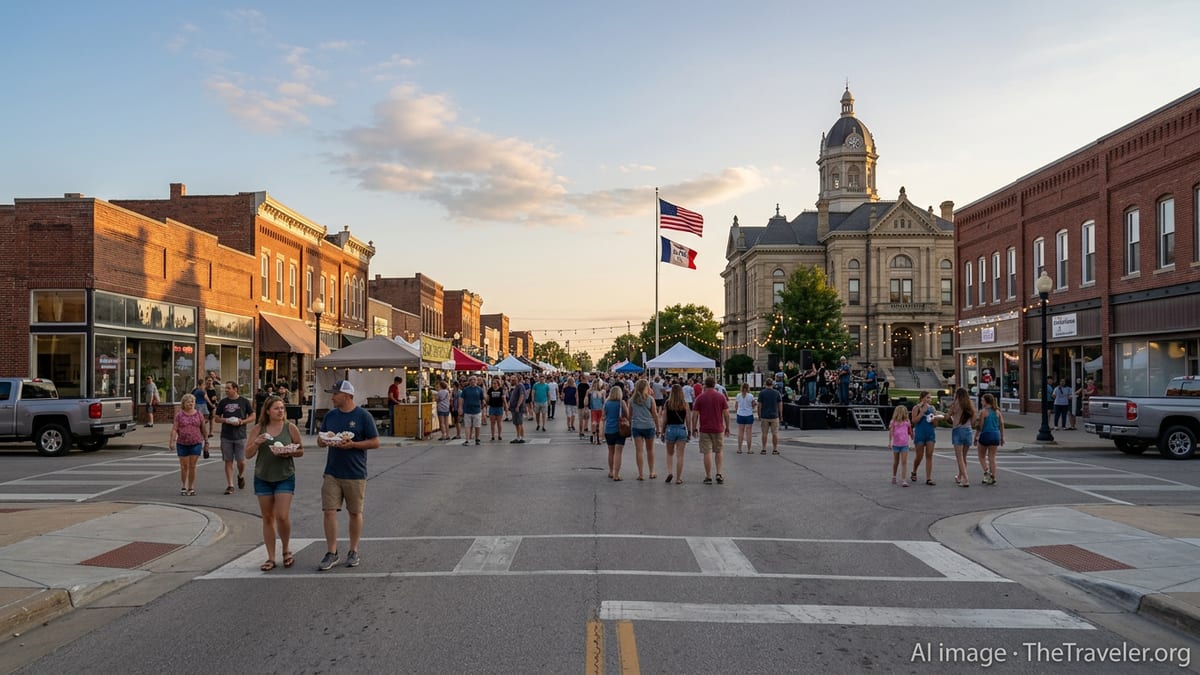
Understanding Iowa’s Cultural Foundations
At the heart of Iowa’s culture is a blend of rural heritage, small-town rhythms and a strong sense of neighborliness. Many communities grew up around farming, rail lines and county seats, and that history still shapes how people organize their lives. Even in the larger metros of Des Moines, Cedar Rapids or Davenport, it is common to find residents who grew up on nearby farms or in small towns and who carry those values into city life.
Daily life tends to be practical and low key. Iowans often measure time by the agricultural calendar as much as the regular one: planting in spring, county fairs and festivals in summer, harvest in fall. Community life is organized around schools, local churches or civic groups, and volunteerism is an important thread. Whether that means helping with a fundraising supper, coaching youth sports or serving on the local festival committee, contributing time is a point of quiet pride.
This emphasis on community also influences how Iowans respond to visitors. Travelers who show curiosity about local history or agriculture, or who attend a town event rather than rushing through, are often rewarded with stories, introductions and insider recommendations. The cultural experience in Iowa is less about big-ticket attractions and more about being invited briefly into the patterns of local life.
While each region has its own flavor, certain traits appear statewide: politeness, modesty about accomplishments and a preference for steady reliability over flash. Understanding this baseline helps explain why Iowans care deeply about certain rituals, from high school football games to the annual county fair, and why community events can feel as important as major holidays.
Local Etiquette and Everyday Manners
Visitors quickly notice that politeness in Iowa is not performative; it is the default setting. Basic courtesies such as holding doors, greeting strangers with a simple hello and thanking service workers are expected. When driving on rural roads, a brief wave to passing vehicles is common. It is a small signal of shared space, especially in areas where people often know each other by sight if not by name.
Modesty matters in conversation. People are generally proud of their work, farms or businesses, but they are unlikely to brag. Asking genuine questions about someone’s community, crops or local history is welcomed, yet pressing for personal details can feel intrusive. Politics and religion, while important in many communities, are usually approached with caution around new acquaintances. Unless a local introduces the topic, it is wiser to steer toward shared themes like weather, sports or festivals.
Timekeeping is another subtle point of etiquette. Showing up on time, or a bit early, signals respect, whether you are joining a farm tour, meeting a local guide or attending a community event. During festivals or busy fair days, lines and crowds are common, and patience is appreciated. People often queue informally but fairly; cutting in or raising your voice is frowned upon even if no one comments directly.
Dress codes are generally casual, but practical clothing is valued. Closed-toe shoes for farm visits, layers for unpredictable spring and fall weather and sun protection for summer events are more important than fashion statements. If you attend a rural church service, school event or community banquet, modest attire will blend best. For anything tied to local heritage, such as a powwow or ethnic festival, observing respectfully and following posted guidelines is essential.
Farm Roots, Rural Traditions and Small-Town Rituals
Agriculture is one of the deepest cultural anchors in Iowa. Even travelers who never set foot on a working farm will see corn and soybean fields stretching to the horizon, grain elevators marking small towns and livestock barns on the outskirts of communities. This landscape is more than scenery; it shapes schedules, conversation topics and community pride. Harvest season in particular can influence everything from traffic patterns to school event calendars.
Many rural traditions revolve around helping neighbors. Informal work days to assist with barn repairs, planting or harvest are still common in smaller communities. Travelers staying at farm stays or visiting agritourism operations may hear stories of neighbors arriving with tractors and equipment after a storm or illness. This expectation of mutual support extends into town life too, where benefits and community suppers raise funds for families in need, fire departments or school programs.
High school sports function as modern town gatherings. On Friday nights in the fall, entire communities turn out for football games, while winter brings packed gyms for basketball and wrestling. Visitors who attend will find concession stands staffed by volunteers, marching bands on the field and three generations sharing the bleachers. Showing support for the home team, or at least enjoying the atmosphere, is an easy way to connect with locals.
Church dinners, pancake breakfasts, fish fries and seasonal bake sales are more than fundraisers; they are social rituals. Travelers are usually welcome, and these events offer an authentic taste of local cooking, from pork tenderloin sandwiches and sweet corn in summer to hot dishes and homemade pies in cooler months. Bring cash for tickets and expect to sit family-style with strangers who may quickly become conversation partners.
Signature Festivals: From Tulip Time to Nordic Heritage
Iowa’s cultural calendar is dotted with festivals that both celebrate local identity and welcome visitors. One of the most distinctive is Tulip Time in Pella, a central Iowa town founded by Dutch immigrants. Each spring, the community plants hundreds of thousands of tulips and residents don traditional Dutch clothing for parades, dancing and heritage demonstrations. Events often include tours of the working Vermeer windmill, Dutch pastry stands and performances that highlight the town’s history and language.
Farther northeast, Decorah’s Nordic Fest honors the region’s strong Norwegian and Scandinavian heritage. Held annually near the end of July, the festival grew from a Norwegian Constitution Day celebration into a multi-day event featuring traditional dances, music, crafts and food. Community members participate from childhood through high school as dancers and volunteers, and the event draws visitors interested in Old World customs maintained across generations.
Smaller communities across the state host their own heritage events honoring Czech, German, Danish and other immigrant traditions. These festivals often feature folk music, regional foods and parades lined with local organizations. Travelers who plan ahead can time visits to coincide with such celebrations, experiencing how cultural heritage is kept alive in everyday life rather than as a museum piece.
While major festivals attract regional attention, it is often the smaller events that reveal the most about local values. Town celebrations marking anniversaries, harvest festivals and county fairs each offer slightly different experiences, but all reflect a deep attachment to place and history. Asking at a local visitor center or cafe about upcoming events is one of the easiest ways to plug into community life.
The Iowa State Fair and County Fair Culture
No cultural guide to Iowa is complete without the Iowa State Fair, held each August in Des Moines and widely regarded as one of the country’s premier state fairs. The fair combines agricultural competitions, 4-H and FFA exhibits, carnival rides, big-name concerts and an ever-expanding lineup of foods on a stick. Recent years have seen ongoing investments in accessibility, upgraded barns and new food court plazas, reflecting the fair’s role as both a showcase and gathering place for the entire state.
Visiting the Iowa State Fair offers a concentrated glimpse of the state’s agricultural and creative life. Livestock shows feature animals raised by youth and professional breeders alike, while exhibition halls display everything from quilts and photography to giant pumpkins. Food stands highlight signature items such as pork chops, corn dogs and locally produced ice cream. For many families, attending the fair is an annual ritual that marks the height of summer.
County fairs, held throughout June, July and early August, tend to be more intimate but no less meaningful to their communities. These events revolve around 4-H and FFA projects, local entertainment, tractor pulls and small-scale carnivals. Travelers who choose a county fair experience will find shorter lines, easier conversations with exhibitors and a closer look at youth agriculture. It is common to see generations of the same family involved in exhibits, judging or behind-the-scenes work.
Etiquette at fairs is straightforward: respect animals and exhibitors, follow posted rules in barns and show rings and avoid blocking pathways in crowded areas. Many competitions are the culmination of months or years of effort. Showing interest, asking questions courteously and keeping food and drink away from animal pens or display cases demonstrates respect for that work.
Indigenous, Immigrant and Urban Cultural Communities
Iowa’s cultural story began long before statehood with Indigenous nations whose descendants remain active contributors to the state’s life today. The Meskwaki Nation, based near Tama, maintains Iowa’s only federally recognized settlement. Its annual powwow, established in the early twentieth century, brings together tribal members and visitors for traditional dancing, drumming, food and crafts. For non-Native guests, attending with a learning mindset and following protocols around photography, sacred areas and regalia is especially important.
Across the state, more recent immigrant communities have added new dimensions to local culture. In cities such as Des Moines, Waterloo, Sioux City and Storm Lake, Latino, African, Asian and Middle Eastern communities have established markets, restaurants and festivals that reflect their heritage. It is increasingly common to find events featuring Mexican Independence Day celebrations, African dance performances or Asian cultural showcases alongside long-standing European heritage festivals.
College towns like Iowa City and Ames contribute their own cultural layers, blending student-driven arts scenes with local traditions. Live music venues, literary readings, film festivals and gallery walks coexist with farmers markets and neighborhood block parties. Travelers interested in contemporary Midwestern culture will find these urban centers particularly rich in cross-cultural exchange, from internationally inspired cuisine to public art projects.
As these communities grow, collaborations between cultural groups and city institutions have expanded. Heritage museums, multicultural centers and public school programs work together to highlight diverse histories and foster dialogue. Visitors benefit from this work through more inclusive storytelling in museum exhibits, bilingual signage at events and a festival calendar that increasingly mirrors Iowa’s evolving demographics.
Participating Respectfully in Community Life
Experiencing Iowa’s culture fully means doing more than observing from the sidelines. Travelers are often invited to join in, whether that means clapping along at a small-town music performance, sampling homemade food at a church supper or signing up for a guided farm or heritage tour. Saying yes to these invitations, while being attentive to cues from locals, deepens the experience and builds mutual respect.
Photography is a common point of uncertainty. As a general rule, taking photos of public scenes at festivals, parades or fairs is acceptable. However, it is courteous to ask permission before photographing individuals at close range, especially children or people in traditional dress. At events with spiritual or ceremonial components, such as powwows or certain church services, always look for posted guidelines or consult an organizer before taking photos or recording video.
Supporting local economies is another way to engage respectfully. Buying directly from artisans at craft markets, choosing independent cafes or diners, and staying in locally owned accommodations keeps more of your travel spending in the community. Tipping in restaurants, for guided tours and for shuttle drivers follows standard American norms, and is appreciated even in smaller towns where prices may feel modest.
Above all, approach communities with humility and curiosity rather than assumption. Not every town will match stereotypes about rural Iowa, and residents are often eager to explain how their community has changed over time. Listening more than speaking, asking open-ended questions and being flexible with your plans will allow the local culture to reveal itself in ways no itinerary can fully script.
The Takeaway
Iowa’s culture is not defined by a single landmark or skyline but by a network of communities that express their identity through traditions, etiquette and shared events. From the tulip-lined streets of Pella and the Scandinavian dances of Decorah to the packed grandstands of the Iowa State Fair and the songs of the Meskwaki powwow, the state offers a wide spectrum of experiences grounded in everyday life.
For travelers, the key to appreciating Iowa lies in slowing down, paying attention and participating where invited. Learning basic local manners, from on-time arrivals to respectful photography, opens doors. Attending festivals, fairs and neighborhood gatherings transforms a drive across the state into a series of memorable encounters. In return for that attention and respect, Iowa offers what many visitors remember most: genuine hospitality and a sense of belonging, however briefly, in the communities that call the Hawkeye State home.
FAQ
Q1. When is the best time of year to experience Iowa’s cultural events?
The most concentrated season for festivals and fairs runs from late spring through early fall, roughly May to September, when weather is milder and communities host outdoor events.
Q2. Do I need tickets in advance for major Iowa festivals?
For large events such as the Iowa State Fair or popular heritage festivals, advance tickets or reserved parking can be helpful, especially on weekends, though many smaller community events welcome walk-up visitors.
Q3. How should I dress for rural and small-town events in Iowa?
Comfortable, weather-appropriate, modest clothing works best. Closed-toe shoes are useful for farms and fairs, and layers help with changing temperatures, especially in spring and fall.
Q4. Is it appropriate to visit a powwow or Indigenous cultural event as a non-Native traveler?
Yes, many powwows and events welcome respectful visitors. Follow posted guidelines, ask before taking close-up photos and treat dances and ceremonies as living traditions, not performances.
Q5. What are some easy conversation starters with Iowans?
Safe, friendly topics include local sports, weather, favorite restaurants, nearby attractions, community history and upcoming events or festivals. Genuine curiosity is appreciated.
Q6. Are children welcome at Iowa festivals and community events?
Most festivals, fairs and small-town celebrations are family friendly, with activities, food and entertainment designed to include children, though some evening concerts or venues may be geared more toward adults.
Q7. How can I find out about local events while traveling through Iowa?
Check visitor centers, local newspapers, community bulletin boards, radio stations and tourism offices, and ask staff at cafes or hotels, who often know what is happening nearby.
Q8. What food traditions should I try while exploring Iowa culture?
Look for pork tenderloin sandwiches, sweet corn in season, pies at church suppers or cafes, ethnic specialties at heritage festivals and classic fair foods at county and state fairs.
Q9. Is tipping expected at Iowa events and in small towns?
Standard American tipping customs apply in Iowa. Tip in restaurants, for guided tours, shuttles and similar services, even in rural areas where prices may be comparatively low.
Q10. How can I be a respectful guest in Iowa’s small communities?
Arrive on time, follow local rules, ask before photographing individuals, support local businesses and approach conversations with openness and humility rather than assumptions.