

More news on this day
Iran’s call for civilians and workers to leave several major ports in the United Arab Emirates has injected fresh urgency into an already volatile Gulf crisis, raising concerns for shipping safety, regional travel and the stability of global energy supplies as its war with the United States and Israel enters a new and more dangerous phase.
Get the latest news straight to your inbox!
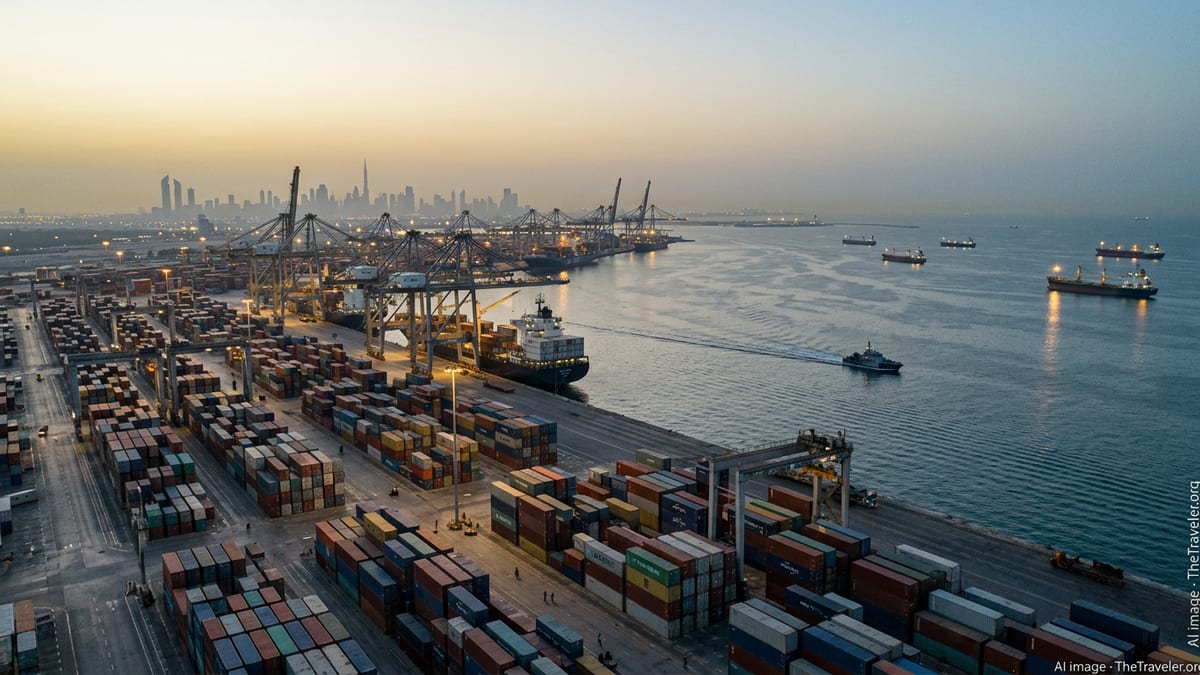
Evacuation Call Targets Jebel Ali, Khalifa and Fujairah
Publicly available reporting indicates that Iranian state media on Saturday urged the evacuation of three key Emirati facilities: Dubai’s Jebel Ali Port, Abu Dhabi’s Khalifa Port and the oil and bunkering hub of Fujairah. The locations were described as potential “legitimate targets” after Tehran alleged that United States forces used “ports, docks and hideouts” in the UAE to launch strikes on Iran’s Kharg Island oil terminal.
Jebel Ali is the Middle East’s busiest container port and a critical logistics gateway linking Asia, Africa and Europe. Khalifa Port anchors Abu Dhabi’s industrial and free zone strategy, while Fujairah lies outside the Strait of Hormuz and serves as a vital refueling and storage point for ships seeking to avoid the choke point. Advisories highlighting possible Iranian retaliation have focused attention on these strategic roles.
Reports from the ground in the UAE describe heightened security measures and visible nervousness among maritime operators, even as core port infrastructure remains functional for now. There were no immediate indications of successful strikes on the three ports on Saturday, but the rhetoric has underscored their new status as front-line assets in a widening regional confrontation.
The evacuation calls follow weeks of tit-for-tat attacks that have already hit airports, oil facilities and shipping in the wider Gulf. Analysts say that by explicitly naming non-U.S. facilities in a neighboring state, Tehran is signaling a readiness to expand the battlefield beyond strictly military targets.
Strait of Hormuz and Global Energy Routes Under Strain
The latest threats come against the backdrop of serious disruption in and around the Strait of Hormuz, where earlier attacks, naval clashes and mine-laying incidents have sharply reduced commercial traffic. The narrow waterway, bordered by Iran to the north and the Arabian Peninsula to the south, is the route for an estimated one-fifth of the world’s crude oil and a significant share of liquefied natural gas exports.
Shipping advisories issued to commercial operators in recent days warn of elevated risk across the Arabian Gulf, Gulf of Oman and northern Arabian Sea. Guidance has included recommendations to maintain wide standoff distances from naval vessels, review routing away from Iranian waters and prepare contingency plans for rapid diversion to alternative ports when possible.
Iranian officials have repeatedly hinted at the potential to block or severely disrupt oil exports from rival producers in response to U.S. and Israeli military pressure. Published analysis from energy consultancies notes that any sustained disruption at UAE ports, paired with instability in the strait, could represent the largest shock to global energy flows since the major oil crises of the twentieth century.
While benchmark crude prices have already been volatile, markets are now assessing the possibility of a protracted conflict that curtails both production and transport capacity. Traders are closely watching signals from Gulf producers about emergency stock releases, rerouting via pipelines and the use of ports outside the strait, particularly in Oman and on the Red Sea.
Impact on UAE Travel, Tourism and Expat Communities
The UAE’s emergence as a global air hub and leisure destination means any deterioration in security reverberates quickly through travel systems. Airspace closures and flight suspensions across parts of the Gulf earlier this month have already forced airlines to cancel or divert services, stranding thousands of passengers and complicating onward connections to Asia and Africa.
Dubai and Abu Dhabi airports remain pivotal nodes for international transit. Although major carriers continue to operate many routes, aviation risk advisories highlight the potential for sudden restrictions, longer flight paths around conflict zones and higher operating costs. Industry observers suggest that travelers may see more last-minute schedule changes and reduced capacity on some Gulf-linked itineraries.
Reports in regional and international media describe growing anxiety among expatriate communities, especially in Dubai, where many residents work in logistics, aviation and tourism directly tied to port and airport activity. Some foreign workers are reportedly weighing temporary relocation or early repatriation, particularly families with school-age children.
Hotel and hospitality operators in coastal areas near key ports are also monitoring the situation closely. While there is no broad-based exodus of visitors, booking patterns indicate softer demand for stays in certain beachfront districts and an uptick in inquiries about cancellation policies linked to security developments.
Shipping Companies Reroute as Risk Premium Climbs
Container lines, tanker operators and cruise companies are rapidly reassessing their presence in UAE waters. According to industry circulars and port advisories, several major shipping firms have imposed temporary no-go zones close to Iranian territorial waters and are reviewing calls at Jebel Ali, Khalifa and Fujairah on a case-by-case basis.
Some cargo owners have instructed vessels to divert to alternative ports in Oman or further afield, even at the cost of longer voyages and higher fuel consumption. Marine insurers are updating war-risk assessments, leading to higher premiums for ships entering designated high-risk areas in the Gulf, which in turn increases transport costs for everything from refined fuels to consumer goods.
Port status reports for early March described UAE terminals as operational but under heightened security, with some restrictions on crew changes and shore leave. Logistics experts say that even without direct physical damage, reduced calls and longer turnaround times may ripple through global supply chains, affecting delivery schedules for goods transiting between Asia, Europe and East Africa.
Cruise lines, already cautious about itineraries that include Gulf ports, are expected to further scale back or reroute voyages that had planned stops in Dubai, Abu Dhabi or Fujairah. Travel agents catering to cruise and package-tour markets report increased customer questions about safety, insurance coverage and alternative destinations in the wider region.
Regional Diplomatic Pressure and Uncertain Outlook
Regional and international organizations have intensified public calls for restraint as the conflict widens across the Gulf. Statements from multilateral bodies in recent days have urged all parties to halt attacks on civilian infrastructure and to protect shipping lanes that underpin the global economy. The security of ports, airports and energy facilities has featured prominently in diplomatic communiqués.
At the same time, the pattern of recent strikes suggests that Iran is seeking to apply targeted pressure on US and Israeli interests and their regional partners, while still calibrating its actions to avoid all-out war with Gulf monarchies. The explicit mention of UAE ports as potential targets, however, has raised fears that the balance may be shifting toward a more confrontational stance.
For travelers and businesses with ties to the UAE, the outlook remains uncertain. Travel risk firms advise monitoring official travel advisories from home governments, staying in close contact with airlines and tour operators, and allowing extra flexibility in itineraries. Corporate security departments are reassessing evacuation and shelter-in-place plans for staff based in or transiting through key Gulf hubs.
Much now depends on whether the current escalation gives way to a cease-fire arrangement or hardens into a longer conflict. For the UAE’s ports and airports, which have spent decades building a reputation as safe, efficient and politically stable gateways, the coming days will be crucial in determining how deeply this crisis reshapes perceptions of travel and trade across the Gulf.