

More news on this day
Thousands of international visitors on the Indonesian resort island of Bali are facing prolonged delays and mounting costs after the Iran war prompted widespread airspace closures over the Gulf, grounding or rerouting planes on some of Asia’s busiest long-haul corridors.
Get the latest news straight to your inbox!
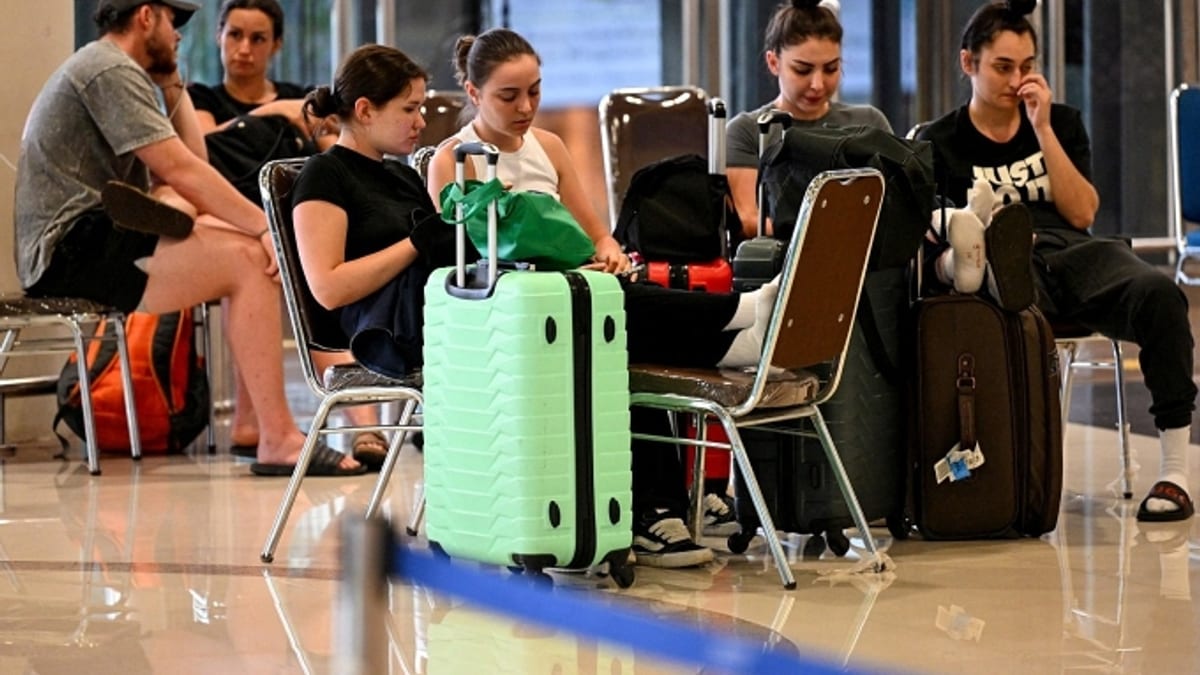
Image by VnExpress International
Holiday hotspot turned holding zone
Scenes of crowded departure halls and floor-bound travelers at Bali’s Ngurah Rai International Airport have become emblematic of the broader aviation fallout from the Iran conflict. Published coverage shows that flights linking Southeast Asia with Europe and parts of Africa customarily rely on Gulf hubs such as Dubai, Doha and Abu Dhabi, many of which have sharply curtailed operations since late February.
Newspaper images from March depict passengers waiting among rows of luggage trolleys beneath departure boards filled with delayed or cancelled flights on Indonesia’s flagship resort island. These disruptions follow the closure or severe restriction of airspace in states including Iran, Iraq, Israel, Qatar, Kuwait and Bahrain, a series of moves that has rippled far beyond the Middle East’s own airports.
While Bali’s runways and terminals remain physically intact and open, the island’s role as a transfer point for long-haul itineraries has left visitors caught in a web of disrupted connections. Many European, Middle Eastern and South Asian routes ordinarily rely on a single ticket that strings together Southeast Asia with Gulf mega-hubs, leaving travelers stranded when the final legs of those journeys vanish from schedules.
Early efforts by airlines to rebook passengers onto alternative routings have been hampered by limited seat availability, longer detour paths that increase fuel costs, and evolving security assessments along remaining corridors between Europe and Asia.
Global war, regional airspace closures and Bali’s bottleneck
The Iran war, which escalated sharply from February 28 with strikes involving the United States, Israel and Iranian forces, has triggered some of the most sweeping airspace closures since the early stages of the COVID-19 pandemic. Publicly available aviation data and media reports indicate that Bahrain, Iraq, Israel, Kuwait, Qatar, Syria and the United Arab Emirates have all shut or heavily restricted their skies at various points, while airports from Dubai to Kuwait City have faced temporary suspensions or damage to infrastructure.
These measures have forced airlines to chart longer flight paths skirting the Arabian Peninsula or to cut services entirely along certain routes. For Southeast Asia’s resort destinations, where a high proportion of visitors arrive on complex itineraries involving multiple carriers and hubs, the sudden loss of key waypoints has left thousands with no straightforward route home.
Bali, in particular, is feeling the strain because of its popularity with travelers from Europe, the Middle East and North Asia. Many of these visitors arrived before the latest escalation and now find themselves in a dramatically different landscape, in which previously routine overnight connections via Gulf cities are unavailable and alternative routings through East Asia or Australia are heavily oversubscribed.
Aviation analysts cited in recent coverage describe the situation as one of the largest single shocks to global airline scheduling in years, with cascading impacts on aircraft positioning, crew rotations and maintenance windows. For passengers on a leisure island with limited long-haul capacity of its own, those industry-wide constraints translate into queues, uncertainty and an extended stay that few had planned for.
Airlines juggle rerouting, refunds and emergency capacity
Carriers serving Southeast Asia are now engaged in a complex reshuffle of capacity in an effort to mitigate the disruption. According to business and aviation reports, some airlines have suspended services to Gulf hubs entirely, while others are experimenting with new routings over the Indian Ocean or Central Asia that bypass the most volatile airspace.
Such detours can add hours to flight times and require additional fuel and crew, reducing the number of rotations a single aircraft can complete in a day. This, in turn, limits the number of replacement flights that can be mounted to extract stranded travelers from places like Bali and other Southeast Asian resort islands.
Published coverage highlights a patchwork of responses: limited “exceptional” or evacuation-style flights from certain Middle Eastern airports, temporary use of secondary hubs, and expanded codeshare arrangements to move passengers via safer corridors. However, the scale of the backlog built up in the first days of the crisis means many travelers are being told to expect multi-day waits before a seat becomes available.
In Bali, travel agents and hotel front desks have become de facto information centers as visitors attempt to navigate shifting airline policies on refunds, rebookings and travel credits. With call centers overwhelmed and digital channels frequently updated, the burden of interpreting schedule changes has often fallen on local tourism workers already stretched by the peak season rush.
Stranded travelers weigh costs, visas and personal safety
For many of those stuck on Bali and other Southeast Asian destinations, practical concerns are starting to outweigh the initial inconvenience. Extended stays mean additional accommodation, food and transport costs, with popular beach areas reporting higher-than-normal occupancy for late-season weeks as visitors reluctantly extend bookings.
Visa rules are another source of anxiety. Some governments in the wider region, such as the Philippines, have publicly extended visa relief for foreigners unable to depart due to conflict-related flight disruptions, allowing them to remain without penalties for longer periods. Travelers in Indonesia are watching such developments closely and seeking clarification on whether similar flexibility will be available if delays continue.
Insurance coverage is also being tested. Many standard travel insurance policies contain exclusions or special conditions related to war and armed conflict, leaving some policyholders unsure whether extra nights, missed connections or emergency alternative routings will be reimbursed. Consumer advocates quoted in regional media encourage travelers to keep detailed documentation of expenses, airline communications and any written advisories to support future claims.
At the same time, the perception of risk is not uniform. Bali itself remains physically distant from the conflict zones, and daily life on the island continues largely as normal outside the airport perimeter. The primary concern for most visitors is not immediate personal safety, but rather when and how they will be able to resume their journeys.
Tourism-dependent economies brace for ripple effects
The sudden interruption of flight links has raised alarms for tourism-dependent economies across Southeast Asia. Bali and similar resort islands rely heavily on steady international arrivals, and a prolonged period of uncertainty could dampen bookings for the months ahead as travelers reconsider long-haul trips that depend on volatile transit corridors.
Economic analyses of the Iran war’s broader impact point to a sharp hit to global aviation and tourism revenues, drawing comparisons with previous crises that sharply curtailed international mobility. For individual destinations, the effect may be uneven. Some travelers stranded in Bali are choosing to embrace an unplanned extension, spending more on local tours, dining and wellness experiences, which offers a modest short-term boost to the island’s businesses.
However, forward-looking bookings are vulnerable. Tour operators in key source markets are already fielding questions from clients about alternative holiday options that avoid potential chokepoints in the Middle East. Airlines’ decisions on whether to restore or reconfigure routes in the coming weeks will play a decisive role in shaping demand for Southeast Asian holidays during the next peak seasons.
Local tourism boards are expected to recalibrate their messaging as the situation evolves, emphasizing both the safety of destinations like Bali and the importance of flexible planning. For now, though, one of the world’s most famous island getaways has become an unexpected waypoint in a global aviation crisis, with thousands of passengers learning just how tightly their journeys are bound to events far beyond the tropical horizon.