

Planning a first trip to Europe can feel overwhelming. With its iconic landmarks, celebrated cuisine and efficient rail network, France often tops the shortlist for new travelers. But is it actually a good choice for a first-time visit to Europe, especially for visitors from North America and other long-haul markets? The answer depends on what you value most: ease of logistics, budget, culture shock, language or crowd levels. This guide looks at current conditions and practical realities to help you decide whether France should be the starting point for your European travels.
Why France Tops So Many First-Time Europe Shortlists
France has a compelling case as a first European destination. It remains the world’s most visited country, welcoming roughly 100 million or more international travelers a year in recent seasons, which is a strong sign that its tourism infrastructure is mature and adaptable for visitors with a wide range of budgets and comfort levels. Tourism is a major pillar of the French economy, generating millions of jobs and prompting ongoing investment in transport, heritage preservation and visitor services. For a first-timer, that depth of experience on the ground translates into relatively smooth logistics and a well-tested tourism ecosystem.
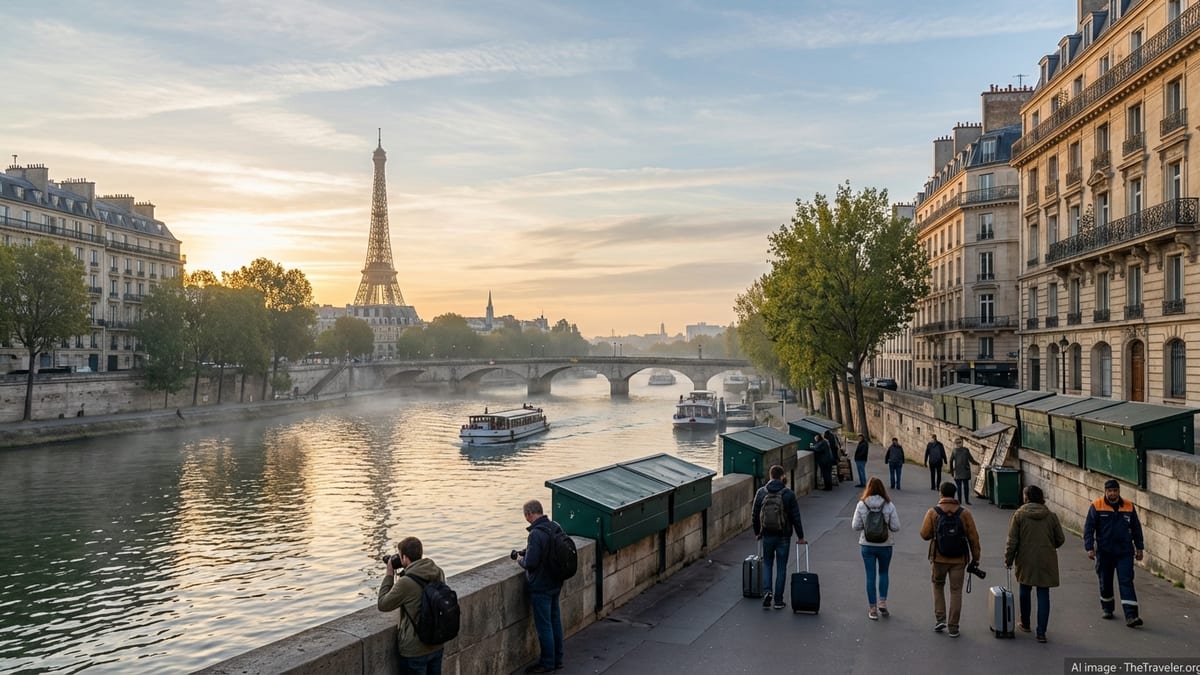
There is also the obvious draw of France’s cultural cachet. Paris alone offers some of the world’s best-known sights in a compact area: the Eiffel Tower, the Louvre, the Seine, grand boulevards and cafe culture that many travelers have seen on screen long before they arrive. Beyond the capital, the variety is striking for a country of its size: wine regions, Atlantic and Mediterranean coasts, snow-capped Alps and Pyrenees, and small villages that feel far from urban intensity. For a first European trip, this means you can experience several very different landscapes and lifestyles without crossing another border.
Equally important for first-timers, France has a long tradition of welcoming foreign visitors. English is widely spoken in major cities, transport hubs and tourism sectors, especially among younger people. While learning a few basic French phrases remains both practical and respectful, a newcomer who is nervous about language barriers generally finds that staff in hotels, restaurants around central areas and key attractions can switch to English if needed. That combination of global familiarity and local distinctiveness is part of why France is often recommended as a “soft landing” in Europe.
Accessibility, Visas and Practical Entry Requirements
From a logistics standpoint, France is one of the easiest European countries to reach from North America and many other regions. Paris Charles de Gaulle is a major global hub with non-stop flights from dozens of large cities, and secondary airports such as Orly, Nice and Lyon receive substantial international traffic. For a first trip, this means you can often fly directly into your starting point rather than making a connection elsewhere in Europe. The presence of multiple airports also gives you flexibility to arrive in one city and depart from another, which can simplify itinerary planning.
For many travelers, particularly from the United States, Canada, the United Kingdom and much of Latin America and Asia-Pacific, short tourist visits to France of up to 90 days currently do not require a traditional visa, as long as you remain within the wider Schengen Area limits. As of early 2026, new electronic travel authorization rules for much of Europe are scheduled to begin in the final quarter of the year, which will affect visitors from visa-exempt countries. These systems are intended to be quick online registrations rather than full visa processes, but first-time travelers should check official government sources carefully in the months before departure to understand timing, fees and documentation.
Entry formalities beyond that are relatively straightforward for most visitors. Standard requirements typically include a passport valid for at least several months beyond your planned departure, proof of onward or return travel and sometimes evidence of sufficient funds and accommodation. While health-related entry rules have relaxed compared with the pandemic period, they can change at short notice. New travelers who are unfamiliar with border procedures should review up-to-date guidance from both French authorities and their home country before flying, and allow generous time for connecting flights during peak seasons.
Ease of Getting Around: Trains, Cities and Regions
France is arguably one of the best places in Europe for a first-timer to learn how to use public transport. High-speed TGV trains link Paris with most major regions in just a few hours, and advance purchase can bring prices down compared with last-minute tickets. Intercity and regional services extend that web into medium-sized towns and local hubs. For someone unsure about renting a car on another continent, the rail network offers an accessible way to explore beyond the capital without facing the stress of driving in dense traffic or navigating unfamiliar road rules.
Within cities, public transport is dense and generally reliable. The Paris Metro, suburban RER lines, trams and buses can look intimidating on a map, but they follow clear routes, use uniform ticketing systems and are designed for heavy daily use by residents as well as tourists. Contactless payments and updated ticket formats are increasingly common. Other cities such as Lyon, Marseille, Bordeaux, Lille and Toulouse also operate modern metro or tram systems and extensive bus networks. For first-time travelers, this means that once you understand the basics of buying tickets and reading signage, you can apply the same skills in multiple locations.
In rural areas, transport can feel more challenging. Many of France’s most charming villages and coastal corners are not well-served by frequent trains or buses, especially outside summer. Here, a rental car becomes more practical. Driving standards are high and motorways are excellent, but tolls can add up, and city centers often restrict vehicles or require low-emissions stickers. For someone on their very first European trip, it may be wise to focus on a mix of well-connected cities and secondary towns reachable by train, and save the more remote countryside itineraries for a later visit when you are more comfortable with European road systems.
Costs, Value and Crowd Levels Compared With Other Countries
For many travelers, the main hesitation about choosing France for a first European trip is cost. Paris is a global capital and can feel expensive, especially during summer, around major events and in neighborhoods near headline sights. Hotel rates, restaurant prices and museum admissions in central areas often rival those of other major hubs such as London or New York. First-time visitors who equate “Europe” with budget travel sometimes experience sticker shock if they only look at prices in the most popular parts of Paris.
Zooming out, though, France offers considerable range. Smaller cities such as Lyon, Toulouse or Nantes often provide better value on accommodation and dining, while still offering rich culture and easy access to scenic day trips. In many rural regions and mid-sized towns, family-run hotels, guesthouses and campgrounds keep nightly costs more manageable. Tourism officials report strong growth in camping and outdoor accommodations in recent years, reflecting both domestic demand and international travelers seeking more affordable, nature-oriented stays. Travelers who are willing to step a little beyond the most photographed locations can often reduce their overall budget without losing the feeling of being in France.
The question of whether France is “too crowded” is complex. The country receives more international visitors than any other, and certain spots such as the Eiffel Tower, Mont Saint Michel or the lavender fields of Provence can be heavily congested at peak times. However, compared with other European hotspots where anti-tourism protests or visitor caps regularly make headlines, French authorities have invested in spreading tourism more evenly across regions and seasons. For first-time travelers, this means you can still enjoy famous sights with good planning, but you also have realistic options to experience quieter areas without leaving the country.
Language, Culture Shock and First-Time Travel Comfort
One of the biggest worries for first-time visitors to Europe is language. France’s reputation for limited English among older generations can be intimidating, and stories about brusque service in Paris are deeply ingrained in travel folklore. There is some truth to the idea that you will encounter fewer English speakers in small towns or among older residents. However, in the main tourism economy, particularly in Paris and other large cities, staff at hotels, major museums, top attractions and many restaurants are used to communicating in English at a functional level.
Cultural expectations, rather than outright language barriers, often cause the most friction. French service style tends to be more formal and less chatty than what many North American travelers expect. Waiters may not check on your table frequently, and you are generally expected to signal when you need something. Greetings also matter: beginning interactions with a simple “Bonjour” or “Bonsoir,” and using “s’il vous plaît” and “merci,” goes a long way. New travelers who take a few minutes to learn these basics and understand that a quieter, more reserved style can still indicate good service often find their experiences significantly smoother.
In terms of culture shock, France sits somewhere in the middle. It is modern, technologically advanced and familiar in global media, which softens the adjustment. At the same time, daily rhythms can be quite different from those in North America, with later dining hours, more emphasis on long sit-down meals and widespread closures at lunchtime or on Sundays in smaller towns. For a first European experience, this can be a gentle introduction to the idea that not everything operates on a 24-hour, convenience-first schedule, while still remaining relatively straightforward to navigate.
Safety, Security and Current On-the-Ground Realities
Safety is a reasonable concern for any first-time traveler. Broadly speaking, France is considered safe for visitors, with crime levels similar to those in many other Western European countries. The most common issues affecting tourists are non-violent: pickpocketing on crowded public transport, bag snatching in busy areas and scams around major attractions. In Paris and other big cities, visible police and military patrols remain a feature of heavily visited zones, reflecting both a preventive security posture and the government’s desire to reassure visitors.
France, like many democracies, also experiences regular demonstrations and occasional strikes that can affect transport and public services. These are usually announced in advance and follow a predictable pattern, but they can still disrupt flights, trains or city transit for a day or two. First-time visitors sometimes misinterpret images of protests on international news as signs that visiting is unsafe. In practice, these events are typically well-managed, localized and avoidable with basic situational awareness. New travelers can mitigate disruption by monitoring local news, asking hotel staff for updates and allowing extra flexibility in schedules.
Health care access is another point in France’s favor. The country has a strong public health system and a dense network of pharmacies. For visitors, it is wise to carry comprehensive travel insurance that covers medical care and evacuation, as well as any medications you rely on, in original packaging with prescriptions. While emergency services are available, non-urgent care can involve paperwork and out-of-pocket payments that you later reclaim from insurers. Still, compared with many destinations around the world, France offers robust support if something goes wrong during your first European trip.
Is France the Best First Stop, or Part of a Multi-Country Itinerary?
Deciding whether France is a good first destination is not only about the country itself, but about how you prefer to travel. For someone who wants a single-country focus for 7 to 14 days, France offers enough variety to keep an itinerary rich and varied without border crossings. A first-timer could spend several days in Paris, add a wine region such as Burgundy or Bordeaux, explore a stretch of the Mediterranean coast or Normandy’s seaside towns, and still only see a small fraction of what is available. Traveling within one country simplifies logistics, tickets and packing, and can reduce the mental load of navigating different languages and currencies.
On the other hand, France also works well as the anchor of a multi-country first trip. High-speed trains connect Paris to London, Brussels, Amsterdam, Geneva and Barcelona, among others, often in just a few hours. Budget airlines and regional flights further expand those options. For some travelers, this ability to combine France with neighboring countries in a loop across Western Europe is a key part of the appeal. Starting in France can give you an accessible entry point with familiar cultural references before you branch into destinations that feel more linguistically or culturally different.
Ultimately, France is not automatically the best choice for every first-time traveler. Those whose primary interests lie in ancient ruins, sun-and-sea resorts or very low-cost backpacking may find countries such as Greece, Portugal or parts of Eastern Europe more aligned with their priorities. Yet for many visitors seeking a mix of art, food, city life, landscapes and relatively straightforward logistics, France compares favorably with other major Western European gateways.
The Takeaway
France’s status as the world’s most visited country is not an accident. For first-time travelers to Europe, it offers an unusually strong combination of attributes: dense transport networks, a wide spread of well-prepared destinations, deep cultural heritage and enough English spoken in key sectors to ease common worries. Paris provides the iconic experiences many people imagine when they picture Europe, while smaller cities and rural regions show a calmer, often more affordable side of French life.
At the same time, it is important to approach France with realistic expectations. Costs in popular urban centers can be high, crowds at famous landmarks are real, and cultural norms around service and schedules differ from those in North America or other regions. Travelers who arrive prepared for these differences, and who plan itineraries that balance iconic sights with lesser-known areas, generally find that France works extremely well as a first European destination.
If you are weighing where to begin your European travels, consider your personal priorities. If you want a single country that can offer world-class museums, memorable food, coastlines, mountains and villages, all connected by trains and flights that are relatively easy to navigate, France is a logical and rewarding choice. With some planning, it can serve either as a complete first trip in itself or as the central pillar of a wider European journey.
FAQ
Q1. Is France a good choice for my very first trip to Europe?
For many travelers, yes. France combines strong transport infrastructure, iconic sights, diverse regions and broad tourism experience, which together make it a relatively forgiving introduction to Europe.
Q2. Is France safe for first-time solo travelers?
France is generally safe for solo travelers, including women, as long as you use standard precautions against petty crime, stay aware in crowded areas and follow local advice about neighborhoods and late-night transport.
Q3. Do I need to speak French to enjoy my first trip?
No, but learning a few basic phrases helps. English is widely spoken in major cities, transport hubs and tourist businesses, while smaller towns may require more patience and simple French.
Q4. Is Paris too expensive for a first-time visitor on a budget?
Paris can be costly, but careful planning helps. Choosing less central neighborhoods, traveling outside peak season and mixing paid attractions with free walks and viewpoints can keep costs under better control.
Q5. How many days should I spend in France on my first Europe trip?
Many first-time visitors spend 7 to 14 days, which is enough for Paris plus one or two additional regions. Shorter stays tend to feel rushed, especially if you are also visiting other countries.
Q6. Is it better to focus only on France or include other countries?
This depends on your style. Focusing on France simplifies logistics and lets you go deeper, while including nearby countries such as Belgium, Spain or Switzerland adds variety but increases travel complexity.
Q7. What is the best time of year to visit France for the first time?
Spring and early autumn usually balance pleasant weather with more manageable crowd levels and prices. Summer brings long days and festivals but also higher costs and denser crowds at major sights.
Q8. Is public transport easy to use for a newcomer?
Yes. High-speed and regional trains, metros and trams are well-developed and clearly signposted. Once you learn how to buy tickets and validate them, getting around becomes straightforward.
Q9. Do I need a visa to visit France for tourism?
Many nationalities can visit France and other Schengen countries visa-free for short stays, but new electronic travel authorization rules are scheduled to begin in late 2026, so always check official guidance before booking.
Q10. How does France compare with Italy or Spain for a first Europe trip?
All three offer rich culture and food. France stands out for its central location, extensive rail network and variety within one country, while Italy and Spain may offer sunnier climates or different price points depending on region and season.