

Hudson Bay captures the imagination as a place of sea ice, northern lights, and wandering polar bears. Yet this vast inland sea at the edge of the Arctic is also one of the most challenging and unforgiving travel environments in North America. For adventurous travelers, the question is not just whether Hudson Bay is beautiful or unique, but whether it is genuinely safe to visit in an era of rapid climate change, shifting sea ice, and increasing human–wildlife encounters.
Understanding the Hudson Bay Region
Hudson Bay is a massive inland sea in northern Canada, bordered primarily by Manitoba, Ontario, Quebec, and Nunavut. It sits below the Arctic Circle but is strongly shaped by Arctic systems, particularly seasonal sea ice and long, dark winters. Travelers usually access the region through a small number of communities, the best known being Churchill in northern Manitoba, often called the polar bear capital of the world. Farther east and south, remote Indigenous settlements and wilderness parks front the bay on sparsely populated tundra and lowlands.
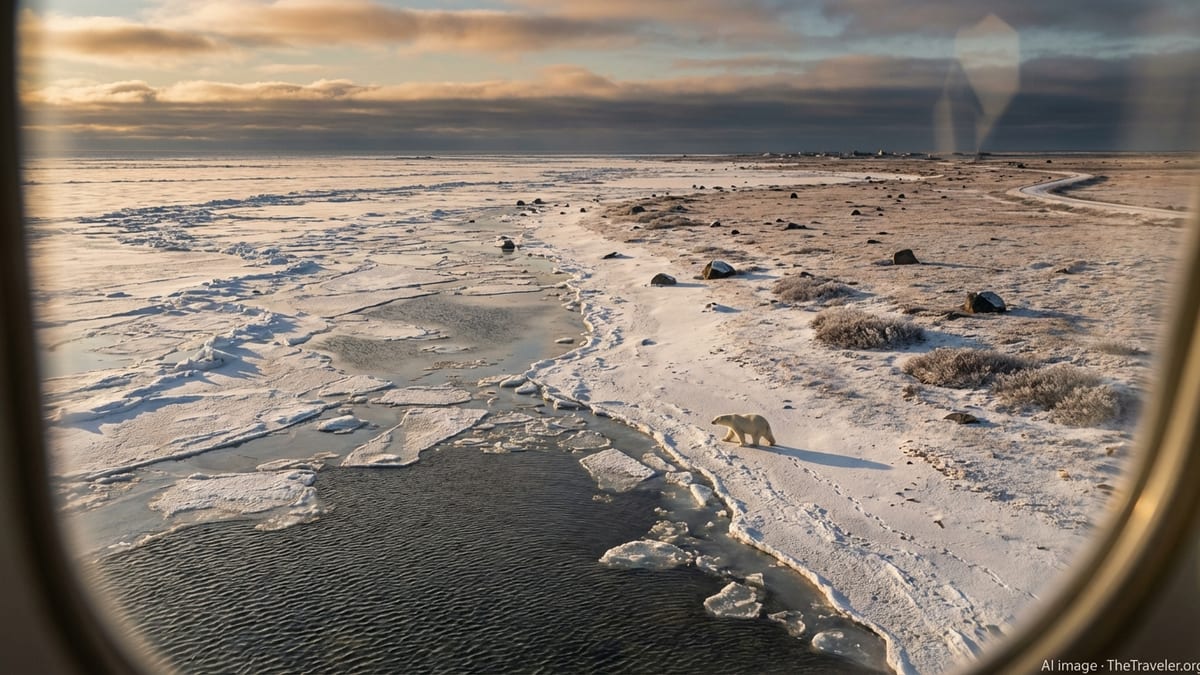
The bay freezes completely each winter and melts almost entirely each summer. This extreme seasonality defines every safety question a visitor might ask. In winter, the bay becomes a vast expanse of ice that can look deceptively solid while hiding pressure ridges, thin leads, and fast-changing wind conditions. In summer and shoulder seasons, ice breakup and freeze-up can strand boats or complicate flights, while fog, storms, and strong currents impact marine travel. Even when visiting primarily on land, the bay’s rhythms of ice and open water influence wildlife movements, weather hazards, and logistics.
For most travelers, “Hudson Bay” effectively means a small number of accessible hubs and guided excursions into surrounding wild areas. Churchill has a modest tourism infrastructure with hotels, outfitters, and guided tours by tundra vehicle or boat. In contrast, many other coastal areas, from Ontario’s Polar Bear Provincial Park to Nunavut hamlets, have few or no visitor services, often requiring charter flights and advance permits. This uneven infrastructure plays a central role in determining how safe the region feels and how carefully a trip must be planned.
Crucially, Hudson Bay is not a place where independent travelers can improvise. Distances are huge, local knowledge is essential, and rescue resources are limited. Those who respect the bay’s remoteness, listen to local authorities and guides, and understand that help may be far away are more likely to have a safe and rewarding visit.
Polar Bears and Wildlife Encounters
Hudson Bay’s most iconic safety issue is the polar bear. Western and southern Hudson Bay support some of the world’s best-studied polar bear populations, including the bears that congregate near Churchill each autumn as they wait for sea ice to return. Scientists and wildlife authorities note that these bears are under growing stress as ice-free seasons lengthen, which can increase the chances that hungry animals approach communities or camps in search of food.([polarbearsinternational.org](https://polarbearsinternational.org/what-we-do/research/western-hudson-bay-polar-bears?utm_source=openai))
In Churchill, a comprehensive Polar Bear Alert Program operates around the town. Officers patrol the coastline, respond to reports, and use deterrents such as noise-makers and relocation to keep bears away from people whenever possible. There is even a polar bear holding facility, informally called the polar bear jail, where problem animals are temporarily confined before being released back onto the sea ice. This system has been credited with reducing lethal bear control and helping keep attacks rare, although it does not eliminate risk.([gov.mb.ca](https://www.gov.mb.ca/nrnd/fish-wildlife/polar_bears/index.html?utm_source=openai))
Visitors are repeatedly reminded that polar bears are powerful predators capable of moving quickly and silently over long distances. Local authorities stress that no one should walk outside town limits alone, especially during the peak bear season from mid-summer to late fall. Basic rules, such as never approaching a bear for photographs, keeping doors unlocked so people can seek refuge, and following the instructions of guides and bear monitors, are treated as non-negotiable. Longtime residents and Indigenous elders often say that managing people’s behavior is as important as managing the bears themselves, because curiosity and complacency can lead travelers into dangerous situations.([parks.canada.ca](https://parks.canada.ca/lhn-nhs/mb/prince/securite-safety/ours-bear?utm_source=openai))
Other wildlife can also pose risks. Along with polar bears, travelers may encounter black bears in some southern areas, as well as wolves and, in summer, large numbers of biting insects that can cause allergic reactions or make outdoor work difficult. Marine trips may bring people close to beluga whales and seals, which are generally not dangerous but require respectful distances to avoid disturbance. As with polar bears, the safest encounters are guided ones, where operators follow established viewing protocols and carry deterrents and communications gear.
Climate Change, Sea Ice, and Emerging Risks
Climate change is reshaping Hudson Bay faster than many travelers realize. Research shows that over the past several decades, the region has warmed significantly, with sea ice breaking up earlier in summer and forming later in autumn. In Western Hudson Bay, where Churchill is located, scientists tracking ice-free days have documented a marked increase in the length of time bears must remain onshore without access to their primary prey, seals. Recent analyses suggest that the average ice-free season in this subpopulation is now several weeks longer than it was in the 1980s.([polarbearsinternational.org](https://polarbearsinternational.org/news-media/articles/fall-2025-hudson-bay-sea-ice-freeze-up?utm_source=openai))
In 2025, for example, sea ice near Churchill took until late November to form in sufficient concentration for polar bears to return to hunting, resulting in one of the longest ice-free periods on record for Western Hudson Bay. Southern Hudson Bay has seen similarly unusual seasons, with record-low sea ice coverage at times when the bay would historically have been fully frozen. These shifts offer a glimpse into a possible future in which such conditions become more common rather than exceptional, altering wildlife behavior and travel safety patterns.([polarbearsinternational.org](https://polarbearsinternational.org/news-media/articles/fall-2025-hudson-bay-sea-ice-freeze-up?utm_source=openai))
From a visitor’s perspective, longer ice-free periods can have conflicting implications. On one hand, warmer autumns and later freeze-up may extend the window when tourism operators can safely run boats or tundra vehicles without extreme cold. On the other, stressed bears may spend more time near shorelines and human settlements, potentially heightening the risk of encounters at times when visitors may not expect them. Climate-driven weather anomalies, such as heavy autumn storms or erratic freeze-thaw cycles, can also complicate flights, marine travel, and on-the-land expeditions.
Scientists warn that if global temperatures continue to rise beyond certain thresholds, polar bears in parts of Hudson Bay could face extirpation over the coming decades as ice-free periods stretch beyond what the animals can physiologically endure. While new genetic research hints that some populations may be developing subtle adaptations to warmer and more variable conditions, experts emphasize that this does not negate the broader threat. For travelers, this means that visiting Hudson Bay is increasingly an encounter with a rapidly changing ecosystem, where safety planning must account for more unpredictable seasons and ice conditions than in the past.([wildlife.org](https://wildlife.org/hudson-bay-polar-bears-may-not-survive-climate-change/?utm_source=openai))
Remote Travel, Infrastructure, and Medical Access
Even without polar bears or climate change, Hudson Bay’s remoteness poses significant safety challenges. Communities along the coast are small, scattered, and often reachable only by plane, seasonal train, or boat. Outside of Churchill and a few regional centers, there may be no hotels, restaurants, or formal tour operators, and in many places there are no roads linking settlements. In practical terms, this means that anyone traveling beyond town limits enters an environment where self-sufficiency is critical and outside help may be hours or days away.
Medical facilities are limited, especially for specialized care. Clinics in small communities can handle routine issues and initial stabilization, but serious injuries or illnesses typically require evacuation to larger hospitals in southern Canada. Weather, low visibility, and high winds can ground aircraft, delaying medevac flights. Travelers with existing health conditions, mobility limitations, or a low tolerance for uncertainty should consider these factors carefully when deciding how far off the grid they want to venture.
Communication is another key safety concern. Cellular coverage outside towns is patchy or non-existent, particularly in coastal lowlands and offshore. Guides and experienced independent travelers rely on satellite phones, inReach-style messengers, VHF radios for marine travel, and redundant navigation systems. For visitors, it is sensible to view such equipment not as optional extras but as essential safety tools, especially on multi-day trips or expeditions far from any settlement.
Logistically, even small disruptions can cascade. A storm that closes a gravel airstrip, delays a supply barge, or grounds tourist flights can leave visitors stuck longer than planned, sometimes in basic accommodations. Authorities in extremely remote parks such as Polar Bear Provincial Park on the Ontario side of the bay advise visitors to bring at least a week of extra provisions in case weather delays departure. In such places, there are no marked hiking trails, no staffed visitor centers, and no on-site rescue teams waiting to respond. The entire safety system depends on thorough pre-trip planning, conservative decision-making, and respect for local guidance.([en.wikipedia.org](https://en.wikipedia.org/wiki/Polar_Bear_Provincial_Park?utm_source=openai))
Seasonal Conditions and Weather Hazards
Hudson Bay’s seasonal extremes shape both the appeal and the risk profile of any visit. In deep winter, temperatures can plunge well below freezing for extended periods, with windchill driving perceived temperatures to life-threatening levels. Storms can bring whiteout conditions, blowing snow, and rapidly shifting sea ice. For land-based travelers, this increases the risk of frostbite, hypothermia, and disorientation. For those on the ice, such as local hunters or specialists traveling with experienced guides, shifting floes and hidden leads can become serious hazards in a matter of hours.
Spring and early summer bring their own challenges. Melting ice and break-up can trap boats or make shore travel difficult as snow turns to deep, uneven slush. Rivers can run high with meltwater, complicating crossings. Fog is common over the cold bay and can reduce visibility for pilots and boat operators, leading to delays and navigation challenges. Insects also emerge in large numbers in the lowlands, creating uncomfortable conditions for anyone camping or working outdoors without adequate netting and repellents.
Summer on Hudson Bay is short and often cooler than visitors expect, with a mix of clear, luminous days and sudden storms that can whip up strong winds and choppy seas. Thunderstorms can roll through quickly, and lightning is a risk for exposed hikers on the tundra. Although conditions are generally more forgiving than in winter, the absence of tree cover leaves travelers exposed to weather changes, and the long daylight hours can lead to fatigue if people underestimate how far they have walked or paddled.
Autumn is the period most associated with polar bear viewing near Churchill, as bears gather along the coast awaiting freeze-up. Weather at this time can be volatile, swinging between crisp, clear days and sleet, freezing rain, or early snow. Ice may begin forming along shorelines and estuaries, creating slippery surfaces and complicating marine operations. This shoulder season can be spectacular, with northern lights and migrating birds, but also requires flexible itineraries, cold-weather gear, and a clear willingness to accept delays and last-minute plan changes for safety reasons.
Staying Safe in Communities and on Guided Trips
For most travelers, the safest way to experience Hudson Bay is through organized tours based in established communities such as Churchill. Over decades, local operators, residents, and authorities have learned how to balance visitor access with wildlife protection and community safety. Many companies employ trained bear guards and use specialized tundra vehicles or enclosed boats designed to keep people at a safe distance from polar bears and other wildlife. Participation in these guided experiences significantly reduces risk compared with independent travel into bear country.
Within towns, basic situational awareness is critical. Visitors are typically encouraged to stay on main streets, avoid wandering along the shoreline alone, and remain alert, particularly at night and during peak bear season. Signs at the edge of Churchill, for instance, warn people to be polar bear aware, although local leaders note that some tourists treat the signs more as photo opportunities than as serious safety messages. Respecting these warnings, and understanding that bears occasionally move through or near town, is part of responsible travel in the region.([news.mongabay.com](https://news.mongabay.com/2025/05/manage-people-more-and-bears-less-say-indigenous-elders-in-worlds-polar-bear-capital/?utm_source=openai))
Most reputable local tour companies run detailed safety briefings, covering topics such as how to behave around polar bears, why no one should feed wildlife, and what to do if a bear approaches a vehicle or observation platform. Guides carry deterrents and maintain communication with community-based alert programs. They also closely monitor weather forecasts and ice conditions and may cancel or modify excursions on short notice if conditions deteriorate. Travelers who choose operators with a strong safety record and who are willing to accept last-minute changes in the name of safety generally have more secure experiences.
Insurance and documentation are another part of staying safe. Travel insurance that covers medical evacuation is strongly recommended, especially for trips involving remote camps or boat expeditions. Visitors should also ensure they understand local laws and guidelines regarding drones, firearms, and wildlife disturbance. In some cases, certain equipment may only be carried by licensed guides or professionals, and ignoring these regulations can endanger both people and animals.
Independent Expeditions and Wilderness Risk
While most travelers will visit Hudson Bay via organized tours or short stays in communities, a smaller number are drawn to the idea of independent wilderness expeditions. These may include multi-day paddling trips, backpacking across tundra, or extended stays in remote coastal cabins or camps. Such journeys can be profoundly rewarding but carry substantially higher risk, particularly in areas with frequent polar bear activity and minimal rescue infrastructure.
Authorities and park managers along the bay frequently emphasize that wilderness travelers must be self-reliant and thoroughly prepared. This includes having detailed route plans shared with a trusted contact, carrying redundant navigation and communication tools, packing extra food and fuel in case of delays, and being competent in cold-weather camping techniques. In ultra-remote parks such as Polar Bear Provincial Park, where access is by air only and there are no on-site rangers, visitors are advised to arrive with additional supplies and contingency plans in case weather prevents aircraft from landing for days at a time.([en.wikipedia.org](https://en.wikipedia.org/wiki/Polar_Bear_Provincial_Park?utm_source=openai))
Polar bear safety in the backcountry is a specialized skill set. Campers need to think carefully about where they pitch tents, how they store food and waste, and what deterrents they carry. Some expeditions use electric bear fences around camp perimeters; others rely on constant vigilance and rotating night watches. Even then, professionals stress that there is no such thing as a completely safe campsite in active bear country. The goal is risk reduction rather than risk elimination.
For many would-be adventurers, an honest self-assessment is crucial. Experience in more temperate backcountry areas does not automatically translate to expertise in Arctic and sub-Arctic environments. Cold injuries, water hazards, and navigation challenges over featureless tundra or ice can overwhelm those who have not trained specifically for this kind of terrain. For these reasons, joining a guided expedition or hiring a local guide with deep regional knowledge is often the most responsible choice, particularly for first-time visitors.
The Takeaway
So, is Hudson Bay safe to visit? The answer is that it can be, but only for travelers who approach it on its own terms. This is a region defined by polar bears, fast-changing sea ice, extreme weather, and vast distances, where even routine trips depend on local expertise and flexible planning. Visitors who expect the predictability and convenience of more conventional destinations are likely to be frustrated, and they may inadvertently put themselves at risk by underestimating the environment.
For those prepared to respect these realities, however, Hudson Bay offers one of the most compelling travel experiences in North America. Guided trips from communities such as Churchill, grounded in strong safety protocols and long-standing coexistence strategies, allow visitors to witness polar bears, beluga whales, and dramatic northern skies while keeping risks within reasonable bounds. Listening carefully to Indigenous knowledge, following community guidelines, and supporting operators that prioritize both wildlife conservation and visitor safety are essential parts of that equation.
Climate change is adding urgency and complexity to every decision about when and how to visit. Sea ice seasons are shifting, wildlife is under growing stress, and infrastructure may be challenged by more frequent extremes. Yet this same reality makes responsible, well-informed travel more meaningful than ever. Approached with humility, preparation, and respect, Hudson Bay can be both safe enough to visit and powerful enough to leave a lasting impression about the fragile Arctic world on which so many species, including humans, depend.
FAQ
Q1. Is it safe for first-time Arctic travelers to visit Hudson Bay?
It can be reasonably safe for first-time visitors if they base themselves in established communities like Churchill and join reputable guided tours that provide safety briefings, bear protection, and logistical support. Independent wilderness travel is much more demanding and best reserved for those with significant cold-weather and remote-expedition experience.
Q2. How dangerous are polar bears for tourists in Hudson Bay?
Polar bear attacks on visitors are rare, especially in areas with active bear alert programs and professional guides, but the risk is real and cannot be ignored. Bears are powerful predators, and safety depends on strict adherence to local advice, avoiding walking alone outside town, and never approaching bears for photographs or feeding.
Q3. When is the safest time of year to visit Hudson Bay?
Many travelers find late summer and early autumn, during organized polar bear or beluga seasons, to be a good balance of access and safety when using professional operators. Deep winter and shoulder seasons can be spectacular but bring increased cold, storms, and travel disruptions, which require more specialized clothing, skills, and flexibility.
Q4. Do I need special permits to visit remote areas along Hudson Bay?
In some regions, especially remote parks or Indigenous territories, visitors may need permits, permissions, or organized logistics arranged in advance. Travelers should check requirements with provincial or territorial authorities and, where appropriate, work with local outfitters or community organizations to ensure they are visiting legally and respectfully.
Q5. What kind of medical facilities are available near Hudson Bay?
Coastal communities generally have small clinics capable of handling routine care and emergencies in the short term, but serious cases often require evacuation to larger southern hospitals. Because weather can delay flights, visitors should carry adequate medication, consider evacuation insurance, and be aware that advanced medical support may not be immediately available.
Q6. Is it safe to camp in polar bear country around Hudson Bay?
Camping in active polar bear country carries inherent risk and should only be undertaken by people with appropriate training, equipment, and contingency plans. Many travelers choose guided expeditions that use bear fences, deterrents, and strict camp protocols. Even with precautions, the risk can only be reduced, not eliminated.
Q7. How is climate change affecting travel safety on Hudson Bay?
Climate change is lengthening ice-free seasons and making weather and ice conditions more unpredictable, which can impact wildlife behavior, flight schedules, and marine travel. Travelers need to be prepared for increased delays, changing wildlife viewing windows, and safety protocols that may evolve from one season to the next as conditions shift.
Q8. Can families with children safely visit Hudson Bay?
Families can visit safely if they choose family-friendly operators, stay within community areas or guided excursions, and closely supervise children at all times. Parents should be prepared to follow strict rules about staying with groups, remaining in vehicles or viewing platforms, and avoiding unsupervised walks near shorelines or on the tundra.
Q9. What emergency communication tools are recommended for remote trips?
For any travel beyond town limits, satellite phones or satellite messengers, combined with GPS navigation and, for marine travel, VHF radios, are strongly recommended. These tools allow travelers to call for help, share locations, and receive weather updates in areas where cellular service is unreliable or absent.
Q10. Is it ethical to visit Hudson Bay while polar bears are under climate stress?
Many conservationists and local leaders argue that carefully managed tourism can support research, conservation, and local economies while raising global awareness about climate impacts. The key is to travel with operators who prioritize wildlife welfare, respect Indigenous perspectives, and minimize disturbance, so that visits contribute positively rather than adding to the pressures the region already faces.