

Ask an American traveler about Illinois and many will picture a flat, flyover state with Chicago perched on the edge. Spend even a few days on the ground, though, and a very different place emerges. The Land of Lincoln turns out to be a state of dramatic contrasts: world-class architecture and Michelin ambitions in Chicago, red-cliff canyons and quiet vineyards in the south, nostalgic Route 66 towns across the middle, and a surprisingly inventive small-town food and arts scene threaded along its rivers and prairies. The real surprise for many first-time visitors is not that Illinois is worth visiting, but that it feels like several destinations in one.
Illinois Is No Longer Just a “Flyover State”
One of the biggest surprises for first-time visitors is how central tourism has become to Illinois’ identity. For years, the state was often reduced to a quick Chicago city break or a gas stop on the way somewhere else. Recent tourism campaigns have worked hard to change that image, highlighting everything from state parks to small-town festivals. Visitor numbers in Illinois have rebounded strongly in the past few years, with tourism officials reporting record spending and more people choosing to stay longer, especially outside the traditional Chicago core. That shift reflects a growing realization among travelers that Illinois offers enough variety to justify a dedicated trip, not just a layover.
Another surprise is how easy Illinois is to navigate. The state sits at the crossroads of the Midwest, framed by interstates, Amtrak routes and two major Chicago airports. For road trippers, that means you can pair a deep dive into Chicago with a few days exploring quieter corners like Galena in the northwest, the Illinois River Valley, or the orchard country and wine trails of the south. The sense that everything is “just a few hours away” changes how people plan their time. Instead of choosing one base, many visitors string together a mini grand tour that shifts from urban to rural, from lakefront to limestone bluffs, in the span of a week.
Most surprising of all for skeptics is how often expectations are quietly overturned. Travelers arrive imagining a flat, monotone landscape and discover sandstone canyons, forested hills, vineyards and river bluffs. They assume Chicago will feel cold or overwhelming and instead find welcoming neighborhoods and lakefront paths packed with joggers and families. What makes Illinois worth visiting, in the end, is not a single headliner attraction, but the way the whole state keeps delivering small, unscripted discoveries.
Chicago: More Than a Big City Stopover
For many first-time visitors, Chicago is the hook that gets them to Illinois, and it rarely disappoints. What surprises people most is how livable the city feels. The skyscrapers and elevated trains create an iconic skyline, yet within minutes you can be strolling leafy neighborhood streets or lounging on a Lake Michigan beach in summer. Classic river architecture cruises showcase century-old towers alongside bold contemporary designs, and the city’s museums, from the Art Institute to the Museum of Science and Industry, rival those in coastal cultural capitals. Travelers often remark that Chicago has the cultural depth of a much larger metropolis with a more approachable, unhurried pace.
Another revelation is the breadth of Chicago’s food scene. First-time visitors expect deep-dish pizza and Chicago-style hot dogs, and they do find them, along with Italian beef sandwiches and a long list of local comfort foods. What they do not always expect is the sheer range beyond these icons: serious tasting-menu restaurants, inventive cocktail bars, thriving neighborhood taquerias, Korean barbecue joints, and bakeries drawing lines around the block. The city’s immigrant communities have shaped a dining landscape that shifts from Polish delis to South Asian sweets shops within a few train stops, and travelers who venture onto the neighborhood train lines or buses are often rewarded with memorable, reasonably priced meals.
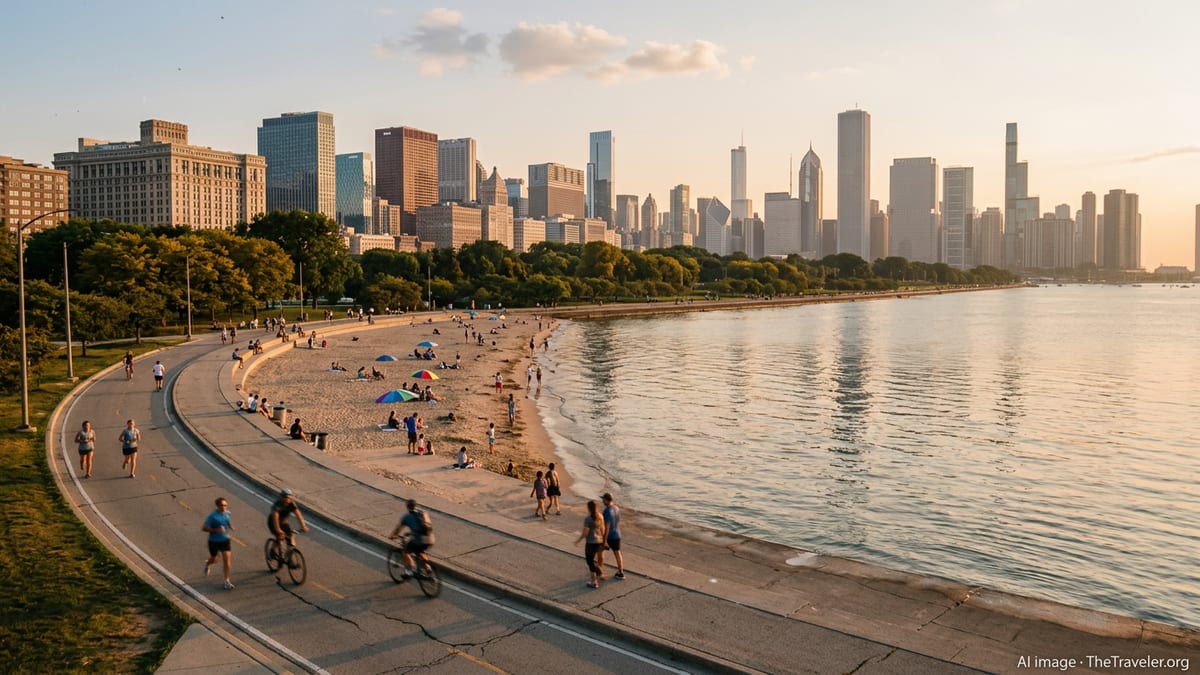
Chicago’s lakefront catches many newcomers off guard. From late spring through early fall, the 18-mile lakeshore path fills with cyclists, runners and families, and beaches stretch from the upscale Gold Coast to more laid-back stretches in neighborhoods farther north and south. On a clear summer evening, with sailboats scattered across the water and the skyline glowing behind them, it can be hard to reconcile the view with the stereotype of “cold, industrial Midwest.” Even in winter, visitors who dress for the weather discover an atmospheric city of frozen harbor scenes, cozy neighborhood bars and museums that feel blissfully uncrowded.
Landscapes That Defy Flat-State Stereotypes
If Chicago is Illinois’ calling card, the rest of the state is its best-kept secret. Many first-time visitors are genuinely startled by the landscape variation that unfolds once you leave the interstate. In the north, rolling farmland curls around small rivers and forest preserves. Head west and you reach the Mississippi River bluffs near towns like Galena, where streets climb steep hills and 19th-century brick storefronts overlook wooded valleys. This corner of Illinois feels more like parts of Wisconsin or Iowa than the flat prairie image that often dominates people’s mental map.
Farther south, the surprises become more dramatic. In places like Starved Rock State Park, sandstone canyons, seasonal waterfalls and forested trails draw hikers in every season. Continued interest in outdoor recreation has brought more visitors to Illinois’ state parks in recent years, and first-timers often comment on how accessible they are: trailheads close to parking, scenic overlooks just a short walk away, and family-friendly loops that still deliver big views. In southern Illinois, the Shawnee National Forest reveals a completely different side of the state, with rock formations, forested ridges and overlooks that feel a world away from Chicago’s glass and steel.
What tends to surprise travelers is not that Illinois has nature, but that it has nature with personality. You can wander through quiet riverbottom woods, climb to sweeping bluff-top panoramas and then be back in a small town for ice cream by midafternoon. Because these landscapes are still under the radar compared with national park icons, they remain relatively uncussy: trail maps may be printed on simple boards, small visitor centers are staffed by rangers who know the area intimately, and sunsets can be enjoyed without jostling for a tripod spot.
Route 66 Nostalgia and Small-Town Americana
For travelers with even a passing interest in classic Americana, Illinois is a revelation. The state claims the starting point of historic Route 66 in downtown Chicago, and the old highway cuts diagonally across cornfields and small towns on its way southwest. Along the route, visitors encounter everything from restored 1920s service stations to giant fiberglass roadside figures and old diners serving simple comfort food. Enthusiasm for Route 66 has only grown as the highway’s centennial approaches, and Illinois has leaned into preserving and promoting these sites, turning what used to be a utilitarian drive into a time-travel experience.
What surprises many first-timers is how alive these small towns still feel. Places like Joliet, Pontiac, Bloomington-Normal and Springfield mix Route 66 history with murals, local museums and seasonal events. In Pontiac, visitors will find multiple small museums and a downtown speckled with large-scale murals that make it feel like an open-air gallery. Other stops feature quirky super-sized roadside sculptures or carefully restored neon signs that light up at dusk. Travelers expecting a dusty, forgotten back road discover communities that have taken pride in their heritage and turned nostalgia into an economic engine.
The human element is part of the charm. Road trippers often report that some of their most memorable conversations happen at small-town diners or visitor centers along Illinois’ stretch of Route 66. Locals may share their own stories of the highway’s mid-century heyday or offer tips about side trips to nearby lakes, covered bridges or farm stands. Instead of rushing through the state, many visitors end up adding unscheduled nights to linger in a town where they had only planned to stop for lunch.
Food That Goes Far Beyond Deep Dish
Illinois’ food reputation tends to orbit Chicago’s most famous dishes, but first-time visitors quickly discover a much more nuanced and regional culinary story. In and around Chicago, deep-dish pizza, Italian beef sandwiches and Chicago-style hot dogs are still must-try staples, yet you will also encounter tavern-style thin-crust pizza sliced into squares, neighborhood hot dog stands with loyal followings, and corner bakeries turning out Old World pastries alongside modern creations. Many of these spots are unpretentious, counter-service joints that have been feeding their neighborhoods for generations, and visitors are often surprised at how affordable and unfussy the food scene can be away from the marquee names.
Outside Chicago, menus begin to reflect local ingredients and smaller-town traditions. In central and southern Illinois, you are more likely to find farm-to-table restaurants sourcing from nearby producers, seasonal specials built around sweet corn, apples or pumpkins, and small-town butcher shops doubling as lunch counters. River towns along the Mississippi and Illinois rivers highlight freshwater fish and regional specialties, while wineries and craft breweries have multiplied across the state, especially where rolling hills and long views provide a natural backdrop for tasting rooms.
The biggest surprise for many visitors is how proudly local people are about their food, even in the smallest communities. Locals will debate which town festival has the best fried chicken, which bakery makes the most authentic regional pie, or which roadside stand is worth a detour during peach or apple season. Travelers willing to ask for recommendations at gas stations, diners or hotel desks often end up at low-profile spots that never appear on national lists but linger in their memory long after the trip.
History, Culture and Quirky Museums
Illinois holds a central place in American history, yet many first-time visitors greatly underestimate how accessible that history feels on the ground. Springfield, the state capital, is home to well-interpreted Abraham Lincoln sites, from his preserved home neighborhood to a modern presidential museum that uses immersive exhibits to tell his story. In smaller towns, historic courthouses, preserved main streets and modest local museums bring to life chapters ranging from early French exploration along the Mississippi to the state’s role in the Underground Railroad.
Cultural surprises extend beyond official museums. Many Illinois towns have embraced large-scale murals, sculpture walks and public art festivals, transforming otherwise quiet downtown streets into open-air galleries. College towns like Champaign-Urbana, Normal and Carbondale support live music, theater and arts events that outsize their population, giving visitors an opportunity to pair small-town charm with a night at a concert or play. Even in Chicago’s neighborhoods, travelers who step off the well-trodden downtown loop find independent galleries, community arts centers and historic churches that reflect the city’s diverse immigrant roots.
Then there are the delightfully offbeat museums and attractions that travelers rarely see coming: hyper-focused collections devoted to everything from classic cars and tractors to riverboats and neon signs. Along Route 66 and in some river towns, you can wander through old jails turned into mini-museums, restored gas stations filled with highway memorabilia, or small local history centers run by volunteers who know every story behind the objects on display. These places rarely feel polished in a big-city sense, but they offer an intimacy and personality that many visitors end up valuing more.
Seasonal Rhythms and When to Go
First-time travelers are often surprised at how dramatically Illinois changes with the seasons, and timing a trip can shape the entire experience. Summer brings festivals nearly every weekend, from neighborhood street fairs in Chicago to county fairs and heritage celebrations in small towns. Lakefront beaches, rooftop bars and outdoor concerts make Chicago feel almost Mediterranean on warm evenings, while state parks fill with hikers and campers taking advantage of long daylight hours. This is peak season, and while it offers the most activities, it also means planning ahead for city hotels and popular outdoor cabins.
Autumn, by contrast, may be the state’s best-kept secret. Cooling temperatures usher in fall color along river valleys and forested hillsides, and harvest season brings pumpkin patches, apple orchards and wine festivals to life across the countryside. Many visitors pair a few urban days in Chicago with a drive into the countryside to experience corn mazes, farm stands and scenic overlooks under golden foliage. College football Saturdays add an energetic buzz to university towns, and even in the city, tree-lined boulevards and parks show off their colors.
Winter can intimidate travelers who associate Illinois with harsh Midwestern cold, but those who come prepared often find a charming, lower-cost season. Chicago dresses itself in holiday lights, indoor cultural attractions are at their most appealing, and smaller towns host Christmas markets and parades. Snow adds a hush to state parks and rural roads, rewarding photographers and solitude seekers. Spring, meanwhile, offers a shoulder season with emerging greenery, fewer crowds and moderate temperatures ideal for long city walks or early hikes before summer humidity arrives.
The Takeaway
So, is Illinois worth visiting? For travelers willing to venture beyond clichés, the answer is a confident yes. The state’s biggest surprise is its range: a global city on a freshwater sea, nostalgic Route 66 towns clinging to their mid-century charm, sandstone canyons and forested ridges that feel far removed from any notion of “flat,” and a deeply rooted food culture that thrives as much in small towns as it does in acclaimed city kitchens.
First-time visitors often arrive expecting to tick off Chicago’s highlights in a day or two and then move on. Many leave wishing they had stayed longer, or already plotting a return focused on a different region of the state. Whether you are drawn by architecture and museums, by road-trip nostalgia, by hiking and river scenery, or simply by the promise of discovering places that still feel unhurried and genuine, Illinois rewards curiosity. In a travel world where so many destinations feel over-scripted, the Land of Lincoln stands out for its ability to quietly exceed expectations.
FAQ
Q1. Is Illinois worth visiting if I have already been to Chicago once?
Yes. You can return to explore new Chicago neighborhoods, then add time in small towns, Route 66 stops, river valleys or southern parks for a very different experience.
Q2. How many days should a first-time traveler spend in Illinois?
A short trip might be three to four days in Chicago, but to see more of the state, plan a week so you can add at least one region beyond the city.
Q3. What surprises first-time visitors to Illinois the most?
Many are surprised by how friendly and walkable Chicago feels, how varied the landscapes are outside the city, and how much small-town Americana still thrives.
Q4. When is the best time of year to visit Illinois?
Late spring through fall offers the most comfortable weather and many festivals. Autumn is especially appealing for fall colors, harvest events and pleasant temperatures.
Q5. Is Illinois a good destination for a road trip?
Yes. Historic Route 66, scenic river roads and short drives between towns make Illinois ideal for road trips that mix city time with countryside and small-town stops.
Q6. Are there outdoor activities in Illinois beyond city parks?
Definitely. The state has popular hiking areas, rivers for paddling, lakefront beaches, forest preserves, state parks and a national forest with rock formations and scenic overlooks.
Q7. Is Illinois family-friendly for travelers with kids?
Very. Chicago’s museums and lakefront, plus zoos, children’s museums, state parks, farms and small-town festivals across the state, give families plenty of options.
Q8. How expensive is it to visit Illinois compared with coastal cities?
Chicago can be more affordable than major coastal cities, especially outside peak dates, and costs drop further in smaller towns where lodging and dining are generally less expensive.
Q9. Do I need a car to enjoy Illinois?
You can explore much of Chicago without a car using transit and walking. To visit smaller towns, Route 66 attractions or state parks, having a car is highly recommended.
Q10. Is Illinois safe for travelers?
Most travelers experience Illinois as safe when they take normal precautions, stay aware of their surroundings, and follow local advice about areas to avoid, especially late at night.