

I visited Mafia Island after years of hearing it described as a quieter, wilder alternative to Zanzibar, especially for diving and whale sharks. I went in with high expectations of pristine reefs, empty beaches, and a laid–back Swahili island atmosphere that tourism had not yet overwhelmed.
What I found was more complex. Mafia Island is genuinely special in some ways and frustrating in others. It is not a one–size–fits–all destination, and whether it is worth visiting depends a lot on what you value, your budget, and your tolerance for logistical hassle.
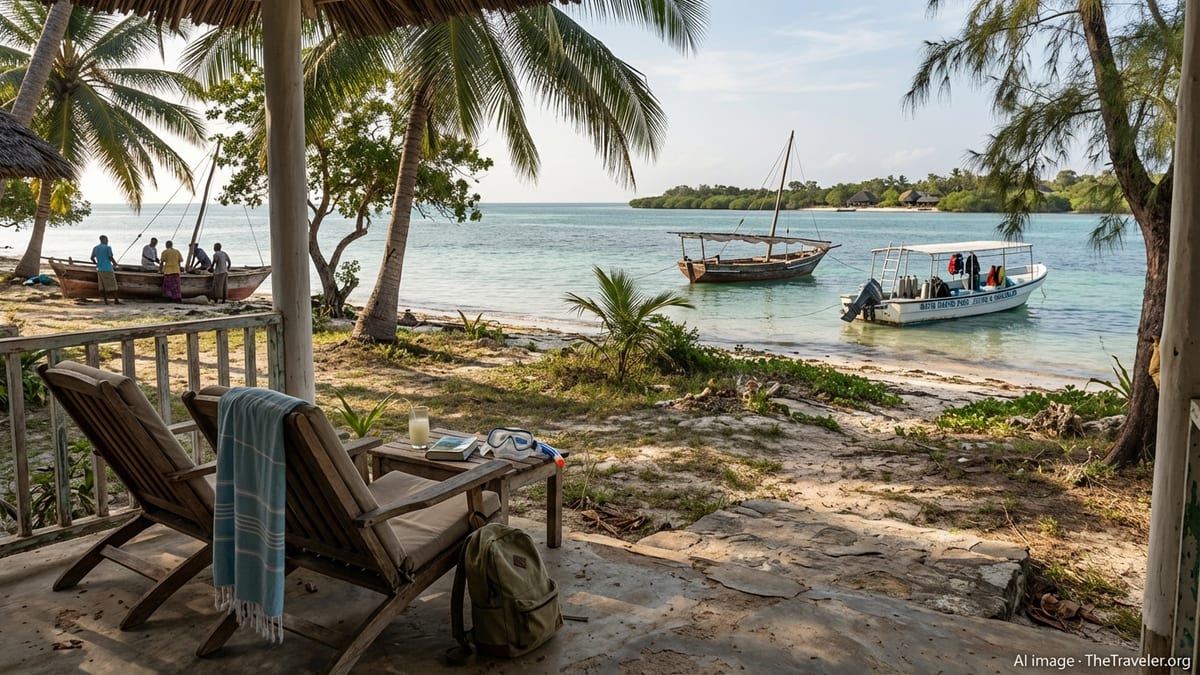
Getting There: Remote Paradise or Just Plain Inconvenient
Reaching Mafia Island is the first test of how badly you really want to go. There is no straightforward international gateway. I first had to fly into Dar es Salaam, then connect to a small domestic flight with Coastal Air or Auric Air for the roughly 30 to 35 minute hop to Mafia. On paper it looks simple. In reality, it felt patchy and a little fragile, with limited schedules and small planes that do not leave much room for delays or missed connections.
I considered the much cheaper boat option via the mainland port at Nyamisati, but everything I heard on the ground pointed in the same direction: frequent delays, rough crossings, and occasional mechanical issues with the government ferry. Private boats cost more and are also heavily dependent on sea conditions. In the end I chose the flight for safety and sanity. It was scenic, and the view over the delta and reefs was beautiful, but the overall journey from home to my lodge in the marine park area still took most of a day and left me tired.
The small–plane baggage limit of about 15 kilograms per person was another reality check. I had to repack my dive gear and camera kit more ruthlessly than I expected. Excess luggage is technically possible, but it is charged extra and is not guaranteed to come on the same flight. On the way in, that made me slightly nervous about checking anything important. On the way out, it added a layer of mild stress I would rather have skipped at the end of a supposedly relaxing island stay.
By the time I reached Kilindoni airstrip, Mafia already felt remote in a way that was both exciting and inconvenient. That sense never really left. I liked knowing I was far from big resorts and crowds, but I also knew that if something went wrong with flights or weather, I could easily be stuck for an extra day or more with very little control over the situation.
First Impressions: A Quiet Island That Takes Its Time
A short drive from the airstrip brought me to Kilindoni, the main town, which is really more of a large village. Dusty streets, small shops, and men working on traditional wooden dhows on the beach gave me my first glimpse of what Mafia does best: a sense of a working Swahili island that exists for itself, not for tourists. It felt authentic in a way that Zanzibar, with its cruise ships and touts, no longer does. At the same time, that authenticity comes with some compromises.
Outside the lodges, there is not much in the way of polished visitor infrastructure. There are few restaurants aimed at travelers, almost no nightlife, and very limited shopping. I did not see the endless line of souvenir stalls and beach hawkers that dominate some other islands, which I loved. But if you enjoy wandering into different bars in the evening or browsing for crafts, Mafia will probably feel sparse and a little too quiet.
The drive from Kilindoni to the main marine park area around Utende took about 45 minutes on a rough road that becomes muddy in the rains. It was bumpy enough that I was glad I had not tried to self–organize transport. As we passed simple villages and coral–rag scrubland, I realized how small and rural the island really is. There are no high–rise hotels, no large supermarkets, and no chain anything. For some travelers, this is the dream. For others, it may feel like stepping back a few decades, in both good and bad ways.
My initial emotional reaction was mixed. I appreciated the absence of big developments and the relaxed pace of life. People were friendly but not pushy, and I did not feel like a walking wallet. At the same time, Mafia lacks that instant postcard “wow” you get in places where the beach is right outside the airport. In Mafia, the real magic is offshore, and you have to work a little to get to it.
Money, Marine Park Fees, and the True Cost of Visiting
One thing I wish I had understood more clearly before going was the real cost structure of a stay in the Mafia Island Marine Park area. Accommodation around Utende is mostly small lodges and boutique hotels, plus a handful of budget options. Prices are higher than on many parts of the mainland, and almost everything geared to visitors sits inside or right next to the national marine park boundary.
Because of that, you pay a daily marine park fee to the Marine Parks and Reserves Unit. As of my visit, the charge for non–Tanzanian adults was around 20 to 24 US dollars per person per day, plus taxes, and it had to be paid by card at the park gate or built into the lodge bill. That fee applies for every day you are inside the park, not just days you actively dive or snorkel. The system itself is understandable, but in practice it felt like a constant, invisible meter running in the background of the trip.
Activity prices then stack on top of those daily fees. A basic half–day snorkeling trip in Chole Bay cost in the region of 25 to 35 dollars per person, plus the park fee if it was a day I had not yet covered. Whale shark excursions, when in season, were quoted from about 50 dollars per person and up. Dives were in line with other remote dive destinations, but again, the marine park fee is separate and unavoidable. Once I added up accommodation, park fees, activities, and transfers, Mafia was far from a cheap island break.
Another practical point is money access. There are ATMs in Kilindoni, but everyone, including my lodge, warned me not to rely on them. Outages and cash shortages are common. Most lodges and dive centers prefer or require payment by card for big bills, but card machines can also be temperamental when the network goes down. I ended up bringing more cash in US dollars than I normally would, which meant thinking about safety and careful budgeting. None of this was unmanageable, but it took mental bandwidth and planning that a more developed destination would not demand.
The Marine Life: Incredible Reefs, But Not Every Day Is Perfect
The reason most people put up with the cost and hassle of reaching Mafia Island is the marine life. In that respect, Mafia is genuinely exceptional, especially inside the marine park. I spent several days snorkeling and diving around Chole Bay and the outer reefs, and the coral health was noticeably better than in many other parts of the Indian Ocean I have visited.
I saw dense hard coral gardens, big fields of staghorn and table corals, and plenty of healthy fish life. Even simple snorkeling trips delivered a wide mix of species, from clouds of anthias and sergeant majors to larger groupers and rays. On one dive, I watched a massive potato cod cruise past, and on another I hovered above a turtle slowly grazing on seagrass. Visibility, especially in the dry season months, often reached well beyond 20 meters and sometimes closer to 30 or more, which made the underwater scenery feel expansive and cinematic.
That said, expectations matter. The way Mafia is often promoted can give the impression that every snorkel session will be a technicolor explosion on the scale of a nature documentary. Reality is a bit more nuanced. Visibility in the inner bay can drop with tides and plankton. Some shallow spots look less spectacular at low tide or on windy days. On one outing, the water was milky and surgey, and I came back feeling a little underwhelmed. It was still a pleasant swim, but not the “trip of a lifetime” moment the brochures imply.
Whale sharks were another area where hype and reality did not fully align. The main season runs from roughly October to March, when plankton blooms draw these giants to the west coast of the island. I visited in season and did see them, which was thrilling. Gliding alongside a whale shark is every bit as humbling as I had imagined. But it was not the peaceful, solitary encounter I had pictured. Several boats converged on the same animals, and there were moments that felt crowded, with multiple people in the water trying to keep pace. The operators I went with were respectful and followed distance guidelines, but I still left thinking that marketing glosses over the messy, competitive side of chasing charismatic wildlife.
Life On Land: Simple Villages, Patchy Beaches, Limited Diversions
On land, Mafia Island is not really a classic beach holiday destination, and this is another area where travelers can end up disappointed if they arrive with the wrong mental picture. The main tourist base at Utende has some nice sandy stretches, especially at higher tides, but many shorelines are a mix of seagrass, coral fragments, and working beachfront. Mangroves dominate parts of the coast. There are sandbanks and beautiful beaches in the wider area, but many of the picture perfect spots require a boat trip to reach.
Day trips to places like Marimbani sandbank or Fisherman’s Island were among my favorite excursions. White sand, clear water, and almost no one else around gave me the remote island feeling I had hoped for. But these trips cost extra in both money and time. There is no wandering down the beach to a row of bars or hopping between coves like you might on a more developed island. Once I accepted that Mafia’s best beaches are a destination in themselves rather than a backdrop to daily life, I enjoyed them more. Before that, I occasionally found myself thinking how nice it would be to have a really good swimming beach right outside my door.
The villages themselves are modest but interesting. Walking through Chole village, with its big fruit bats hanging in the trees and scattered coral stone ruins, felt like stepping into a slower, older rhythm. I appreciated that tourism had not turned it into a theme park. At the same time, I was conscious of being a visitor in a predominantly Muslim, conservative community. Shoulders and knees covered, no beachwear away from the lodge, and low–key behavior are basic expectations. That was not a problem for me, but if you like to drink, party, or dress freely on holiday, Mafia may feel restrictive.
Evenings on the island are quiet. Apart from a few lodge bars and the odd beach bonfire, there is not much going on after dark. Power cuts do happen, although most places have generators. Phone signal was patchy, and mobile data was slow. I quite liked being forced offline, but anyone heavily reliant on connectivity for work or entertainment could find that stressful. In many ways, Mafia is more of a daytime destination where you wake early, get on a boat, dive or snorkel, and then eat, read, and sleep.
Accommodation, Food, and Service: Warm People, Variable Standards
Accommodation on Mafia Island ranges from rustic guesthouses on the Kilindoni side to mid–range and upper mid–range lodges around Utende and neighboring islands. There are no large international chains. This gives the island a personal, low–density feel, but it also means that the quality of rooms, maintenance, and food can vary more than in big resort destinations.
I stayed at a small lodge in the marine park area that marketed itself as eco–friendly and boutique. The setting was genuinely lovely, with views over the bay and plenty of greenery. Staff were warm, remembered my name, and did their best to accommodate requests. However, there were details that did not quite match the price tag. Water pressure in the shower was inconsistent. Hot water depended on the time of day. Towels were clean but tired. None of it ruined the stay, but at rates comparable to mid–range hotels in more accessible destinations, I expected slightly higher polish.
Food followed a similar pattern. Fresh fish and seafood were excellent, with grilled octopus and fish curries that were highlights of the trip. Tropical fruit was abundant, and breakfasts were usually satisfying. Where things dipped was variety. After a few days of eating all meals at the lodge, the menu started to feel repetitive. There are very few independent restaurants within easy reach, especially in the marine park area, so most guests simply eat wherever they are staying. Dietary needs can be accommodated if you give advance notice, but ingredients are limited to whatever small boats and weekly supply runs manage to bring in. If you are used to diverse dining options, this can feel restrictive.
Service, on the whole, was friendly and genuine, but it worked on island time. Excursions did not always depart exactly when planned. Bills took a while to prepare. Special requests sometimes got lost between shifts. None of this struck me as laziness; it is just the pace of a remote place with small teams and limited systems. I found that the more I relaxed my expectations of efficiency, the more I appreciated the human side of the experience. Still, for travelers who equate a premium price with sharp, hotel–school service, Mafia’s approach may be frustrating.
Best Time to Go and Seasonal Realities
Timing a trip to Mafia Island matters more than many people realize. The headline seasons revolve around whale sharks and weather. Whale sharks are most reliably seen from around October to March. I purposely visited in that window and was glad I did. The sea was warm, conditions were generally calm on most days, and I had a high probability of ticking that experience off my bucket list. Visibility for diving also tends to be good in these months, though there can be variations based on currents.
The so–called long rains in April and May are a different story. Many lodges either close entirely or operate with skeleton staff. Flights may be less frequent, and the interior roads can become muddy, making transfers and day trips more taxing. Unless you have a specific reason to go in that period, I would avoid it. Shoulder months outside the whale shark season can still offer excellent diving and fewer people, but you need to be comfortable trading a lower chance of big animal encounters for more solitude.
Another subtle but important point is tide. So many of Mafia’s activities are tide dependent: snorkeling in the blue lagoon, exploring certain reefs, or accessing sandbanks safely. This means excursion times can be at odd hours and sometimes very early morning. During my stay, I had one day where the tide pattern meant a long gap in the middle of the day with not much to do except sit by the lodge. For some, that enforced downtime is a blessing. For others, especially restless travelers, it can feel like a loss of precious holiday hours.
Overall, I left with the sense that Mafia rewards those who plan around these natural rhythms rather than fight them. If you choose your month carefully, accept that the sea and tides will dictate your daily schedule more than you will, and give yourself enough days to account for the occasional weather hiccup, the island is far more likely to deliver what you came for.
Is Mafia Island Worth It, and Who Is It Really For?
After a week on Mafia, I had to answer the question I arrived with: was it worth the time, money, and effort compared to easier, cheaper beach options in the region. My answer is yes, but with important qualifications. Mafia is not a generic tropical island holiday. It is a niche destination, and it shines brightest for a specific kind of traveler.
If you are a diver or an avid snorkeler who cares about coral health and prefers a low–key base over a party island, Mafia is genuinely special. The combination of protected reefs, marine park management, and low visitor numbers creates an underwater experience that still feels relatively intact. If swimming with whale sharks sits high on your life list, Mafia gives you one of the better chances in the world during its season, albeit with the caveat that you will share those animals with others on busy days.
If, on the other hand, your priorities are broad white beaches you can enjoy directly from your hotel, lots of restaurants and bars, easy access, and reliable modern comforts, then Mafia will probably disappoint you or feel like poor value. The daily marine park fees, limited infrastructure, occasional power and connectivity issues, and restricted dining and nightlife all stack up. You need to be comfortable trading convenience for authenticity, and structure for spontaneity driven by tides, weather, and local rhythms.
Looking back, I would absolutely visit again, but I would change how I structured the trip. I would stay a night or two in Dar es Salaam before and after, to cushion any flight or weather disruptions. I would bring more cash in small denominations and a little fewer expectations of “resort smoothness.” I would also give myself at least five full days on the island, rather than trying to squeeze everything into three or four. It takes time for Mafia to reveal itself, and rushing only exaggerates its inconveniences.
The Takeaway
Mafia Island is not perfect, and it does not try to be. It is remote, sometimes awkward, occasionally more expensive than it feels like it should be, and quietly resistant to becoming the next big thing. That very resistance is also what protects the qualities that make it worth the journey: vibrant reefs, meaningful marine encounters, and the feeling that you are visiting an island still mostly living life by its own rules.
For me, the frustrations and compromises were real, but they did not overshadow the best moments. Drifting over intact coral gardens with no other boat in sight, watching fruit bats swirl over Chole at dusk, and sharing the water with a whale shark are experiences that stayed with me long after the minor inconveniences faded. I did not leave feeling dazzled in the glossy–brochure sense, but I did leave feeling that I had been somewhere distinctive and fragile.
If you approach Mafia Island as a boutique, nature–focused trip rather than a cheap or effortless beach break, and if you are willing to accept its rough edges as part of the package, then yes, it is worth visiting. It is not for everyone, and it should not be your first choice if you want nightlife, shopping, or polished luxury. But for divers, marine life enthusiasts, and travelers who like their islands slow, unhurried, and still shaped more by tides than timetables, Mafia can be exactly the kind of imperfect, memorable place that lingers in your mind long after you have flown back over its reefs toward home.
FAQ
Q1. Is Mafia Island easy to get to?
It is relatively easy but not especially convenient. You need to fly into Dar es Salaam first, then take a small domestic plane with limited baggage and schedules. There are boat options via the mainland, but they are slower, more weather dependent, and generally less comfortable, so most visitors choose to fly.
Q2. How expensive is Mafia Island compared to Zanzibar?
Mafia is usually more expensive once you factor in domestic flights, daily marine park fees, and the cost of boat–based activities. Accommodation is smaller scale and can feel pricier for what you get compared to large resorts, though you are paying partly for remoteness and conservation.
Q3. Do I have to pay the marine park fee every day?
If you stay or spend time inside the marine park area, you pay a daily per–person fee for each day you are there, regardless of whether you go on the water. Some lodges bundle it into your bill, others require you to pay by card at the park gate, but in practice it functions like a compulsory conservation tax during your stay.
Q4. Is Mafia Island suitable for a classic beach holiday?
Not really. While there are some lovely sandy stretches and spectacular sandbanks, many shorelines near the lodges are mixed with seagrass, coral, or mangroves. The best “postcard” beaches usually require a boat trip. If your priority is long, wide, walkable beaches directly from your room, other islands will suit you better.
Q5. What is the best time to visit Mafia Island?
The prime season runs from around June to March, with October to March being best for whale sharks. April and May are dominated by heavy rains, and many lodges close or scale back operations. If whale sharks are a priority, aim for the core of their season. If you care more about diving and fewer people, consider shoulder months outside major holiday periods.
Q6. Is Mafia Island safe for travelers?
I felt safe throughout my stay. Crime against visitors is relatively low, especially in the marine park area and small villages. Usual travel common sense applies: respect local culture, look after your belongings, and avoid walking in unlit areas at night. The bigger risk is logistical, such as flight delays or weather–related disruptions, rather than personal safety.
Q7. Can non–divers still enjoy Mafia Island?
Yes, but with caveats. Snorkeling, sandbank trips, dhow cruises, and village walks are all enjoyable, and you can have a rewarding stay without diving. That said, if you have no interest in the sea beyond a casual swim and would rather focus on land activities, Mafia’s main strengths will not line up with your priorities.
Q8. How conservative is the local culture, and how should I dress?
Mafia is predominantly Muslim and socially conservative. Swimwear is fine at lodges and on boats, but in villages and town you should cover shoulders and knees and avoid tight or revealing clothing. This is basic respect rather than a legal requirement, but it does make a noticeable difference to how comfortable and welcome everyone feels.
Q9. What should I pack that I might not think of?
Reef–safe sunscreen, a good hat, and a long–sleeved rash vest for sun protection are essential. Bring any specialized medications you might need, as pharmacy options are limited. Extra cash in small denominations is useful for tips and small purchases, and a dry bag helps protect electronics on boat trips. If you are particular about gear, consider bringing your own mask and snorkel.
Q10. Who would I recommend Mafia Island to, and who should skip it?
I would recommend Mafia to divers, keen snorkelers, and travelers who value quiet, nature, and authenticity over nightlife and convenience. It suits people willing to accept some logistical bumps and basic comforts in exchange for healthy reefs and low visitor numbers. I would not recommend it to those seeking a party scene, extensive dining options, polished luxury, or a simple, cheap beach week without much planning.