

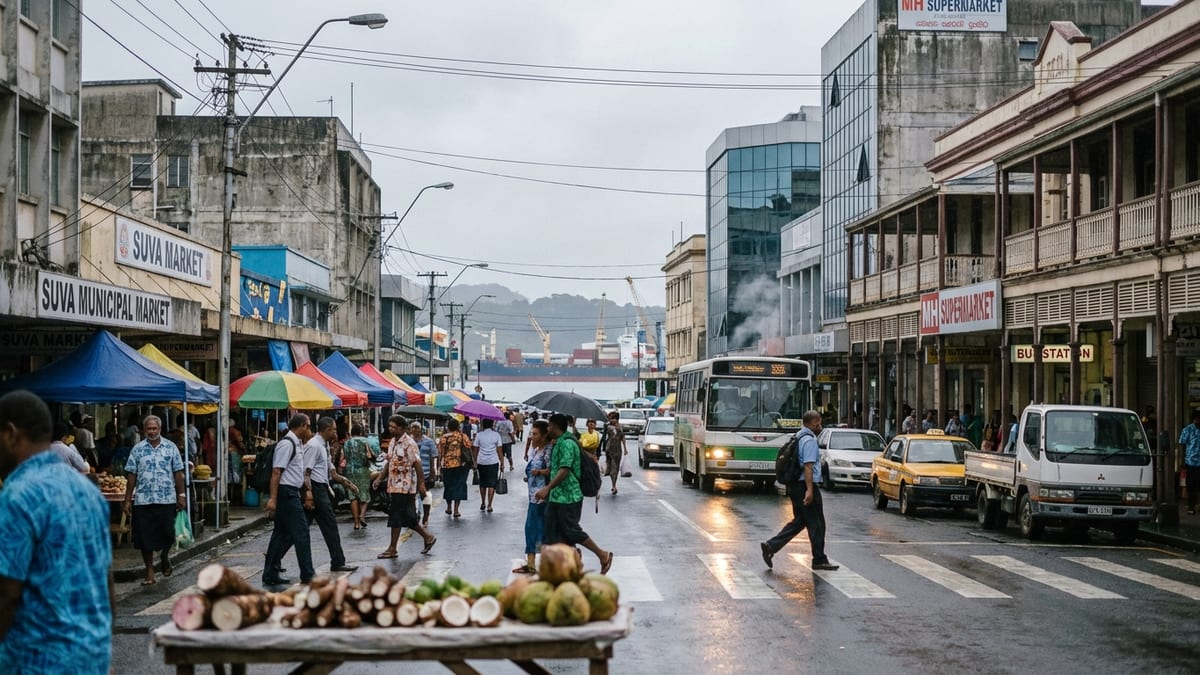
Suva is not the postcard Fiji that fills brochures and resort ads. There are no over-water bungalows, and the lagoon-blue water is mostly glimpsed in the distance, beyond a working harbor and a busy ring road. Yet for travelers who care about culture, food, politics and real daily life, Fiji’s capital can be one of the most rewarding stops in the country. Whether Suva is worth visiting depends on what you want from Fiji: an easy tropical escape, or a deeper understanding of the islands beyond the beach.
Understanding Suva: Fiji’s Real-Life Capital
Suva sits on the southeast coast of Viti Levu, Fiji’s largest island. Home to roughly 90,000 people in the city proper and many more in the surrounding urban area, it is the country’s political and administrative hub. Parliament, embassies, universities and national cultural institutions cluster here, and the city’s streets are busy with civil servants, students and dockworkers rather than holidaymakers wheeling suitcases to resorts.
This is a port city with tropical rain, concrete high-rises, colonial-era facades and a waterfront lined more by cargo ships than palm trees. The pace is distinctly Pacific, but Suva has the energy and grit of a small, developing-world metropolis. You come here to see how contemporary Fiji works: the interactions between Indigenous iTaukei communities and Indo-Fijians, the influence of regional migration, church and temple life, and the tensions of a country that has experienced several coups since the 1980s.
For many visitors, Suva slots naturally into a broader itinerary that includes Nadi, the Coral Coast or the Mamanuca Islands. Ferries, buses and domestic flights make it easy to treat the capital as an overnight stop on the way to somewhere more conventionally “beautiful.” The real question is not so much whether you can visit Suva, but whether you should carve out time from beach days to explore a city that offers a very different kind of Fijian experience.
Reasons Suva Is Worth Visiting
Suva’s biggest draw is its cultural density. Within a compact area you can visit the Fiji Museum in Thurston Gardens, wander one of the region’s most atmospheric municipal markets, listen to live music in kava bars and nightspots, and join walking tours that explore everything from colonial history to LGBTQ+ activism. National events, from political rallies to Independence Day festivities, tend to concentrate in the capital, and major sports fixtures often play out at nearby stadiums.
The city’s food scene is another standout. Suva’s role as a commercial center attracts chefs and restaurateurs from across Fiji and the wider Pacific. Indian, Chinese and Fijian eateries sit side by side with bakeries, curry houses, seafood grills and informal canteens. Compared with resort areas where prices are driven up by captive tourism, dining in Suva can be remarkably good value, especially at lunchtime in and around the Suva Municipal Market.
Suva is also a convenient launchpad for rainforest walks and swimming holes. Colo-i-Suva Forest Park lies only about 15 minutes’ drive inland, a cool, lush reserve threaded with trails, streams and natural pools. The contrast between the humid, traffic-choked city and the birdsong and waterfalls of the park is sharp, and many travelers find this pairing one of the most satisfying aspects of spending time in the capital.
Finally, for travelers who care about social realities, Suva offers context. Recent coverage in international media has highlighted initiatives such as “anti-tours” led by local poets and activists that take visitors through markets, backstreets and community spaces to discuss postcolonial history, queer life and urban inequality. These kinds of experiences are hard to find on the outer islands. If you want to move beyond clichés and engage with Fiji as a living, contested place, Suva is where those conversations happen most openly.
The Downsides: Why Some Travelers Skip Suva
Despite its strengths, Suva is not for everyone. Many visitors arrive in Fiji specifically to relax in sunshine, snorkel over reefs and wake to the sound of waves rather than traffic. Suva is one of the wettest capitals in the Pacific, with heavy rainfall especially during the wet season from November to April. Travel weather resources consistently point out that Suva can see more rainy days and higher humidity than western centers like Nadi, particularly in January and March. That can translate to slippery sidewalks, frequent showers and occasionally flooded streets.
The city can also feel visually underwhelming at first glance. The harbor views are partly obstructed by wharves and industrial buildings. Mid-century blocks and newer concrete structures dominate the skyline, and some infrastructure shows its age. Public spaces are improving, but you should not expect manicured promenades or beach parks in the heart of town. Travelers who dream of a turquoise lagoon directly outside their hotel will be disappointed.
Urban issues are present too. Like many small capitals in developing countries, Suva has pockets of petty crime, informal street vending and uneven street lighting. Reports from travelers and government advisories alike recommend basic precautions: keep valuables out of sight, use licensed taxis or ride services at night, and avoid poorly lit backstreets after dark. Most visits pass without incident, but it is fair to say Suva requires a bit more street awareness than a fenced resort compound.
Finally, time is a factor. Fiji’s domestic transport network and island geography mean that many trips already involve one or two travel days. If you only have five or six days in the country and your main goal is snorkeling or diving off the Mamanucas or Yasawas, dedicating two nights to Suva might feel like a compromise. For some visitors, the capital is best treated as an optional extra, not a must-see.
Top Things To Do in Suva
Most travelers who leave with a positive impression of Suva do so because they approached it as a walking city rather than a tick-box list of attractions. That said, a few sights stand out. The Fiji Museum, set within Thurston Gardens, provides an accessible overview of Fijian history, from Lapita-era pottery and traditional canoes to artifacts from the colonial period and the post-independence era. The museum is modest in size but rich in context, and it is an ideal rainy-day option or first stop in the capital.
Thurston Gardens themselves are a pleasant place to stroll, with mature palms, flowering plants and shaded paths. Adjacent Albert Park doubles as a recreational ground and civic space, remembered for hosting early aviation milestones and national ceremonies. On weekends, you may see rugby games or informal matches in progress, alongside family picnics and small festivals.
Suva’s Municipal Market is often cited as a highlight. Under its sprawling roofs and tarpaulin extensions, vendors sell everything from taro and cassava to chilies, eggplants, yaqona (kava) roots and stacks of green coconuts. Upstairs or in adjacent buildings you may find handicrafts, fabrics and household items. It is a vivid, crowded place that showcases the city’s ethnic diversity and daily rhythms, especially in the early morning.
Faith and architecture provide additional points of interest. The sandstone Sacred Heart Cathedral, completed in the early 20th century, anchors one part of the downtown skyline, while mosques, Hindu temples and other churches are scattered across the city. Visitors are usually welcome to enter outside of services, provided they dress modestly and behave respectfully. Exploring these sites offers insight into how religion shapes public and private life in Fiji.
Culture, Food and Nightlife in Fiji’s Capital
Suva is often described by local creatives and commentators as the cultural heart of Fiji. It is home to theaters, small galleries, bookshops and arts initiatives that host readings, exhibitions and performances. Universities and NGOs bring in students and professionals from across the Pacific, creating a more cosmopolitan, politically engaged atmosphere than you will find in resort zones. Street murals and posters hint at ongoing debates about land, gender, climate change and Indigenous rights.
The city’s culinary landscape reflects this complexity. Simple curry houses serve rotis and dhal alongside fish in coconut milk and chili-spiked chutneys. Chinese restaurants offer banquet-style dinners and, in some cases, double as venues for drag shows and late-night events. Contemporary cafes and bistros cater to younger professionals, serving espresso, smoothies and fusion dishes that lean into local produce. The combination of Indo-Fijian spices, Pacific seafood and imported ingredients makes eating in Suva a pleasure for travelers willing to roam a bit beyond their hotel.
Nightlife in Suva is livelier than many visitors expect. While it is not a clubbing capital, there are bars, lounges and small music venues where local bands play reggae, pop and island standards. Kava circles, sometimes organized informally among friends or in more structured cultural evenings, give another window into social life. As in any city, evenings require more caution: stay with companions, use trusted transport and be aware of your surroundings. For solo travelers nervous about navigating after dark, guided night tours and group outings can provide a safer framework.
Perhaps the most distinctive cultural experience currently associated with Suva is the emergence of thematic walking tours led by poets, historians and activists. These walks consciously avoid sanitizing the city, instead calling attention to urban poverty, queer communities, environmental pressures and the layered histories behind seemingly ordinary sites. They attract visitors interested in critical tourism and can profoundly shift how you see both Suva and Fiji more broadly. Booking ahead is advisable, as group sizes are often kept small.
Nature, Day Trips and Surrounds
Although Suva itself is largely urban and does not have central swimming beaches, nature is never far away. Colo-i-Suva Forest Park, a protected area of tropical rainforest just northwest of the city, is the most popular escape. Trails there lead past pools and small waterfalls fed by the Waisila Creek. Birdlife is abundant, and the shade and slightly higher elevation make it cooler than downtown. Local advice recommends visiting in the dry season months from May to October if you want less mud, though year-round visits are possible with appropriate footwear.
Closer to the city, the seawall and various small parks offer glimpses of the coastline, mangroves and the distant outline of islands. These areas are more suited to walking and people-watching than to swimming, but they remind visitors that Suva is still very much a maritime town. On clear days, sunrises and sunsets can be beautiful, particularly where the view opens out along the bay.
Beyond Colo-i-Suva, day trips from Suva might include drives along the east coast of Viti Levu to smaller villages and viewpoints, or journeys inland to waterfalls and river valleys with local guides. Public transport can be slow and infrequent on some routes, so hiring a driver or joining a tour is often the most efficient way to explore. Always check recent weather, as heavy rains can lead to slippery roads and localized flooding.
Suva also functions as a jumping-off point for longer circuits. Some travelers combine a few days in the capital with stays on the Coral Coast or in Pacific Harbour, known for diving and adventure sports, before moving on to island groups accessible from Nadi. This kind of multi-base itinerary allows you to enjoy Suva’s cultural offerings without sacrificing the beach time that many associate with Fiji.
Practicalities: Weather, Safety and Getting Around
Weather is one of the most important practical considerations when deciding whether to include Suva in your plans. Travel climate services describe a distinct dry season from May to October and a wetter, hotter stretch from November to April. In the cooler months, Suva’s daytime temperatures typically range between roughly 20 and 26 degrees Celsius, making city walks and hikes more comfortable. During the hot season, highs can rise to around 30 or 31 degrees, with humidity pushing the “feels like” temperature higher.
Rain falls year-round, but it is more frequent and intense during the wet season, when tropical systems and the risk of cyclones are greatest. Travelers visiting between November and April should build some flexibility into their plans, carry lightweight rain gear and pay attention to local weather updates. The upside of the wet season is the lushness of surrounding forests and potentially lower accommodation rates in the capital.
On safety, Suva is generally considered manageable for visitors who exercise normal urban caution. Petty theft and bag snatching can occur in crowded areas and at night, so money belts, cross-body bags and leaving valuables at your accommodation when possible are sensible strategies. Walking in groups after dark, sticking to busier, well-lit streets and using registered taxis or reputable ride services can significantly reduce risk. As with elsewhere in Fiji, laws around drugs are strict and penalties severe, which is worth keeping in mind if you are used to more liberal regimes.
Getting around Suva is straightforward. The downtown core is walkable for most reasonably fit travelers, though hills and humidity can make midday strolls tiring. Buses and minibuses connect the city center with suburbs and nearby towns, at low fares but with limited schedule information. Taxis are plentiful and relatively affordable by international standards, especially for short hops. Agreeing on a fare or ensuring the meter is used before departure avoids misunderstandings. For day trips to Colo-i-Suva and beyond, many hotels can arrange drivers or tours.
The Takeaway
So, is Suva worth visiting? If your ideal Fiji holiday is a week of uninterrupted beach time, cocktails and snorkeling with minimal logistics, the honest answer is that you can safely skip the capital and focus on resort areas closer to Nadi. The beaches are better there, the skies are often clearer, and the day-to-day experience is simpler.
If, however, you are curious about Pacific politics and society, enjoy urban wandering, or want to understand the forces shaping life beyond the brochure view, Suva becomes not just worthwhile but essential. Its museums, markets, food, walking tours and proximity to rainforest all contribute to a fuller picture of Fiji. Even 24 to 48 hours in the city, bookended by days on the coast or outer islands, can deepen your sense of where you are.
The key is to arrive with realistic expectations. Suva is not a resort and does not try to be one. It is a small, sometimes rain-soaked, occasionally chaotic capital that holds the administrative, cultural and emotional heart of the country. Travelers who approach it with openness, good shoes and a willingness to be surprised often leave having discovered an unexpected highlight of their time in Fiji.
FAQ
Q1. Is Suva safe for tourists?
Suva is generally safe for visitors who use common-sense precautions. Petty crime exists, especially in crowded areas and at night, so keep valuables secure, avoid poorly lit backstreets after dark and use registered taxis or reputable ride services. Most travelers experience no serious issues when they stay alert and follow local advice.
Q2. How many days should I spend in Suva?
For most itineraries, one to two full days is enough to experience Suva’s highlights, including the Fiji Museum, Thurston Gardens, the Municipal Market and a visit to Colo-i-Suva Forest Park. Travelers particularly interested in politics, culture or the arts might extend to three days to join walking tours and explore neighborhoods at a slower pace.
Q3. What is the best time of year to visit Suva?
The most comfortable time to visit Suva is during the drier, cooler months from May to October, when temperatures are milder and humidity is lower. Shoulder periods like October and early November can balance decent weather with fewer crowds and reasonable prices. The wet season from November to April is hotter and more humid, with heavier rainfall and a higher risk of cyclones.
Q4. Can I swim at beaches in Suva?
Suva itself does not have classic white-sand tourist beaches in the city center. The coastline around the capital is more industrial and mangrove lined, and swimming is not a primary activity there. To enjoy beach time and snorkeling, plan side trips to the Coral Coast, Pacific Harbour or island groups reached from Nadi, and treat Suva mainly as a cultural and urban stop.
Q5. What should I wear in Suva?
Light, breathable clothing suited to a tropical climate works best, along with comfortable walking shoes or sandals that handle occasional rain. Modest dress is appreciated, especially when visiting religious sites or government buildings, so pack at least one outfit that covers shoulders and knees. A lightweight rain jacket or umbrella is useful year-round.
Q6. How do I get from Nadi to Suva?
You can travel between Nadi and Suva by domestic flight, long-distance bus or private transfer. Flights are the fastest but operate on limited schedules and cost more. Buses are cheaper and run several times a day, taking around four to five hours depending on stops and traffic. Private drivers or hotel-arranged transfers offer flexibility and comfort at a higher price.
Q7. Is Suva expensive compared with resort areas?
In many respects, Suva can be better value than resort zones. Accommodation spans a wider range of price points, and local restaurants, markets and cafes often charge less than hotel dining rooms aimed at tourists. Transport within the city is also relatively affordable. High-end luxury options are fewer, but day-to-day costs can be lower for travelers willing to use local businesses.
Q8. Do I need to book tours in advance in Suva?
For popular or specialized experiences, such as themed walking tours or organized day trips to Colo-i-Suva and nearby attractions, advance booking is sensible, especially during peak travel months. Basic city exploration, market visits and museum trips can usually be done spontaneously. If your time in Suva is short, pre-booking one or two key activities helps ensure you make the most of your stay.
Q9. Is Suva a good base for exploring the rest of Fiji?
Suva works well as a base for exploring the eastern and central parts of Viti Levu and for handling administrative tasks, but it is less convenient for island-hopping than Nadi and Port Denarau. Many outer-island ferries and flights depart from the western side of Viti Levu, so travelers focused on beach resorts often use Suva as a short stop rather than a long-term base.
Q10. Who will enjoy Suva the most?
Suva tends to appeal to travelers who value culture, history, food and everyday life over polished resort experiences. It is especially rewarding for people interested in Pacific politics, postcolonial history, urban photography, markets and the arts. Those seeking a quiet, all-inclusive beach escape may find the capital less aligned with their expectations, but even they can gain perspective from a well-planned day or two in the city.