

The Apostle Islands on Lake Superior draw paddlers, hikers and photographers with sculpted sea caves, historic lighthouses and wild shorelines. Yet local rangers and guides repeat one message over and over: the lake is in charge. Conditions can shift from calm to hazardous in minutes, and winter attractions such as the famous ice caves are only accessible when a rare mix of weather, ice and safety factors line up. Visiting the Apostle Islands can be safe and deeply rewarding if you plan carefully, respect the water and understand the limits of this remote, cold-water environment.
Understanding the Apostle Islands Environment
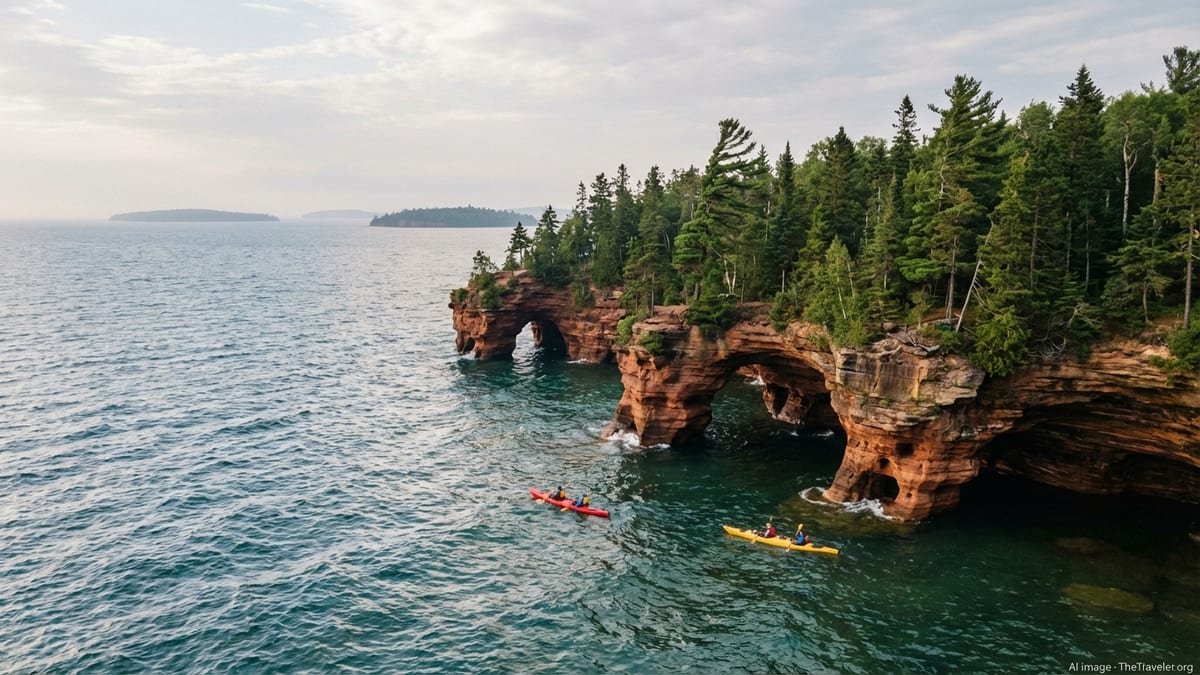
The Apostle Islands National Lakeshore in northern Wisconsin encompasses more than 20 islands and miles of mainland shoreline on Lake Superior. The setting looks serene on a summer day, with glassy water and red sandstone cliffs, but the park sits on a lake known for cold water, fast-changing wind and steep waves. Even close to shore, visitors are exposed to conditions more like an inland sea than a typical Midwestern lake, which shapes every conversation about safety.
Lake Superior is the largest and one of the coldest of the Great Lakes. Water temperatures are often cold enough to cause cold shock or hypothermia well into summer, especially away from shallow bays. The geography around the Apostle Islands also funnels wind and swell into certain passages, so a calm morning can turn into an afternoon of whitecaps that overwhelm small craft. Because the park covers more than 500 square miles of water, help may be far away when something goes wrong.
On shore, conditions can be equally demanding. Trails cross roots and slick bedrock, campsites are exposed to sudden storms, and biting insects are common from late spring into early fall. Cell phone service is inconsistent or absent on many islands and sections of shoreline, leaving visitors to rely on marine radios, satellite devices and their own judgment. All of this does not make the Apostle Islands unsafe by default, but it does mean that risk management has to be part of every trip plan.
Lake Conditions, Cold Water and Drowning Risk
Most serious incidents in the Apostle Islands are connected in some way to Lake Superior itself. Rangers describe the lake as cold, rough and unforgiving, with sudden squalls that can catch even experienced boaters off guard. Nearshore forecasts might call for moderate conditions, yet localized wind, current and reflected waves around the sea caves and headlands can create steep, chaotic seas that swamp small boats and kayaks.
Cold water is the central hazard. Water just a few degrees above freezing is common in spring and can persist below what most swimmers consider comfortable well into August offshore. In these temperatures, an unexpected capsize can lead to cold shock within seconds and debilitating loss of muscle control within minutes. Even strong swimmers wearing basic life jackets may be unable to self-rescue without proper thermal protection such as a wetsuit or drysuit.
Past incidents in the park have illustrated these dangers. A number of kayaking accidents have involved paddlers venturing out in small-craft advisory conditions or underestimating the effect of breaking waves around the sea caves. In rough water, re-entering a swamped kayak is difficult, and repeated attempts quickly drain energy and body heat. Rescue can take time in choppy seas, so once a person is immersed, the window for successful recovery is narrow.
For visitors, the practical implication is straightforward: treat any time on the lake as exposure to a cold-water, open-water environment. That means checking detailed marine forecasts, planning conservative routes, wearing appropriate flotation and thermal protection, and being willing to turn back at the first sign of building wind or whitecaps. If you would not feel comfortable offshore on a coastal sea, you should rethink being on Lake Superior in similar conditions.
Kayaking, Boating and Sea Cave Safety
Kayaking and boating around the Apostle Islands are often portrayed in postcard images of glassy water and calm arches, yet local guides and the National Park Service consistently caution that these trips are only safe for people who match the route to their skill, gear and the current forecast. The lake around the islands is no place for casual improvisation, particularly near the sea caves that line portions of the mainland and several outer islands.
The sandstone caves concentrate risk as well as beauty. Waves rebound off the cliffs, creating clapotis and backwash that can unexpectedly flip kayaks even on days that look manageable from the parking lot. Inside the caves, there is often nowhere to land in an emergency, and rescue boats may be unable to approach closely in heavy swell. Paddlers who are not comfortable bracing, edging and performing assisted rescues in rough water are generally safer staying outside the cave entrances or joining a guided trip with professional equipment and instruction.
Small motorboats and sailboats face related challenges. Shoals, submerged rocks and rapidly changing wind around the islands can surprise operators who are new to the area. Charts and updated navigation apps are essential, but so is local knowledge. Boaters should carry VHF marine radios rather than relying solely on mobile phones, monitor marine weather channels and establish clear float plans with someone on shore. Overloading small vessels and failing to secure gear is a recurring factor in capsizes and swamped boats in choppy conditions.
If you are new to paddling or powerboating on large lakes, the safest approach is to book a trip with a licensed local outfitter or charter captain, especially early in your Apostle Islands experience. Professional guides understand the subtleties of wind direction, swell and shoreline features, and they carry rescue equipment that most casual visitors do not. Even then, guided trips may cancel or reroute on short notice in response to deteriorating conditions, which is a sign of good risk management rather than inconvenience.
Winter Visits and the Reality of Ice Cave Access
The mainland ice caves near Meyers Beach have become one of the most sought-after winter experiences in the Upper Midwest, with social media amplifying images of frozen curtains of ice and sculpted chambers. In practice, reaching them safely is extremely rare. Park data shows that from 2000 to 2023, the mainland ice caves were open to the public only a very small percentage of days, generally in a handful of winters when Lake Superior ice coverage exceeded about 90 percent and a prolonged cold snap coincided with light winds.
In February 2026, the caves opened for public access for the first time in roughly a decade, only to close again the following day as a winter storm and shifting ice made conditions unsafe. This pattern highlights how quickly apparently solid lake ice can fracture or drift when wind and waves increase. Rangers monitor ice thickness, cracks and pressure ridges and will shut down access at the first sign that stability is deteriorating, even if conditions looked secure only hours before.
When the caves are open, visitors must hike several miles over uneven lake ice without shelter, services or guaranteed cell coverage. The route can include pressure cracks, snow-covered ruts and areas of slick glare ice. Temperatures are often well below freezing, and wind can be severe along the exposed shoreline. Those who attempt the crossing without insulated boots, traction devices, layers of windproof clothing and eye protection risk frostbite, falls and disorientation. The park emphasizes that people should carry water, high-calorie snacks and basic first aid, and should be prepared for a strenuous, slow walk in both directions.
The most important safety step for any winter visitor is to check official updates on whether the ice caves are open or closed and to respect those decisions without attempting unauthorized access from other points along the shore. Ice that appears thick from the beach may conceal weak spots, currents or fractures that are invisible from the surface. No photograph is worth stepping onto lake ice that has not been evaluated by professionals who understand local patterns and hazards.
Hiking, Camping and Wildlife Considerations
Away from the shoreline, the Apostle Islands offer forested trails, sandy beaches and backcountry campsites that feel remote even though they are relatively close to mainland communities. These settings carry their own risks. Trails can be muddy, root-covered and slick, particularly after rain or heavy dew. Cliffs and bluffs overlook many shorelines, and informal side paths may lead visitors too close to unstable edges. Staying on established trails and keeping a safe distance from drop-offs are basic but essential safety habits.
Campsites on the islands and mainland are exposed to changing weather. Sudden storms on Lake Superior can bring strong gusts that test tent stakes and guy lines. Trees and branches weakened by age, disease or past storms sometimes fall without warning. Campers are advised to pitch tents away from dead or leaning trees when possible and to secure gear against wind and rain. Because potable water is only seasonally available at a few locations, visitors should also carry enough drinking water or have reliable means to treat lake water through boiling or proper filtration.
Wildlife encounters are another factor in outdoor safety. Black bears are present on several islands and the mainland, and although serious incidents are rare, food-conditioned bears can cause property damage and create risky situations. Keeping a clean camp, using bear-resistant food storage or approved hanging systems, and never leaving food, trash or scented items unattended are critical measures. Smaller wildlife, including rodents and birds, will also investigate accessible food, potentially attracting larger animals.
Insects may not seem like a safety issue at first glance, but biting flies, mosquitoes and ticks can impact both comfort and health from late spring through early fall. Long sleeves, light-colored clothing, insect repellent and routine tick checks help reduce the chance of tick-borne illnesses. Visitors who develop flu-like symptoms or unusual rashes after a trip should seek prompt medical advice and mention their recent travel to a tick-endemic area.
Emergency Services, Communication and Self-Reliance
One of the defining safety characteristics of the Apostle Islands is the limited and uneven availability of help. The U.S. Coast Guard and National Park Service rangers respond to emergencies on the water and islands, but distances are significant, and severe weather can slow or temporarily block rescue operations. This means that visitors need to be more self-reliant than they might be in a front-country park with dense road networks and strong cell coverage.
Cell phone reception in the park is inconsistent. Signal strength can vary between carriers and often drops to nothing behind cliffs, in dense forest or on the far side of islands. Mobile devices are also vulnerable to cold temperatures, which can rapidly drain batteries in winter. For anyone traveling offshore by boat or kayak, a VHF marine radio is strongly recommended, both for routine weather updates and for hailing the Coast Guard or other vessels in an emergency. Simple channel information and the habit of clearly stating your position when calling for help can speed up response times.
On land, emergency contact usually begins with 911 from any available phone, but visitors should realize that describing locations in a park dominated by islands, capes and coves takes preparation. Carrying paper maps or downloaded offline maps, noting campsite numbers and trail junctions, and recording GPS coordinates when possible all make it easier to direct rescuers. Parties should also leave trip plans with someone on the mainland, including expected routes, campsites and return times.
Because of the time it can take for professional responders to arrive, basic first aid skills and equipment are particularly valuable in the Apostle Islands. Simple measures such as stopping bleeding, treating minor wounds, recognizing early signs of hypothermia and stabilizing sprains or suspected fractures can make a significant difference in outcomes. Even for day visitors, packing a compact first aid kit, extra warm layers and high-energy snacks is a sensible step in a place where short outings can occasionally become extended waits for a boat or shuttle.
How Safe Are the Apostle Islands in Practical Terms?
Safety in the Apostle Islands is less about the place being inherently dangerous and more about whether visitor behavior matches the environment. Each year, hundreds of thousands of people visit the national lakeshore, take boat tours, paddle in calm conditions, hike short trails and camp in designated sites without serious incident. Commercial cruise operators and licensed guides maintain strong safety records, and the National Park Service invests heavily in search and rescue training and public education.
At the same time, the park has seen serious accidents and fatalities, particularly involving small craft and cold water. These tend to occur when people underestimate Lake Superior’s power, ignore marine forecasts, venture into exposed sections of shoreline in marginal weather or paddle without appropriate clothing and rescue skills. In winter, the very infrequent openings of the ice caves concentrate many visitors onto lake ice that would be unfamiliar to them under any circumstances, magnifying the importance of clear communication and personal preparation.
For a reasonably fit and informed visitor who respects posted warnings, checks conditions, uses proper gear and chooses activities within their experience level, the Apostle Islands can be as safe as many other remote outdoor destinations. The risks are real but manageable with conservative decision-making. Parents with children, beginner paddlers and winter visitors should be especially cautious and may wish to favor ranger-led programs, commercial boat tours or shoreline hikes over more committing trips.
Ultimately, the safety profile of an Apostle Islands trip is something each party shapes through its planning. Early conversations about bail-out options, weather thresholds and group skills help prevent last-minute pressure to continue in deteriorating conditions. Listening to local advice, whether from rangers, outfitters or long-time residents, is one of the most reliable ways to align your expectations with the reality of this powerful lake environment.
The Takeaway
Visiting the Apostle Islands is not inherently unsafe, but it is not casual recreation either. The national lakeshore exists in partnership with Lake Superior, whose cold water and fast-changing weather demand respect. Most visitors who plan conservatively, choose appropriate activities and stay flexible around forecasts will experience only the rewards of the islands: quiet beaches, sculpted sandstone, deep forests and star-filled skies far from city lights.
Staying safe begins with recognizing where the real hazards lie. On the water, that means cold temperatures, wind, waves and the particular complexities of the sea caves and offshore islands. On land, it means slippery trails, variable weather, limited communication and the realities of camping and hiking in a predominantly backcountry setting. In every season, local conditions can swing quickly, and official closures or warnings should be treated as essential guidance rather than optional advice.
If you travel with proper gear, maintain situational awareness and are willing to call it a day when the lake or weather turn against you, the Apostle Islands are well within reach for careful, curious travelers. By prioritizing safety as much as scenery, you can explore one of the Great Lakes region’s most striking landscapes with confidence and a deeper appreciation for the wild forces that shape it.
FAQ
Q1. Are the Apostle Islands generally safe for first-time visitors?
Yes, they can be safe for first-time visitors who stick to well-managed activities such as ranger programs, commercial boat tours and short mainland hikes, and who follow park safety guidance closely.
Q2. Is it safe to kayak to the Apostle Islands sea caves on my own?
It is only advisable for paddlers with open-water experience, cold-water gear and rescue skills; beginners are usually safer joining a professional guided trip or choosing calmer, protected routes.
Q3. How dangerous is the cold water in Lake Superior?
The water is often cold enough to cause rapid cold shock and hypothermia, even in summer, so an unexpected capsize can become life-threatening within minutes without proper protection.
Q4. Are the Apostle Islands ice caves safe to visit when they are open?
When the National Park Service opens the ice caves, it means conditions meet safety criteria, but visitors still face a strenuous, exposed hike on variable ice and must be properly equipped for severe cold.
Q5. Is hiking on the Apostle Islands safe for children and older adults?
Many short trails are suitable if everyone has sturdy footwear, layers and plenty of time, but steep cliffs, roots, mud and slippery rock mean adults should supervise closely and choose routes conservatively.
Q6. How reliable is cell phone coverage in the Apostle Islands?
Coverage is patchy and often absent, especially on outer islands and in deep coves, so visitors should not rely solely on cell phones for navigation or emergencies.
Q7. What wildlife safety issues should I be aware of?
Black bears, smaller scavengers and biting insects are the main concerns; good food storage, clean camps and protective clothing greatly reduce the likelihood of problems.
Q8. Are commercial boat tours around the Apostle Islands safe?
Licensed tour operators follow established safety procedures and monitor weather carefully, so for many visitors these cruises are one of the safest ways to experience the park from the water.
Q9. How can I prepare for emergencies during my visit?
Carry a small first aid kit, extra warm layers, maps or offline navigation, and consider a VHF radio or satellite device, while also leaving a detailed trip plan with someone on shore.
Q10. What is the single most important safety rule for visiting the Apostle Islands?
The most important rule is to respect Lake Superior and current conditions, adjusting or canceling plans whenever forecasts, rangers or your own observations suggest that risk is rising.