

More news on this day
Istanbul Airport has cemented its position at the heart of European aviation, closing 2025 with a record 84 million passengers and consolidating its role as a powerhouse hub for both international tourists and business travelers.
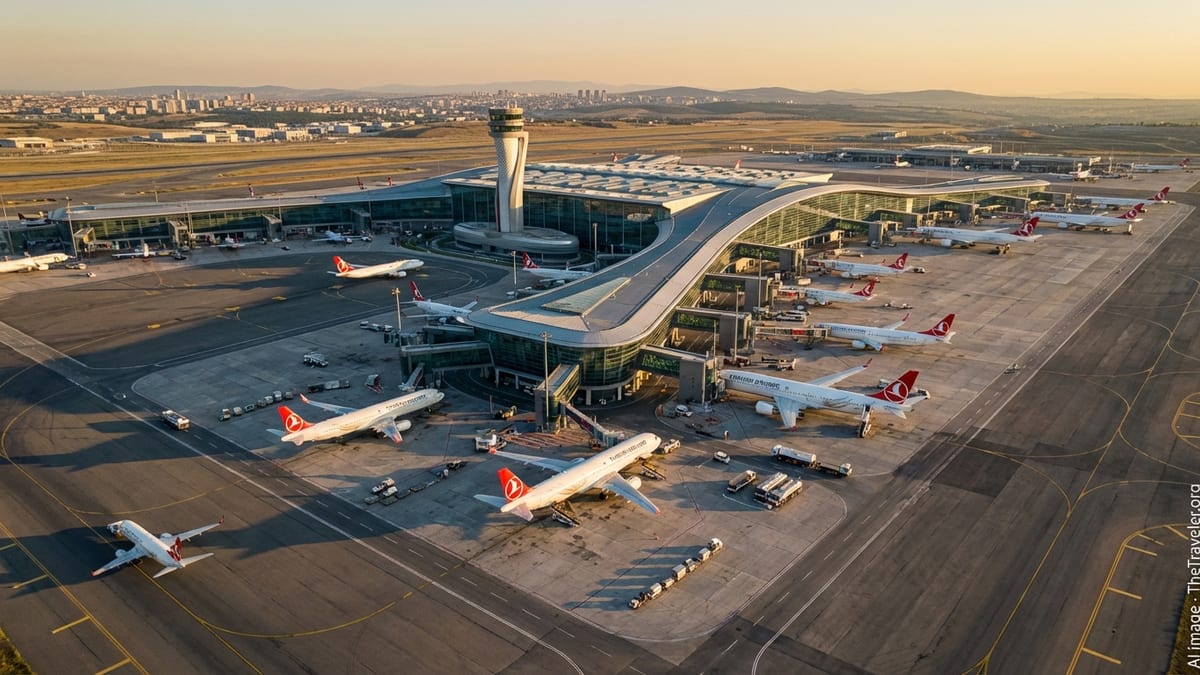
A Record Year Crowns Istanbul as Europe’s Premier Hub
Passenger traffic at Istanbul Airport reached 84 million in 2025, according to figures released by Turkey’s airports authority and the airport’s operator, iGA. The result represents a sharp rise from 80.4 million travelers in 2024 and places the airport neck and neck with London Heathrow at the very top of Europe’s traffic rankings, underlining the rapid ascent of Istanbul as a global gateway.
The 5.5 percent year on year growth came in a year of robust recovery and expansion across European aviation, but Istanbul’s performance stood out. Industry data shows the airport handled nearly 547,000 flights over the year and maintained a network of more than 330 destinations worldwide, an extensive reach that few hubs on the continent can match. In parallel, Eurocontrol figures confirm that Istanbul led Europe by average daily flight movements in 2025, with almost 1,500 arrivals and departures each day.
The narrow gap separating Istanbul from Heathrow in total passenger numbers has fueled expectations among analysts that the Turkish hub could overtake its British rival as Europe’s busiest airport as early as 2026. Officials and operators in Türkiye are presenting the figures as evidence that the country has moved decisively from being a transit corridor to becoming a strategic aviation center in its own right, bridging Europe, Asia, the Middle East and Africa.
Flight Volumes and Daily Records Showcase Operational Muscle
Behind the headline passenger figure lies an intensive level of day to day activity. Over the course of 2025, Istanbul Airport averaged around 1,491 flights every 24 hours, according to Eurocontrol’s network data for Europe. That volume placed it first among European airports for the fourth consecutive year, ahead of traditional giants such as Amsterdam Schiphol, Paris Charles de Gaulle, Frankfurt and London Heathrow.
The airport’s operators also reported new all time records for both flights and passenger throughput on individual days. On 18 July 2025, Istanbul handled 1,707 aircraft movements, its highest daily figure since opening. Just weeks later, on a peak summer travel day in early August, the airport processed more than 280,000 passengers, surpassing previous European single day records and underlining the scale of demand flowing through the hub during the busy holiday season.
These achievements came in a year when total flights across the European network climbed to more than 11 million, only slightly above pre pandemic 2019 levels. Istanbul’s ability to grow faster than the continental average, while still maintaining operational resilience during peak periods, has strengthened its reputation among airlines looking for reliable transfer points and among passengers seeking smooth connections.
Connectivity and Network Reach Drive Tourism and Trade
Much of Istanbul Airport’s strength lies in its extensive connectivity. Sector reports and airport data indicate that the hub now serves flights to more than 330 destinations and 120 plus countries, giving it one of the broadest international networks of any airport in the world. Aviation consultancy rankings have repeatedly placed Istanbul among the top three most connected global mega hubs, reflecting the density of transfer options available within short connection windows.
The airport’s route map has been built around Türkiye’s flag carrier, Turkish Airlines, which has pursued an aggressive growth strategy since the opening of the new airport in 2018. With a large long haul fleet and an expanding order book, the airline uses Istanbul as its central interchange, funneling passengers between Europe, North America, the Middle East, Africa and Asia. This has turned the city into a preferred transit point for travelers bound for emerging markets that are not as well served from Western European hubs.
For the wider Turkish economy, this connectivity is more than a matter of aviation statistics. The ability to move people quickly and efficiently across continents has supported a tourism boom, with Istanbul positioned as both a destination and a gateway to beach resorts, cultural sites and business centers across the country. It has also eased business travel for executives and entrepreneurs who rely on frequent flights to and from major commercial capitals, helping Istanbul market itself as a regional headquarters city for multinational firms.
Tourism Boom Keeps Terminals Busy Year Round
The surge in passenger traffic at Istanbul Airport in 2025 cannot be separated from Türkiye’s strong tourism performance. The country has continued to attract tens of millions of visitors annually, drawn by a combination of historic attractions, coastal resorts along the Aegean and Mediterranean, competitive prices and a favorable exchange rate for many foreign currencies. Istanbul, with its blend of Ottoman, Byzantine and modern architecture, remains the primary entry point for many of these visitors.
Summer 2025 proved particularly intense, with record volumes of leisure travelers passing through both Istanbul Airport and the city’s second gateway, Sabiha Gökçen Airport on the Asian side. Industry data shows that Sabiha Gökçen handled 48 million passengers in 2025, itself a double digit increase from the previous year and a sign that demand for travel to and within Türkiye is broad based rather than confined to a single airport.
Yet traffic at Istanbul Airport is not purely seasonal. Officials say that the mix of transfer passengers, business travelers and visitors on city breaks has helped smooth out peaks and troughs. In 2025, roughly 48 percent of travelers at the main airport were connecting passengers, while the remaining 52 percent were origin and destination customers either starting or ending their journeys in Istanbul. That balance has supported high aircraft loads in both summer and winter schedules, improving the economics for carriers operating from the hub.
Business Travel Rebounds on the Back of Strategic Geography
While leisure tourism grabs headlines, a rebound in corporate and trade related travel has been equally important in cementing the airport’s status as a business hub. In 2025, global companies continued to resume in person meetings, conferences and site visits after the disruptions of the pandemic period, and Istanbul’s location at the crossroads of Europe, Asia and the Middle East made it a natural meeting point.
Executives traveling between European capitals and cities in the Gulf, the Caucasus, Central Asia and parts of Africa have increasingly routed through Istanbul, taking advantage of Turkish Airlines’ wide body network and frequent schedules. The airport’s extensive lounge facilities, conference capable hotels in the surrounding area and improving ground transport links into the city center have added to its appeal for corporate travelers looking to minimize layover times without sacrificing comfort.
Regional trade activity has also played a role. Türkiye’s manufacturers and exporters rely on swift access to markets across multiple continents for high value, time sensitive goods, and passenger flights carry a substantial share of this belly hold cargo. As volumes of goods and business travelers rise together, airlines find it easier to justify adding capacity and launching new routes, reinforcing the hub’s growth cycle.
Infrastructure Investments and Triple Runway Operations
The airport’s ability to handle rising demand has been underpinned by sustained infrastructure investments. A key milestone came in April 2025, when Istanbul Airport launched triple independent runway operations. This development made it the first airport in Europe and one of only a handful worldwide able to operate three parallel runways simultaneously for independent arrivals and departures, significantly boosting capacity and operational flexibility.
According to the operator, the airport’s design allows it to scale up further in phases, with additional terminal space and ancillary facilities already planned or under construction. The current layout includes expansive check in halls, high capacity security and passport control points, and large central departure areas designed to absorb peak hour surges commonly seen during summer weekends and major holiday periods.
Authorities have also focused on improving airspace management and coordination with Eurocontrol to keep delays in check as traffic grows. Turkey’s transport ministry has highlighted national performance metrics showing average delays per flight remaining low by European standards, a factor that has encouraged airlines to schedule more connections through Istanbul without fear of systemic bottlenecks.
Balancing Growth With Passenger Experience and Sustainability
Rapid expansion has brought challenges as well as opportunities, and both the airport operator and regulators have faced pressure to maintain service quality while accommodating additional flights. Travelers passing through Istanbul Airport in 2025 reported a mix of experiences, with many praising the modern terminals, extensive retail and dining options, and clear wayfinding, while others noted congestion at certain times and distances between gates that can make tight transfers demanding.
In response, the airport has invested in digital tools such as mobile wayfinding, real time queue information and automated border control gates to speed passenger flows. Carriers have also continued to refine minimum connecting times and allocate ground staff during peak banks of arriving flights to support transit passengers, measures that are especially critical given the high proportion of transfer traffic.
Sustainability is an increasingly prominent consideration. Istanbul Airport has committed to a range of environmental initiatives, including energy efficient terminal design, electric ground service equipment and expanded public transport access. As European regulators tighten emissions and noise standards, the airport’s long term competitiveness will depend in part on its ability to accommodate newer, quieter aircraft and to work with airlines on more efficient flight paths and descent procedures that reduce fuel burn.
Competition, Capacity and the Road Ahead
Istanbul’s ascent comes in a competitive landscape in which other major European hubs are also vying for traffic and airline partnerships. Heathrow, Paris Charles de Gaulle, Amsterdam Schiphol and Frankfurt all retain strong positions, underpinned by large local markets and global network carriers. However, capacity constraints, infrastructure works and regulatory pressures at some of these airports have created openings for Istanbul to capture additional connecting flows.
Industry forecasts suggest that passenger traffic across Europe will continue to grow in the coming years, albeit at a more moderate pace than during the initial post pandemic rebound. In this environment, hubs capable of handling large volumes efficiently, offering extensive connectivity and maintaining competitive costs are expected to be the primary beneficiaries. Istanbul Airport’s 2026 target of 90 million passengers indicates that its operator is planning for continued expansion rather than consolidation.
For tourists and business travelers alike, the airport’s rise means more route options, increased frequencies and potentially sharper price competition on key long haul corridors. For Istanbul and Türkiye, the numbers highlight a broader shift in the global aviation map, one in which a new generation of hubs situated between traditional power centers is reshaping how people and commerce move around the world.