

More news on this day
Italy and Germany have become the latest focal points in Europe’s rolling aviation disruption, as mid-April strikes by air traffic controllers and airline cabin crews trigger fresh waves of cancellations, delays, and last-minute schedule changes across the continent.
Get the latest news straight to your inbox!
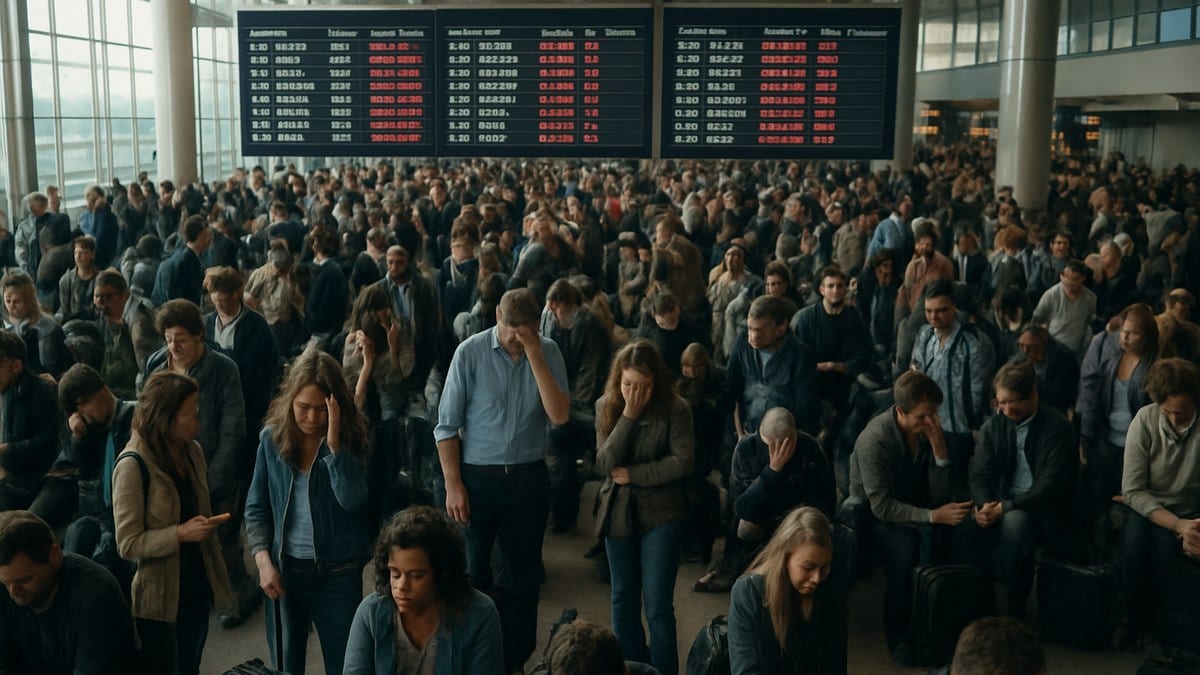
Coordinated Walkouts Hit Key Italian and German Hubs
Publicly available information indicates that Italy’s air navigation service staff staged a national air traffic control walkout on April 10, 2026, with action concentrated in a four-hour window during the afternoon. The stoppage affected flights across Rome, Milan, and other major Italian airports, with airlines forced to trim schedules, retime departures, and consolidate services to keep a reduced program running.
On the same date, Germany’s aviation system came under severe pressure as Lufthansa and Lufthansa CityLine cabin crews carried out a 24-hour strike. According to published coverage, the walkout prompted the cancellation of more than 500 flights from Frankfurt, Munich, and several regional airports, disrupting tens of thousands of passengers at the height of the Easter return travel period.
The near-simultaneous industrial action in two of Europe’s largest aviation markets added to existing operational strain linked to earlier strikes in Spain and the United Kingdom. With Italy controlling a large section of southern European airspace and Germany acting as a central hub for long-haul and intra-European traffic, the combined effect was felt well beyond national borders.
Airport operations data and airline advisories suggest that knock-on disruption extended into neighboring countries as carriers attempted to reroute aircraft, reposition crews, and rebook stranded travelers on alternative services. Some long-haul flights were maintained through reduced schedules and widebody aircraft substitutions, while short-haul and feeder routes bore the brunt of cancellations.
Part of a Wider European Mid-April Strike Wave
The latest stoppages in Italy and Germany form part of a broader mid-April wave of industrial action that has been building since late March across Europe’s aviation sector. Reports from travel and transport outlets highlight parallel disputes involving ground handlers, security staff, and airline employees at major airports in Spain and the UK, with intermittent walkouts continuing into April.
In Spain, a series of ongoing and intermittent ground handling strikes has affected operations at major holiday gateways including Madrid, Barcelona, and Palma de Mallorca. These actions, focused on pay and working conditions, have periodically reduced baggage, ramp, and check-in capacity, slowing airport processes even on days when flight schedules remain largely intact.
In the UK, warning strikes and targeted walkouts by airport and airline workers over the last several weeks have contributed to longer security queues, isolated cancellations, and tighter turnaround times at London-area airports. While not always resulting in mass cancellations, these actions have further reduced the margin for error in an already stretched European air network.
Travel industry analyses describe the current pattern as a rolling disruption rather than a single one-off event. Rather than a continent-wide shutdown on a specific date, a series of overlapping strikes across multiple countries and staff groups is creating a prolonged period of uncertainty for travelers and airlines throughout early and mid-April.
Impact on Travelers Across Europe’s Air Network
The combined effect of Italian air traffic control action and German airline staff strikes has been significant for passengers connecting through Europe. Publicly available flight-tracking snapshots for early and mid-April show elevated levels of delays and cancellations at key hubs, with Frankfurt, Munich, Rome Fiumicino, and Milan airports all reporting substantial schedule disruption around April 10.
For travelers, the most immediate impacts have been last-minute flight cancellations, missed connections, and extended waits for rebooking. Many airlines have responded by activating flexible travel waivers, allowing passengers scheduled to fly on or around the strike days to change dates or routings without additional change fees, subject to fare conditions and seat availability.
Travel advisories published in recent days emphasize the importance of closely monitoring flight status via airline apps and airport information channels, arriving early at the airport, and travelling with carry-on luggage when possible to maintain flexibility. Passengers with tight connections through German or Italian hubs have been encouraged to build in additional buffer time or consider alternative routings where available.
Consumer rights organizations continue to remind passengers that, depending on the jurisdiction and the specific nature of the strike, certain cancellations and long delays may entitle travelers to care, assistance, or compensation under European air passenger protection rules. However, the applicability of compensation often depends on whether a disruption is considered within an airline’s control, and travelers are being advised to review the fine print of both airline policies and regional regulations.
Operational Challenges for Airlines and Airports
For airlines, the mid-April strike wave has underscored the operational fragility of tightly wound schedules that rely on high aircraft utilization and rapid turnarounds. With crew and air traffic control availability constrained, carriers have been forced to publish special reduced schedules, prioritize long-haul and high-demand routes, and in some cases upgauge aircraft to move as many passengers as possible on the flights that do operate.
Lufthansa, which is at the center of Germany’s cabin crew dispute, has already weathered multiple rounds of industrial action in early 2026. Public information on recent strikes shows that the carrier has responded with a combination of preemptive cancellations and consolidated services, operating a fraction of its normal program on affected days while coordinating with partner airlines to keep key intercontinental links open.
In Italy, the concentration of air traffic control action within specified time windows has allowed some flights to operate outside the strike periods, but has also compressed demand around those hours. Airlines have had to adjust departure banks, re-time connections, and accept additional airborne holding or ground delays when traffic flows resume, as controllers work through backlogs that build up during the stoppages.
Airport operators, meanwhile, face the task of managing crowding in terminals, reallocating stands and gates, and coordinating with ground handlers, security providers, and border control to keep passenger flows moving despite fluctuating flight volumes. The situation is particularly complex at large hub airports where minor schedule changes can cascade quickly across an entire day’s operations.
What Mid-April Disruption Signals for Summer Travel
The addition of Italy and Germany to Europe’s mid-April aviation strike calendar is raising fresh questions about the resilience of the continent’s air transport system ahead of the peak summer season. Travel analysts note that early spring has increasingly become a flashpoint for labor disputes as unions seek leverage before the high-demand months of June through August.
Published commentary from aviation and labor experts suggests that core issues in the current disputes include wage levels that have not kept pace with inflation, staffing pressures after years of pandemic-related cuts, and concerns over rostering, fatigue, and work-life balance. These factors are common across many European markets, which helps explain why multiple countries are experiencing industrial action within a relatively short timeframe.
For travelers planning trips later in 2026, the current disruption serves as a reminder to build flexibility into itineraries. Recommendations frequently include allowing extra time for connections, avoiding the tightest same-day transfers between separate tickets, and considering earlier or later travel dates when possible to steer clear of announced strike periods.
At the same time, publicly available schedules show that airlines continue to operate the majority of flights on non-strike days, and many carriers are working to refine contingency planning after several seasons of similar disruptions. How labor negotiations evolve in Italy, Germany, and other key markets over the coming weeks will be closely watched by both the industry and travelers preparing for the peak summer rush.