

More news on this day
Italy is preparing for sweeping transport disruption later this week, as coordinated nationwide strikes targeting both rail and air services threaten to halt journeys for millions of residents, commuters and international visitors at the height of the winter season.
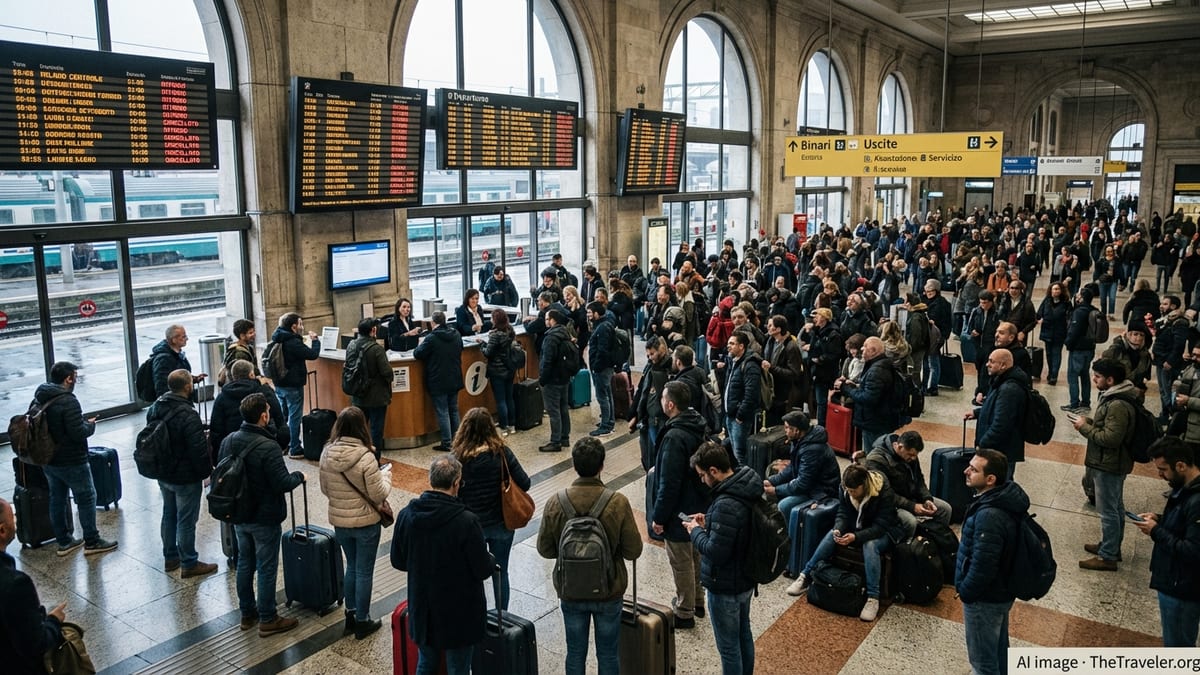
Coordinated Industrial Action Set for Late February
Italy’s transport system is heading into one of its most challenging weekends in recent years, with national-level industrial action scheduled to hit aviation on Thursday, February 26, followed by a 24-hour rail stoppage from the evening of Friday, February 27 through Saturday, February 28. The twin strikes, called by multiple unions across the air and rail sectors, are expected to affect domestic routes and international connections, amplifying disruption far beyond Italy’s borders.
The planned walkouts come on the heels of a month already marked by frequent localized strikes, warning actions and sporadic delays. Industry analysts say the late‑February escalation represents a decisive move by unions to increase pressure on employers and the government over working conditions, staffing levels and pay, particularly as the country hosts the Milano Cortina 2026 Winter Olympics.
Authorities have warned that the impact will not be limited to a few peak hours. Airlines, rail operators and airport managers expect rolling knock‑on effects before and after the official strike windows, complicating travel plans from Thursday morning through Sunday, March 1.
For travelers, the timing is especially sensitive. The final week of February typically sees busy business travel, school holiday trips and sports tourism, and this year Italy is further in the spotlight as an Olympic host nation, bringing increased international arrivals into cities such as Milan, Turin and Verona.
Nationwide Air Transport Strike to Hit Major Hubs
The first phase of the coordinated action will focus on air transport. A 24‑hour nationwide aviation strike is set for Thursday, February 26, involving airport staff, ground‑handling crews and airline personnel across much of the country. Unions including Cub Trasporti and Uiltrasporti have confirmed their participation, citing stalled contract talks and concerns over workloads and safety standards.
National carrier ITA Airways is among the most heavily affected operators. The airline has already announced the cancellation of more than half of its scheduled flights for February 26, including a mix of domestic segments and key European routes. Low‑cost carrier easyJet is also bracing for disruption, with pilots and cabin crew scheduled to join a full‑day strike. Vueling has reduced its participation to a four‑hour window in the afternoon, but still expects delays and schedule reshuffles.
Most major airports on the peninsula are expected to see reduced operations, particularly Rome Fiumicino, Milan Malpensa and Milan Linate, Naples, Catania and Palermo. Some regional airports may experience partial closures of services if minimum staffing levels cannot be guaranteed. Venice and Treviso are understood to be exempt from parts of the action due to earlier agreements designed to safeguard Olympic logistics.
Under Italian law, some essential flights, including certain long‑haul services and connections during protected time bands, must still operate. However, both airlines and unions are warning that even these flights may experience delays, re‑timings and last‑minute aircraft changes as carriers attempt to consolidate operations into fewer departures.
Rail Network Set for 24 Hours of Disruption
As the aviation strike winds down, attention will shift to the rail network. From 9 pm on Friday, February 27 until 8:59 pm on Saturday, February 28, a nationwide rail strike will affect services run by Trenitalia, Italo and regional operator Trenord. The action has been called by several unions representing drivers, on‑board staff, maintenance crews and freight workers within the broader Ferrovie dello Stato group and private operators.
State infrastructure manager Rete Ferroviaria Italiana has warned that services may be disrupted before the official start and after the scheduled end of the walkout, as rolling stock and staff are repositioned. High‑speed Frecciarossa and Italo services on the busy north–south spine between Turin, Milan, Bologna, Florence, Rome and Naples are expected to see widespread cancellations, while InterCity and regional connections could be reduced to skeletal levels.
The timing on a Friday night and Saturday is particularly problematic for leisure travelers, weekend commuters and tourists planning day trips between major cities or to coastal and alpine destinations. Because the strike falls on a weekend, the “guaranteed rush‑hour” services that typically operate on weekdays do not apply, removing one of the main protections normally afforded to passengers.
Rail links to and from key airports such as Rome Fiumicino, Milan Malpensa and Naples Capodichino are also likely to be affected. In many cases, airport trains could be replaced by limited bus services, increasing journey times significantly and adding uncertainty for passengers attempting to connect to still‑operating flights.
Local Transport and Urban Mobility Under Pressure
Beyond the national rail and air networks, travelers should also prepare for knock‑on effects across local transport systems. Municipal authorities in major cities including Rome, Milan, Naples, Florence and Turin have signaled that urban buses, trams and metro lines may run reduced services or altered schedules during the strike period, particularly on Friday, February 27.
Local industrial action does not always align perfectly with national calls, but unions often coordinate their timetables to maximize visibility. As a result, commuters may find that their usual links to rail stations and airports are limited, even if some long‑distance services continue to run. This layered disruption increases the risk of missed connections and overcrowding on the limited services that remain in operation.
Travel risk analysts note that February has already seen a dense calendar of local and regional strikes across Italy’s transport sector. From Lombardy rail walkouts to temporary metro stoppages in Rome and Naples, the pattern has been one of rolling industrial unrest that frequently catches infrequent travelers and tourists by surprise. The upcoming nationwide actions are likely to magnify those pressures into a single, highly disruptive window.
Tourism boards and local hospitality associations are advising hotels to proactively inform guests about possible delays and to support rebookings or alternative transfer arrangements wherever possible. In major tourist hubs, concierge desks and information points are expected to play a critical role in helping visitors navigate unfamiliar timetable changes.
Union Demands and Political Backdrop
The latest strike wave sits against a broader backdrop of tension between unions, employers and the Italian government over wages, staffing levels and labor protections in a high‑inflation environment. Air transport unions argue that ground‑handling staff and cabin crews are bearing the brunt of an industry still recovering from the pandemic, with intensified workloads and irregular shifts, while wage growth lags behind rising living costs.
In the rail sector, unions have raised concerns about staffing reductions, outsourcing and pressure to maintain punctuality targets on an increasingly congested network. Workers’ representatives say that safety issues and fatigue risks are not being adequately addressed, particularly on demanding high‑speed and overnight routes. They contend that strike action has become the only effective tool to secure serious negotiations on new collective agreements.
Politically, the timing of the strikes is sensitive. The Italian government previously intervened to limit or postpone transport strikes that might interfere with preparations for the Milano Cortina 2026 Winter Olympics, arguing that large‑scale stoppages could damage the country’s international image and compromise key infrastructure operations. Some unions reluctantly agreed to reschedule earlier walkouts, but now insist their patience has run out.
Public opinion is divided. While many commuters express frustration at repeated disruption, polling cited by Italian media suggests a degree of sympathy for workers’ grievances, particularly among those who have experienced staff shortages and service cuts firsthand. The government faces the delicate task of balancing the right to strike with pressure from businesses and tourism operators to maintain a reliable transport network.
Impact on International Visitors and the Tourism Sector
For international travelers, the immediate concern is logistical. Italy remains one of Europe’s most visited destinations during the winter period thanks to city breaks, alpine skiing and cultural events tied to the Olympic calendar. Airlines and tour operators report a spike in customer inquiries as news of the strikes circulates, with many passengers unsure whether they should rebook, reroute or delay their trips.
Major carriers are offering varying degrees of flexibility. ITA Airways has invited passengers scheduled to travel on February 26 to rebook without penalty or request a refund if their flights are canceled or significantly delayed. Low‑cost airlines tend to offer fewer options, though they are required under European regulations to assist with rerouting or reimbursement for cancellations under certain conditions.
Hotels, tour companies and cruise operators using Italian ports of embarkation are already reviewing contingency plans. Some groups are considering chartering private coach transfers to replace affected rail links, while others are advising customers to arrive in departure cities a day earlier than planned to reduce the risk of missed departures.
In the medium term, industry observers say repeated strike waves risk denting Italy’s appeal for time‑sensitive business travel and conferences. However, they note that leisure demand has historically proven resilient, with visitors often rescheduling rather than canceling trips altogether once the scale of disruption becomes clearer.
What Travelers Should Expect and How to Prepare
Travel experts stress that, while the planned strikes are significant, they do not equate to a complete shutdown of Italy’s transport system. A proportion of flights and trains will still operate, and essential services must be maintained within legally mandated minimum levels. The challenge for passengers lies in the unpredictability of last‑minute cancellations, re‑timings and altered routes.
Passengers scheduled to travel by air on Thursday, February 26 are being urged to monitor their airline’s official channels closely, make sure their contact details are up to date for notifications and consider traveling with carry‑on luggage only to simplify rebooking. Arriving at the airport earlier than usual may help, but will not guarantee smooth passage if ground‑handling staffing is severely reduced.
Rail travelers planning journeys between the evening of Friday, February 27 and Saturday, February 28 should check timetables repeatedly in the days leading up to departure. Where possible, travelers may wish to shift nonessential trips to earlier in the week or after the strike window. Those who must travel during the affected period should anticipate longer door‑to‑door journey times, bus substitutions and crowded trains where services do operate.
Travel insurance policies vary in their treatment of strike‑related disruption, so passengers are advised to read the fine print carefully and retain documentation of cancellations or delays. Flexibility is likely to be crucial, both in terms of booking changeable tickets and in building extra time into connections between flights, trains and local transport.
Outlook for March and the Rest of the Season
The late‑February strikes are unlikely to mark the end of Italy’s transport unrest. March 2026 already features a packed strike calendar, including regional rail stoppages, a planned air‑traffic control walkout in Rome and a broader general strike expected to touch multiple public services nationwide. For travelers, that means a continued need to track developments and factor potential disruption into itineraries well beyond this week’s actions.
Industry leaders are warning that, without breakthroughs in contract talks and a clearer long‑term funding framework for public transport, intermittent strikes could become a recurring feature throughout the year. Airports, airlines and rail operators are under pressure to invest in staffing and operational resilience, but many argue they need more regulatory certainty and government support to do so.
For now, Italy’s tourism and business communities are focused on weathering the imminent disruption while maintaining the country’s reputation as an accessible, well‑connected destination. The coming days will test not only the resilience of its transport infrastructure, but also the ability of authorities, operators and unions to find compromise under intense public scrutiny.
As travelers weigh their options, one piece of advice is shared broadly across the industry: do not cancel a long‑planned trip lightly, but stay informed, stay flexible and be prepared for a slower, less predictable journey through one of Europe’s most visited countries.