

More news on this day
New rankings and restaurant guides for 2026 indicate that Italy is consolidating its position at the top of Europe’s culinary tourism hierarchy, joining Spain, Greece, Portugal, Austria and other regional rivals in competing for visitors hungry for immersive food experiences.
Get the latest news straight to your inbox!
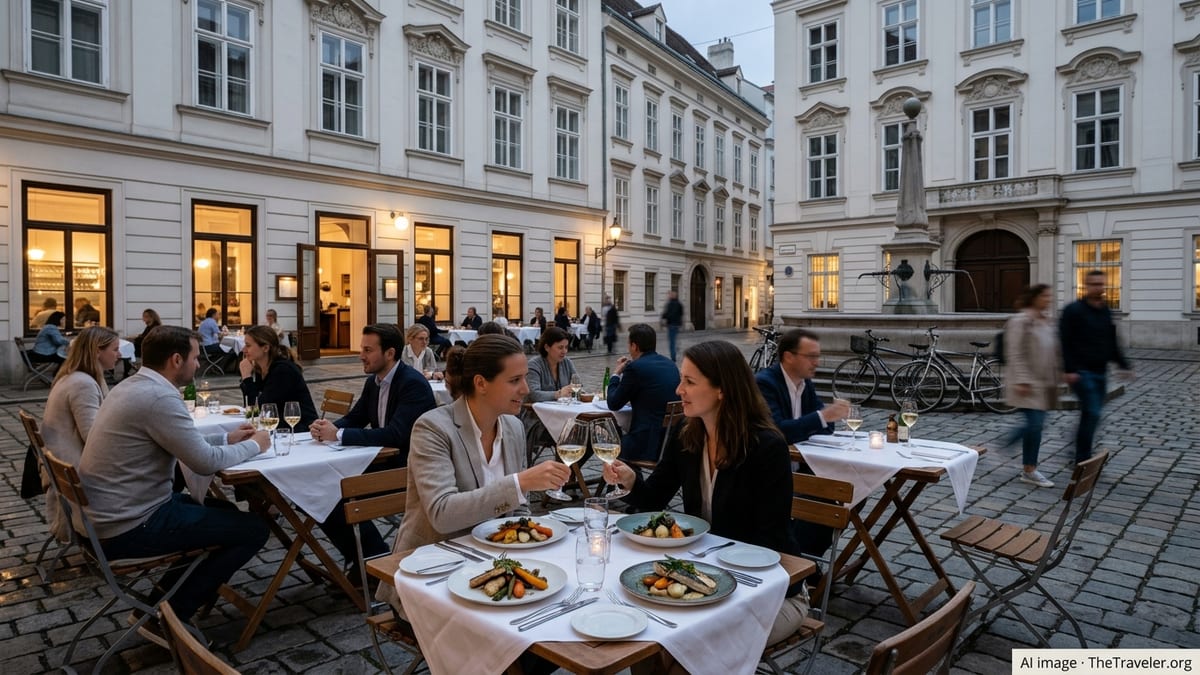
Fresh Rankings Put Italy at the Center of Europe’s Food Travel Map
Recent research into European culinary tourism for 2026 highlights how central Italy has become to food-focused travel. A “Foodie Ranking 2026” compiled by TUI Musement, widely reported across European media, found that Italy dominates the list of Europe’s most sought-after cities for food tours, with six destinations in the top 20. Cities such as Rome, Naples, Venice, Florence and Milan are repeatedly singled out for the density of cooking classes, market experiences and guided tastings now on offer.
The same ranking shows Spain in a strong second position by number of featured cities, with Madrid, Barcelona and Seville continuing to attract visitors interested in tapas, markets and wine bars. Portugal, Austria, Greece, France, the Netherlands, Ireland, Hungary and the Czech Republic also appear in the top tier, indicating that the competition for international food travelers is increasingly pan-European rather than limited to a small group of classic destinations.
Separate coverage of global “best cities for foodies” lists for 2026 reinforces this shift. Rome and other Italian cities score highly on factors such as restaurant variety, perceived quality, local food markets and specialist tours, while Lisbon, Barcelona, Athens and Vienna underscore how Portugal, Spain, Greece and Austria are converting strong culinary reputations into structured visitor experiences.
Industry commentary suggests that travelers are now using food rankings as a primary planning tool rather than a secondary consideration. For Italy, Spain and their Mediterranean neighbors, this means that the visibility of their cities in 2026 lists is expected to translate directly into higher visitor numbers outside traditional peak summer months.
Michelin Guides Confirm a Densely Starred Southern Europe
Alongside travel rankings, the 2026 Michelin Guides for Europe provide a numerical snapshot of how intensely Italy and its neighbors are investing in high-end gastronomy. The latest Michelin data for Italy indicates that the country now counts more than 390 starred restaurants, keeping it firmly among the world’s most awarded nations and second in Europe only to France by total stars.
Spain’s 2026 guide confirms more than 300 Michelin-starred restaurants, with 16 establishments holding the coveted three-star rating. The country’s concentration of top-tier venues across regions such as Catalonia, the Basque Country and Madrid continues to underpin its image as one of Europe’s most ambitious fine-dining laboratories.
Austria’s dedicated Michelin listing, with just over 100 starred restaurants for 2026, may be smaller in absolute terms, but analysts point to its high density of Bib Gourmand and starred venues in cities such as Vienna and Salzburg. This, combined with strong pastry and coffeehouse traditions, has made Austria increasingly visible in rankings of European food cities.
Portugal and Greece, historically overshadowed in Michelin statistics, are gaining momentum through targeted expansions of the guide and the recognition of regional cuisines. Portugal’s separate guide, introduced recently, and the announced regional expansion of the Greek coverage from 2026 onward are both seen by observers as catalysts for further investment and chef-driven experimentation in Lisbon, Porto, Athens and beyond.
Culinary Tourism Demand Broadens Beyond Prestige Dining
While star counts remain a benchmark, recent surveys of American and European travelers for 2026 suggest that demand is broadening beyond Michelin-level dining. Research published by tour operators focused on European food travel indicates that Italy, France and Spain still dominate dream-trip planning, but that Greece and Portugal are now close behind as travelers seek regional depth, casual venues and everyday food culture.
Publicly available survey data shows that travelers value markets, neighborhood trattorias, wine bars and street food at least as much as tasting menus. In Italy, this dynamic favors regions such as Emilia-Romagna, Campania and Puglia, where visitors can connect iconic dishes to local producers, from Parmigiano Reggiano dairies to coastal seafood markets.
Spain’s tapas tradition, Portugal’s pastelarias and seafood tascas, and Greece’s meze culture all lend themselves to informal, walkable food itineraries that complement high-end restaurants rather than competing with them. Austria, meanwhile, benefits from the appeal of coffeehouse culture and alpine specialties, which are being integrated into tasting walks, bakery tours and wine-focused excursions.
Analysts note that this shift toward experience-based and mid-range culinary offerings helps spread tourism revenue more evenly across cities and regions. For destinations such as Italy and Greece, where historic centers risk overtourism, curated food neighborhoods outside the usual hotspots are increasingly promoted to distribute visitor flows.
Heritage Recognition and National Branding Elevate Italian Cuisine
Italy’s elevated role in the 2026 culinary tourism landscape is also linked to broader moves to formalize and promote its food heritage. In 2025, Italian cuisine received recognition on UNESCO’s Intangible Cultural Heritage list, a milestone widely covered by European media and framed domestically as confirmation of the cultural status of everyday Italian cooking.
Tourism boards and regional consortia have since leaned into that recognition in their branding, presenting food and wine as a gateway to understanding local history and landscapes. Campaigns emphasize protected products such as Parmigiano Reggiano, Prosciutto di Parma, Chianti Classico and Neapolitan pizza, while encouraging visitors to explore smaller towns and rural routes tied to these specialties.
Comparable strategies are visible in Spain, Portugal, Greece and Austria, where national and regional organizations foreground culinary identity alongside beaches, culture or alpine scenery. Spain promotes routes centered on wine, olive oil and avant-garde restaurants; Portugal highlights wine regions and Atlantic seafood; Greece underscores island produce and urban food scenes; and Austria markets wine-growing valleys and traditional Heuriger taverns.
Observers argue that this shift toward culinary branding not only differentiates countries in a crowded European market but also supports local producers and rural economies. It is particularly visible in 2026 itineraries promoted for shoulder seasons, where food festivals, harvest events and regional tastings are used to extend the tourism calendar.
A Competitive but Complementary Southern European Food Corridor
The convergence of rankings, heritage recognition and restaurant guides has effectively created a competitive yet complementary culinary corridor stretching from Portugal through Spain, Italy and Greece to Austria and neighboring states. Rather than displacing one another, these countries appear to be benefiting from shared visibility as travelers plan multi-country trips anchored around food.
Travel platforms and tour operators now routinely package Rome and Naples with Barcelona, Lisbon or Athens, while central European hubs such as Vienna position themselves as sophisticated stopovers offering refined dining and wine experiences. Industry commentary suggests that this clustering effect is likely to intensify through 2026 as rail links and short-haul flights support flexible, multi-city culinary itineraries.
For Italy, the latest data confirms that it sits at the heart of this trend. With some of Europe’s highest concentrations of Michelin-starred restaurants, a growing array of food tours and classes, and the global resonance of its cuisine, the country is moving from perennial favorite to structural leader in the continent’s competition for culinary travelers.
Spain, Greece, Portugal and Austria, meanwhile, are consolidating their own positions by emphasizing distinctive food cultures and regional diversity. Together with Italy, they are shaping a 2026 European travel landscape in which dining, markets and cooking experiences are no longer an optional extra but a primary reason to visit.