

More news on this day
Hundreds of passengers traveling through Italy on Friday faced hours of disruption as a fresh wave of flight delays and cancellations rippled across Rome, Milan, Catania and Bergamo, snarling schedules for carriers including Alitalia’s successor ITA Airways, Ryanair, EasyJet and Lufthansa and underscoring the fragility of Europe’s busy winter air network.
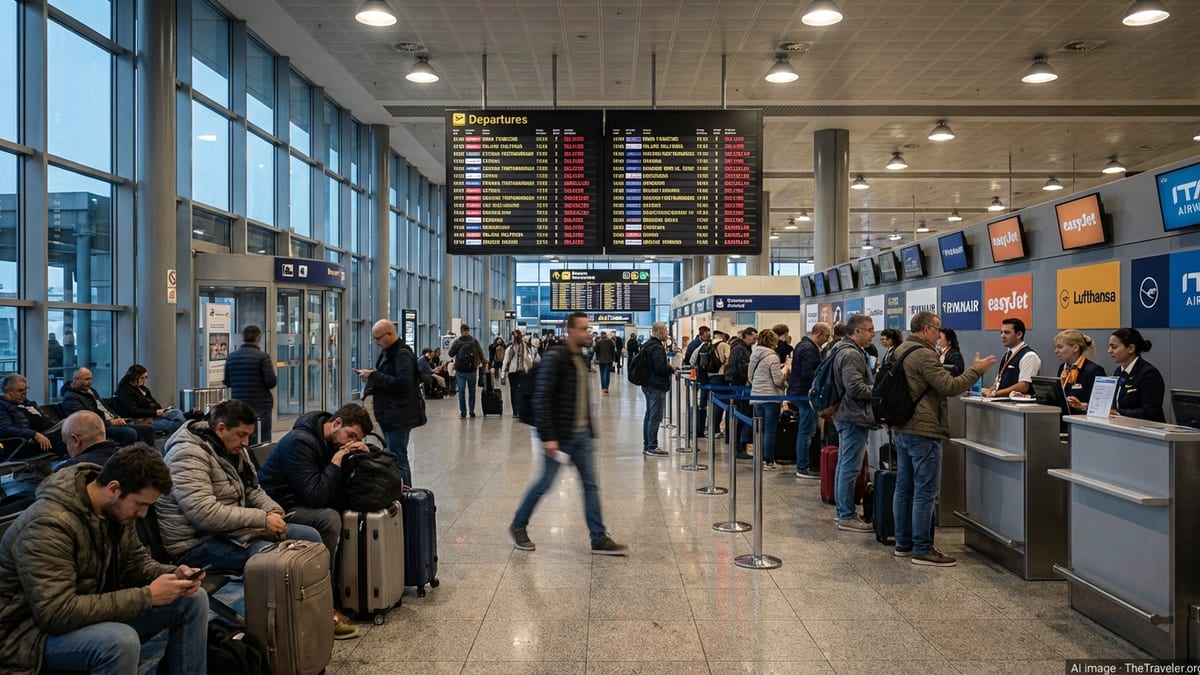
Latest Disruption Hits Italy’s Busiest Winter Routes
Italian airports entered the busy late‑February travel period under renewed strain as 237 flights were reported delayed and 12 cancelled across key hubs, according to preliminary figures compiled from airport and industry data on Friday. While the totals are modest compared with Italy’s worst aviation meltdowns of recent years, the concentrated impact in and around Rome, Milan, Catania and Bergamo created a cascade of missed connections and overnight disruptions for travelers heading across Europe and beyond.
At Rome Fiumicino and Ciampino, Milan Malpensa and Linate, Catania Fontanarossa and Bergamo Orio al Serio, airport displays flickered with rolling delays through the morning and early afternoon as control centers slowed traffic flows to manage congestion in already crowded airspace. Short‑haul European routes bore the brunt, particularly services operated by low‑cost carriers that link Italy with secondary cities in Spain, Germany, the United Kingdom and Eastern Europe.
Airlines stressed that safety was never compromised, but acknowledged that the day’s timetable integrity had been badly undermined. The disruption added to a winter marked by recurring operational pressures, from thick fog and seasonal storms to industrial unrest and the lingering ripple effects of previous technical glitches in Italian and regional air‑traffic systems.
Many passengers discovered the knock‑on nature of such events, with a minor delay on an early rotation quickly magnified across an aircraft’s multi‑sector day. By late afternoon, some flights were running over three hours behind schedule, pushing crews toward duty‑time limits and forcing last‑minute cancellations on selected routes.
Rome and Milan Bear the Brunt of Schedule Turmoil
Rome’s Fiumicino, Italy’s primary international gateway, again emerged as one of the worst affected airports. The hub handles a heavy mix of domestic, European and long‑haul services, leaving little slack in its tightly sequenced operations. On Friday, morning congestion in the domestic and Schengen terminals spilled into the rest of the day, as arriving aircraft waited for stands and departing flights queued on taxiways during peak waves.
Milan’s dual‑airport system, Malpensa and Linate, also struggled to absorb the disruption. Malpensa, the main intercontinental hub for northern Italy, saw a patchwork of delays across European and medium‑haul flights, while Linate’s concentrated business schedule made it especially vulnerable to even small timing shifts. Ripple effects from earlier technical problems in the Milan air‑traffic control area, which in the past have temporarily curtailed departures and arrivals, have encouraged controllers to run more conservative spacing during periods of uncertainty.
Further south, Catania Fontanarossa faced a familiar strain as one of Italy’s busiest island gateways. Any disruption there quickly affects a network of domestic links to the mainland, as well as low‑cost and leisure flights serving central and northern Europe. Travelers connecting through Rome or Milan from Sicily reported missed onward flights and long rebooking queues at transfer desks.
In Bergamo, a key low‑cost hub for the Milan region, Friday’s delays came only weeks after a separate technical failure involving landing guidance equipment and dense fog had brought operations to a standstill and stranded thousands overnight. That earlier incident forced dozens of cancellations and diversions and highlighted how quickly a localized outage can spread chaos through the broader system.
Low‑Cost and Legacy Carriers Struggle to Contain Impact
Among the carriers most exposed to Friday’s disruption were Europe’s dominant short‑haul players. Budget giant Ryanair, which operates a large base at Bergamo and extensive networks from Rome and other Italian cities, saw multiple services pushed back or resequenced as aircraft and crews fell out of position. For point‑to‑point travelers, the immediate effect was late arrivals, but for those with self‑made connections, delays often meant buying entirely new tickets.
EasyJet, which has a substantial operation at Milan Malpensa and serves both leisure and business markets, reported schedule pressures as aircraft cycling through Italy ran behind time. Its model of frequent flights on high‑demand routes provided some flexibility, enabling certain passengers to be accommodated on later departures, but many still faced hours‑long waits in crowded gate areas.
On the legacy side, Lufthansa and other full‑service European airlines contended with an additional layer of complexity: maintaining connectivity at their home hubs. Delays on Italian feeder flights threatened to disrupt carefully choreographed wave departures in Frankfurt, Munich and other major transit airports. To protect long‑haul banks, some carriers opted to proactively cancel lightly booked Italian sectors or consolidate services, a strategy that minimized wider knock‑on effects at the cost of inconvenience for passengers booked on the affected flights.
Italy’s own flag‑carrier successor, ITA Airways, inherited much of Alitalia’s previous network structure, including heavy reliance on Rome Fiumicino as a transfer hub. The airline worked to rebook disrupted passengers onto later services or alternative routings, but with many flights already heavily booked for the late‑winter travel period, options were limited. Travelers without flexible tickets or sufficient travel insurance sometimes found that only next‑day departures were available.
Technical Glitches, Weather and Strikes Form a Volatile Backdrop
The latest wave of disruption did not occur in a vacuum. Over the past several seasons, Italy’s aviation system has been repeatedly tested by a mix of technical failures, adverse weather and industrial action, each event leaving residual strain on schedules and resources. In northern Italy, a major radar and data‑transmission malfunction at the Milan Area Control Center in 2025 forced the suspension or severe restriction of hundreds of flights across Milan, Bergamo, Genoa and Turin, underscoring how vulnerable the regional network can be when a single node fails.
More recently, Bergamo’s early‑January technical outage, compounded by heavy fog, halted operations for hours and led to dozens of cancellations, diversions and overnight delays. Thousands of passengers were forced to sleep in terminal buildings or seek last‑minute hotel rooms, while airlines scrambled to reposition aircraft and crews the following day. The incident intensified calls from consumer advocates for more robust contingency planning and clearer communication protocols during major disruptions.
Industrial unrest has added another layer of uncertainty. Nationwide transport strikes, including walkouts by air‑traffic controllers, ground staff and airline crews, have periodically hit Italian aviation, prompting airlines to trim schedules and airports to warn of cancellations and delays. Further ahead, confirmed aviation strikes set for late February and early March 2026 are already raising concerns that today’s problems could be a precursor to a more turbulent period for Italy‑bound travel.
Weather remains an unpredictable factor. Winter fog in the Po Valley, summer thunderstorms over the Apennines and strong crosswinds at island airports can all force traffic‑flow restrictions, diversions or missed approach attempts that erode schedule resilience. When combined with high seasonal demand and limited spare aircraft capacity, even routine weather‑related slowdowns can spiral into widespread disruption.
Passengers Face Long Queues, Uncertain Timelines and Rising Costs
For travelers caught in Friday’s disruption, the operational backdrop mattered less than the immediate reality of crowded terminals, rebooking queues and uncertain arrival times. At Rome Fiumicino, passengers described snaking lines at airline service desks and self‑service kiosks, with many relying on smartphone apps to rebook flights faster than agents could process requests in person. Families with young children and elderly passengers appeared particularly stressed as waits stretched for hours.
In Milan and Bergamo, passengers stranded by cancellations struggled to find same‑day alternatives, especially on routes with limited daily frequencies. Some resorted to re‑routing via other European hubs, adding extra stops and travel time but preserving critical onward connections, such as long‑haul flights back to North America or Asia. Others shifted to Italy’s high‑speed rail network for domestic journeys, booking last‑minute train tickets between Milan, Rome and other major cities to salvage their itineraries.
Accommodation and incidental costs quickly mounted. With many flights delayed into the late evening, travelers who missed final connections or faced next‑morning departures had to secure hotel rooms in already busy airport corridors. Transport between airports and city centers added further expense, especially for those carrying large amounts of luggage or traveling in groups. While some airlines provided meal vouchers and hotel stays in line with European Union passenger‑rights rules, others classified the disruption as an extraordinary operational issue, leaving passengers to shoulder more of the burden.
Business travelers and tour operators reported cascading effects beyond the immediate travel day. Missed meetings, lost holiday time and rescheduled excursions all carried economic and emotional costs. For smaller travel agencies and independent tour guides, last‑minute cancellations or late arrivals can mean not only logistical headaches but also lost income they may never recover.
What EU Passenger Protections Mean in Practice
The disruptions once again thrust the European Union’s air passenger rights framework into the spotlight. Under Regulation EC 261/2004, travelers departing from an EU airport or flying with an EU‑based carrier generally have the right to assistance in the event of long delays or cancellations, and in many cases may be entitled to financial compensation depending on flight distance, length of delay and the cause of the disruption.
In practical terms, passengers facing extended delays should be offered food and refreshments after a certain waiting period, as well as access to communication such as phone calls or emails. If an overnight stay becomes necessary, airlines are typically required to provide hotel accommodation and transport between the airport and the lodging. For cancellations, carriers must offer a choice between rerouting at the earliest opportunity or a refund of the unused portion of the ticket.
Compensation payments, which can range from 250 to 600 euros per person for qualifying delays and cancellations, are intended both as a deterrent against poor operational planning and as a financial buffer for affected travelers. However, airlines are exempt from paying this compensation if they can demonstrate that the disruption was caused by extraordinary circumstances beyond their control, such as severe weather, certain types of air‑traffic control failures or security incidents.
The complexity of these rules, and the frequent disputes over what counts as extraordinary, have fueled a growing ecosystem of legal and claims‑management firms that help passengers pursue compensation. In Italy, as in other EU countries, consumer advocates encourage travelers to keep detailed records of their disruption, including boarding passes, delay notifications and receipts, to strengthen any future claims.
How Travelers Can Plan Around Italy’s Unsteady Skies
With Italy’s aviation system facing a challenging mix of technical vulnerability, industrial unrest and seasonal weather, travel experts are urging passengers to build more resilience into their itineraries. One key recommendation is to avoid extremely tight connections, especially when relying on separate tickets across different airlines or between air and rail. Leaving several hours between scheduled arrival and onward travel can provide a crucial buffer against moderate delays.
Travelers are also advised to monitor their flights closely in the 48 hours leading up to departure, using airline apps, airport information pages and, where available, push‑notification services. Signing up for alerts can give early warning of schedule changes and increase the chances of securing alternative options before flights fill up. For trips during known strike windows or peak holiday periods, some passengers may choose to adjust their travel dates slightly to reduce risk.
Booking strategies can play a role as well. Itineraries on a single ticket, particularly with full‑service carriers, generally provide stronger protection in the event of misconnection, as the operating airline is responsible for getting the passenger to the final destination. While low‑cost carriers may offer cheaper fares, their point‑to‑point model can expose travelers to greater risk if a delayed flight causes a missed independently booked connection.
Finally, comprehensive travel insurance that specifically covers delays, missed connections and additional accommodation costs can help cushion the financial blow of days like Friday. Policies vary widely, so experts recommend reading the fine print and verifying coverage for strikes, technical failures and air‑traffic restrictions. As Italy braces for further potential disruptions in the coming weeks, informed planning and realistic expectations may be the most valuable tools in a traveler’s kit.