

Rome and Venice will always be magnetic, but they are only a small part of Italy’s story. Beyond the blockbuster sights lie quieter cities, hilltop villages, wild coastlines and alpine valleys where daily life unfolds at a gentler pace. This guide explores those lesser-known corners, helping you plan a trip that trades queues and crowds for local markets, family trattorias and landscapes that feel refreshingly unstage-managed.
Why Look Beyond Italy’s Classic Cities
Italy continues to face intense pressure on its most famous destinations, with cities such as Venice and Florence experimenting with crowd control and visitor caps in peak periods. That is encouraging many travelers to look elsewhere, both to avoid congestion and to lessen their own impact. Moving beyond the big-name draws opens up a richer experience, with more chances to interact with residents, hear local dialects and observe traditions that feel rooted rather than rehearsed.
Shifting your focus also changes the pace of your trip. Away from the busiest hubs, mealtimes stretch out, traffic thins, and you can wander historic centers without being shepherded along in a stream of tour groups. Accommodation costs are often lower and availability better, particularly in the shoulder seasons from April to early June and September to October, when weather is generally mild but coastal and rural areas remain pleasantly alive.
Exploring less touristed regions does require slightly more planning, especially if you are relying on public transport or visiting outside summer. Train lines may be less frequent and some small towns have limited dining hours. The reward is an Italy that feels more personal: you might be the only visitor in a village bar, the sole audience to a sunset over vineyards, or one of a handful of people in a tiny museum that guards masterpieces known mainly to locals and specialists.
Instead of treating these places as add-ons, consider designing an itinerary that revolves around them. Use Rome, Venice or Florence as brief gateways if you wish, but spend most of your time in secondary cities and rural regions. The following suggestions focus on areas that are relatively easy to reach, culturally rich, and still far calmer than the country’s household-name sights.
Underrated Northern Italy: Turin, Bologna and Beyond
Northern Italy is often shorthand for Milan, the lakes and the Dolomites, yet some of its most rewarding cities remain surprisingly low profile. Turin, in the region of Piedmont, is one of the country’s most elegant urban experiences. Its wide boulevards and arcaded streets recall Paris more than Rome, framed by a backdrop of snow-tipped Alps. Visitors come for the café culture, grand squares and world-class museums, including institutions devoted to cinema and ancient Egypt, but the atmosphere is far less hurried than in Italy’s fashion capital.
East of Turin, Bologna has long been beloved by Italians and food-focused travelers while somehow avoiding the crowds that pack Florence and Venice. It is home to one of the world’s oldest universities, and that academic history still shapes its energy. The medieval center is wrapped in miles of porticoed walkways that offer shelter from sun and rain, and evenings spill into the streets as students and locals gather at wine bars and osterie. The surrounding Emilia-Romagna countryside is dotted with producers of cured meats, cheeses and balsamic vinegar, making Bologna an ideal base for day trips focused on regional gastronomy.
Further north, the city of Verona and the lesser-known Vicenza and Padua provide alternatives to Venice for travelers seeking frescoed churches, Renaissance palaces and atmospheric piazzas without the crush. Trains connect these cities efficiently, allowing you to settle in one location and make relaxed excursions. For a deeper escape, consider the Valtellina valley near the Swiss border, where terraced vineyards climb steep mountainsides and small spa towns offer thermal baths fed by natural springs.
In all these northern destinations, plan for a blend of cultural sightseeing and everyday rituals. Take your morning coffee standing at the bar like locals, book a table for a long Sunday lunch, and leave pockets of time simply to walk through residential neighborhoods. You will see a side of Italian life that can be hard to spot amid the souvenir stands of the most famous centers.
The Heart of Italy: Hill Towns and Quiet Umbrian Valleys
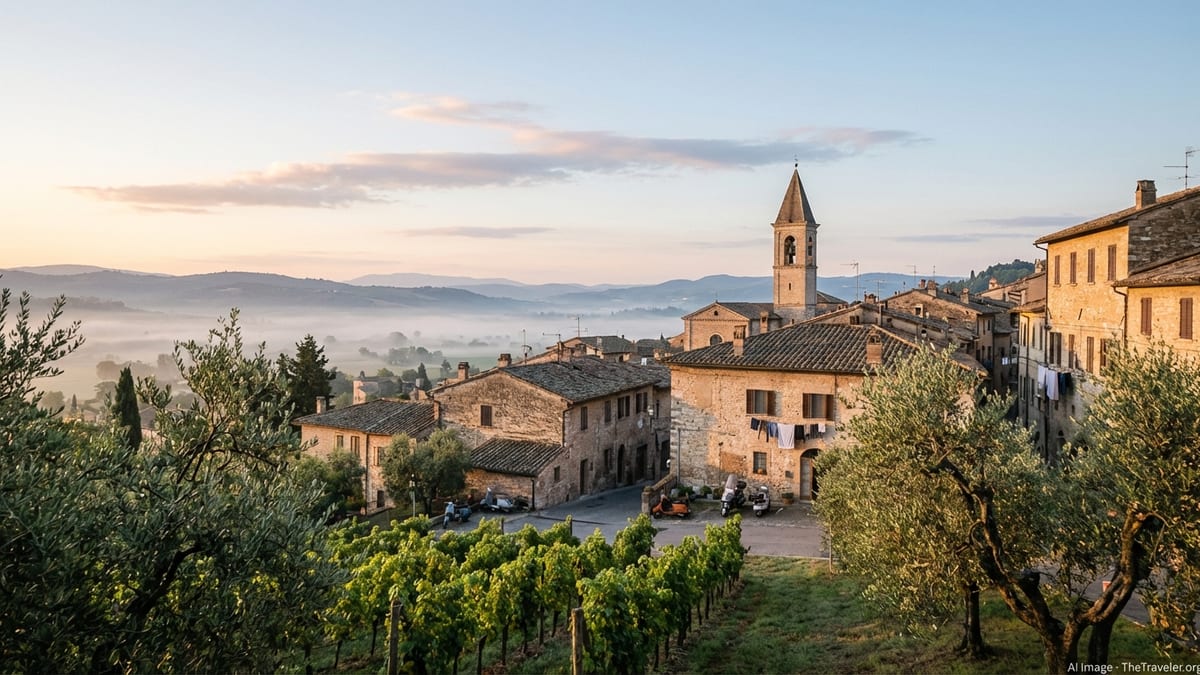
Central Italy is often associated with Tuscany’s beloved landscapes, but neighboring Umbria and the inland hills of Le Marche and Abruzzo reward travelers who are willing to go a little further from the main rail corridors. Here you find stone villages perched on ridges, monasteries tucked into forests, and valleys where olive groves and vineyards dominate the view. Compared with Tuscany’s most photographed destinations, many of these places feel unhurried and lived-in rather than curated for visitors.
Hill towns such as Narni, Spello and Gubbio in Umbria offer winding lanes, Roman and medieval remnants, and intimate piazzas where evenings revolve around a few cafes and a church tower’s bell. In Le Marche, you can combine similar historic centers with easy access to the Adriatic coast, where fishing towns and low-key beach resorts attract mostly Italian families. The Sibillini mountain range on the border of Umbria and Le Marche provides opportunities for hiking in late spring and autumn, when trails are open and temperatures are comfortable.
Abruzzo, east of Rome, remains one of Italy’s most quietly dramatic regions. Its national parks protect high plateaus, beech forests and alpine-style villages that feel far removed from coastal development. Towns such as L’Aquila and Sulmona balance baroque architecture with views of surrounding peaks, while smaller villages like Santo Stefano di Sessanio have been sympathetically restored as slow-travel bases. The region is especially appealing for visitors who enjoy combining cultural walks with day hikes and hearty mountain cuisine.
Because many of these areas are rural, a rental car significantly increases your flexibility, especially if you want to link several small towns in one trip. However, it is still possible to rely on trains and regional buses if you are patient and plan around timetables. Whatever your mode of travel, try to stay at least two nights in each base to settle into local rhythms instead of racing from viewpoint to viewpoint.
Southern Charms: Puglia, Basilicata and Calabria
Italy’s south has moved onto more itineraries in recent years, but significant swaths of it remain less busy than the Amalfi Coast or Capri. Puglia, forming the heel of the Italian boot, is a patchwork of whitewashed hill towns, baroque cities and long coastlines that alternate between rocky coves and sandy bays. Inland, centuries-old olive trees spread across gently rolling countryside, and traditional farmsteads known as masserie have been converted into tranquil guesthouses that highlight local food and wine.
Cities such as Lecce, sometimes described as a baroque open-air museum, and smaller towns like Ostuni and Locorotondo offer atmospheric historic centers built from pale stone that glows softly at dusk. On the Adriatic side, fishing towns such as Monopoli and the cliffside setting of Polignano a Mare pair sea views with compact old towns that are easy to explore on foot. While summer brings more visitors, shoulder seasons can be ideal, with warm days for coastal walks and evenings that still feel lively in main squares.
West of Puglia, the region of Basilicata remains more sparsely visited beyond the city of Matera, whose cave dwellings have attracted global attention. Away from that focal point, rural Basilicata offers quiet mountain villages and forested parks suited to walking and slow road trips. Further south, Calabria is best known domestically for rugged coastlines facing both the Tyrrhenian and Ionian seas. Small resort towns, hilltop villages and stretches of relatively undeveloped shoreline make it an appealing choice for travelers seeking simple pleasures: sea swims, grilled fish, and sunsets watched from a promenade bench.
When traveling in these southern regions, heat can be intense in July and August, and local life often slows in the early afternoon. Adapting to the rhythm of early starts, a rest in the hottest hours and late dinners will make your trip more comfortable and culturally attuned. Many businesses close for at least one day a week, often Monday or midweek, so build some flexibility into your plans to account for local schedules.
Islands and Coastlines: Sicily, Sardinia and Lesser-Known Shores
Italy’s islands offer a sense of separation that can feel like entering another country, with distinct histories, dialects and culinary traditions. Sicily, the largest island in the Mediterranean, combines Greek temples, Arab-influenced architecture and baroque towns with volcanic landscapes and a long, varied coastline. Travelers can blend cultural visits to places such as Palermo, Syracuse or the Valley of the Temples with time in smaller fishing villages, wine estates and nature reserves that protect beaches and hiking paths.
On Sicily’s eastern side, towns around Mount Etna provide easy access to vineyards and lava fields, with guided excursions ranging from gentle walks to more demanding summit attempts when conditions permit. In the south and southeast, baroque hill towns and coastal wetlands attract visitors interested in architecture and birdlife. Even on popular stretches of coast, quieter experiences are possible if you explore beyond the best-known resorts, seek out lesser-publicized beaches and travel outside peak holiday weeks.
Sardinia, further west, has long been favored by Italian vacationers for its clear waters and varied interior. While the Costa Smeralda in the north is well known, much of the island still sees fewer foreign visitors than mainland hotspots. Coastal towns such as Alghero and the capital Cagliari mix historic centers with waterfront promenades, while inland villages preserve traditional festivals and crafts. Offshore archipelagos offer wild coves and excellent opportunities for sailing and snorkeling, especially in late spring and early autumn when seas are usually calm.
Back on the mainland, travelers who want coastal scenery without the saturation of the most famous resorts can look to regions such as Cilento in Campania, Gargano in northern Puglia, or the Maremma coast in southern Tuscany. These areas combine beaches, protected natural reserves and small towns that lean more rural than glamorous. Reaching them often takes an extra train connection or a rental car, but the payoff is more space, lower prices and a sense of sharing the shore with residents rather than primarily with other tourists.
Mountains, Lakes and Active Escapes
Italy’s mountainous spine and northern lakes offer dramatic landscapes that are ideal for travelers who prefer hiking, cycling and fresh air to dense urban sightseeing. Beyond high-profile destinations such as the central Dolomites and Lake Como, there are numerous valleys and lesser-known lakes where infrastructure is good but crowds remain manageable. These are places where you can breakfast on a lakeside terrace, spend the day on trails or quiet roads, and finish with an evening stroll through a compact historic center.
The northern region of Trentino-Alto Adige is crisscrossed by well-marked paths, many of which are accessible from small towns served by trains or cable cars. Summer brings wildflowers and long daylight hours, while autumn is prized for foliage and vineyard harvests. In Lombardy and Piedmont, smaller lakes such as Iseo and Orta provide alternatives to Como and Maggiore, with ferry services, waterfront promenades and hillside sanctuaries that invite unrushed exploration.
Further south, the Apennine mountains offer a very different kind of escape. National parks in Abruzzo, Lazio and Molise protect habitats for wildlife and maintain networks of trails between villages and pastures. Accommodation here ranges from simple guesthouses to family-run mountain hotels, often serving robust regional dishes built around local cheeses, cured meats and seasonal vegetables. Winter conditions can be harsh, and some facilities close in the coldest months, so late spring to early autumn is generally the most comfortable period for visits.
Many of these mountain and lake destinations are best explored with sturdy footwear and flexible daily plans. Weather at altitude can change quickly, and it is wise to carry layers, sun protection and water even on seemingly short outings. Check local tourism offices for updates on trail conditions, seasonal closures and recommended routes suited to your fitness level and experience.
Planning a Trip Beyond the Icons
Designing an itinerary that skips or minimizes Rome and Venice starts with deciding how many bases you want. Instead of trying to see the entire country in one visit, consider focusing on one or two regions and exploring them in depth. For example, you might combine Turin and the Langhe wine hills, or pair Lecce with several small Puglian towns and a few days along the coast. Another option is to choose a medium-sized city as a hub, such as Bologna or Palermo, and take a series of day trips into neighboring countryside.
Transport will shape what is realistic. Italy’s high-speed rail network efficiently links major cities, while regional trains and buses connect smaller ones, though sometimes on limited schedules. Renting a car gives you maximum freedom in rural areas, but it comes with responsibilities: navigating narrow historic streets, understanding local parking rules and staying alert to ZTL (limited traffic) zones in town centers where unauthorized cars face fines. If you prefer to avoid driving, look for towns that sit on train lines and offer easy access to nearby villages by bus or organized excursions.
Seasonality is another key consideration. Peak summer brings high temperatures, higher prices and more Italians on holiday, particularly in August. Coastal areas and islands are liveliest then but also busiest. Spring and autumn offer a good balance in many regions, though mountain areas may still see snow in early spring and some minor coastal services may reduce hours outside high season. Winter can be atmospheric in cities and hill towns, with fewer visitors and lower accommodation costs, though smaller establishments may close for part of the season.
Wherever you go, booking at least your first few nights in advance is sensible, especially if your visit overlaps with local festivals or national holidays, when demand from domestic travelers surges. Once on the ground, talk with hoteliers, café owners and taxi drivers about their favorite nearby places. Local recommendations can lead you to viewpoints, trattorias and neighborhood markets that rarely appear in guidebooks, rounding out your experience of an Italy that feels both authentic and individual.
The Takeaway
Italy’s most famous cities attract attention for good reason, but they are only part of what makes the country so compelling. By shifting your focus toward lesser-known regions, secondary cities and rural landscapes, you gain access to a version of Italy where daily life takes precedence over sightseeing, and where it is easier to connect with people rather than just monuments.
Traveling beyond Rome and Venice asks for a little more initiative, whether in deciphering a regional bus schedule or booking a guesthouse in a town you had never heard of a year ago. In exchange, you are rewarded with quieter piazzas, uncrowded walking trails and meals that feel like they were cooked for neighbors rather than for passing tour groups. It is a way of traveling that supports a wider spread of communities and often feels more sustainable and satisfying.
On your next trip, consider using the classic cities only as gateways or brief stops, and devote most of your time to these alternative destinations. Whether you end up in a baroque square in Lecce, a vineyard valley in Valtellina, or a fishing harbor in Sardinia, you may find that your most vivid Italian memories come from the places that never appeared on your original must-see list.
FAQ
Q1. Is it realistic to skip Rome and Venice entirely on a first trip to Italy?
Yes, it can be. Many travelers now design itineraries around smaller cities and regions instead of the classic circuit. As long as you choose a few well-connected bases and allow enough time for travel between them, you can have a rich first experience of Italy without setting foot in Rome or Venice, then return to those cities on a future trip.
Q2. What is the best time of year to visit Italy’s less touristy regions?
Generally, April to early June and September to October work well for most regions. During these months, temperatures are usually comfortable for walking and sightseeing, and many coastal and rural destinations are open but not yet at peak capacity. High summer can be very hot in the south and busy on popular beaches, while winter brings a quieter atmosphere and shorter days.
Q3. Do I need to rent a car to explore areas beyond Rome and Venice?
Not always, but it helps in rural regions. Medium and large cities are usually linked by trains, and popular towns often have bus connections, though they may not run late into the evening or on every day. If you plan to visit several small villages, stay in the countryside or move between isolated coastal areas, a rental car offers far more flexibility. In cities, it is often easier to park on the outskirts and rely on walking or public transport.
Q4. Are smaller Italian towns and villages safe for independent travelers?
Most visitors find smaller communities in Italy to feel safe, especially compared with crowded urban tourist zones where pickpocketing can be an issue. Normal travel precautions still apply: look after valuables, avoid poorly lit areas late at night and be cautious with unfamiliar people. In many villages, local residents know one another, and visitors quickly become familiar faces if they stay for more than a night or two.
Q5. How much Italian do I need to speak when traveling off the beaten path?
A few phrases go a long way. In major cities and heavily touristed regions, English is widely understood in hospitality and retail settings. In smaller towns, you may encounter fewer English speakers, particularly among older residents. Learning basic greetings, polite expressions and food terms will help. Carrying a translation app or phrasebook can bridge gaps and is often appreciated as a sign of respect.
Q6. Will I find vegetarian or special-diet options outside major cities?
Availability is improving but can be more limited than in large urban centers. Italian cuisine naturally includes many vegetable, pasta and grain-based dishes, and it is often possible to assemble a meal from sides and simple plates. For strict diets such as vegan or gluten-free, it helps to research a few restaurants in advance and to learn key phrases describing your needs. Larger regional hubs usually offer more choice than very small villages.
Q7. How should I budget for a trip that focuses on lesser-known areas?
Costs vary by region, but accommodation and dining are often more affordable outside the biggest tourist cities. You might pay less for a centrally located room, and meals in family-run trattorias can be good value. However, transport between remote places may be less frequent, and taxis can be expensive where public options are limited. Building a modest contingency into your budget for last-minute transfers or schedule changes is sensible.
Q8. What is the best way to choose which regions to visit?
Start with your interests and travel style. If you enjoy food and wine, consider regions known for gastronomy such as Piedmont, Emilia-Romagna or Puglia. For hiking and scenery, mountain areas and lake districts may appeal. If you want a mix of culture and sea, look at coastal cities in Sicily or smaller towns in Liguria and the Adriatic. Limiting yourself to one or two regions allows for deeper exploration and less time spent in transit.
Q9. How far in advance should I book accommodation in these less-touristed places?
In high and shoulder seasons, booking at least several weeks ahead is wise, particularly for weekends, seaside towns and popular festivals. Many small hotels and guesthouses have a limited number of rooms and may close for part of the year. Outside peak periods, you often have more flexibility, but securing your first nights in each new base before arrival helps reduce stress and gives you a confirmed landing point.
Q10. Can I combine famous cities with lesser-known destinations in a single trip?
Yes, a mixed itinerary can work very well. One approach is to fly into a major city such as Milan, Rome or Naples, spend a short time there, and then move on quickly to quieter regions that align with your interests. Another is to base yourself in a secondary city and take a day trip to a headline destination rather than staying overnight. Balancing a few iconic sights with longer stays in off-the-beaten-path locations often results in a trip that feels both comprehensive and relaxed.