

Choosing between Italy and Greece for a Mediterranean vacation is a very good problem to have. Both countries offer luminous coastlines, layered history, passionate food cultures and famously warm hospitality. Yet the experiences they deliver can feel surprisingly different once you are on the ground. Understanding those differences is the key to deciding which destination is right for your next trip, or how to combine them in a single unforgettable journey.
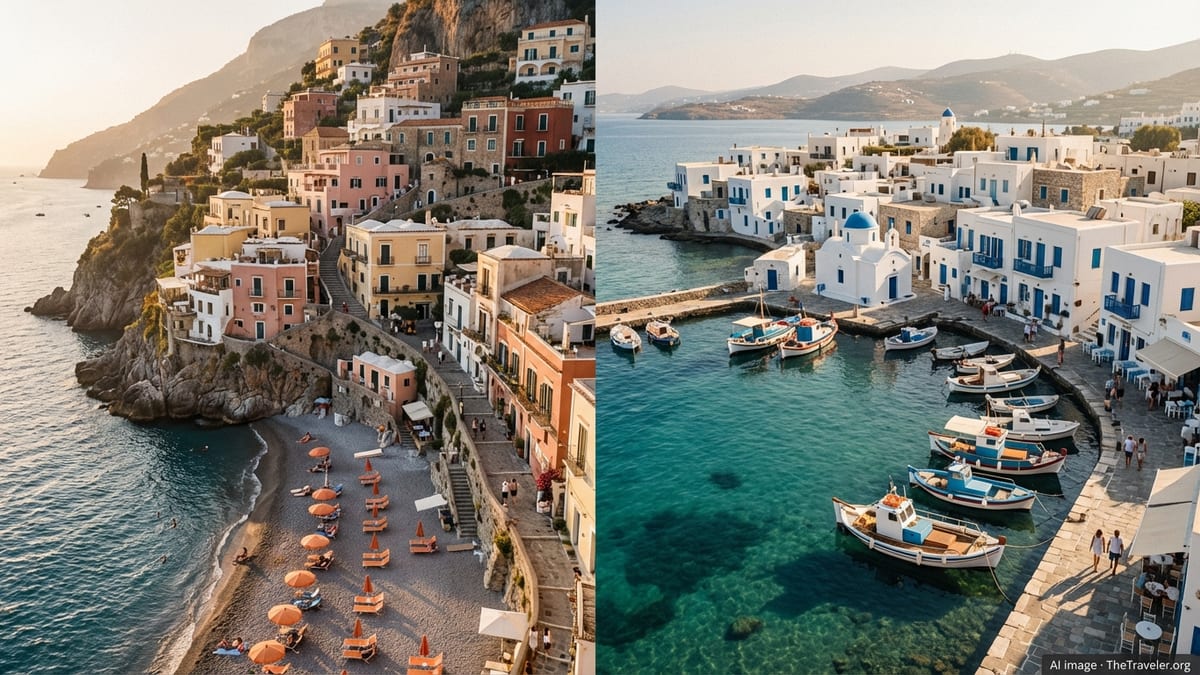
Overall Vibe: Dolce Vita vs Island Ease
Italy and Greece share a sun-soaked Mediterranean setting, but the mood of a vacation in each country is distinct. Italy’s coastal hotspots, from the Amalfi Coast to Cinque Terre and Puglia, feel like open-air theater: dramatic landscapes, glamorous piazzas, stylish locals and a strong sense of performance around food, fashion and daily life. Even small seaside towns can feel intense and energetic, especially in high season.
Greece, by contrast, is often about slowing down. On the islands in particular, days fall into an easy rhythm of swims, naps, tavern lunches and sunset views. The emphasis is less on seeing and being seen, and more on simple pleasures: the clarity of the sea, the sound of cicadas and the glow of whitewashed houses in late-afternoon light. Nightlife can be lively in hubs like Mykonos or Ios, but many islands keep a relaxed, village feel.
Urban experiences also differ. Italian cities such as Rome, Florence, Naples and Venice have dense layers of art and architecture, with major museums and landmark churches at every turn. Greek cities like Athens and Thessaloniki are more compact and informal, with world-famous ruins alongside creative neighborhoods, cafes and bars that feel resolutely modern and local.
If you dream of a trip filled with iconic art, high style and a touch of cinematic drama, Italy leans in your favor. If you imagine sun-faded streets, harborfront tavernas and afternoons that drift by without a schedule, Greece may match your Mediterranean ideal.
Beaches and Sea: Cliffs, Coves and Island-Hopping
For many travelers, the sea is the deciding factor. Italy’s Mediterranean coastline is long and varied, with spectacular cliff-backed stretches like the Amalfi Coast and Ligurian Riviera, sandy sweeps in Puglia and Calabria, and volcanic shores in Sicily. The water is typically clear and inviting, though beaches can be narrow, pebbly and busy in peak season, especially near famous towns.
Greece’s calling card is its islands. The country counts hundreds of inhabited and uninhabited islands, from the Cyclades and Dodecanese in the Aegean to the lush Ionian group off the western coast. Many islands ring their coasts with white or golden sand, turquoise shallows and rocky coves that are best reached by boat. On well-known islands, you can expect organized beach clubs and waterfront bars. On quieter ones, simple tavernas and nearly empty coves still exist, especially outside July and August.
Water temperature and conditions are similar across both countries in summer, warming steadily from late May and staying comfortable through September and often into early October. On Greece’s Aegean side, strong seasonal winds can bring choppier seas at times, while Italy’s more sheltered bays along the Tyrrhenian and Adriatic coasts often feel calmer. Both destinations offer excellent snorkeling and boat excursions, though Greece generally provides more options for casual island-hopping by ferry.
If your priority is variety of beaches in one trip, Greece has an edge because you can easily combine very different islands in a single itinerary. If you picture dramatic coastal drives, seaside villages backed by vineyards and archaeological day trips from the shore, Italy’s mix of coastline and culture may appeal more strongly.
Culture, History and Sights
Both Italy and Greece are foundational destinations for anyone interested in European history. In Italy, you walk amid the legacy of the Roman Empire, the Renaissance and the Catholic Church. Rome’s Colosseum and Forum, Florence’s art-filled churches and palazzi, and Venice’s canals and palaces provide dense concentrations of world-famous landmarks within relatively compact areas.
Greece offers equally powerful encounters with the ancient world, but in a different context. The Acropolis in Athens, the sanctuary of Delphi, the palaces of Crete and island sites such as Delos give shape to the myths and city-states familiar from classical literature. Ruins are often integrated into everyday life, perched above modern towns or framed by the sea on low headlands. The result can feel less like a museum experience and more like ancient history bleeding into the present.
Outside antiquity, cultural experiences diverge. Italian cities feature grand opera houses, design-forward boutiques, acclaimed contemporary galleries and a polished cafe culture. Greek culture is more informal and often centered on the village square, local festivals, music in small venues and traditional dancing at summer celebrations. Both countries are proud of their regional traditions, from Italian ceramics and textiles to Greek folk crafts and island-specific recipes.
If you want to spend a significant portion of your vacation inside museums and historic churches, Italy will keep you busier. If you picture climbing to hilltop ruins, wandering through whitewashed alleys and hearing traditional music after dinner in a small square, Greece may deliver more of what you seek.
Food, Wine and Nightlife
Italian and Greek cuisines share Mediterranean roots: olive oil, tomatoes, fresh vegetables, grilled seafood and local cheeses dominate menus in both countries. Yet each has its own flavor profile. Italy shines with regional pasta dishes, artisanal pizza, cured meats and a deep wine culture, from Piedmont reds to coastal whites. Even in simple trattorias, presentation and pacing are often treated with care, and a multi-course dinner can easily become the focus of the evening.
In Greece, meals tend to be convivial and unfussy. Tavernas set out shared plates of grilled fish, charred octopus, stuffed vegetables, dips like tzatziki and melitzanosalata, and crisp salads crowned with slabs of feta. House wine, often local and served in simple carafes, is common, and ouzo or tsipouro appear as traditional aperitifs or digestifs. Long, relaxed dinners by the water are part of the island experience, and many travelers find that Greek hospitality around the table feels especially personal.
Nightlife patterns differ too. Italy’s coastal towns and cities offer sunset aperitivo scenes, stylish bars and, in some places, nightclubs, but social life often centers on the early evening passeggiata and dinner. In Greece, especially on islands known for nightlife such as Mykonos, Ios or parts of Rhodes and Corfu, music bars and clubs frequently run late into the night. Other islands maintain a quieter rhythm, with low-key bars or cafes that stay open late without becoming full-blown party hubs.
Wine lovers will find structured tasting experiences and vineyard visits more developed in Italy, particularly in regions such as Tuscany, Sicily and Puglia, though Greek wine has been gaining attention, with distinctive varieties on islands like Santorini and Crete and in northern mainland regions. For many visitors, the choice comes down to whether they dream more of trattoria dinners with carefully paired wines or generous taverna spreads right at the water’s edge.
Costs, Crowds and Seasonality
Budget is often where Italy and Greece begin to diverge in practical terms. In both countries, prices vary widely by region and season, but Greece is generally perceived as slightly better value for mid-range travelers. Simple rooms, tavern meals and local transportation can be more affordable on many Greek islands compared with Italy’s most famous coastal areas, where accommodation costs in particular have risen notably in recent years.
In both destinations, high season typically runs from late June through August. These months bring the warmest seas and most reliable sunshine, but also the largest crowds and highest prices. Greece’s islands and Italy’s marquee regions such as the Amalfi Coast, Cinque Terre and parts of Sicily can feel heavily visited at this time. Shoulder seasons, especially May to mid-June and September to early October, often provide a sweet spot of pleasant weather, somewhat lower prices and more breathing room in popular destinations.
Travel conditions are also influenced by climate-related factors. In recent summers, both countries have seen heatwaves and sporadic wildfires, particularly in forested and island areas. Conditions change year by year and often remain localized, so monitoring local advisories before and during travel is wise. Coastal regions usually remain safe and fully operational even when inland areas are affected, but some travelers may prefer the slightly milder weather of late spring and early fall.
If you are cost-sensitive and flexible on timing, Greece may stretch your budget further, especially outside the marquee islands. If you are set on Italy’s most famous coastal spots in midsummer, advance booking and realistic expectations about prices and crowds are important. For either country, planning shoulder-season travel can significantly improve value and comfort.
Getting Around and Trip Logistics
Logistics can influence how relaxed your vacation feels. Italy has an extensive high-speed and regional rail network that links major cities and many coastal areas. Rome, Florence, Venice, Milan and Naples are all well connected by train, and from there you can reach regional lines serving coastal hubs and resort towns. Buses fill in many gaps, and domestic flights connect more distant regions such as Sicily and Sardinia.
Reaching Italy’s coastal destinations sometimes involves a combination of train or car and short ferry rides. The Amalfi Coast, for example, is accessed by road and seasonal boat services, while the islands of Capri, Ischia and the Aeolian group are reached by frequent ferries and hydrofoils. Driving is common for travelers who want to explore rural areas, but coastal roads can be narrow and parking limited in peak season.
Greece relies heavily on a network of ferries and domestic flights to connect its mainland and islands. Major islands have airports with seasonal international flights, and Athens acts as the primary hub for both flights and ferries. During the main tourist season, ferries between islands and from the mainland are frequent on major routes, with a mix of high-speed vessels and larger conventional ships that also carry vehicles. Outside peak months, schedules thin out, so checking connections is essential when planning multi-island itineraries.
Travelers keen to experience both Italy and Greece can combine the two by air or sea. Several Italian ports on the Adriatic coast have year-round ferry links to western Greece, including routes between Bari, Brindisi, Ancona and Venice on the Italian side and ports such as Corfu, Igoumenitsa and Patras on the Greek side. Journey times vary from roughly overnight to more than a full day at sea, and many services allow vehicles on board, making them popular with road-trippers.
Who Each Destination Suits Best
While individual preferences vary, certain traveler profiles tend to gravitate to one country or the other. Italy is often a first choice for visitors who prioritize art, architecture and food in an urban and semi-urban setting, with coastal time as an accent rather than the entire focus. Honeymooners and couples may favor the romance of cities like Venice and Florence paired with a few nights on the Amalfi Coast or in coastal Puglia. Families who enjoy sightseeing and day trips may appreciate how easily Italian rail and road networks link different types of experiences.
Greece tends to appeal strongly to travelers who want most of their vacation to unfold near the water. Island-hopping is naturally suited to people who enjoy slow mornings, beach time, casual hikes and evenings lingering in small harbors. Budget-conscious travelers and groups of friends often find that Greek islands offer a good balance of affordability, nightlife and outdoor activities. The country is also attractive for solo travelers, thanks to its social hostel and guesthouse scene and a culture that is generally welcoming to visitors.
Adventure-oriented travelers can thrive in both countries, with hiking, sailing, diving and cycling available in various regions. In Italy, combining coastal hikes with wine regions and inland national parks is straightforward. In Greece, options include sailing trips through island chains, hiking in gorges and mountains, and exploring lesser-known islands that still feel off the main tourist circuit.
Hybrid trips are increasingly popular. Travelers might start with a week in Italy, exploring a city and nearby coast, then connect by short flight or ferry to a Greek island for an additional week of slower seaside living. This sort of itinerary offers the best of both worlds, as long as you allow enough time to avoid constant check-in and transit days.
The Takeaway
When you pit Italy against Greece for a Mediterranean vacation, there is no universal winner, only a better match for your priorities. Italy offers a denser tapestry of cities, art and design-forward experiences threaded with dramatic coastlines and refined food culture. Greece invites you into a slower, sea-centered rhythm, with island after island promising clear water, simple pleasures and an easygoing social life built around tavern tables and village squares.
If you have limited time and crave iconic landmarks, polished urban stays and a sense of theatrical flair around every meal, Italy is likely to satisfy. If your ideal trip revolves around swims, sunsets, uncomplicated food and the freedom to hop between islands, Greece may feel like your natural home in the Mediterranean.
For many travelers, the best answer is not either or, but when. Italy can be a sublime spring or autumn destination when its cities and coasts feel calmer, while Greece shines in the long, beach-friendly summer months and the gentle shoulder seasons that frame them. Whichever country you choose, approaching your trip with realistic expectations about crowds, costs and climate, plus a willingness to embrace local rhythms, will reward you with the same essential gift: time well spent by the sea.
FAQ
Q1. Which is cheaper for a Mediterranean vacation, Italy or Greece?
Greece is often slightly more budget-friendly, especially on less-famous islands and outside peak summer. Italy’s iconic coastal areas and major cities can be noticeably pricier for accommodation and dining.
Q2. Which country has better beaches, Italy or Greece?
Both have beautiful coastlines, but Greece generally offers a greater variety of beaches and easier island-hopping, while Italy excels in dramatic coastal scenery and picturesque seaside towns.
Q3. Is Italy or Greece better for first-time visitors to Europe?
Italy is a classic first-timer choice for its concentration of famous cities and sights. Greece is equally welcoming, but its island focus often suits travelers who prioritize relaxation over intensive sightseeing.
Q4. When is the best time to visit Italy and Greece for good weather and fewer crowds?
For both countries, late spring and early autumn often provide the best balance. May to mid-June and September to early October usually bring pleasant temperatures and thinner crowds than peak summer.
Q5. Which destination is better for families with children?
Both can work very well. Italy offers easy day trips, historic attractions and familiar food, while Greece’s shallow beaches, relaxed island pace and family-friendly tavernas can be especially appealing with younger children.
Q6. Is it easy to combine Italy and Greece in one trip?
Yes, provided you have enough time. Short flights connect major cities and islands, and several Adriatic ferry routes link Italian ports with western Greece, making combined itineraries practical.
Q7. Which country is better for nightlife?
For pure beach-party energy, certain Greek islands such as Mykonos and parts of Ios or Corfu have very active nightlife. Italian cities and resort areas offer stylish bars and clubs but tend to feel less focused on late-night beach parties.
Q8. Do I need a car to enjoy the coasts and islands?
In Italy, a car can be useful in rural and some coastal areas, though roads can be narrow and parking limited. In Greece, many islands can be explored by local buses, taxis and scooters, with rental cars helpful but not always essential.
Q9. Which destination is better for history lovers?
History enthusiasts will find more than enough in both. Italy is unmatched for Renaissance art and monumental Roman remains, while Greece offers an extraordinary concentration of classical sites and island-based ruins tied closely to ancient myth.
Q10. Is it safe to travel to Italy and Greece given recent climate and weather concerns?
Both countries remain popular and generally safe for visitors. Heatwaves and occasional wildfires can affect specific regions in high summer, so staying informed about local conditions and following official guidance is advisable when planning and undertaking your trip.