


More news on this day
Italy’s summer tourism peak has been hit hard as a nationwide 24-hour aviation strike ripples across the country’s busiest airports, with Naples joining Milan, Rome, Venice and other key hubs in a sudden wave of flight cancellations, delays and diversions that is being felt across Europe’s already stretched air travel network.
Get the latest news straight to your inbox!
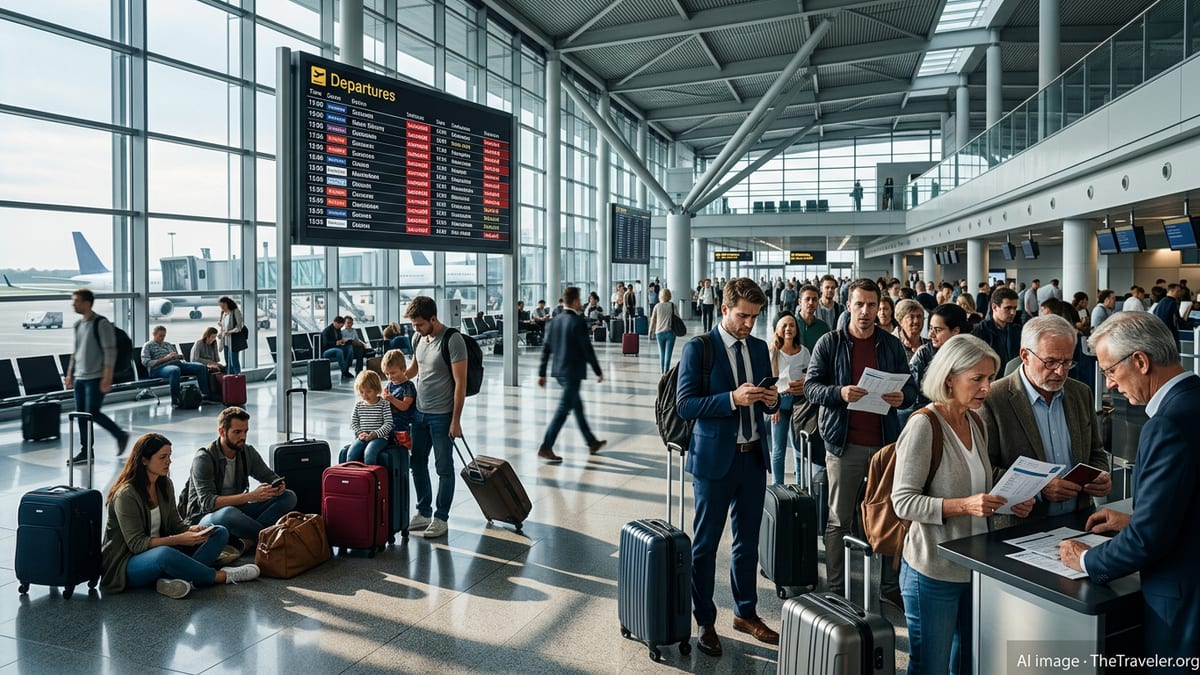
Naples Joins Front Line Of Italy’s Strike Turbulence
Naples Capodichino, a fast-growing Mediterranean gateway and key arrival point for the Amalfi Coast and southern Italy, has moved into the eye of the storm as the national walkout sweeps the country. Local coverage indicates that the 24-hour action covers multiple categories of aviation workers, including air traffic control personnel and airline staff, placing almost every phase of the passenger journey at risk of disruption.
The timing could hardly be worse for the region. The first week of July traditionally heralds peak arrivals for coastal resorts and cruise departures from nearby ports, and publicly available flight-tracking data in recent days has already shown Naples among Europe’s most disrupted airports. The strike has added a further layer of uncertainty for travellers who were already contending with weather-related delays and an overstretched summer schedule.
Airport operator communications and national strike trackers point to a full calendar-day protest window, from just after midnight to late evening, with only legally mandated “guaranteed” services operating in specific time bands. These include a limited number of domestic and essential flights, leaving many leisure routes vulnerable to cancellation or significant delay.
Passengers heading to or from Naples are being urged by airlines and travel advisories to monitor flight status closely, arrive early at the terminal and prepare for long queues at security and check-in as reduced staffing meets near-capacity demand.
Major Hubs Milan, Rome And Venice Under Sustained Pressure
Italy’s main intercontinental and European hubs are also experiencing intense pressure. Reports from national media and specialist strike monitors show that Milan Malpensa, Rome Fiumicino and Venice Marco Polo are among the airports most exposed, as the 24-hour aviation strike intersects with separate stoppages by air traffic control staff and ground-handling companies during the early July travel surge.
At Milan Malpensa, one of the country’s busiest long-haul gateways, a full-day stoppage by air navigation personnel has been scheduled alongside additional time-limited walkouts, shrinking available take-off and landing slots. In Rome, where Fiumicino serves as a primary base for ITA Airways and a major connecting hub for transatlantic services, earlier industrial actions this spring already forced the carrier to cancel more than a third of its flights on strike days, underscoring how vulnerable the system is to any fresh disruption.
Venice, heavily reliant on seasonal international demand and cruise-related traffic, is similarly exposed. Publicly available schedules show a dense network of intra-European services operated by low-cost and legacy carriers, many of which are now being trimmed, consolidated or rerouted as operators attempt to maintain some connectivity using the reduced number of protected flights they can legally operate during strikes.
The cumulative effect at these hubs is a cascade of last-minute schedule changes that extend far beyond Italian borders. Inbound aircraft and crews stranded in Italy cannot be redeployed for subsequent legs elsewhere in Europe, amplifying disruption at secondary airports from Spain and France to Germany and the United Kingdom.
easyJet, ITA Airways And European Carriers Cut Schedules
The walkout compounds a broader season of industrial tension in Europe’s aviation sector. Italian unions representing cabin crew and pilots at easyJet have already called multiple 18-hour and 24-hour national strikes in recent weeks, directly affecting bases such as Naples, Milan and Venice and prompting warnings from airports that delays and cancellations were likely even on days without a full system shutdown.
ITA Airways has likewise been repeatedly forced to trim its schedules after a series of earlier national and sectoral actions. Publicly available statements from the carrier and coverage by European news outlets show that during an air traffic control strike in May, the airline cancelled around 38 percent of its planned services, including numerous domestic and European links from Rome, Milan and southern airports. Labour groups have warned that further actions remain possible if contract and workload disputes remain unresolved, leaving airlines with little room to guarantee reliability at the height of the season.
Across the wider continent, major network and low-cost carriers have already pared back their summer offerings as they grapple with high fuel costs, limited spare capacity and staffing shortages in key operational roles. Industry briefings and aviation trend reports note that airlines in Germany, France, the Netherlands and Spain have all taken the unusual step of cancelling large numbers of flights months in advance, in an attempt to avoid day-of-travel chaos.
The Italian 24-hour strike therefore lands in an environment where schedules are tighter and disruption is harder to absorb. With aircraft and crew rotations already optimised to the limit, any prolonged interruption at one of Italy’s big four airports has immediate knock-on effects for routes across Europe.
Summer Tourism Hit Across Amalfi Coast And Beyond
The fallout for tourism is especially acute in southern Italy and the country’s marquee city-break destinations. Naples serves as a primary gateway not only for the Amalfi Coast but also for Capri, Ischia, Pompeii and inland regions of Campania, and recent promotional campaigns have helped push international arrivals to record highs. The sudden reduction in flight capacity risks stranding visitors mid-itinerary and curtailing short stays that are tightly timed around weekend or long-weekend trips.
Travel advisors and consumer-rights services report a spike in enquiries from travellers seeking rerouting options through Rome or Milan, or attempting to switch to regional airports such as Salerno or Bari where capacity still exists. However, seat availability during the first half of July is already constrained, and some holidaymakers are being forced to delay their departures or cut trips short, particularly when cruise embarkations or prepaid tours cannot easily be rescheduled.
Urban destinations are also affected. City hotels in Rome, Milan and Venice had anticipated strong occupancy driven by pent-up demand and a relatively stable geopolitical backdrop earlier in the year. Instead, last-minute cancellations and delayed arrivals are complicating revenue management and staffing plans, while local businesses that depend on high-spending short-stay visitors, from restaurants to tour operators, face uncertain trading days whenever flight schedules are thrown into doubt.
Industry analysts note that while a single 24-hour strike does not erase a season, the psychological impact on consumers can be significant. Travellers who experience major disruption or fear being stranded may decide to avoid Italy or even Europe entirely in subsequent summers, opting instead for destinations perceived as less prone to industrial action.
Passengers Confront Rights, Rebooking Battles And Future Risks
For affected travellers, the immediate priority is navigating cancellations and delays in real time. European consumer regulations give passengers on flights departing from EU airports, or operated by EU-based carriers, the right to refunds or rebookings when flights are cancelled, alongside care provisions such as meals and accommodation in many cases. However, complex distinctions between strikes by airline staff, airport workers and air traffic controllers, and whether they are considered extraordinary circumstances, mean that entitlement to fixed monetary compensation is not always clear-cut.
Travel law specialists and advisory sites are encouraging passengers to keep all receipts, document communication with carriers and be prepared for extended processing times as airlines and online travel agencies work through a surge of claims. With call centres and airport service desks under strain, many travellers are turning to mobile apps and digital channels in the hope of securing alternative itineraries before remaining seats disappear.
Attention is also turning to the weeks ahead. Strike calendars maintained by specialist monitoring services show further industrial actions planned across Italy’s transport network in late July, including multi-sector stoppages on rail and local public transport that could complicate onward journeys for tourists who manage to reach the country by air. Aviation labour groups, meanwhile, have signalled that additional protests remain on the table if ongoing negotiations over pay, scheduling and working conditions fail to produce agreements.
With European carriers already operating slimmer schedules and infrastructure under strain from a busy holiday season, analysts caution that the current 24-hour aviation strike may be a preview of a more fragile travel environment for the remainder of the summer, in which any new labour dispute or weather shock can swiftly tip airports like Naples, Milan, Venice and Rome back into chaos.