


More news on this day
Travelers across the United Kingdom are facing another day of disruption as London Heathrow Airport records a new cluster of cancellations and delays, with British Airways, Virgin Atlantic, Aer Lingus, KLM and Qantas grounding around 20 services and delaying dozens more, interrupting key links to the United States, Ireland, the Netherlands and Australia.
Get the latest news straight to your inbox!
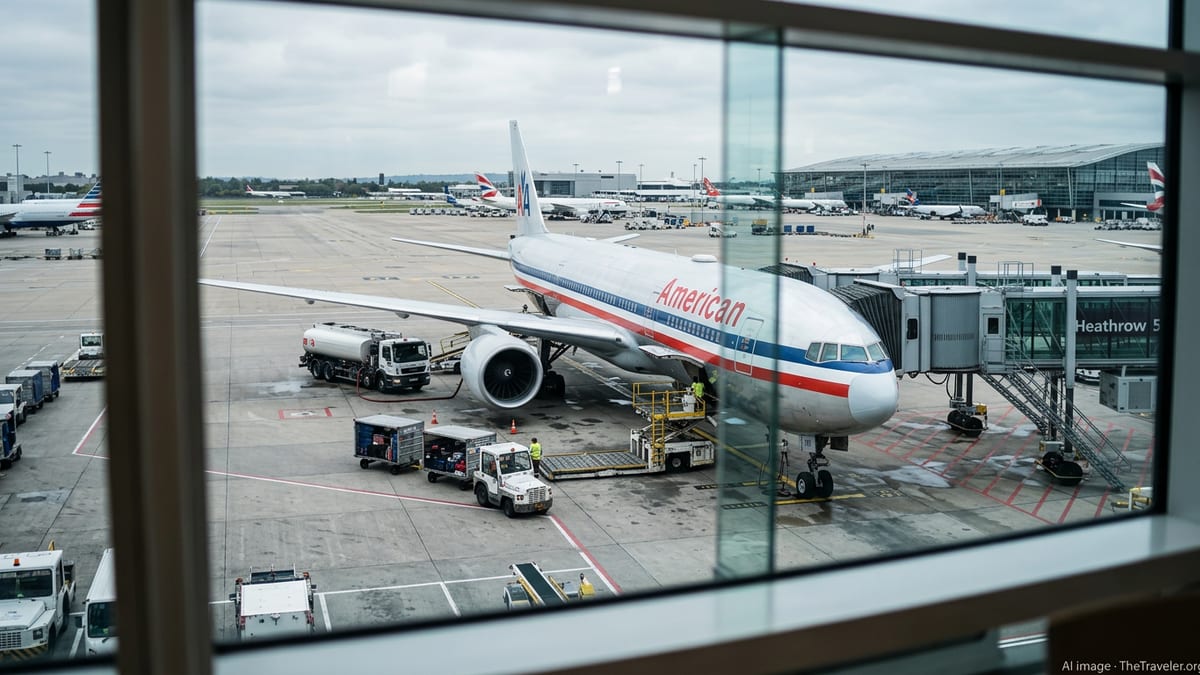
Wave of Disruptions Hits Major Long-Haul and Short-Haul Routes
According to live departure-board data and published operational updates, Heathrow has seen a concentrated run of cancellations affecting both transatlantic and European routes, while a further 40 to 50 flights are operating with extended delays. The impact is being felt most acutely on services linking London with major hubs in the United States, Ireland and continental Europe, as well as on some long-haul connections to Australia via partner networks.
Publicly available schedules show multiple services removed from the day’s timetable or listed as cancelled at short notice, including selected departures marketed by British Airways, Virgin Atlantic, Aer Lingus, KLM and Qantas. Additional flights are departing significantly behind schedule, in some cases by more than two hours, leading to missed onward connections and extended journey times for passengers already en route.
The pattern follows several recent days of heavy disruption at Heathrow, where earlier incidents in recent months produced triple-digit delay totals and clusters of cancellations across many of the same carriers. Aviation tracking data indicates that even a relatively small number of grounded services can create substantial knock-on effects at an airport operating near maximum capacity.
While the latest disruption is smaller in scale than previous shutdown-level events, the concentration of affected flights on key international routes means the practical impact for individual travelers can still be severe, particularly for those relying on tight transatlantic and long-haul connections.
Transatlantic Travelers Bear the Brunt of Schedule Changes
For passengers bound for the United States, the timing of cancellations and rolling delays at Heathrow is especially challenging. The airport serves as a primary European gateway for flights to East Coast and hub cities that feed onward connections nationwide. When even a handful of departures are grounded or pushed back by several hours, replacement capacity can be difficult to secure on the same day.
Recent flight-history data for routes such as London to major US hubs shows a pattern of late-notice schedule changes, with some services re-timed and others removed entirely from departure boards. In many cases, the affected flights are also sold under codeshare agreements, meaning that a single cancellation can disrupt passengers ticketed by multiple partner airlines, including British Airways, American Airlines and other alliance members.
Passengers with itineraries that combine a Heathrow departure and a US domestic connection are particularly exposed. If the transatlantic leg is cancelled or substantially delayed, it can render the onward sector unusable, triggering complex rebookings onto alternative routings or overnight stays while waiting for the next available seats.
Travel-industry guidance circulated in recent weeks has urged travelers to build additional buffers into same-day connections at Heathrow, especially when itineraries involve long-haul departures in the afternoon and evening peak periods, when operational bottlenecks are most likely to cascade through the schedule.
Ireland, the Netherlands and Australia Also Affected
The latest Heathrow disruptions are not limited to transatlantic routes. Flight-tracking services show cancellations and extended delays on services between London and Dublin, as well as on selected KLM-operated flights between Heathrow and Amsterdam that are sold under multiple airline codes. These routes function as vital feeder links into wider networks across Ireland, mainland Europe and beyond.
Even when individual sectors such as London to Dublin or London to Amsterdam are relatively short, a cancellation can sever an entire multi-leg journey. Travelers booked on Aer Lingus or KLM from regional airports via Heathrow may find that a grounded London sector leaves them with no straightforward same-day alternative, especially during busy travel periods.
Connections to Australia are also vulnerable when disruptions hit London and European hubs simultaneously. Qantas relies heavily on partner networks and code-sharing to funnel passengers into its long-haul departures, and any reduction in punctuality or capacity on those feeder flights can lead to missed long-haul connections that may only operate once per day.
In practical terms, a single delay on a European or UK domestic leg can cascade into a 24-hour interruption for travelers bound for Australia, given the limited frequency of some ultra-long-haul services and the distance involved in rerouting via alternative hubs.
What Public Guidance Says About Passenger Rights
Publicly available guidance based on UK and EU-style aviation consumer rules sets out clear minimum standards of care when flights are heavily delayed or cancelled. Travelers departing from UK airports are generally entitled to assistance such as meals, refreshments and, where necessary, hotel accommodation and ground transport when disruption forces an overnight stay, regardless of the underlying cause.
Eligibility for financial compensation depends on factors including the length of delay on arrival, flight distance and whether the airline can demonstrate that the disruption was caused by circumstances beyond its control, such as severe weather or air-traffic-control restrictions. When problems are attributed to internal operational issues, staffing constraints or aircraft rotations, passengers may in some cases qualify for additional cash payments, subject to the specific regulation that applies to their itinerary.
Consumer advisories consistently recommend that passengers first use the managing airline’s official website or mobile app to confirm the latest status of their booking and to review proposed rebooking options. Where self-service tools are available, it is often possible to select a different same-day flight, postpone travel to a later date, or request a refund if the journey is no longer required.
Travelers are also encouraged to retain all receipts for reasonable expenses incurred during disruptions, such as hotels, meals and local transport, in case reimbursement is permitted under the airline’s published policies. Many carriers provide online claim forms for post-travel submissions once the immediate disruption has passed.
How Travelers Can Navigate Ongoing Heathrow Disruption
With Heathrow operating close to capacity and multiple major carriers sharing terminals and airspace, operational experts suggest that further pockets of disruption are possible in the near term, particularly during peak holiday and weekend travel windows. Even when the number of outright cancellations is limited, high volumes of delayed flights can strain staffing and infrastructure, increasing the risk of further schedule adjustments later in the day.
For passengers yet to travel, publicly available industry advice emphasizes checking flight status repeatedly in the 24 hours before departure, opting in to airline notifications, and allowing additional time at the airport to clear check-in, security and border controls. Where itineraries involve tight connections, particularly onto long-haul flights, some travelers may choose to voluntarily move to earlier feeder services when spare seats are available.
Those already on multi-leg journeys are advised to monitor not only their next departure from Heathrow but also the status of any onward flights from the United States, Ireland, the Netherlands or Australia. If an onward sector is showing as delayed or cancelled, it may be preferable to adjust plans while still at a major hub rather than risk becoming stranded at a smaller outstation with limited accommodation or alternative transport options.
While the latest cluster of grounded and delayed flights at Heathrow falls short of a full-scale shutdown, it underscores how quickly minor operational issues can escalate into significant disruption at one of the world’s busiest international airports. For now, travelers using British Airways, Virgin Atlantic, Aer Lingus, KLM, Qantas and their partners are being urged, through published advisories and airline updates, to remain flexible and to plan for possible changes as the day’s operations unfold.