

More news on this day
Air travelers to, from and within Italy on Friday, April 10, 2026 face widespread disruption as a four-hour national air traffic control strike coincides with one of the busiest afternoon travel periods of the spring.
Get the latest news straight to your inbox!
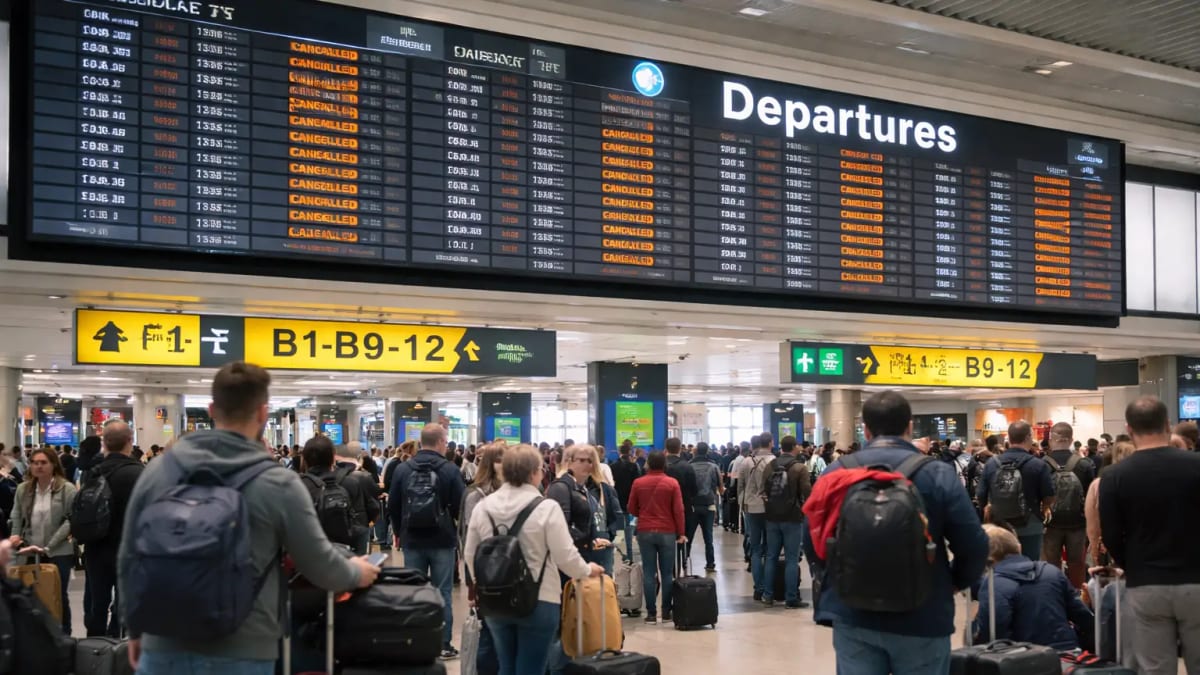
Nationwide walkout to hit core air traffic services
Publicly available strike notices show that personnel of ENAV, Italy’s national air navigation service provider, will stage a coordinated walkout on April 10 from 13:00 to 17:00 local time. The industrial action has been called by several unions representing air traffic controllers and technical staff, including Uiltrasporti, UGL Trasporto Aereo, FAST-Confsal-AV and Astra, following the filing of formal strike notices earlier this month.
ENAV’s own published information confirms that the strike window covers four hours in the middle of the day, affecting key area control centers and control towers across the country. Airports that rely on these units for en route and terminal guidance are expected to operate with reduced capacity during the stoppage, raising the likelihood of flow restrictions and airborne holding patterns for flights that are allowed to operate.
Reports from Italian media outline that the dispute centers on staffing levels, working conditions and broader concerns about the future structure and ownership of ENAV. Recent commentary from sector unions has highlighted frustration over what they describe as mounting operational pressure, with the April 10 action framed as part of a wider cycle of transport strikes scheduled between April 6 and 12.
According to travel-industry tracking platforms, the walkout will be national in scope, affecting both domestic and international traffic. Although the strike itself is limited to four hours, delays and knock-on disruption are expected to spill over into the late afternoon and evening as airlines work through congestion and reposition aircraft and crews.
Major hubs in Rome, Milan and Naples braced for delays
Coverage from Italian and international travel outlets indicates that Italy’s largest airports are preparing for operational challenges during the April 10 strike window. Rome Fiumicino, the country’s primary intercontinental gateway, and the city’s second airport, Ciampino, are among the hubs expected to see significant schedule adjustments as air traffic capacity is temporarily reduced.
Milan Malpensa, a key base for long-haul and European services, is also listed among the primary locations likely to experience delays and cancellations. Localized strike actions involving ENAV staff at Naples Capodichino are planned in parallel with the national walkout, further concentrating disruption in southern Italy and along popular leisure routes.
Regional airports, including holiday gateways such as Olbia Costa Smeralda in Sardinia, have issued passenger advisories warning of possible cancellations and urging travelers to verify their flight status before heading to the terminal. These notices emphasize that while some services may be protected under Italian rules on essential transport, others may be retimed or consolidated to fit within the reduced air traffic control capacity.
Travel risk analysts note that the impact is likely to extend beyond Italy’s borders. Flights overflying Italian airspace may face rerouting or delays if control centers implement flow restrictions, while connections involving Italian hubs could be missed if inbound legs are delayed by the industrial action.
Protected flights and legal safeguards for passengers
Under Italian regulations governing strikes in essential public services, a minimum level of air transport must be guaranteed even during industrial action. Publicly available guidelines set out a series of “protected” time bands and routes, such as early-morning and late-evening services and certain island connections, which must continue to operate wherever possible.
For travelers, this framework means that some flights scheduled outside the 13:00 to 17:00 window may be shielded from cancellation, although they could still suffer secondary delays due to network congestion. Industry observers point out that during previous ENAV-related strikes, hundreds of flights have nonetheless been canceled or heavily delayed when air traffic control staffing was reduced, particularly at busy hubs.
Passenger rights for affected flights departing from European Union airports, or operated by EU carriers, are governed by Regulation EC 261/2004. According to published guidance and recent case summaries, travelers whose services are canceled or significantly delayed may be entitled to rebooking, refunds and care such as meals and accommodation. Compensation, however, can depend on whether the disruption is considered beyond the airline’s control, a classification that is often debated when strikes involve third-party service providers.
Specialist travel publications are advising passengers to retain boarding passes, booking confirmations and any written notifications from airlines, as these documents can be important when submitting claims. Travelers are also encouraged to keep receipts for out-of-pocket expenses linked to the disruption, in case reimbursement is later possible under carrier policies or applicable law.
Airlines adjust schedules and issue flexibility policies
In the days leading up to the walkout, several carriers have begun adjusting their Italian operations for April 10. Publicly posted schedule updates show reductions in frequency on selected domestic and short-haul European routes, with some services consolidated onto larger aircraft and certain midday flights brought forward or pushed later in the day to avoid the core strike window.
At the same time, airline advisories and travel-waiver notices are offering affected customers greater flexibility. For example, at least one major transatlantic carrier has issued a waiver for itineraries that include Italian airports on April 9 and 10, allowing eligible passengers to change their travel dates without standard change fees, provided they rebook within a defined period around the strike.
Low-cost and network airlines operating intra-European services have also begun messaging customers about the risk of disruption. Public updates typically urge travelers to verify their contact details in booking profiles so that any schedule changes or cancellations can be communicated quickly via email or mobile notifications.
Travel-planning services note that proactive rebooking onto early-morning or late-evening flights on April 10, or shifting travel to adjacent dates where feasible, may reduce exposure to delays. However, observers caution that alternative flights could themselves become crowded as demand concentrates around the protected time bands and outside the four-hour strike period.
Practical guidance for travelers heading to and through Italy
For passengers who must travel on or around April 10, transportation risk specialists suggest adopting a cautious, layered approach. Checking flight status directly through airline channels in the 24 hours before departure is considered essential, as schedules are likely to evolve as carriers refine their plans and coordinate with air traffic control authorities.
Travelers with tight connections through Rome Fiumicino, Milan Malpensa or other Italian hubs are being advised by travel-management companies to allow additional buffer time, or where possible to choose itineraries with longer layovers. Those beginning or ending trips in Italy may wish to build flexibility into onward train, ferry or rental car bookings in case of late arrivals.
Accommodation near major airports could become busier than usual on April 10 if disruption escalates and passengers require overnight stays. Industry commentary suggests that travelers who suspect they may be stranded should contact their airline before arranging hotels independently, since some carriers provide negotiated options or vouchers in the event of extensive cancellations.
Ultimately, while the April 10 air traffic control strike is limited to four hours, its timing in the early afternoon and its national scope make notable disruption likely across Italy’s air network. Travelers who monitor developments closely, understand their rights and stay flexible in their arrangements are expected to be best placed to navigate the turbulence.