


More news on this day
Indonesia’s main international gateway, Soekarno-Hatta International Airport near Jakarta, suspended flights on Sunday after volcanic ash from an ongoing eruption of Mount Anak Krakatau drifted over key air corridors, disrupting hundreds of services and affecting passengers across the region.
Get the latest news straight to your inbox!
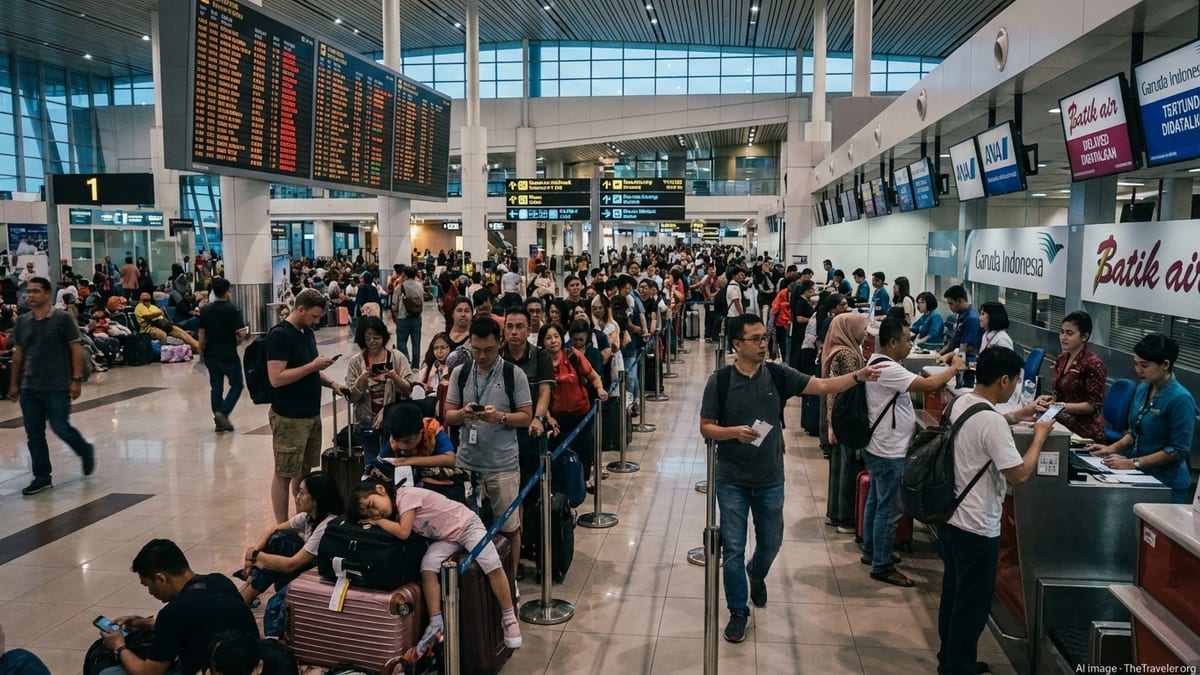
Flight suspensions ripple through Jakarta’s main hub
Publicly available information from Jakarta’s Soekarno-Hatta International Airport shows that flight operations were temporarily halted from early Sunday morning as ash from Mount Anak Krakatau was detected in the vicinity of the airport. Advisories indicated an initial shutdown window from 5.30am to 9.30am local time, which was later extended as ash continued to move across western Java and the capital region.
Reports from regional media and aviation bulletins describe widespread cancellations and delays involving both domestic and international airlines. Channel NewsAsia coverage notes that the airport announced a continued suspension of operations until at least late afternoon on Sunday to allow further assessment of ash concentrations in airspace serving Jakarta’s busiest runways and approach paths.
Data compiled by regional news agencies indicate that more than 200 flight movements at Soekarno-Hatta alone were affected, with tens of thousands of passengers facing cancellations or extended delays. Malaysian and Singaporean outlets also highlight that services by carriers such as Singapore Airlines and several Malaysian operators were among those disrupted as the shutdown’s impact spread beyond Indonesia’s borders.
Travelers scheduled to transit through Jakarta reported being advised to postpone journeys or rebook, while airline notices urged passengers to check flight status before heading to the airport. Airport and airline social media channels were used as primary channels for updates as the situation evolved through the day.
Wider airport closures and regional disruption
The suspension at Soekarno-Hatta formed part of a broader set of restrictions across Indonesia’s aviation network. According to coverage from Indonesia’s Antara news agency, the Transportation Ministry temporarily halted operations at a total of six airports after the Anak Krakatau eruption sent ash clouds drifting over western Indonesia. The list included both international and domestic facilities in Java and Sumatra that lay along the forecast ash path.
Antara’s reporting describes closures at airports including Husein Sastranegara in Bandung and Radin Inten II in Lampung, among others, reflecting concern about ash concentrations at various flight levels. The measures effectively created a belt of suspended operations across parts of southern Sumatra and western Java, forcing airlines to reroute or cancel flights that would normally pass through Indonesian airspace near the Sunda Strait.
International coverage from Al Jazeera and wire services characterizes the disruption as one of the most significant to Indonesia’s air transport system since recent volcanic episodes in Bali and elsewhere in the archipelago. Some long-haul flights between Southeast Asia and Australia, as well as intra-Asia services, were reported to have diverted to alternative hubs or adjusted flight paths to avoid the affected airspace.
Malaysian state news agency Bernama reported that more than 30 Jakarta-bound flights from airports in Malaysia were cancelled on Sunday in response to the temporary closure of Soekarno-Hatta. That pattern underscored how quickly a localized volcanic event near the Sunda Strait translated into cross-border impacts on airline schedules.
Anak Krakatau’s renewed activity and ash plume
Information from Indonesia-focused coverage in The Jakarta Post and international outlets indicates that Mount Anak Krakatau began a new eruptive phase late on Friday, producing sustained lava fountains and ash emissions through the weekend. The volcanic island sits in the Sunda Strait between Java and Sumatra, roughly 150 kilometers from Jakarta’s main airport.
Geology agency updates cited in local media describe ash plumes rising several kilometers above the crater, with intermittent explosions and glowing lava visible in overnight footage circulating on social platforms and news sites. The combination of eruption strength and prevailing winds steered ash clouds toward the densely populated regions of Banten, Jakarta, and parts of West Java, where aviation routes converge.
Ash was detected at multiple flight levels over western Java, according to regional meteorological and aviation advisories referenced in local reports. That pattern raised concerns for aircraft engines and instrumentation, given past incidents worldwide in which volcanic ash has led to engine damage and emergency diversions. As a result, Indonesia’s aviation authorities adopted a precautionary approach, opting for temporary closures while ash dispersion models and satellite imagery were reviewed.
Travel-focused reports emphasize that while the visual spectacle of Anak Krakatau’s eruption has attracted global attention, the operational priority for aviation has remained avoiding ash-contaminated airspace. Airlines generally rely on a combination of official advisories, satellite data, and their own risk assessments before deciding whether to fly routes near active volcanoes.
Impact on travelers and airline operations
The sudden shutdown at Jakarta’s primary hub left many passengers facing overnight stays or unplanned stopovers. Accounts shared via airline channels and regional news reports describe long queues at customer service desks as travelers sought rebooking options, with some international passengers diverted through alternative regional hubs such as Singapore and Kuala Lumpur.
Bernama’s coverage of the disruption details how carriers adjusted schedules in response to the Indonesian airport closures, including wholesale cancellation of Jakarta-bound services from Malaysian airports. Other airlines opted to hold aircraft at origin airports rather than dispatch flights into uncertain conditions around Jakarta until clearer guidance on reopening times was available.
For travelers already en route, diversions added flight time and complexity, while those with connecting itineraries through Jakarta faced missed onward flights. Industry analysts cited by international media noted that such disruptions can take days to fully resolve, even after an airport reopens, as airlines work through aircraft positioning, crew duty limits, and backlogs of stranded passengers.
Travel insurance providers and advisory services highlighted the importance of monitoring policy wording for volcanic ash events, given that some plans treat them as weather-related disruptions while others categorize them under natural disasters. Passengers were encouraged in multiple advisories to retain documentation of cancellations and delays to support any later claims.
What travelers should watch in the coming days
While reports on Sunday pointed to a temporary nature of the airport closures, coverage from regional media and Indonesia’s transport sector suggests that the outlook will depend on Anak Krakatau’s continuing activity and wind patterns over the Sunda Strait. Authorities indicated through public statements and official websites that monitoring of ash levels would remain intensive, with the possibility of further short-notice operational changes.
Aviation and meteorological experts quoted in international analyses note that ash-related disruptions can fluctuate rapidly, with windows of safe operations opening as plumes disperse, followed by renewed closures if emission intensity or wind direction changes. For travelers with imminent plans involving Jakarta, guidance across multiple outlets is consistent: check with airlines frequently, build extra time into itineraries, and be prepared for schedule adjustments.
Indonesia’s recent history of managing air traffic around volcanic eruptions in Bali and Java has produced established protocols for coordination between geological agencies, meteorological services, air navigation providers, and airport operators. Publicly available information indicates that similar coordination is underway for Anak Krakatau, aiming to balance safety with the need to restore vital air links as soon as conditions allow.
As of late Sunday, regional reporting continued to track ash dispersion and its impact on air routes across western Indonesia. Travelers planning to transit through Jakarta over the coming days are being advised by airlines, airports, and travel advisories to rely on official channels and real-time flight status tools rather than assuming normal operations have fully resumed.
Channel NewsAsia: Jakarta airport suspends flights due to Mount Anak Krakatau ash
Antara News: Indonesia suspends six airports amid Anak Krakatau ash spreads
Al Jazeera: Indonesia’s main airport suspends flights due to Anak Krakatau eruption
Bernama: Anak Krakatau eruption temporarily closes Soekarno-Hatta International Airport