


More news on this day
Flights at San Diego International Airport have resumed following a temporary halt to operations after a drone and a weather balloon were reported in the airspace near the runway approaches, disrupting travel at the height of Labor Day weekend departures.
Get the latest news straight to your inbox!
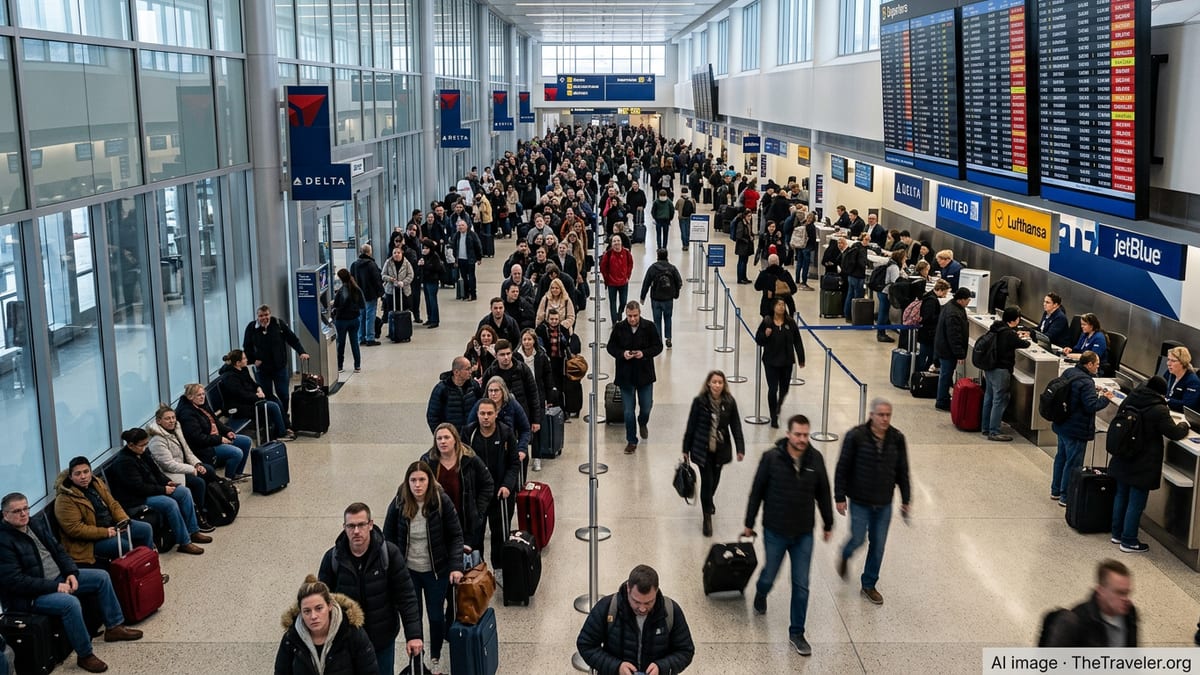
Temporary ground stop ripples through holiday travel
According to publicly available flight-tracking data and local broadcast coverage, arrivals and departures at San Diego International Airport were paused on the afternoon of Friday, September 4, when a drone and a weather balloon were spotted near the airfield. The interruption came just as outbound traffic for the long Labor Day weekend was building, amplifying the impact on already busy schedules.
Airport status boards and federal airspace monitoring tools indicated that arrivals into San Diego were held for roughly two hours while the situation was assessed. Published reports noted average delays of about 120 minutes for both inbound and outbound flights, with hundreds of movements affected as aircraft waited on the ground or in holding patterns over Southern California.
Publicly accessible FAA traffic summaries and the airport’s own online flight information later showed a gradual restart of operations once the airspace was cleared. However, residual disruptions persisted into the evening as airlines worked to reposition aircraft, reassign crews, and accommodate passengers who missed connections.
The pause at San Diego occurred against a backdrop of heavy national air travel and seasonal weather challenges elsewhere in the country, compounding the difficulty of finding open seats for some travelers seeking same-day alternatives.
Drone and balloon sightings raise airspace safety concerns
Local news coverage and regional aviation blogs reported that the disruption at San Diego was linked to two separate objects: a drone operating close enough to the airport to trigger concerns for arriving and departing aircraft, and a weather balloon drifting in the vicinity. The combination prompted a conservative response by air traffic managers, given the constrained single-runway layout at San Diego International Airport.
Federal guidance on drone operations near airports underscores why such sightings can quickly affect commercial traffic. FAA material on flying near airports states that drone operators must avoid manned aircraft and are responsible for any safety hazard their devices create in an airport environment, with specific authorization required for flights in controlled airspace around major facilities. Public FAA resources also describe how temporary flight restrictions can be used to keep all aircraft, including drones, clear of sensitive areas during unusual events.
In San Diego County, local ordinances add another layer, allowing temporary limits on unmanned aircraft operations when they interfere with emergency or public-safety activities. County emergency planning documents and municipal codes highlight that drones can be barred from operating in or near incident zones where aviation assets or critical infrastructure may be at risk.
The appearance of a weather balloon near one of the country’s busiest single-runway commercial airports further complicated the response. National Weather Service and FAA materials describe such balloons as valuable for atmospheric data collection but note that coordination with airspace managers is essential when they rise through corridors used by airliners on approach or departure.
How the disruption unfolded for passengers
Publicly available flight-tracking platforms showed a rapid buildup of delays at San Diego once the ground stop took effect. By early evening, data from aviation analytics services indicated that several hundred flights involving the airport had been delayed, with some departures pushed back by more than three hours and a smaller number of cancellations beginning to appear.
Travelers checking the airport’s website and airline apps saw departure times repeatedly adjusted as carriers waited for an all-clear from air traffic managers and then competed for limited takeoff and landing slots once operations restarted. Social media posts from passengers described long queues at customer service counters, crowded gate areas, and difficulty rebooking on later flights to popular West Coast and transcontinental destinations.
Once the FAA cleared the airspace and lifted the pause, arrival and departure rates gradually increased, but the tightly scheduled nature of single-runway operations meant that recovery took time. Evening flights were still showing knock-on delays, and some late-night services departed significantly behind schedule as crews bumped up against duty-time limits.
Airport irregular-operations planning documents, made available by the San Diego County Regional Airport Authority, outline how the facility prepares for surges in stranded passengers during events like ground stops. These plans describe coordinated responses involving airlines, concessions, and ground transportation providers, all of which can be strained during peak holiday periods.
Broader scrutiny of drones near busy airports
The San Diego incident adds to a growing list of disruptions linked to drones near major airports. FAA general statements on drone oversight, updated in mid-2024, point to hundreds of thousands of registered unmanned aircraft in the United States and reiterate that unsafe operations that endanger other aircraft or people on the ground can lead to significant civil penalties.
Guidance for drone users stresses that controlled airspace around airports is typically off-limits without prior authorization obtained through platforms such as the FAA’s Low Altitude Authorization and Notification Capability or the FAADroneZone system. Recreational and commercial operators are advised to consult dedicated mapping tools before any flight and to keep well clear of flight paths used by airliners.
County-level regulations in the San Diego region echo these cautions, referencing federal temporary flight restriction rules and establishing local penalties when drones interfere with emergency or aviation activities. Regional emergency planning documents cite the potential for temporary airspace closures around major incidents, with restrictions applying to both traditional aircraft and unmanned systems.
Industry groups and aviation analysts have highlighted incidents like the San Diego halt as reminders that even a relatively brief drone encounter near a runway can cascade into hours of disruption for thousands of travelers, particularly where airports operate close to capacity with limited runway options.
What travelers should know after operations resume
By late afternoon on September 4, publicly accessible FAA status tools and the airport’s online information indicated that flight operations at San Diego International had resumed, with arrival and departure flows returning toward normal levels. Nonetheless, airlines continued to report delays as they worked through the backlog of aircraft and crews displaced by the ground stop.
Travel advisers recommend that passengers affected by such events rely on airline apps and text alerts, which tend to update more quickly than airport displays. When disruptions stem from airspace safety concerns rather than weather or mechanical issues, rebooking options may be constrained across multiple carriers as the entire schedule compresses into a smaller operational window.
Frequent-flyer guidance also suggests monitoring federal airspace status pages and flight-tracking services for a broader view of regional congestion. While most travelers will not see the underlying notices to air missions or temporary flight restrictions, these tools can provide context when an airport like San Diego experiences sudden, large-scale delays tied to airspace anomalies.
For San Diego’s holiday travelers, the drone and balloon episode appears to have been relatively short-lived, but the extended recovery underscores how quickly the modern air travel system can be affected by even small intrusions into tightly managed urban airspace.
NBC 7 San Diego coverage of the San Diego International Airport delays
FAA guidance on flying drones near airports
FAA overview of temporary flight restrictions and airspace safety
San Diego County regulations on unmanned aircraft temporary area restrictions
San Diego County Regional Airport Authority irregular operations resources