

More news on this day
Tourists in the Pacific resort city of Puerto Vallarta have been ordered to shelter in place as a sweeping security clampdown grips western Mexico following the reported killing of Nemesio “El Mencho” Oseguera Cervantes, the elusive leader of the Jalisco New Generation Cartel.
Security Operation Ends Hunt for Mexico’s Most Wanted Kingpin
Mexican military officials announced on February 22 that troops had killed Nemesio Rubén Oseguera Cervantes, better known as El Mencho, during a major operation in the mountainous municipality of Tapalpa, Jalisco. The takedown of the 58-year-old cartel boss, long considered Mexico’s most wanted drug trafficker and a key figure in the fentanyl trade to the United States, marked a watershed moment in the country’s long drug war.
Authorities said the operation unfolded over several hours as federal forces closed in on a rural compound believed to be used as a safe house. Local residents reported hearing gunfire and explosions before troops secured the area. Officials have released few tactical details, citing ongoing investigations and follow up raids targeting cartel lieutenants who may be vying to fill the power vacuum.
El Mencho’s death, which Mexican authorities say has been confirmed by forensic analysis, ends years of pursuit by Mexican and U.S. agencies. He had been the subject of a multimillion-dollar U.S. reward and was accused of overseeing a cartel that expanded aggressively across Mexico, clashing with rival groups and security forces in battles that left scores dead and displaced communities in multiple states.
Yet even as government officials hailed the operation as a major success, they acknowledged that it triggered an immediate and violent backlash from cartel gunmen determined to demonstrate that the organization retains the capacity to paralyze entire regions.
Roadblocks, Fires and Shootouts Spread Across Jalisco
Within hours of the Tapalpa operation, convoys of suspected cartel members fanned out across Jalisco, setting vehicles ablaze and blocking key highways that connect the interior of the state with coastal tourist hubs such as Puerto Vallarta. Videos verified by local media showed buses, freight trucks and private cars burning on rural roads and at key junctions, filling the air with black smoke.
Jalisco Governor Pablo Lemus Navarro said that individuals linked to criminal groups had torched vehicles and erected roadblocks in multiple municipalities in an effort to hinder the movement of federal and state security forces. Authorities reported clashes in and around Tapalpa, as well as incidents near Guadalajara, the state capital, and along routes used by travelers heading to the Pacific coast.
In several cities, including Puerto Vallarta, local officials temporarily suspended portions of public transportation and urged residents to remain at home. Social media posts from residents showed deserted avenues normally packed with weekend traffic, while the sound of distant sirens and helicopter overflights underscored the tension on the streets.
Security analysts noted that the cartel’s rapid, coordinated response mirrored past tactics used when top leaders have been arrested or killed. By attacking infrastructure and creating a perception of chaos, groups like the Jalisco New Generation Cartel attempt to pressure authorities and signal strength to rivals and potential defectors.
Tourism Hotspot Puerto Vallarta Plunged Into Lockdown
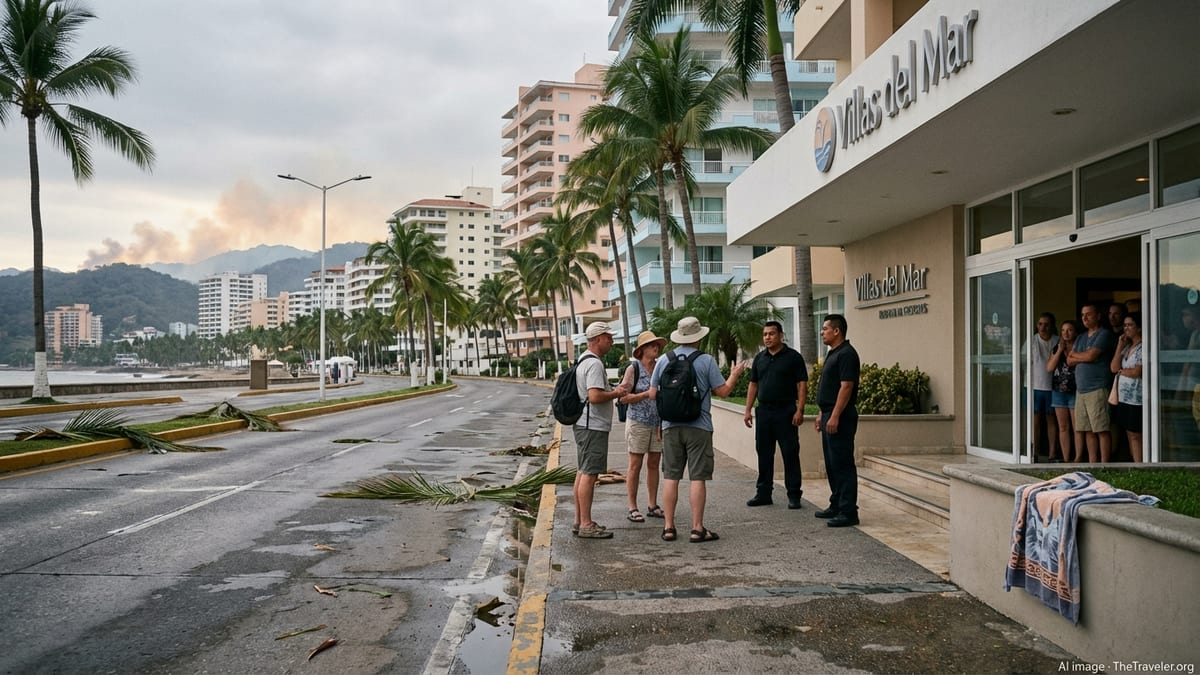
Puerto Vallarta, a city that markets itself as a laid-back beach escape on Mexico’s Pacific coast, suddenly found itself at the center of an unfolding security crisis. Hotels along the popular Zona Romántica and Marina Vallarta districts moved quickly to tighten internal security, with many instructing guests to stay inside and avoid nonessential outings until further notice.
Hotel managers reported that local authorities and tourism boards had contacted major properties with guidance to restrict guest movement, monitor official alerts and keep lobbies and common areas under closer surveillance. Some beachfront resorts closed direct access to the sand and canceled organized excursions, including boat trips to nearby coves and jungle tours in the Sierra Madre foothills.
Visitors described surreal scenes of an enforced quiet in a city known for lively nightlife. Restaurant owners in the city’s historic center said they saw abrupt declines in evening clientele as both locals and tourists heeded warnings to avoid crowds. Popular malecon promenades, typically lined with vendors and buskers at sunset, were noticeably emptier than usual as people retreated indoors.
Despite the tension, local officials stressed that much of the violence and roadblocks had occurred on highways and access routes rather than directly in the hotel zones. Nevertheless, the uncertainty and the speed with which conditions have changed left many visitors unsure how safe it was to venture beyond their accommodations for even basic errands.
U.S. and Canadian Governments Urge Citizens to Shelter in Place
The U.S. Embassy and consulates in Mexico issued an urgent security alert on February 22 instructing U.S. citizens in Jalisco, including those in Puerto Vallarta, Chapala and Guadalajara, to shelter in place. The alert cited ongoing security operations, road blockages and criminal activity, and advised travelers to avoid areas around law enforcement activity, steer clear of crowds and limit unnecessary movement.
The shelter in place guidance extended beyond Jalisco to several other Mexican states where authorities feared retaliatory cartel action, including Tamaulipas, Michoacán, Guerrero and Nuevo León. Officials urged Americans to monitor local media and embassy channels, keep friends and family informed of their whereabouts and call emergency services if in immediate danger.
Canada’s foreign ministry issued a parallel advisory, warning its citizens about a “serious and rapidly evolving security situation” in Jalisco and specifically naming Puerto Vallarta and Guadalajara. Canadian officials reported roadblocks with burning vehicles in parts of the state and told travelers to keep a low profile, follow local authority instructions and comply with any orders to shelter in place.
The rapid coordination between U.S. and Canadian authorities underscored the scale of concern in North American capitals, where Puerto Vallarta and the wider Jalisco coast rank among the most visited winter and spring destinations for foreign tourists seeking warm-weather escapes.
Airlines Suspend Flights as Airports Experience Turmoil
The violence and uncertainty rippled quickly into Mexico’s air travel network. Airlines suspended or canceled numerous flights to and from Licenciado Gustavo Díaz Ordaz International Airport, which serves Puerto Vallarta and nearby Riviera Nayarit resorts, citing an “ongoing security situation.” United Airlines and Air Canada were among carriers that halted operations, with others closely monitoring developments.
Travelers attempting to leave Puerto Vallarta on Sunday and Monday found themselves stranded amid a wave of cancellations and delays. Some reported long lines at airline counters as passengers sought rebooking options, while others were turned back before reaching the airport due to roadblocks or as taxi and rideshare services were curtailed under local shelter orders.
Further inland, scenes of panic were reported at Guadalajara International Airport after shots were fired in the vicinity and reports circulated of possible gunmen near the terminals. Though details remained fluid, the incidents prompted additional security sweeps and added to the sense of a region-wide emergency affecting both domestic and international routes.
Aviation analysts said the interruptions were likely to continue at least in the short term as airlines and aviation authorities evaluate risks to flights and ground operations. Even if airports remain physically intact and open, restricted access to terminal roads, staff shortages and passenger safety concerns could constrain capacity for days.
Hotels and Local Businesses Scramble to Protect Guests
Across Puerto Vallarta’s tourism sector, hotel operators, restaurateurs and tour companies moved into crisis management mode. Many large resorts activated contingency plans designed for hurricanes or earthquakes, adapting them to a security emergency. These included accounting for all guests, reinforcing access control at entrances and providing regular updates through in-room messages and internal channels.
Smaller guesthouses and vacation rental managers faced tougher challenges, often relying on social media or direct messaging to advise visitors of the latest curfews, road closures and government recommendations. Some arranged group food deliveries to limit guest movement, while others helped reschedule or cancel day trips to surrounding towns and beach villages affected by roadblocks.
Local business associations reported significant drops in revenue over the weekend, particularly for nightlife venues, excursion operators and small vendors who depend on pedestrian traffic along the waterfront and in popular plazas. Owners expressed frustration that their livelihoods were once again threatened, just as many had recovered from pandemic-era travel disruptions.
Despite the economic anxiety, there was also a clear emphasis on safety. Many business leaders publicly urged tourists to follow official instructions and assured them that proprietors were coordinating closely with authorities to prioritize guest protection over short term profits.
What Travelers in Puerto Vallarta Should Do Now
For visitors currently in Puerto Vallarta, officials and security experts are delivering a consistent message: remain indoors, avoid nonessential travel and stay closely informed. Tourists are being advised to shelter in place inside their hotels or accommodations, keep doors locked, and stay away from windows or balconies facing streets where disturbances could occur.
Travelers are encouraged to maintain direct communication with hotel staff or property managers, who are generally receiving information faster from local authorities and tourism boards than individual guests. Guests should confirm whether their hotel has established set times or channels for updates, such as printed notices, in-house television feeds or text alerts, and use those channels rather than relying solely on social media rumors.
Those with imminent flight departures are urged not to attempt to reach the airport without first confirming that their flight is operating and that road routes are open and considered safe. Where possible, travelers should rely on hotel-arranged transportation rather than hailing independent taxis on the street and should avoid driving rental cars through areas where vehicle fires or roadblocks have been reported.
Consular authorities also recommend that travelers keep phones fully charged, have important documents and essential medications within easy reach and maintain a small go bag in case evacuation becomes necessary. However, they stress that at present the priority remains staying put rather than attempting to move through potentially unstable zones.
Uncertain Outlook for Jalisco’s Tourism Industry
The killing of El Mencho and the ensuing chaos come as Mexico’s tourism sector, particularly in coastal states like Jalisco, is entering one of its busiest periods of the year. Puerto Vallarta’s hotels typically fill with international visitors in February and March, and the region has tried to balance its image as a secure, family-friendly destination with periodic security scares.
Local tourism officials worry that images of burning vehicles, deserted beaches and nervous travelers could damage Puerto Vallarta’s reputation just as bookings had begun to rebound in the wake of previous travel warnings and pandemic-related downturns. Tour operators reported that some foreign visitors were already inquiring about cancellations or changes to itineraries, even for trips scheduled weeks away.
Security specialists caution that the immediate aftermath of a cartel leader’s death is often marked by instability as criminal groups recalibrate, and that authorities will likely maintain a heightened security presence in Jalisco for some time. That could mean more checkpoints, more visible armed patrols and intermittent travel disruptions, even if large-scale violence subsides.
For now, both officials and industry leaders are emphasizing resilience, arguing that Jalisco’s tourism infrastructure and communities have weathered previous shocks and can recover again. Much will depend on how quickly authorities can reassert control, prevent further retaliatory attacks and reassure visitors that Puerto Vallarta’s beaches, boardwalks and colonial streets are once again safe to explore.