


More news on this day
Domestic air travel in Japan is facing fresh disruption as publicly available data and media reports indicate at least 122 flight delays and 13 cancellations affecting services operated by All Nippon Airways, Japan Airlines, Peach Aviation, Skymark Airlines and Air Do across Sapporo, Kagoshima, Kushiro and other regional cities.
Get the latest news straight to your inbox!
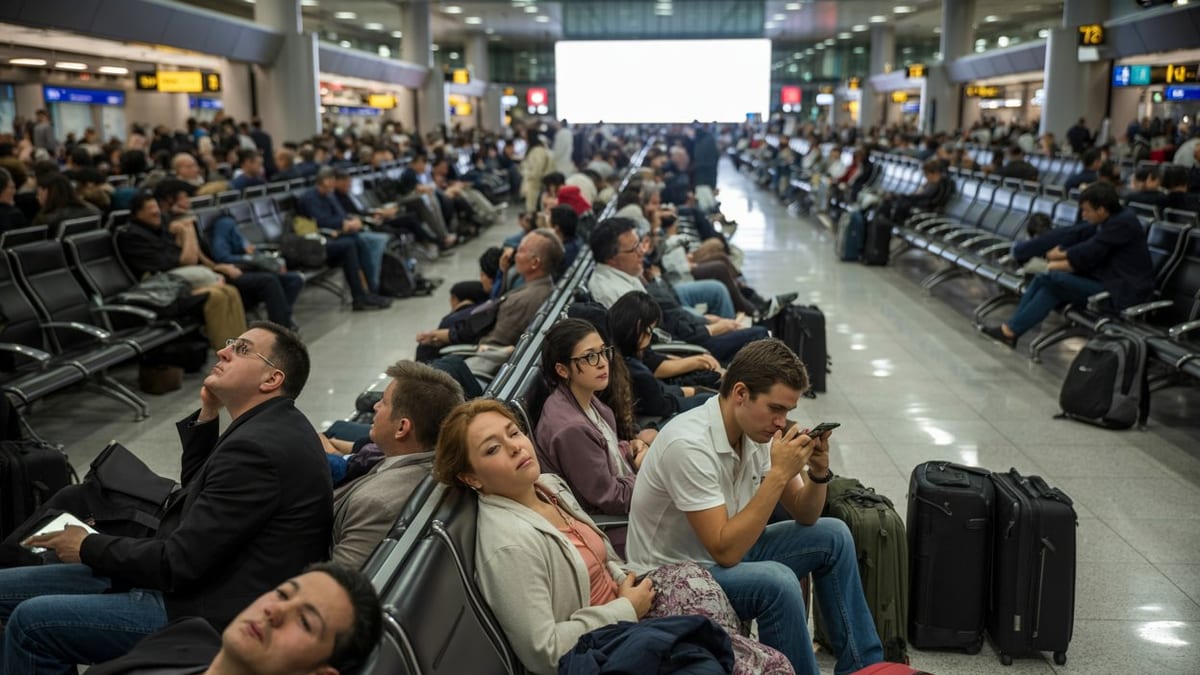
Ripple Effects Across Japan’s Domestic Network
The latest wave of operational disruption is being felt most sharply on key domestic routes linking Hokkaido, Kyushu and Honshu. Services into and out of Sapporo’s New Chitose Airport, Kagoshima Airport in southern Kyushu, and Kushiro in eastern Hokkaido are among those showing clusters of delayed and cancelled flights on airline status pages and independent trackers.
According to publicly available flight information, the delays span both trunk routes and thinner regional connections, hitting morning and evening peaks particularly hard. Passengers on links between Sapporo and other major cities such as Tokyo, Osaka and Fukuoka, as well as routes tying Kagoshima and Kushiro into the wider domestic grid, are reporting extended waits and missed connections.
The impact is not confined to a single carrier or segment. Full service operators ANA and Japan Airlines sit at the center of Japan’s domestic network, while Peach Aviation, Skymark Airlines and Air Do play crucial roles in connecting regional hubs and offering lower cost options. When several of these players simultaneously experience irregular operations, schedule resilience tends to erode quickly, producing knock on effects at airports hundreds of kilometers away.
Data from airport and airline dashboards indicates that the 122 delays include a mix of late departures and knock on late arrivals, while the 13 cancellations are concentrated on selected domestic sectors where spare capacity is limited. For travelers, this has translated into crowded terminals, longer rebooking queues and growing pressure on alternative services such as shinkansen rail and overnight buses.
Weather, Congestion and System Changes Compound Strain
Japanese carriers routinely cite a mixture of weather, airspace congestion and technical or operational issues as drivers of irregular operations, and the current disruption appears to follow a similar pattern. In northern regions, fast changing conditions around Hokkaido’s airports can quickly affect visibility and runway availability, particularly during transitional seasons when rain and low cloud interfere with tightly timed schedules.
In addition to weather, congestion at major hubs can ripple outward. Busy morning and evening departure waves at Tokyo’s Haneda and Narita airports and Osaka’s Kansai and Itami airports are critical for feeding flights onward to Sapporo, Kagoshima, Kushiro and other regional cities. When ground handling, air traffic control spacing, or taxiway bottlenecks slow these hubs, downstream airports often see accumulating delays over the course of the day.
Public information from carriers also highlights ongoing system upgrades and timetable transitions as a background factor. ANA and Japan Airlines have both been adjusting domestic schedules for the summer 2026 season, while low cost rivals have been fine tuning frequencies on routes such as Osaka to Sapporo and Osaka to Kushiro. Industry observers note that complex transitions, including system integrations and timetable changes, can temporarily reduce operational flexibility, making it harder to recover when weather or congestion trigger disruptions.
Aircraft and crew rotations can further magnify problems. When an aircraft operating an early sector into Sapporo or Kagoshima arrives late, its subsequent legs to other cities may also depart behind schedule. With several airlines sharing codeshare arrangements and using common regional partners, a delay in one part of the network can quickly affect multiple brands and flight numbers.
ANA, JAL and Low Cost Rivals Under Pressure
ANA and Japan Airlines traditionally dominate Japan’s domestic market, particularly on trunk routes and higher yield business corridors. Their operations into Sapporo, Kagoshima and Kushiro serve as crucial lifelines for business travelers, local residents and visitors connecting from international services. When irregularities strike, these carriers face intense scrutiny from passengers and media, especially when disruptions interact with public holidays or peak leisure travel periods.
At the same time, budget carriers Peach Aviation and Skymark Airlines, along with regional specialist Air Do, have become indispensable in linking secondary airports and providing competitive fares. Peach offers dense schedules between Osaka and Sapporo and seasonal flights to Hokkaido’s regional gateways, while Skymark’s timetables connect Sapporo and Kagoshima indirectly via intermediate hubs. Air Do, which focuses heavily on routes to and from Hokkaido, plays a key role in linking Sapporo and other cities with Tokyo and the wider domestic grid.
When these operators face simultaneous delays and cancellations, options for rerouting passengers shrink. Full service carriers sometimes accommodate travelers from disrupted low cost flights where interline agreements exist, but this is not guaranteed and often depends on seat availability. For many affected travelers, particularly those on the tightest budgets, the practical outcome is extended airport waits or last minute changes to ground transport plans.
The current pattern of disruption is intensifying existing debates within Japan’s aviation sector about staffing levels, fleet utilization and buffer capacity. Industry data over recent months has pointed to high aircraft use during peak periods, with limited spare jets and crews available to plug gaps when irregularities arise. Analysts argue that operators may need to build in more slack into schedules or strategically allocate standby resources on routes that have shown repeated vulnerability to weather and congestion issues.
Passenger Options and Compensation Landscape
Japan’s legal and regulatory framework for air passenger compensation differs from that in regions such as the European Union, where standardized payout schemes apply in many delay and cancellation scenarios. In Japan, publicly available policy documents from carriers such as ANA and JAL indicate that support typically focuses on rebooking onto later flights, refunds where travel is no longer needed, and coverage of reasonable accommodation or transport costs when disruptions are directly attributable to the airline.
However, compensation practices vary between full service airlines and low cost carriers. Budget operators usually emphasize lower base fares and may offer more limited vouchers or allowances in disruption cases, especially when delays are linked to weather or air traffic control restrictions rather than internal airline causes. Travelers are therefore being urged by consumer advocates and travel media to review the specific conditions of carriage for each airline and ticket type, particularly for promotional or non refundable fares.
For passengers stranded in Sapporo, Kagoshima, Kushiro and other affected cities, practical steps include monitoring airline apps and airport information screens closely, registering for flight status alerts, and considering alternative routing via larger hubs when possible. Publicly available guidance suggests that early engagement with airline customer service channels, either online or at the airport, can improve the chances of securing seats on the next available services.
Travel insurers are also in focus, as policies differ widely on what kinds of delays and cancellations trigger payouts. Some plans provide fixed benefits when journeys are set back beyond a defined threshold, while others reimburse additional expenses such as hotel nights and meals. Industry commentators note that, given the recurring nature of weather and congestion driven disruptions in Japan’s domestic market, more travelers are likely to scrutinize insurance coverage before booking future trips.
Outlook for the Coming Days
Operational data and schedule filings suggest that airlines are working to restore regularity to domestic services over the coming days, but the extent and pace of recovery will depend on weather patterns and the smooth functioning of air traffic control and airport infrastructure. With summer schedules ramping up, carriers face the challenge of maintaining punctuality while also handling higher passenger volumes on popular leisure routes.
Observers expect airlines to continue making tactical adjustments, such as swapping aircraft between routes, consolidating lightly booked flights, and deploying spare capacity on sectors that have experienced repeated disruption. Where cancellations remain necessary, airlines are likely to prioritize maintaining connectivity on routes with limited alternatives, including specific links to Sapporo, Kagoshima and Kushiro that serve as essential access points for surrounding regions.
Airports, for their part, are likely to focus on passenger flow management and clear communication in terminals, including signage and announcements about rebooking options and estimated departure times. Ground handling companies and security screening teams may also face short term strain as disrupted passengers overlap with those arriving for on time flights during peak hours.
Travel industry analysts caution that, while the current batch of 122 delays and 13 cancellations represents a significant operational challenge, such events are likely to recur periodically given Japan’s dense domestic network and exposure to variable weather. The episode is reinforcing calls for long term investment in digital tools, staffing and infrastructure to improve resilience and reduce the risk that localized problems at airports such as Sapporo, Kagoshima or Kushiro cascade into nationwide travel chaos.