


More news on this day
Hundreds of travelers across the United States were left facing missed connections, overnight stays and extended airport waits on May 18 as 76 flights were cancelled and at least 474 delayed, with disruptions rippling through major hubs in Atlanta, New York, Chicago and a string of secondary cities.
Get the latest news straight to your inbox!
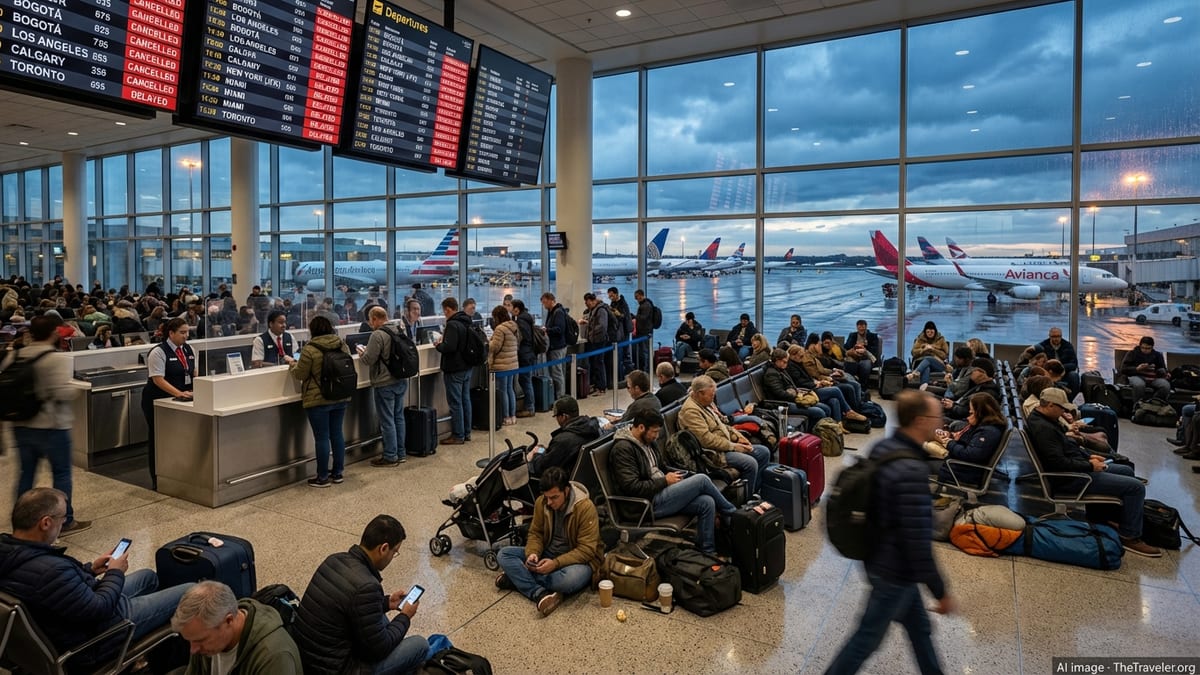
Nationwide Disruptions Strain Key Airport Hubs
Publicly available flight-status dashboards for Monday show a fresh round of operational turbulence for U.S. air travel, with dozens of cancellations and several hundred delays spread across the national network. While the absolute number of cancelled flights remains relatively modest compared with major storm events earlier in the year, the concentration of delays at large connecting hubs means the impact on passengers is far more extensive than the raw figures suggest.
Industry trackers that compile real-time data from airlines and airports indicate that the 76 cancelled flights and 474 delayed departures and arrivals are clustered around dense hub operations. Atlanta, New York area airports and Chicago feature prominently, with rolling timetable changes affecting morning and afternoon waves of departures that feed domestic and international connections.
Recent coverage of similar disruption patterns earlier in May has highlighted how a relatively small block of cancellations can generate a much broader wave of missed onward flights once delays begin to cascade through the network. Reports on previous disruption days this month pointed to more than 1,600 to over 4,000 delays nationwide, underscoring that delays, rather than outright cancellations, are now the dominant source of travel headaches for many passengers.
On Monday, the latest figures suggest the same dynamic at work. Many flights remain technically scheduled to operate, but with departure times pushed back repeatedly, travelers face uncertainty over arrival times, onward connections and even the availability of hotel rooms at key intermediate hubs.
Weather, Congestion and Operational Pressures Combine
Analysis of recent disruption patterns across May points to a familiar mix of contributing factors. Earlier this week, weather-related bottlenecks over the Northeast led to widespread disruption at Boston and New York, while separate coverage on Monday highlighted storms near Orlando that contributed to more than 150 delays and a small number of cancellations at Orlando International Airport.
In the Pacific Northwest, aviation updates for May 18 show Seattle-Tacoma International Airport dealing with a wave of 140 delayed flights and a handful of cancellations affecting both U.S. and international carriers. Although these figures are specific to Seattle, they illustrate how localized weather or operational issues can quickly feed into broader network strains when they hit a major hub served by multiple large airlines.
Operational data from previous weeks also suggest that non-weather factors remain significant. National aviation system constraints, crew and aircraft rotation issues and congestion in busy terminal airspace all contribute to delays that then propagate across the day. When late-arriving aircraft and crews from one disrupted airport feed into another, cities far from the original problem zone can find their departure boards filling with yellow and red delay notices.
The result for travelers is often the same regardless of the root cause. Even when flights are not formally cancelled, substantial departure delays can push arrival times beyond legal crew duty windows or curfews at destination airports, forcing last-minute schedule adjustments that are difficult for passengers to predict or plan around.
Atlanta, New York and Chicago Feel the Ripple Effects
With the latest disruption centered on the national hub system, passengers transiting Atlanta, New York and Chicago have been among the most exposed to Monday’s problems. These airports sit at the core of major airline networks, handling a high proportion of connecting traffic where even short delays can trigger missed onward flights.
Recent reporting on New York’s John F. Kennedy International Airport, for example, showed that more than 70 flights were delayed and several cancelled over a single operational period just a day before the current disruption. Similar patterns have been observed at Boston Logan, where earlier coverage described more than 70 flights affected by delays and cancellations that then influenced services to and from other major cities.
Chicago’s role as a central hub for transcontinental and regional services further amplifies the effect of any schedule instability. Data published for mid May showed a sizeable number of delays at the city’s airports even on days without headline-grabbing weather events, reflecting how volume and complex routing alone can generate bottlenecks when aircraft or crews are not in their planned positions.
On Monday, travelers moving through these hubs have encountered familiar scenes: crowded gate areas, departure boards in constant flux and long lines at customer service desks as passengers seek new routings or overnight accommodation. For those connecting from smaller regional airports, a single missed hub connection can translate into a delay of many hours or even an additional travel day.
Passengers Confront Missed Connections and Limited Options
For individuals caught up in Monday’s wave of disruption, the immediate consequences range from missed family events to disrupted business trips and extended periods in airport terminals. Even though only 76 flights have been recorded as cancelled so far, the 474 delayed operations mean that many more passengers are affected than a superficial reading of cancellation statistics might suggest.
Travel industry analysts often note that delays create a kind of hidden cancellation effect. A flight that eventually departs but arrives many hours late may still cause travelers to miss cruises, rail connections, international departures or important meetings at the far end of their journey. With U.S. hubs already running near capacity at certain times of day, it can be difficult for airlines to find spare aircraft and seats to absorb displaced passengers on short notice.
Recent consumer guidance published by passenger rights organizations in mid May has emphasized the importance of monitoring flight status frequently, using both airline apps and independent trackers, and of having a backup plan for accommodation if an overnight stay becomes unavoidable. These advisories also highlight the value of understanding airline-specific policies on rebooking, meal vouchers and hotel support in the event of significant disruption.
As Monday’s delays and cancellations continue to ripple outward from Atlanta, New York, Chicago and other affected airports, travelers across the country are once again being reminded of the fragility of tightly scheduled hub operations during the busy late spring travel period.