

More news on this day
Japan has issued an urgent Level 4 evacuation advisory for Lebanon, urging all of its citizens to leave the country immediately as cross-border violence between Israel and Hezbollah intensifies and regional instability deepens.
Get the latest news straight to your inbox!
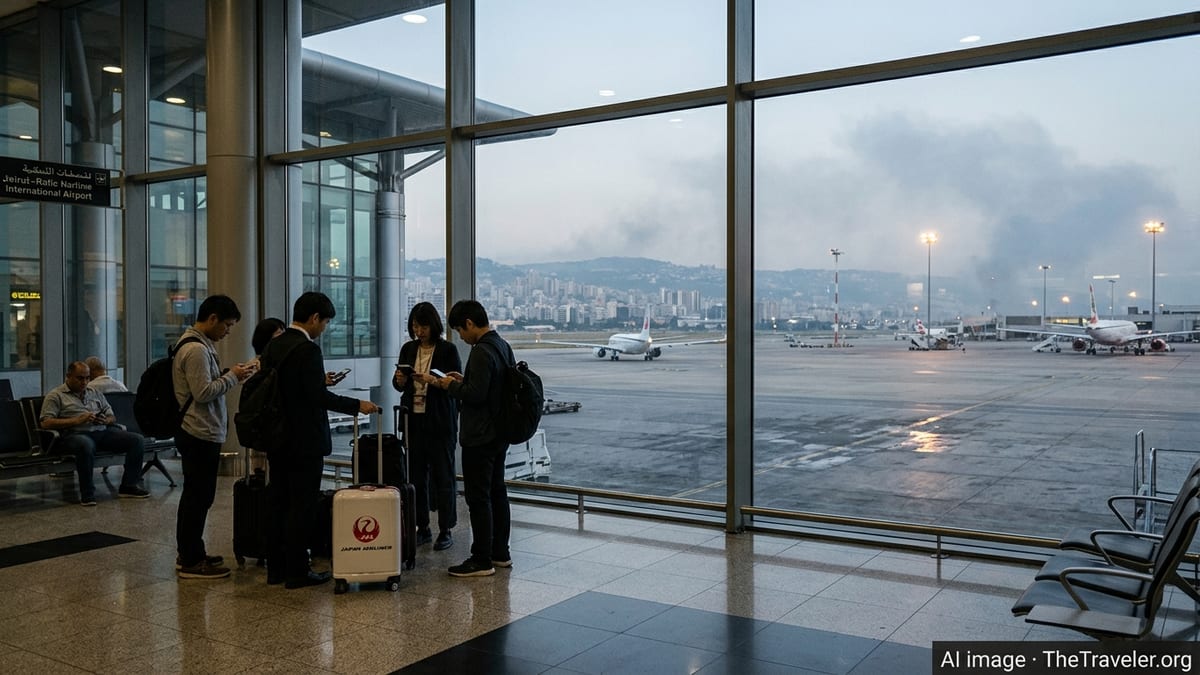
Highest-Level Warning Reflects Rapidly Deteriorating Security
The new guidance places Lebanon among the destinations subject to Japan’s most severe overseas safety alert, a designation that is typically reserved for war zones or states facing acute political and security crises. Publicly available information shows that Japan’s Level 4 advisories instruct citizens to evacuate as soon as they can do so safely, and to avoid any travel to the affected country regardless of purpose.
The escalation comes against the backdrop of an entrenched conflict along the Israel–Lebanon border, where ongoing exchanges of fire, targeted strikes and periodic air raids have raised fears of a broader confrontation. Recent coverage of the situation describes large-scale displacement within Lebanon, disrupted basic services and mounting pressure on already fragile infrastructure.
Japan’s decision aligns the country with a growing number of governments that have strengthened warnings on Lebanon or called for the departure of their nationals as the security outlook worsens. Previous advisories for specific areas near the border had already been tightened in step with earlier episodes of cross-border clashes, but the latest move extends the most stringent alert to the country as a whole.
Travel risk analysts note that a shift to a nationwide Level 4 designation signals that authorities now see threats as not only localized to the south, but as part of a broader, unpredictable risk environment encompassing the capital Beirut and other major urban centers.
Conflict Dynamics Driving the Evacuation Push
The advisory follows months of escalating violence tied to the protracted confrontation between Hezbollah and Israel, which itself has been closely linked to the wider regional fallout from the Gaza conflict. Open-source reporting chronicles recurring Israeli strikes on targets in southern Lebanon and, at times, in and around Beirut, as well as rocket and missile launches from Lebanese territory into northern Israel.
These hostilities have contributed to mass displacement on both sides of the border and have heightened concerns over miscalculation or a sudden widening of the war. Analysts highlight that densely populated districts in southern Beirut and communities in southern Lebanon have repeatedly faced evacuation notices or warnings amid fears of new strikes.
Japan’s move also reflects worries about the potential for spillover incidents in Lebanon’s interior, including risks to civilian aviation, ground transport and critical infrastructure. Travel risk assessments circulated by international firms in recent weeks have underscored the potential for road closures, ad hoc checkpoints and disruptions around key transit hubs that could complicate exit options if conditions deteriorate further.
Regional developments, including heightened tensions involving Iran and other actors, have added to the sense of volatility. Publicly available commentary suggests that Japanese officials are factoring in the broader Middle East security picture when calibrating alerts for Lebanon and neighboring states.
What Level 4 Means for Japanese Travelers and Residents
Japan’s four-tier overseas safety system ranges from calls for normal caution to instructions not to travel and to evacuate if already present. Level 4 is the highest of these categories and is interpreted as an urgent directive rather than a general warning. For Japanese nationals in Lebanon, the message is to leave as quickly as possible while commercial flights and overland routes remain available.
Published guidance explains that during a Level 4 advisory, citizens are urged to closely monitor local news, follow any instructions from local authorities regarding curfews or restricted zones, and keep travel documents and essential items ready for rapid departure. Individuals are also encouraged to inform family and contacts in Japan of their whereabouts and evacuation plans, and to remain in regular communication as the situation evolves.
Those unable to depart immediately are advised in publicly accessible materials to identify safer areas away from potential military targets, to prepare for interruptions to electricity, fuel and telecommunications, and to maintain flexibility as airlines adjust schedules. There is also an emphasis on registering with overseas safety networks offered by Japanese institutions, which can facilitate the dissemination of emergency information.
Travel industry observers expect that tour operators and corporate travel managers will now treat Lebanon as off-limits for business and leisure trips originating in Japan, at least for the duration of the Level 4 advisory. Some insurance providers may also restrict coverage for new trips into the country in light of the elevated risk profile.
Evacuation Logistics and Options for Departure
Although specific operational details are not disclosed in real time, past responses to crises in the Middle East indicate that Japan typically prioritizes the use of existing commercial links for evacuations as long as they remain viable. When airlines reduce or suspend service, governments sometimes explore chartered flights or overland movements to neighboring states with more stable conditions.
Reports from recent months show that Japan has previously positioned Self-Defense Forces aircraft in nearby countries to facilitate the evacuation of nationals from conflict-affected areas when the security situation required more direct involvement. These missions have often involved coordination with partner states and use of regional hubs where evacuees can transit onward to Japan or other safe destinations.
For Japanese citizens currently in Lebanon, the immediate focus is expected to be on securing seats on outbound flights from Beirut or arranging land routes to neighboring countries, subject to border regulations and safety conditions. Travel advisories recommend moving early, before potential surges in demand or airport disruptions complicate departures.
International travel trackers point out that a sudden tightening of security or a significant military escalation could quickly limit mobility. As a result, the Level 4 advisory is framed as a call for proactive evacuation rather than a signal to wait for organized convoys or airlifts that may not materialize in time for all those wishing to leave.
Implications for Future Travel to Lebanon and the Region
The new advisory is expected to significantly dampen Japanese tourism and business travel to Lebanon for the foreseeable future. Industry analysts note that even after a conflict stabilizes, it can take years for perceptions of safety to recover to the point where tour operators, airlines and travelers feel confident returning at pre-crisis levels.
Japan’s decision also sits within a wider pattern of tightened travel guidance for parts of the Middle East. In recent months, publicly reported measures have seen multiple regional destinations move up Japan’s risk scale, reflecting concerns about terrorism, political instability and interstate tensions. Lebanon’s elevation to Level 4 underscores how closely its fate is now perceived to be tied to more extensive regional turbulence.
For Lebanese tourism stakeholders who had been working to revive visitor numbers after years of economic strain, the loss of potential travelers from Japan adds to an already difficult outlook. Observers say the country’s renowned cultural heritage sites, mountain landscapes and Mediterranean coastline, long considered draws for international visitors, will likely remain inaccessible to many Japanese travelers while the advisory is in place.
Looking ahead, travel commentators suggest that any future easing of Japan’s Level 4 warning will depend on sustained de-escalation along the border, improvements in domestic security conditions and the restoration of reliable transport and basic services. Until then, Japan’s message to its citizens is clear: avoid travel to Lebanon and, for those still in the country, prioritize leaving while it is still feasible to do so.